
Navigating the administrative landscape can sometimes feel like an adventure, especially when you’re far from home or planning a significant life event. While the allure of exploring the diverse attractions of California often draws travelers, from the sunny beaches of Southern California to the majestic peaks of the Sierra Nevada, understanding essential documentation like birth certificates is crucial. Whether you’re a resident needing one for a passport to visit Europe, a parent registering a newborn in a charming California town, or a historian researching family roots, knowing how to obtain a birth certificate in California is a valuable piece of information. This guide will walk you through the process, ensuring you can secure this vital record smoothly.

The need for a birth certificate can arise in various situations. For families planning trips to Disneyland or booking stays at luxurious resorts along the coast, it might be required for identification or to prove age for certain activities. For those considering a long-term stay or even relocating to a city like Los Angeles or San Francisco, having official documents readily available is paramount. Understanding the requirements ensures that your Californian experience, whether for leisure, business, or personal reasons, is unhindered by administrative hurdles.
Understanding California Birth Certificates: Eligibility and Types
Before you embark on the journey to obtain a birth certificate in California, it’s essential to understand who is eligible to receive one and what types of certificates are available. This distinction is crucial, as it dictates the application process and the information you’ll receive.
Who Can Obtain a Birth Certificate?
California law restricts access to birth certificates to protect privacy and prevent identity theft. Generally, you can obtain a certified copy of a birth certificate if you are:
- The person named on the certificate: If you are requesting your own birth certificate, you will need to provide proof of identity.
- A parent or legal guardian: You must be listed on the birth certificate or have legal documentation proving guardianship.
- A grandparent: Specific rules may apply, and you might need to provide proof of your relationship to the individual named on the certificate.
- A child (over 18) or grandchild of the registrant: Similar to grandparents, documentation will be required.
- A sibling: Proof of relationship might be necessary.
- A spouse or domestic partner: Legal documentation of the marital or partnership status is usually required.
- A law enforcement officer or government agency representative: Acting in the course of official duties, with proper authorization.
- An attorney representing the registrant or their estate: With appropriate legal authorization.
In certain circumstances, other individuals or entities may be granted access, but these typically involve court orders or specific legal provisions. For travelers planning excursions to iconic landmarks like the Golden Gate Bridge or seeking to experience the local culture in Napa Valley, having a birth certificate might be necessary for various reasons, such as obtaining a passport or for age verification.
Types of Birth Certificates Available
In California, there are two main types of birth certificates:
-
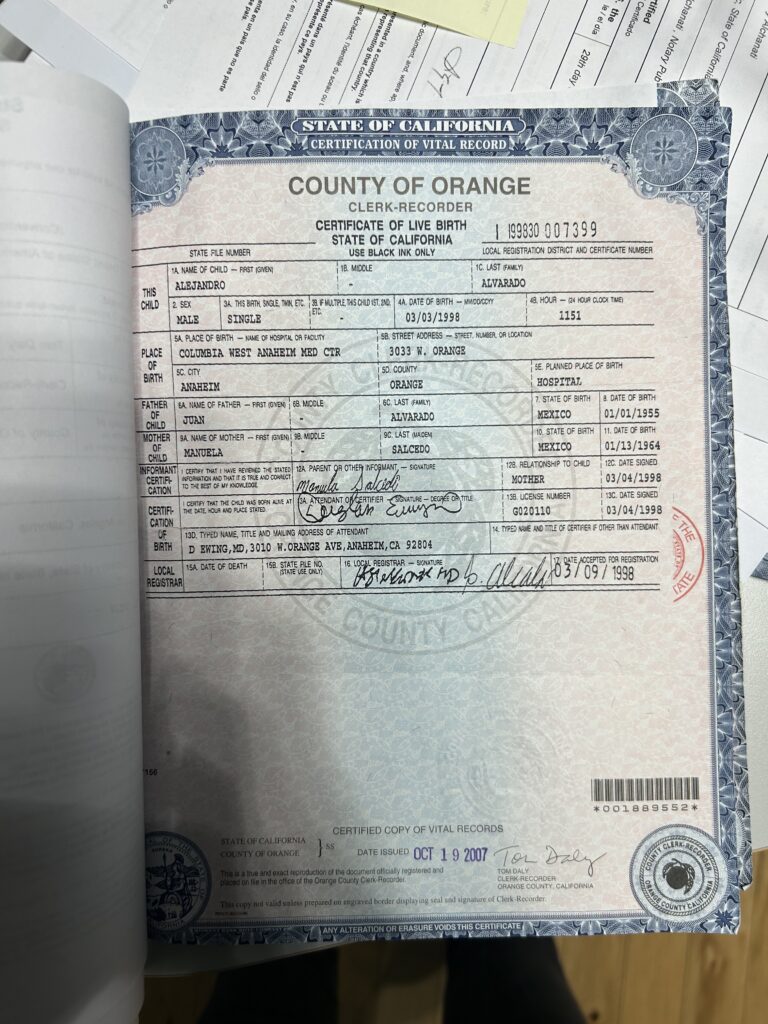
Authorized Certified Copy: This is the official, legally recognized document. It is typically required for most official purposes, such as obtaining a passport, driver’s license, enrolling in school, or applying for social security benefits. To obtain an authorized certified copy, you must meet the eligibility requirements outlined above and provide specific identification. This is the type of certificate most people need when they ask, “How do I get a birth certificate in California?”
-
Informational Certified Copy: This type of certificate contains all the information found on an authorized copy, but it is marked with a legend that states, “INFORMATIONAL, NOT A VALID DOCUMENT TO ESTABLISH IDENTITY.” This copy cannot be used for legal or identification purposes. It is often used for genealogical research or personal record-keeping. The application process for an informational copy is generally less stringent, as it does not require the same level of identity verification.
When you apply, be clear about which type of certificate you require. If your intention is to use it for travel, such as planning a budget trip to Yosemite National Park or a luxury stay in a suite in Beverly Hills, you will almost certainly need an authorized certified copy.
The Application Process: Where and How to Apply
Securing a birth certificate in California involves applying through the correct channels. The primary entity responsible for vital records is the California Department of Public Health – Vital Records (CDPH-VR), but county vital records offices also play a significant role.
Applying Through the California Department of Public Health – Vital Records (CDPH-VR)
The CDPH-VR is the central repository for birth certificates for events that occurred within California. You can apply for a birth certificate through the CDPH-VR by mail.
The steps typically involve:

- Downloading the Application Form: Visit the CDPH-VR website and download the application form for a certified copy of a birth certificate. Ensure you download the correct form for the type of certificate you need (authorized or informational).
- Completing the Application: Fill out the form accurately and completely. This will include details about the person whose birth certificate you are requesting, such as their full name at birth, date of birth, place of birth (city and county), and parents’ full names.
- Notarizing the Application (for Authorized Copies): For an authorized certified copy, you will need to have your sworn statement and signature on the application notarized by a Notary Public. This is a critical step to verify your identity.
- Gathering Supporting Documents: You will need to include a copy of your valid, government-issued identification (e.g., driver’s license, state ID, passport).
- Submitting the Application: Mail the completed and notarized application form, along with the required fee and a self-addressed stamped envelope, to the CDPH-VR address listed on their website.
Processing times can vary, so it’s advisable to apply well in advance of when you need the certificate, especially if you are planning travel to destinations like Hawaii or attending events that require it.
Applying Through Local County Vital Records Offices
For births that occurred within a specific county in California, you can often apply directly through that county’s vital records office. This method can sometimes be faster, especially if you live in or near the county where the birth occurred.
The process at the county level is similar to applying through the state:
- Identify the Correct County Office: Determine which county the birth took place in and find the relevant County Recorder or Vital Records office. Many counties have their own websites with downloadable application forms and specific instructions.
- Complete the Application Form: Fill out the county’s application form for a birth certificate.
- Provide Identification: You will need to present valid, government-issued identification. Some county offices may also allow for mail-in applications, which might require notarization.
- Pay the Fee: Submit the required fee, which can vary slightly by county.
- Submit the Application: You can typically apply in person at the county office or submit your application via mail, depending on the county’s procedures.
Applying locally can be particularly convenient if you are staying in a villa or an apartment in a particular California city and the birth occurred there. For instance, if you are on a family trip exploring the attractions of San Diego, and you need your child’s birth certificate, checking with the San Diego County Recorder’s office would be your first step.
Fees, Processing Times, and Important Considerations
Understanding the costs, how long it will take, and other crucial details can help streamline your application for a birth certificate in California. These aspects are vital for planning, whether you’re organizing a business stay or a leisurely exploration of California’s diverse landscapes.
Fees for Birth Certificates
The fees for obtaining a birth certificate in California are set by state and county regulations and are subject to change. Generally, you can expect to pay a fee for each certified copy you request.
- State (CDPH-VR): The fee for an authorized certified copy from the CDPH-VR is typically around $25-$35. This fee usually covers the processing and issuance of one copy.
- County Offices: County fees can be similar or slightly different. It’s always best to check the specific county’s website for the most up-to-date fee schedule.
Additional fees might apply if you choose expedited processing or mailing options. Payment methods accepted can include checks, money orders, and sometimes credit cards, especially if applying in person or through certain online portals (though direct online application for authorized copies is less common due to notarization requirements).
Processing Times
Processing times are a significant factor, especially when planning travel or meeting deadlines.
- CDPH-VR: Mail-in requests to the CDPH-VR can take several weeks to process, often ranging from 4 to 8 weeks or longer during peak periods. Expedited processing options may be available for an additional fee, but these still require significant lead time.
- County Offices: Processing times at county vital records offices can vary widely. In-person applications might be processed the same day or within a few business days. Mail-in requests to county offices generally take longer, but often still faster than the state office.
If you are planning a trip to experience the local culture in New Orleans or attend a convention in Las Vegas, it is crucial to factor in these processing times when you request your birth certificate. Applying months in advance is highly recommended.
Important Considerations and Tips
- Accuracy of Information: Double-check all the information you provide on the application form. Errors can lead to delays or rejection of your request.
- Proof of Identity: Ensure your identification is current and clearly legible. Photocopies should be clear.
- Sworn Statement and Notarization: For authorized copies, the notarization of your sworn statement is non-negotiable. Do not skip this step.
- Online Applications: While some third-party websites offer to help you obtain birth certificates, exercise caution. For official purposes, it’s best to apply directly through the CDPH-VR or the relevant county vital records office to ensure authenticity and avoid unnecessary fees or potential scams. The official websites will clearly state their procedures and requirements.
- Genealogy Research: If your primary purpose is genealogy, and you do not need an authorized copy for legal identification, an informational copy might be sufficient and easier to obtain.
- VitalChek: For some counties and the state, VitalChek is an authorized third-party vendor that can process applications. While convenient for online submissions, be aware of any additional service fees they may charge. Always verify if the vendor is officially recognized by the state or county.
- Specific Circumstances: If the birth occurred under unusual circumstances, or if you are dealing with a complex family situation, you may need to contact the CDPH-VR or the county office directly for guidance.
By understanding these requirements and following the outlined steps, you can successfully navigate the process of obtaining a birth certificate in California, ensuring that this essential document is ready for all your travel, lifestyle, and personal needs. Whether your plans involve exploring the architecture of San Francisco, enjoying the amenities of a luxury resort in Palm Springs, or embarking on a family adventure to the Grand Canyon (which is actually in Arizona, but a popular side trip for many Californian visitors), being prepared with your vital records will make your journey smoother.
LifeOutOfTheBox is a participant in the Amazon Services LLC Associates Program, an affiliate advertising program designed to provide a means for sites to earn advertising fees by advertising and linking to Amazon.com. Amazon, the Amazon logo, AmazonSupply, and the AmazonSupply logo are trademarks of Amazon.com, Inc. or its affiliates. As an Amazon Associate we earn affiliate commissions from qualifying purchases.