
It’s a question that has puzzled visitors for generations, a linguistic rite of passage for anyone stepping foot into the enchanting Crescent City: how do you pronounce New Orleans? The answer is as multifaceted and charming as the city itself, a reflection of its deep historical roots, vibrant cultural tapestry, and the diverse voices that call it home. More than just a simple string of syllables, the pronunciation of New Orleans acts as an auditory gateway to understanding the soul of this iconic Louisiana gem. For travelers seeking an authentic experience, mastering the local parlance is not just a point of etiquette; it’s an embrace of the spirit of a destination unlike any other in the United States. This article delves into the phonetic nuances, the historical influences, and the unparalleled allure of New Orleans, inviting you to not just say its name correctly, but to truly feel its heartbeat.
The Nuances of NOLA’s Name: Decoding the Pronunciation
The name “New Orleans” itself holds a fascinating phonetic riddle, one that often distinguishes a tourist from a local. While many outside the city might default to a more standard English pronunciation, locals, often affectionately referred to as “Yats,” have their own distinct ways of saying it, each imbued with layers of history and local pride. Understanding these variations is the first step in unlocking a deeper appreciation for this unique American city.
The Local Lexicon: ‘New OR-lins’ vs. ‘New Or-LEENZ’
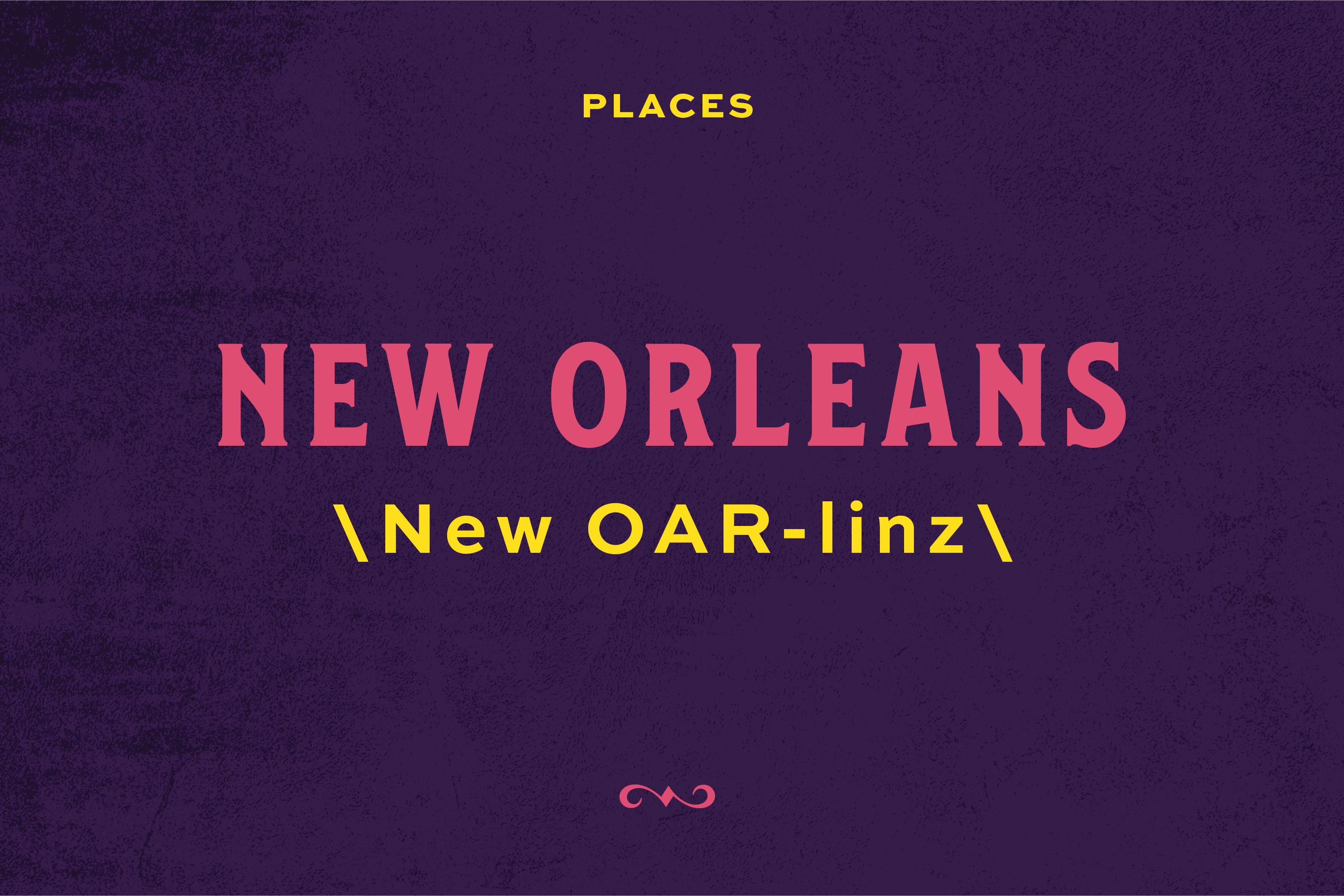
The most common and widely accepted local pronunciation among true New Orleanians is “New OR-lins” (ˈnjuː ˈɔːrlɪnz). In this rendition, the emphasis firmly lands on the first syllable of “Orleans,” and the final “s” is often softened or dropped entirely, making it sound almost like “Or-luns.” This quick, almost swallowed pronunciation is a hallmark of the local dialect and a clear indicator of someone who truly knows the city. It carries a certain clipped authenticity, reflecting the laid-back, yet spirited, rhythm of daily life.
Another pronunciation you might hear, though less common among long-time residents and more frequently used by those outside the immediate metropolitan area, is “New Or-LEENZ” (njuː ɔːrˈliːnz). Here, the emphasis shifts to the second syllable of “Orleans,” giving it a more elongated, almost romanticized sound, perhaps influenced by the city’s French heritage. While not incorrect, it often signals a non-local or someone with a more formal, less colloquial approach to the name. The least common, and generally considered incorrect by locals, is a full, three-syllable “New Or-LEE-uns,” which rarely passes the lips of those who understand the city’s linguistic subtleties. To really blend in, aiming for “New OR-lins” is your best bet, showcasing respect for the local culture and an openness to its unique traditions.
A Historical Symphony: French, Spanish, and Creole Influences
The varied pronunciations of New Orleans are not arbitrary; they are deeply rooted in the city’s rich and complex history, a vibrant tapestry woven from French, Spanish, and Creole threads. Founded by the French in 1718, the city was named La Nouvelle-Orléans in honor of Philippe II, Duke of Orléans, who was Regent of France. In its original French form, the pronunciation would have been closer to “Lah Noo-VEL Or-lay-AHN,” with the nasalized “n” sound characteristic of the French language.
However, the city’s history is one of constant flux. It was ceded to Spain in 1763, then returned to France briefly before being sold to the United States in the 1803 Louisiana Purchase. Each colonial power left an indelible mark not just on the architecture and legal codes, but also on the spoken language. As English speakers began to settle and interact with the existing French and Spanish-speaking populations, the name underwent a natural process of anglicization. The Creole people, a distinct ethnic group of mixed European, African, and sometimes Native American descent, also contributed to the linguistic landscape, blending elements of French and African languages into their own unique dialect.

The evolution of “New OR-lins” is a testament to this linguistic melding pot. The dropping of the final “s” sound and the emphasis on the first syllable of “Orleans” can be seen as an adaptation to English phonetic patterns while retaining a hint of the original French rhythm, avoiding a literal translation that would sound foreign to the local ear. It’s a pronunciation that feels lived-in, a comfortable slipper worn by generations of New Orleanians, and it stands as a proud sonic emblem of the city’s journey through time and cultural assimilation.
Beyond the Phonetics: The Soul of New Orleans
While getting the pronunciation right might be a fun challenge, the true magic of New Orleans lies far beyond its phonetics. This city is a living, breathing entity, a vibrant tapestry woven with threads of history, music, exquisite cuisine, and an irrepressible joie de vivre. Its distinct character, shaped by centuries of cultural exchange and resilience, makes it one of the most compelling travel destinations on the planet. For those seeking an immersive experience that ignites all senses, New Orleans offers an unparalleled journey into the heart of American culture.
A Melding Pot of Culture, Cuisine, and Celebrations
At its core, New Orleans is a celebration of life. Its culture is a harmonious, sometimes raucous, blend of Creole and Cajun influences, seasoned with traces of French, Spanish, African, and Caribbean heritage. This cultural fusion is most famously expressed through its music, especially jazz, which was born in the streets and clubs of this city. The sounds of trumpets, trombones, and saxophones spill from every doorway on Frenchmen Street and echo through the historic lanes of the French Quarter, inviting spontaneous dancing and collective euphoria. Blues, R&B, and gospel also thrive here, creating a soundtrack that is uniquely New Orleans.
The culinary scene is equally legendary, a destination in itself. New Orleans cuisine is a delicious exploration of flavor, from the rich stews of gumbo and jambalaya to the delicate crispness of beignets at Café Du Monde. Po’boys, muffulettas, and fresh seafood are staples, each dish telling a story of the city’s historical trade routes and culinary innovations. Food isn’t just sustenance here; it’s a social ritual, a reason for gathering, and an integral part of the city’s identity.
And then there are the celebrations. Mardi Gras is, of course, the most famous, transforming the entire city into a kaleidoscope of parades, costumes, and merriment. But New Orleans finds a reason to celebrate year-round, from the vibrant Jazz Fest to countless neighborhood street parties and second-line parades. These festivals are not merely events; they are embodiments of the city’s spirit, moments where community, music, and tradition intertwine in joyous expression.
Iconic Landmarks and Must-See Attractions
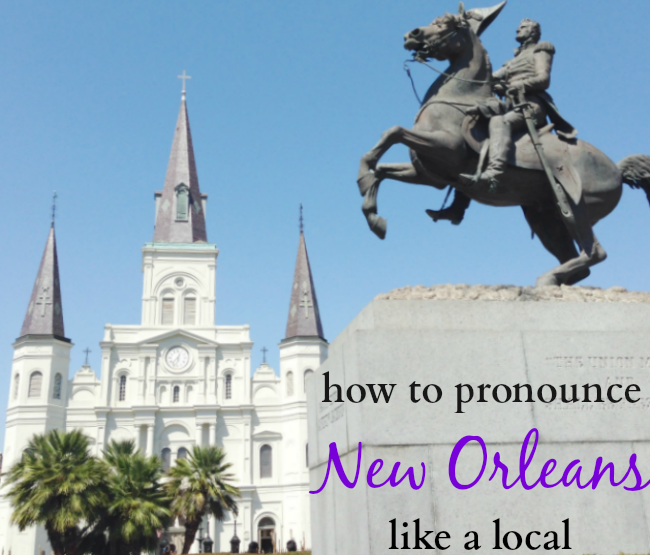
A visit to New Orleans is incomplete without exploring its iconic landmarks, each holding a piece of the city’s storied past and vibrant present. The French Quarter, with its wrought-iron balconies, gas lamps, and historic architecture, is the oldest and most famous neighborhood. Here, Bourbon Street pulses with energy, but quieter streets offer charming boutiques, art galleries, and quaint courtyards. Jackson Square, a National Historic Landmark, anchors the French Quarter with the majestic St. Louis Cathedral, the oldest continuously active cathedral in the United States, serving as a stunning backdrop.
Beyond the French Quarter, the elegant Garden District offers a contrasting view with its grand antebellum mansions and lush greenery, best explored via a leisurely stroll or a ride on the historic St. Charles Streetcar Line. For history buffs, The National WWII Museum is a world-class institution offering a powerful and poignant journey through World War II. Nature and wildlife enthusiasts will appreciate Audubon Park, home to the Audubon Zoo, and the Audubon Aquarium of the Americas, showcasing marine life from the Caribbean and the Gulf of Mexico. A cruise on the Mississippi River Steamboat Natchez provides picturesque views of the city skyline and a taste of the river’s timeless charm. Whether you’re drawn to history, music, nature, or pure revelry, New Orleans presents an endless array of attractions to discover.
Planning Your Trip to the Crescent City
Embarking on a journey to New Orleans requires a bit of planning to fully embrace its distinctive charms. From selecting the perfect place to lay your head to navigating its lively streets, a well-thought-out itinerary enhances the experience of this incomparable destination. The city caters to every type of traveler, whether you’re seeking luxury, a budget-friendly adventure, or a family-focused excursion.
Where to Stay: Hotels, Resorts, and Unique Accommodations
New Orleans offers a diverse range of accommodation options, each promising a unique perspective on the city. For those seeking opulence and historical grandeur, the Roosevelt Hotel New Orleans, a Waldorf Astoria property, offers luxurious suites and a celebrated lobby bar. The iconic Hotel Monteleone, with its famous Carousel Bar, provides a quintessential French Quarter experience, blending historic elegance with modern amenities. High-end resorts like The Ritz-Carlton, New Orleans provide a sanctuary of luxury and service, often featuring spas and fine dining.
Mid-range options are plentiful and often come with character. Boutique hotels in the Warehouse Arts District, such as the Ace Hotel New Orleans, appeal to a hip, art-loving crowd with their stylish design and vibrant communal spaces. For those who prefer a lively atmosphere and perhaps a bit of gaming, Harrah’s New Orleans offers a resort experience with direct casino access. Budget travelers can find comfortable stays in guesthouses and smaller hotels outside the immediate French Quarter, especially in areas like the Faubourg Marigny or Mid-City, often with easy access to public transport. Additionally, numerous bed and breakfasts scattered throughout the city, particularly in the Garden District, offer a charming and personalized stay, providing insights into local life and often housed in beautifully preserved historic homes. Booking in advance is highly recommended, especially during peak festival seasons like Mardi Gras or Jazz Fest, when demand for all types of accommodation surges.
Immersing Yourself in Local Life: Food, Music, and Festivals
To truly experience New Orleans, you must immerse yourself in its daily rhythms, which revolve around food, music, and an enduring spirit of festivity. Start your day with a traditional breakfast of beignets and café au lait at Café Du Monde or explore the vibrant French Market, one of the oldest public markets in the United States, for local delicacies and unique souvenirs. For lunch, sample a classic po’boy sandwich from a neighborhood joint or indulge in a bowl of authentic gumbo. Dinners range from casual Creole and Cajun fare to world-class fine dining experiences, with countless establishments offering fresh Gulf Coast seafood. Don’t hesitate to explore restaurants beyond the French Quarter – areas like the Uptown and Warehouse Arts District boast innovative culinary scenes.
Music is the city’s lifeblood. After dinner, head to Frenchmen Street in the Faubourg Marigny for an authentic dose of live jazz, blues, and funk in its intimate clubs. Many venues have no cover charge, encouraging you to hop from one establishment to another, soaking in different sounds. Even walking through the streets, you’ll encounter talented street musicians whose impromptu performances add to the city’s lively ambiance. Keep an eye on local listings for second-line parades, often held on Sundays, where brass bands lead joyous processions through neighborhoods like Tremé, inviting everyone to join in the spontaneous celebration. These parades are quintessential New Orleans experiences, showcasing the city’s unique cultural traditions and communal spirit.
Mastering Your Visit: Essential Travel Tips and Experiences
To make the most of your New Orleans adventure, a few practical tips can enhance your experience, ensuring a seamless and authentic journey into this captivating city. From getting around to embracing local customs, thoughtful preparation will help you savor every moment.
Navigating the City: Transportation and Getting Around
New Orleans is a remarkably walkable city, especially its most popular areas like the French Quarter and the adjacent Faubourg Marigny. Walking allows you to appreciate the intricate architecture, discover hidden courtyards, and stumble upon spontaneous street performances. However, for longer distances, the city’s historic streetcar system is both practical and charming. The St. Charles Streetcar Line, for instance, offers a scenic route through the Garden District and Uptown, providing a glimpse into the grander side of New Orleans life. Single rides are inexpensive, and day passes offer unlimited travel.
Beyond streetcars, the public bus system is efficient for reaching destinations further afield, and ride-sharing services are readily available. Taxis are also an option, particularly for late-night transportation. While driving a car can be convenient for exploring surrounding areas, navigating the narrow streets of the French Quarter and finding parking can be challenging and expensive. Consider reserving a rental car only for day trips outside the city center, perhaps to visit a plantation or explore the bayous of South Louisiana. For those arriving by air, Louis Armstrong New Orleans International Airport (MSY) is well-connected to the city center via shuttle services and taxis.
Embracing the Spirit: Safety, Etiquette, and Authenticity
While New Orleans is known for its welcoming atmosphere, like any major city, it’s wise to be mindful of your surroundings, especially at night. Stick to well-lit, populated areas and be aware of your personal belongings. The city’s lively nightlife can be intense, so drink responsibly and travel with companions if possible.
When it comes to etiquette, embracing the local pace and politeness goes a long way. Southerners, in general, value courtesy, so a “please” and “thank you” are always appreciated. Tipping for services, especially in restaurants and bars, is customary. Engage with locals – they are often eager to share stories and recommendations, but be respectful of their space and time. Don’t be afraid to ask for directions or suggestions; New Orleanians are renowned for their hospitality.
Finally, to truly experience the authenticity of New Orleans, venture beyond the tourist-heavy strips. Explore the residential areas of the Garden District, discover the historic significance of Tremé, or enjoy a peaceful afternoon in City Park, one of the oldest urban parks in the United States. Support local businesses, dine at hole-in-the-wall eateries, and seek out neighborhood festivals or live music venues off the main drag. The beauty of New Orleans lies in its layers, and by digging a little deeper, you’ll uncover a richer, more profound connection to this extraordinary place. And remember, when you say its name, try “New OR-lins” – you’ll sound like you belong, even if just for a visit. It’s a small detail that shows respect for a city that, above all, celebrates its unique identity with fierce pride.
LifeOutOfTheBox is a participant in the Amazon Services LLC Associates Program, an affiliate advertising program designed to provide a means for sites to earn advertising fees by advertising and linking to Amazon.com. Amazon, the Amazon logo, AmazonSupply, and the AmazonSupply logo are trademarks of Amazon.com, Inc. or its affiliates. As an Amazon Associate we earn affiliate commissions from qualifying purchases.