
The proximity of Alaska and Russia has long captured the imagination, stirring thoughts of historical encounters, geopolitical considerations, and even adventurous travel. Separated by a relatively narrow strait, these two vast territories represent the easternmost reaches of Russia and the northwesternmost corner of the United States. The answer to “How far apart are Alaska and Russia?” is not a simple number, as it depends on the specific points of measurement. However, at their closest, the geographical separation is surprisingly minimal, making this region a fascinating study in geography and human connection.
This incredible closeness is most evident in the Diomede Islands, a small archipelago situated in the Bering Strait. The Little Diomede Island, belonging to Alaska, and Big Diomede Island, a part of Russia’s Chukotka Autonomous Okrug, lie just a mere 2.4 miles (approximately 3.8 kilometers) apart. This narrow expanse of water is not just a geographical marker; it holds immense cultural and historical significance. The International Date Line also runs through the strait between these two islands, meaning that while they are physically so close, they are separated by a full 21-hour time difference. When it’s daytime on Little Diomede Island, it’s already the next day on Big Diomede Island. This unique temporal anomaly adds another layer of intrigue to the already captivating proximity of Alaska and Russia.

The historical context of this separation is crucial to understanding the current relationship between these two landmasses. For millennia, indigenous peoples, such as the Yupik and Chukchi, traversed these waters, maintaining cultural and trade ties long before European exploration. The arrival of Vitus Bering, a Danish explorer sailing for the Russian Empire, in the 18th century marked a new era. Bering’s voyages solidified Russia’s claim over Alaska, a claim that persisted until the Alaska Purchase in 1867. During the Cold War, the Bering Strait became a heavily militarized border, a stark symbol of the ideological divide between the United States and the Soviet Union. Today, while the geopolitical landscape has shifted, the physical proximity remains, a constant reminder of shared history and potential for future interaction.
Navigating the Bering Strait: A Journey Between Continents
The Bering Strait is more than just a geographical divide; it’s a dynamic waterway that influences climate, wildlife, and human activity. Its average depth is around 100 to 160 feet (30 to 50 meters), but it narrows significantly at certain points, particularly between the Diomede Islands. The strait is often choked with ice for much of the year, making navigation challenging and historically limiting direct passage. However, during the warmer months, primarily July and August, the ice recedes, opening up possibilities for sea travel.
Understanding the Geography of Proximity
The closest point between Alaska and Russia is not a straight line but rather a convergence defined by the Diomede Islands.
Little Diomede Island and Big Diomede Island: The Closest Neighbors
As mentioned, Little Diomede Island (part of Alaska, USA) and Big Diomede Island (part of Russia) are separated by just 2.4 miles of water. Little Diomede is inhabited by a small population, primarily Inuit people, while Big Diomede is largely uninhabited, except for a Russian border guard post. The historical presence of indigenous communities on both islands underscores the long-standing human connection across this narrow divide. These islands are part of the Bering Sea, a vital ecosystem supporting diverse marine life.
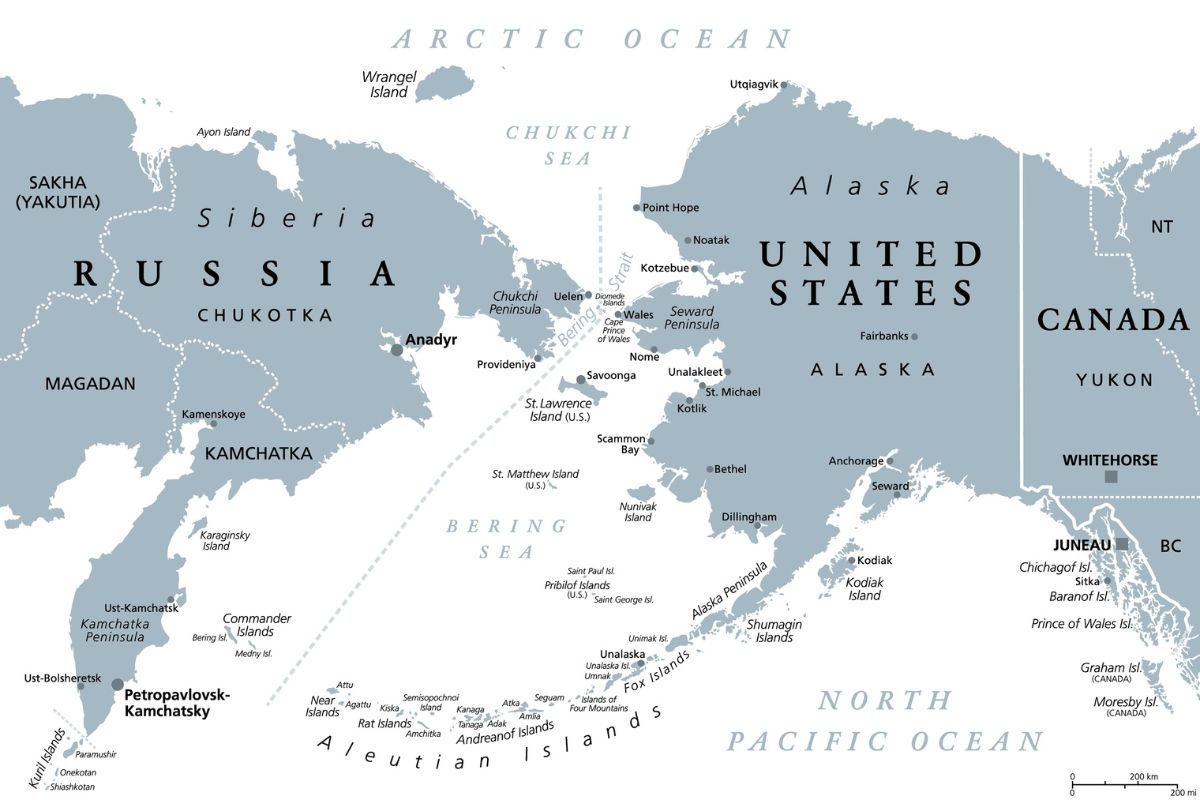
The unique geographical feature of the International Date Line running between these islands is a fascinating aspect for travelers. Imagine standing on Little Diomede and seeing Big Diomede across the water. It’s a mere stone’s throw away, yet you are technically in a different day. This temporal displacement is a vivid illustration of how global systems of timekeeping interact with geographical boundaries.
Travel and Exploration in the Bering Strait Region
While direct travel between Alaska and Russia across the Bering Strait is not a common tourist activity due to geopolitical and logistical complexities, the region itself offers unparalleled travel experiences. The remoteness and unique environment attract adventurous travelers, researchers, and those interested in indigenous cultures.
Experiencing Alaskan Wilderness and Russian Far East
For those fascinated by the proximity, exploring Alaska’s western coast and Russia’s Far East independently offers a glimpse into the distinct yet interconnected worlds.
Exploring Alaska’s Bering Strait Coast
Alaska’s gateway cities like Nome and Kotzebue provide access to the Bering Strait region. Nome is famous for the Iditarod Trail Sled Dog Race and its gold rush history. Visitors can experience the raw beauty of the Arctic tundra, witness stunning displays of the Aurora Borealis, and learn about Yupik and Inupiaq cultures. Accommodations in these remote areas often consist of comfortable lodges and inns, offering a cozy retreat after days of exploration. For those seeking a more immersive experience, guided tours can take you to remote villages and along the rugged coastline.

Discovering Russia’s Chukotka Autonomous Okrug
Across the strait, Russia’s Chukotka Autonomous Okrug is an even more remote and less-visited region. Its capital, Anadyr, is the primary hub for accessing this vast territory. The landscape is characterized by dramatic fjords, volcanic formations, and abundant wildlife, including walruses, whales, and polar bears. Traveling to Chukotka is an expedition in itself, often requiring specialized tours and permits due to its logistical challenges. The indigenous cultures of the Chukchi and Koryak peoples are central to the identity of this region, with opportunities to witness traditional ceremonies and learn about their nomadic lifestyles. Resorts and hotels are scarce, with most visitors opting for expedition cruises or arrangements made through specialized tour operators.
The closest the average traveler can get to experiencing the direct separation without official crossings is through boat tours during the summer months, offering views of both Alaska and Russia from the water, often with a close-up perspective of the Diomede Islands. These tours highlight the dramatic landscapes and the immense scale of the wilderness.
The allure of the Bering Strait lies not just in its geographical narrowness but in the vastness of the cultures and landscapes it connects. It represents a frontier, a place where history, nature, and human resilience converge. Whether you are drawn by the sheer distance (or lack thereof) between two continents, the rich indigenous heritage, or the untamed beauty of the Arctic, the region surrounding the Bering Strait offers an unforgettable journey into one of the planet’s most remarkable frontiers. The question of “How far apart are Alaska and Russia?” ultimately leads to a deeper understanding of connection, history, and the enduring spirit of exploration.