
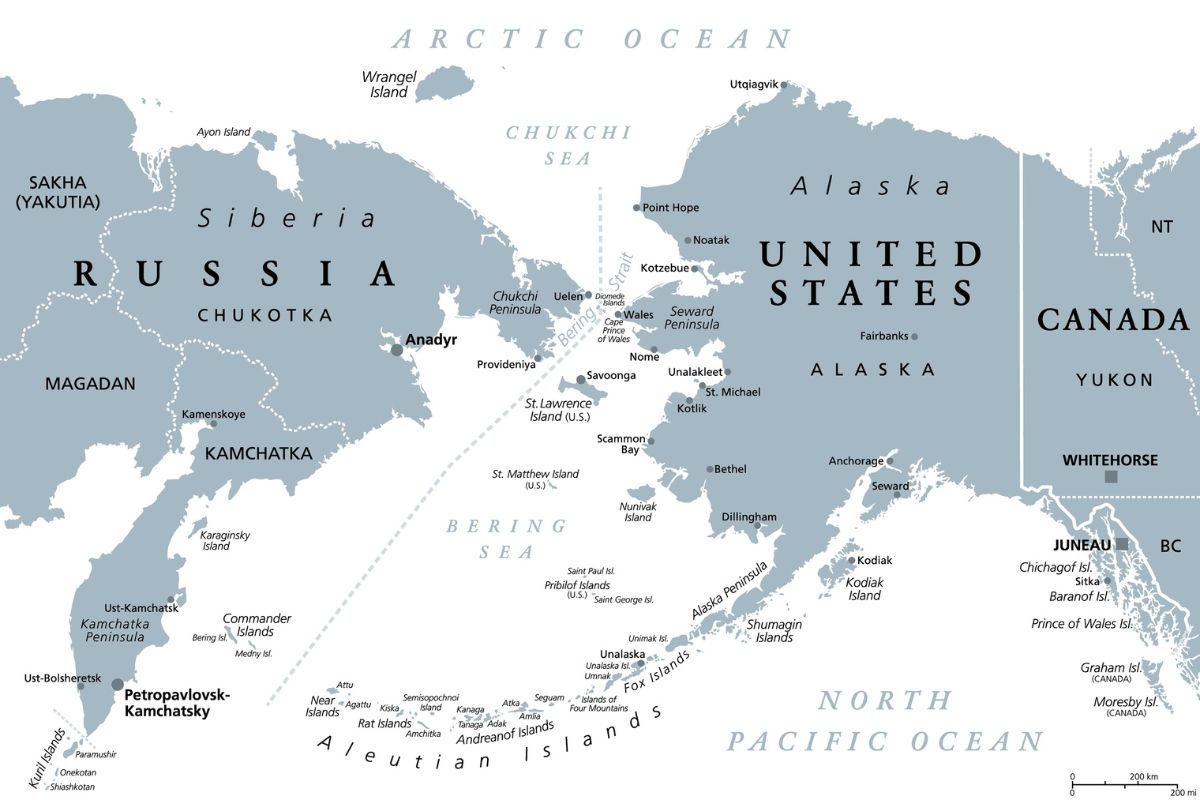
The question of geographical proximity between Alaska and Russia is a fascinating one, often sparking curiosity for travelers, history buffs, and geography enthusiasts alike. While separated by vast stretches of water, these two entities are surprisingly close, forming a unique geopolitical and natural nexus. The most striking aspect of their relationship is their shared maritime border across the Bering Strait, a narrow passage that dramatically shrinks the perceived distance between the continents of North America and Asia.
At its narrowest point, the Bering Strait is a mere 55 miles (89 kilometers) wide. Within this strait lie the Diomede Islands, a geographical marvel that further illustrates the closeness. The Little Diomede Island is part of Alaska, and thus the United States, while the Big Diomede Island is part of Russia. These islands are so close that on a clear day, one can see the opposite island with the naked eye. The International Date Line also passes between these islands, meaning that Big Diomede Island is almost a full day ahead of Little Diomede Island. This remarkable proximity underscores how, despite their distinct national identities and vast territories, Alaska and Russia are neighbors in a very literal sense.

Bridging the Divide: The Bering Strait and its Islands
The Bering Strait is more than just a body of water; it’s a historical and geographical bridge. For millennia, this strait is believed to have been the land bridge – Beringia – that allowed humans to migrate from Asia to North America. Today, it remains a vital shipping lane and a critical habitat for marine life, influencing ecosystems and human activities on both sides. The sheer remoteness of this region makes any interaction between Alaska and Russia a significant undertaking, whether for scientific research, cultural exchange, or the rare adventurous traveler.
The Diomede Islands: A Microcosm of Separation and Proximity
The Diomede Islands, also known as Inupiaq (in Alaska) and Chukchi (in Russia) names, are a stark reminder of the political boundaries that divide a naturally connected world. Big Diomede is the larger of the two islands, with a higher elevation and a more rugged terrain. It is strategically located in the heart of the Bering Strait and is largely uninhabited, serving primarily as a military outpost for Russia. In contrast, Little Diomede is home to a small, year-round community of Inupiaq people. Life on Little Diomede is intrinsically linked to the sea and the traditional ways of its inhabitants, while Big Diomede exists as a remote, sparsely populated Russian territory.
The visual connection between the two islands is profound. Looking across the water from Little Diomede, one can see the imposing silhouette of Big Diomede. This proximity allows for an unparalleled appreciation of the geopolitical divide. During the winter months, when the Bering Strait freezes over, it is theoretically possible to walk between the two islands. However, this is not a casual stroll; it’s a perilous journey across international waters and potentially dangerous ice, further emphasizing the symbolic and physical barrier that exists despite the visual closeness. The fact that Russia maintains border guards on Big Diomede makes any unauthorized crossing a serious offense.
Travel and Tourism Between Alaska and Russia: A Rare but Captivating Pursuit
Direct travel between Alaska and Russia for tourism purposes is exceptionally limited. The sheer remoteness, the stringent visa requirements, and the logistical complexities make it a niche pursuit for the most intrepid travelers. However, for those who manage to embark on such a journey, the rewards are immense. Understanding the cultural tapestry of both regions, experiencing the wild, untamed landscapes, and witnessing the historical connections firsthand offers an unparalleled travel experience.
Exploring Alaska’s Frontier Spirit
Alaska itself is a land of immense beauty and rugged adventure. From the majestic peaks of the Denali National Park to the vibrant coastal cities like Juneau and Anchorage, Alaska offers a plethora of attractions. Visitors can embark on wildlife tours to spot grizzly bears, moose, and whales, or explore the historical gold rush towns that dot the state. The Inside Passage is a popular route for cruise ships, offering breathtaking views of glaciers and fjords. For those seeking a more immersive experience, staying in a rustic lodge or even a remote cabin provides a true taste of Alaskan life. The focus on nature, adventure, and unique experiences makes Alaska a prime destination for those who appreciate the wild.
Russia’s Far East: A World Away
On the Russian side, the proximity to Alaska is primarily represented by the vast and sparsely populated Chukotka Autonomous Okrug. This region, bordering the Bering Strait, is one of the most remote and least explored areas of Russia. Traveling to this part of Russia requires special permits and a significant logistical effort. However, for the truly adventurous, it offers a glimpse into a unique culture shaped by indigenous traditions and extreme natural conditions. The indigenous Chukchi people have a rich history of survival and adaptation in this harsh environment. Exploring cities like Anadyr, the administrative center of Chukotka, provides a window into life on the edge of the Arctic. The natural beauty of Chukotka is dramatic, with vast tundras, dramatic coastlines, and the ever-present influence of the Arctic Ocean.
Historical and Environmental Significance
The proximity of Alaska and Russia has played a crucial role in shaping the history and environment of both regions. The Alaska Purchase in 1867, where the United States bought Alaska from Russia, was a pivotal moment. This transaction, often referred to as “Seward’s Folly,” was driven by strategic considerations and the growing influence of the United States in the Pacific. The sale marked the end of Russian colonial ambitions in North America and solidified American presence in the far north.
A Shared Arctic Environment
Both Alaska and the adjacent regions of Russia share a common Arctic environment. This shared ecosystem means that environmental challenges and opportunities are often interconnected. Climate change, for instance, impacts wildlife migration patterns, ice formations, and coastal erosion in both Alaska and Russia. Research collaborations and conservation efforts are vital to understanding and mitigating these impacts. The Pacific Walrus, for example, migrates across Bering Sea waters, and its conservation depends on coordinated efforts on both sides of the border. The unique marine life and vast natural resources of the Bering Sea region underscore the importance of understanding and respecting the shared environment that connects Alaska and Russia. The sheer scale of the wilderness on both sides invites exploration and a deep appreciation for the power of nature.

Cultural Exchange and Indigenous Connections
Despite the political separation, there are historical and cultural connections, particularly among the indigenous peoples of the region. The Yupik and Inupiat peoples have traditional territories that span across the Bering Strait, and their ancestors have maintained connections for centuries. While modern borders can impede direct travel, the shared heritage and cultural practices are a testament to the enduring human links that transcend national boundaries. Understanding these connections is crucial for a comprehensive appreciation of the region’s human geography. These local cultures, their food, and their activities offer a rich dimension to any exploration of this unique part of the world.
In conclusion, while Alaska and Russia are vast territories, their closest points are separated by a mere 55 miles across the Bering Strait. This proximity, marked by the Diomede Islands, is a geographical marvel with deep historical and environmental significance. Direct travel is challenging, but the allure of exploring these frontier lands, their unique cultures, and their breathtaking natural landscapes continues to draw adventurers and those fascinated by the unique relationship between these two great northern entities. Whether you are planning a trip focused on luxury travel, budget travel, or simply seeking unique experiences, the question of how far Alaska and Russia are is answered by a fascinating blend of immediate closeness and significant distance.
LifeOutOfTheBox is a participant in the Amazon Services LLC Associates Program, an affiliate advertising program designed to provide a means for sites to earn advertising fees by advertising and linking to Amazon.com. Amazon, the Amazon logo, AmazonSupply, and the AmazonSupply logo are trademarks of Amazon.com, Inc. or its affiliates. As an Amazon Associate we earn affiliate commissions from qualifying purchases.