
Embarking on a journey across the diverse landscapes of Texas often involves traversing the distance between its vibrant metropolitan hubs. Among the most popular routes for both residents and visitors is the path connecting the bustling financial and cultural powerhouse of Dallas to the live music capital and political heart of Austin. This drive is more than just a commute; it’s an opportunity to experience a significant slice of the Lone Star State’s unique charm, from its expansive highways to its quirky roadside attractions. Understanding the exact distance, the various travel options, and what to expect along the way is crucial for planning a seamless and enjoyable trip.
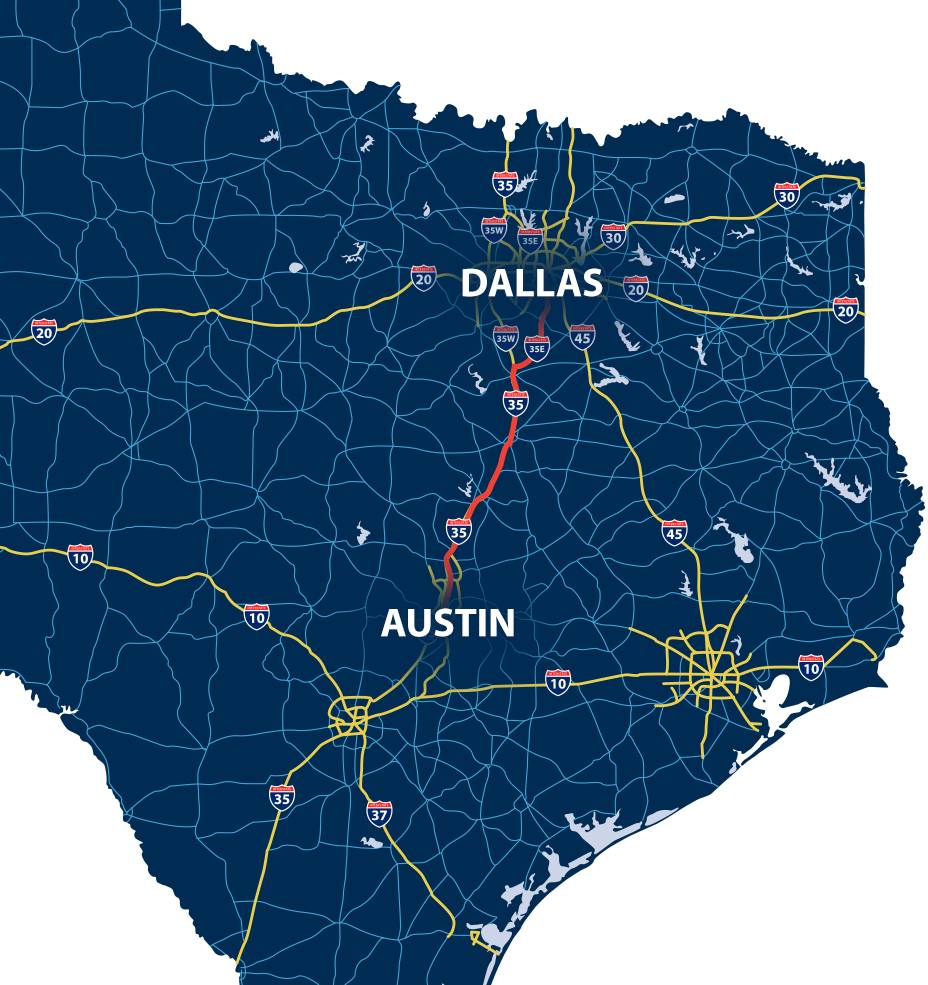
This guide will delve into the specifics of traveling between Dallas and Austin, covering everything from the most efficient routes and estimated travel times to alternative transportation methods, exciting stopover points, and comprehensive insights into accommodations and local attractions in both cities. Whether you’re planning a quick business trip, a family vacation, or a leisurely road trip, this article provides all the essential information to make your journey between these two iconic Texas destinations as smooth and memorable as possible. Get ready to explore the options and prepare for an unforgettable Texas adventure.
The Journey: Distance, Time, and Routes
The distance between Dallas and Austin, Texas, is a frequently asked question for anyone planning travel within the state. As two of Texas’s largest and most influential cities, they serve as major hubs for commerce, culture, and tourism, creating a constant flow of traffic between them. Knowing the precise distance and anticipated travel time is the first step in organizing your itinerary.
Unpacking the Distance and Drive Time
The typical driving distance from downtown Dallas to downtown Austin is approximately 195 to 200 miles (about 314 to 322 kilometers). This measurement can vary slightly depending on your exact starting point and final destination within each metropolitan area, but it provides a reliable estimate for planning purposes.
For most drivers, the journey takes an average of 3 to 3.5 hours under optimal driving conditions. However, this estimate is highly susceptible to various factors. Traffic congestion, particularly during peak rush hours in and around both Dallas and Austin, can significantly extend travel times. Construction zones, common on major interstate highways, can also cause delays. Additionally, any planned stops for fuel, food, or rest breaks will naturally add to the overall duration of your trip. The primary route connecting these two cities is Interstate 35 (I-35), a major artery that runs north-south through the heart of Texas. While generally well-maintained, I-35 is known for its heavy traffic volume, making strategic planning essential.
Navigating I-35: Tips for a Smooth Drive
To ensure a smoother and more efficient drive on I-35, consider these practical tips:
- Avoid Rush Hours: The cardinal rule for driving between Dallas and Austin is to steer clear of rush hour traffic. In Dallas, peak times are typically 7:00 AM to 9:00 AM and 4:00 PM to 6:00 PM on weekdays. Austin experiences similar patterns, with congestion often starting earlier in the afternoon. Ideally, depart early in the morning (before 6:30 AM) or late in the morning (after 9:30 AM), or plan your drive for late evening or during the weekend to minimize delays.
- Utilize Real-Time Navigation: Modern navigation apps like Google Maps or Waze are indispensable. These tools provide real-time traffic updates, suggest alternative routes to bypass congestion, and offer accurate estimated arrival times based on current conditions. They can alert you to accidents or construction well in advance, allowing you to adapt your plans.
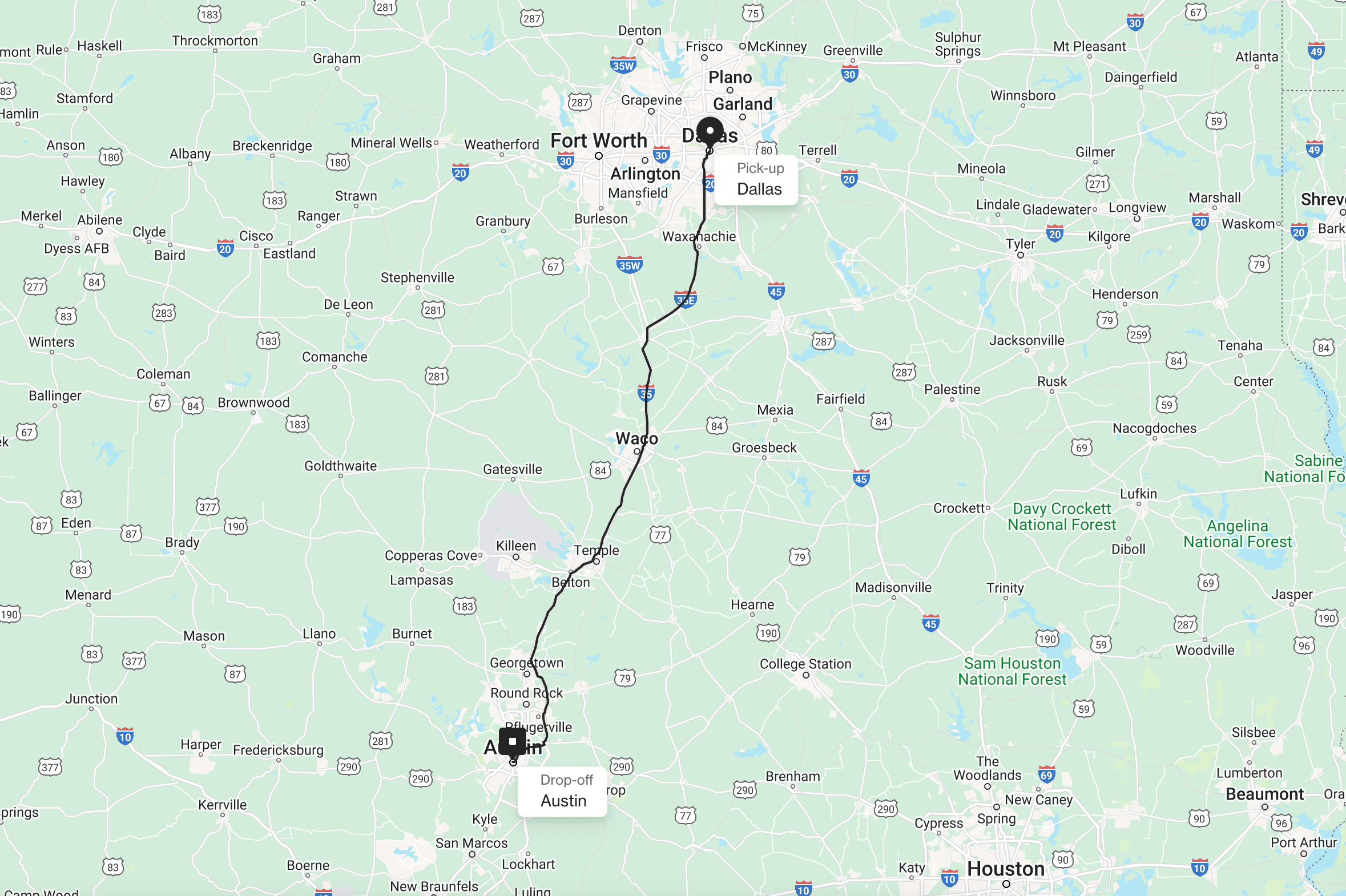
- Plan Your Stops: Even a relatively short 3-hour drive can benefit from a planned stop. The stretch of I-35 between Dallas and Austin offers several towns perfect for a break, such as Waco, Temple, or Killeen. These stops not only allow you to stretch your legs and refuel but can also provide an interesting diversion from the highway.
- Prepare Your Vehicle: Before embarking on any road trip, it’s always wise to ensure your vehicle is in good condition. Check tire pressure, fluid levels, and ensure you have enough fuel. Having an emergency kit with basic tools, jumper cables, and water is also a good precaution.
By keeping these factors in mind and planning strategically, your drive from Dallas to Austin can be a smooth and enjoyable part of your overall travel experience.
Travel Options Beyond Driving
While driving remains the most popular and flexible method for traveling between Dallas and Austin, it’s certainly not the only choice. Depending on your budget, time constraints, and preference for convenience, several other transportation options are available, each offering distinct advantages.
Buses: Economical and Convenient
Bus travel is a highly economical and relatively convenient option for traversing the distance between these two Texas cities. Major bus operators like Greyhound and Megabus offer multiple daily departures.
- Travel Time: Bus journeys are typically longer than driving, often ranging from 4 to 5 hours, depending on the number of stops and traffic conditions.
- Cost: Fares are generally quite affordable, especially if booked in advance, making it an excellent choice for budget-conscious travelers. Prices can fluctuate based on demand and booking time, but you can often find tickets for $20-$40.
- Amenities: Modern buses often come equipped with amenities such as free Wi-Fi, power outlets, and comfortable seating, allowing passengers to work, relax, or enjoy entertainment during the trip.
- Departure/Arrival Points: Buses usually depart from major transportation centers in Dallas (like the Dallas Bus Station) and arrive at central locations in Austin (such as the downtown Austin Bus Station), which are often well-connected to local public transport.
Bus travel eliminates the stress of driving, navigating traffic, and finding parking, making it a hassle-free alternative for many.
Flights: Speed for a Premium
For those prioritizing speed above all else, flying is an option, though it’s typically more expensive and not always the fastest door-to-door.
- Airports: In Dallas, you have two primary options: Dallas/Fort Worth International Airport (DFW) and Dallas Love Field (DAL). Austin is served by Austin-Bergstrom International Airport (AUS).
- Flight Duration: The actual flight time between Dallas and Austin is remarkably short, often around 1 hour.
- Total Travel Time: However, the overall travel time significantly increases when accounting for commuting to and from airports, security checks, boarding procedures, and baggage claim. This can easily add up to 3-4 hours, sometimes rivaling or exceeding the driving time, especially if the airports are not conveniently located to your exact origin and destination.
- Cost: Airfares can vary widely depending on the airline, booking time, and demand. While it’s occasionally possible to find competitive deals, flights are generally the most expensive option. This method is usually preferred for connecting flights or if you have specific travel needs that only air travel can fulfill.
Rideshares & Private Transfers: Flexibility and Comfort
Ridesharing services and private transfers offer a balance of flexibility and comfort, albeit at a higher cost than bus travel.
- Rideshares (Uber/Lyft): It is possible to book a long-distance ride between Dallas and Austin using apps like Uber or Lyft. This offers unparalleled convenience, as you can be picked up directly from your location and dropped off at your destination.
- Cost: The primary drawback is the cost, which can easily range from $250 to $400 or more for a one-way trip, making it suitable primarily for those with a generous budget or groups splitting the fare.
- Private Car Services: For a truly luxurious and personalized experience, private car services are available. These services provide professional drivers, high-end vehicles, and the ultimate in comfort and schedule flexibility. They are often used for business travelers or those seeking a premium travel experience.
- Flexibility: Both rideshares and private transfers offer the flexibility to depart at your desired time and make stops along the way if needed, providing a customized travel experience that public transportation cannot match.
Choosing the right mode of transport depends on individual priorities, whether it’s cost-effectiveness, speed, convenience, or comfort. Each option presents a unique way to bridge the distance between Dallas and Austin.
Exploring the Route: What to See Between Dallas and Austin
The journey from Dallas to Austin doesn’t have to be a non-stop dash. The stretch of I-35 and its surrounding areas are dotted with charming towns, unique attractions, and historical sites that make for perfect stopovers. Breaking up the drive not only alleviates travel fatigue but also adds an enriching layer to your Texas experience.
Stopover Gems: Breaking Up the Drive
Here are some recommended places to pause and explore along the way:
-
Waco: Approximately halfway between Dallas and Austin, Waco has transformed into a popular tourist destination, largely thanks to HGTV’s “Fixer Upper” stars Chip and Joanna Gaines.
- Magnolia Market at the Silos: This is Waco’s biggest draw, offering shopping, food trucks, and a relaxed atmosphere.
- Baylor University: Home to a beautiful campus and the Mayborn Museum Complex.
- Dr Pepper Museum: Discover the history of Dr Pepper, which was invented in Waco. It’s a fun and nostalgic stop for all ages.
- Waco Suspension Bridge: A historic landmark perfect for a scenic walk along the Brazos River.
-
West, Texas: Just north of Waco, the small town of West is famous for its Czech heritage and, more specifically, its kolaches.
- Czech Stop: A legendary roadside bakery and convenience store, open 24/7, offering an incredible array of fresh pastries, including savory and sweet kolaches. It’s an absolute must-stop for a tasty treat and a unique cultural experience.
-
Temple: A bit further south from Waco, Temple offers a glimpse into Texas’s railroad history.
- Railroad and Heritage Museum: Housed in a beautifully restored historic depot, this museum showcases the region’s rich railroading past and its impact on the development of Texas.
-
Belton / Belton Lake: Just off I-35, Belton offers opportunities for outdoor recreation.
- Belton Lake: If you’re looking to stretch your legs with a view, Belton Lake provides scenic overlooks, picnic areas, and opportunities for fishing or a quick walk by the water, especially refreshing on a warm day.
Taking the time to explore these towns not only breaks up the monotony of highway driving but also allows travelers to connect with the local culture, history, and unique flavors of central Texas. These stopovers turn a simple journey into a mini-adventure of its own, offering a richer and more memorable travel experience between Dallas and Austin.
Accommodations and Lifestyle: Making the Most of Your Stay
Whether your journey ends in Dallas or Austin, both cities promise a distinct array of experiences, from their accommodation options to their vibrant lifestyle and attractions. Understanding what each city offers will help you tailor your visit to your preferences, ensuring a memorable stay.
Dallas: A Metropolis of Luxury and Culture
Dallas is a city that epitomizes urban sophistication, luxury, and a thriving cultural scene. It’s a place where big business meets high fashion and world-class arts.
- Hotels/Accommodation: Dallas boasts an impressive selection of accommodations catering to all budgets, with a strong emphasis on luxury and upscale stays.
- High-End: For those seeking opulence, options like The Ritz-Carlton, Dallas or the Omni Dallas Hotel offer exceptional service, exquisite dining, and prime locations, often near downtown attractions.
- Boutique: Boutique hotels such as Hotel ZaZa Dallas provide unique design, personalized service, and a more intimate atmosphere, often found in vibrant neighborhoods like Uptown.
- Budget-Friendly: Numerous mid-range and budget-friendly hotels are available, especially in areas slightly outside the immediate downtown core, offering comfortable stays without breaking the bank. Vacation rentals and serviced apartments are also popular for longer stays or groups.
- Lifestyle/Activities: Dallas’s lifestyle is dynamic, blending sophisticated urban experiences with genuine Southern hospitality.
- Arts and Culture: The Dallas Arts District is a cultural jewel, home to institutions like the Dallas Museum of Art, the Nasher Sculpture Center, and the Winspear Opera House.
- Parks and Recreation: Klyde Warren Park, built over a freeway, offers a green oasis with daily activities, food trucks, and a vibrant community atmosphere.
- Family Attractions: The Dallas World Aquarium and the Dallas Zoo provide engaging experiences for all ages.
- History: The Sixth Floor Museum at Dealey Plaza offers a poignant look at the assassination of President John F. Kennedy.
- Shopping and Dining: From high-end boutiques in Highland Park Village to diverse culinary experiences ranging from celebrity chef restaurants to authentic Texas BBQ, Dallas caters to every taste. The nightlife is equally diverse, with lively bars in Deep Ellum and chic lounges in Uptown.
Austin: Live Music, Outdoor Fun, and Culinary Delights
Austin offers a contrasting yet equally compelling experience, famous for its “Keep Austin Weird” motto, live music scene, stunning natural beauty, and a laid-back, progressive vibe.
- Hotels/Accommodation: Austin’s accommodation landscape is as diverse as its culture, ranging from luxury high-rises to quirky boutique stays and charming vacation rentals.
- Trendy Downtown: Upscale options like the JW Marriott Austin or the historic The Driskill place you in the heart of the action, close to nightlife and dining.
- Boutique Stays: Hotel San José on South Congress Avenue (SoCo) offers a unique, stylish experience that reflects Austin’s independent spirit.
- Vacation Rentals: Areas around South Congress, Zilker Park, and East Austin are popular for Airbnb and other vacation rentals, perfect for experiencing local neighborhoods.
- Lifestyle/Activities: Austin’s lifestyle revolves around music, outdoor activities, delicious food, and a commitment to local culture.
- Live Music: Known as the “Live Music Capital of the World,” Austin offers countless venues, from legendary clubs on Sixth Street and Rainey Street to intimate stages across the city.
- Outdoor Recreation: Zilker Park is a massive urban park perfect for picnics, sports, and home to the refreshing Barton Springs Pool — a natural spring-fed swimming hole. Lady Bird Lake offers kayaking, paddleboarding, and a scenic trail for walking and biking.
- Culture and History: Visit the magnificent Texas State Capitol, explore the eclectic shops and street art on South Congress, or witness the nightly flight of the Congress Avenue bats from the Ann W. Richards Congress Avenue Bridge.
- Food Scene: Austin is a foodie paradise, renowned for its incredible food trucks offering everything from gourmet tacos to unique fusion cuisine. Iconic Texas BBQ joints like Franklin Barbecue are legendary, while a vibrant farm-to-table movement drives innovative restaurant concepts.
Both Dallas and Austin offer rich and distinct travel experiences. Whether you prefer the polished urbanity of Dallas or the bohemian charm of Austin, planning your accommodation and activities around each city’s unique offerings will ensure a fulfilling visit.
Planning Your Trip: Essential Tips for a Seamless Experience
Successfully navigating the distance between Dallas and Austin involves more than just knowing the route; it requires thoughtful planning to maximize enjoyment and minimize stress. By keeping a few essential tips in mind, you can ensure your journey, and your stay in either of these dynamic Texas cities, is as seamless and memorable as possible.
Key Considerations for a Smooth Journey
-
Best Time to Visit: The weather in Texas can be extreme. The ideal times to visit both Dallas and Austin are during the spring (March to May) and fall (September to November). During these seasons, temperatures are generally pleasant, making it perfect for exploring outdoor attractions and enjoying festivals. Summers (June to August) are notoriously hot and humid, while winters (December to February) are mild but can have occasional cold snaps. Also, be mindful of major events like South by Southwest (SXSW) in Austin or the State Fair of Texas in Dallas, as these can drastically impact accommodation availability, prices, and traffic.
-
Book Accommodations and Flights in Advance: Especially if traveling during peak season, holidays, or major events, securing your hotel or vacation rental well in advance is crucial. Popular hotels and unique boutique stays tend to book up quickly. The same applies to flights if you choose to fly; earlier bookings generally yield better fares. This proactive approach ensures you get your preferred options at a reasonable price, rather than settling for last-minute, higher-cost alternatives.
-
Consider a Rental Car for Flexibility: Even if you opt to fly into Dallas or Austin, consider renting a car for local exploration or for the journey between the cities. While both cities have some public transportation and rideshare services, having your own vehicle offers unparalleled flexibility to visit attractions off the main routes, explore surrounding areas, and comfortably carry luggage. Book your rental car ahead of time, especially if you need specific vehicle types or are traveling during busy periods.
-
Pack Smart: Given Texas’s often unpredictable weather, layering is key. Pack comfortable shoes for walking and exploring, especially in Austin where outdoor activities are prominent. Sunscreen, hats, and sunglasses are year-round essentials. If visiting during warmer months, light, breathable clothing is a must. Don’t forget any necessary chargers for your devices and a portable power bank, especially if you’re relying on your phone for navigation and photos.
-
Embrace Local Culture and Cuisine: Both Dallas and Austin offer unique cultural and culinary experiences. In Dallas, dive into its upscale dining scene, explore its impressive arts institutions, and perhaps indulge in some high-end shopping. In Austin, immerse yourself in the live music scene, sample diverse food truck fare, and enjoy the numerous outdoor parks and waterways. Don’t be afraid to try local specialties like authentic Texas BBQ, Tex-Mex, or a kolache from a Czech bakery. Engaging with the local scene is how you’ll truly get to know the heart of each city.
By taking these planning tips to heart, you can transform a simple trip from Dallas to Austin into an effortless and enriching adventure. Each detail, from the timing of your travel to the type of accommodation you choose, contributes to a complete and satisfying Texas experience.
In conclusion, the journey from Dallas to Austin, Texas, while a straightforward drive of roughly 200 miles and 3 to 3.5 hours, is much more than just traversing a distance. It’s an opportunity to dive into the diverse tapestry of the Lone Star State. Whether you choose the independence of a road trip, the economy of a bus, or the speed of a flight, each mode of transport offers a unique perspective on the connection between these two iconic cities. From the sophisticated urban landscape of Dallas to the vibrant, quirky charm of Austin, and the fascinating stopover towns in between, there’s a wealth of experiences waiting to be discovered. By planning intelligently, embracing local attractions, and selecting accommodations that suit your style, your trip between Dallas and Austin can be a highlight of your Texas travels, showcasing the distinct flavors and welcoming spirit that define this remarkable state.
LifeOutOfTheBox is a participant in the Amazon Services LLC Associates Program, an affiliate advertising program designed to provide a means for sites to earn advertising fees by advertising and linking to Amazon.com. Amazon, the Amazon logo, AmazonSupply, and the AmazonSupply logo are trademarks of Amazon.com, Inc. or its affiliates. As an Amazon Associate we earn affiliate commissions from qualifying purchases.