
Embarking on a journey from the vibrant urban landscape of Seattle, Washington, to the equally captivating coastal city of Vancouver, Canada, is a popular adventure for many travelers. This route connects two of the Pacific Northwest’s most iconic destinations, offering a blend of natural beauty, cultural experiences, and modern amenities. For those planning such a trip, the fundamental question often revolves around distance and travel time. Beyond the mere mileage, understanding the various travel modalities, border crossing intricacies, and the plethora of attractions along the way can transform a simple commute into an unforgettable journey. At Life Out Of The Box, we delve into every aspect of travel, from seamless accommodation to enriching lifestyle experiences, ensuring your expedition between these two North American gems is nothing short of extraordinary.
Understanding the Distance: The Core Question
The geographical proximity of Seattle and Vancouver makes this an easily traversable route, appealing to both leisure travelers and those on business. However, the exact “distance” can be interpreted in several ways – a straight line on a map, the actual driving distance, or the elapsed time factoring in traffic and border formalities.
Driving Time Estimates and Route Planning
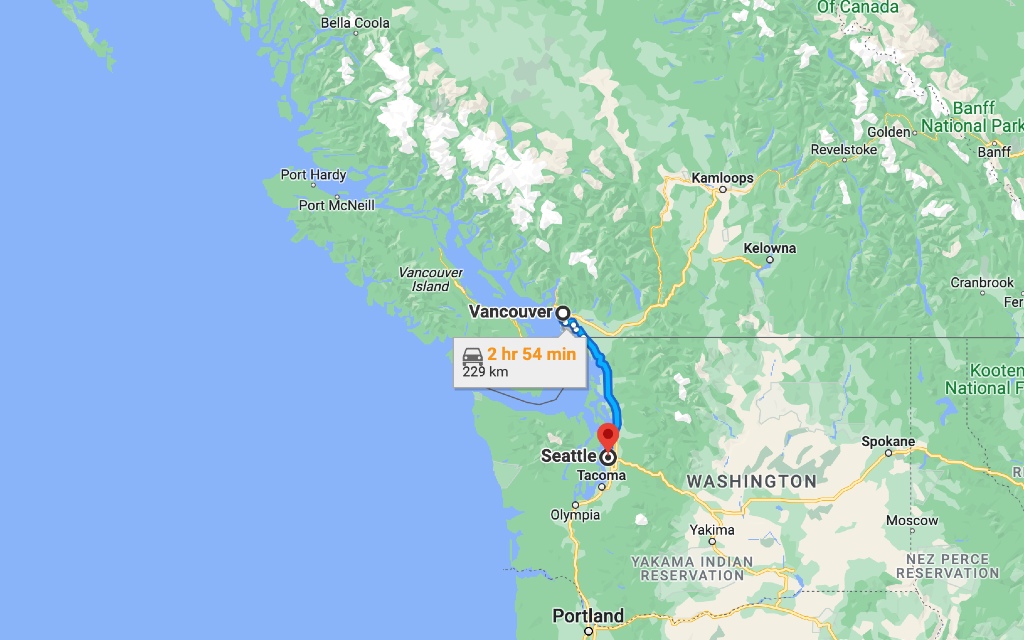
The most common way to travel between Seattle and Vancouver is by car, offering flexibility and the chance to explore hidden gems. The typical driving distance is approximately 140 to 145 miles (about 225 to 233 kilometers), primarily via Interstate 5 (I-5) on the U.S. side, which seamlessly transitions into British Columbia’s Highway 99.
Under ideal conditions – minimal traffic and no border delays – the drive can take anywhere from 2.5 to 3 hours. However, it’s crucial to factor in variables that can significantly extend this duration. Traffic congestion is common, particularly during peak hours, weekends, and holidays, especially around urban centers like Seattle, Everett, Bellingham, and Vancouver. The border crossing experience itself is the most unpredictable element. Depending on the time of day, day of the week, and current events, wait times at the U.S.-Canada border can range from a few minutes to several hours. For this reason, it’s always advisable to budget a total travel time of 4 to 5 hours to account for potential delays, allowing for a more relaxed and stress-free journey.
Alternative Measures and Considerations
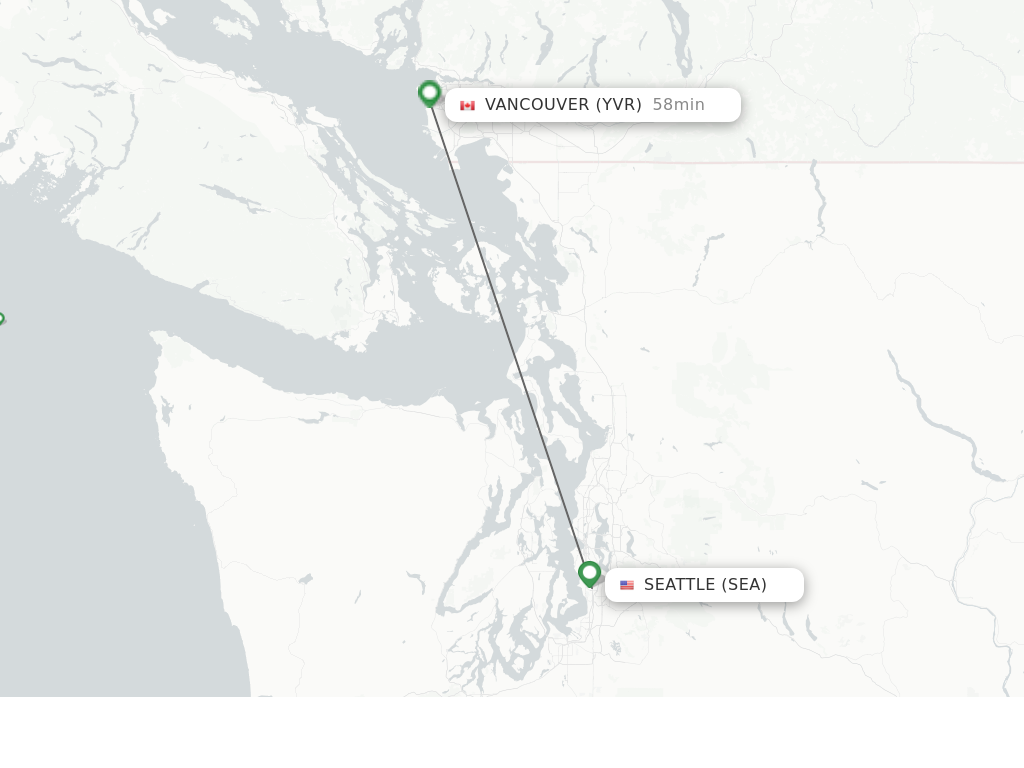
While driving distance is the most practical measure for this route, other forms of travel offer different perspectives on “far.” A direct flight would cover the straight-line distance, which is slightly less, but the added time for airport security, check-in, and transit to and from airports often makes flying less efficient for this particular route compared to ground travel. For those interested in a more scenic and leisurely approach, trains and buses offer a chance to relax and enjoy the landscape without the stress of driving or parking. Each method transforms the concept of distance into a unique travel experience, catering to different preferences and priorities.
Navigating the Journey: Travel Options and Border Crossings
Choosing the right mode of transportation for your journey from Seattle to Vancouver depends on your budget, time constraints, and desired level of comfort and flexibility. Each option presents its own set of advantages and considerations, especially concerning the international border crossing.
Driving Essentials and Border Protocol
Driving remains the most popular choice for its unparalleled flexibility. The primary route follows I-5 North from Seattle to one of the major border crossings. The most frequently used crossings include:
- Peace Arch Border Crossing: This is the most direct route via I-5 connecting to Highway 99. It’s known for its iconic Peace Arch Park, where visitors can walk across the border without inspection within the park grounds. However, vehicles must go through inspection.
- Pacific Highway Border Crossing (also known as Blaine or Douglas): Located slightly east of Peace Arch, this crossing is primarily for commercial traffic but is also open to passenger vehicles. It can sometimes be less busy than Peace Arch during peak times.
- Sumas-Abbotsford Border Crossing: Further inland, this crossing is often a good alternative if the coastal crossings are experiencing long delays. It requires a slight detour from I-5 via State Route 9.
Regardless of the crossing point, all travelers will need a valid passport or an approved alternative like a NEXUS card (highly recommended for frequent travelers to expedite crossing times). Be prepared to declare all goods, including purchases, and understand customs regulations regarding alcohol, tobacco, and agricultural products. Checking border wait times online (e.g., via the U.S. Customs and Border Protection or Canada Border Services Agency websites) before you depart is an essential tip for optimizing your travel time.
Public Transportation Perks: Bus and Train
For those who prefer to sit back and enjoy the scenery, public transportation offers convenient and often more affordable alternatives to driving.
- Bus Services: Several bus companies operate daily routes between Seattle and Vancouver. Greyhound is a long-standing option, offering multiple departures. Quick Shuttle is another popular choice, providing direct service from downtown Seattle and Seattle-Tacoma International Airport (SEA) to downtown Vancouver and Vancouver International Airport (YVR). Bus journeys typically take between 4 and 5 hours, including the border crossing, where passengers disembark with their luggage for customs inspection.
- Scenic Rail Journeys: Amtrak Cascades: Perhaps the most picturesque way to travel this route is aboard the Amtrak Cascades train. This scenic route hugs the coastline for much of the journey, offering breathtaking views of Puget Sound and the surrounding mountains. The train departs from King Street Station in Seattle and arrives at Pacific Central Station in Vancouver. The total travel time by train is usually around 4 hours, which includes a simplified border crossing process handled directly on the train. It’s an excellent option for those seeking a relaxed and memorable journey, often combining the efficiency of public transport with the allure of a leisure cruise.
Quick Flights and Unique Ferry Experiences
While flying is generally overkill for the relatively short distance between Seattle and Vancouver given airport transit and security, it can be an option for those prioritizing speed for specific circumstances. Direct flights are short, often less than an hour, but the total time door-to-door typically equals or exceeds ground transportation when factoring in travel to/from airports.
A unique, albeit less direct, option involves a combination of ferry and ground travel, primarily appealing to those who wish to visit Victoria on Vancouver Island as part of their itinerary. You could take a Washington State Ferries service from Anacortes (north of Seattle) to the San Juan Islands and then onwards, or more directly, a passenger-only ferry like the Victoria Clipper from downtown Seattle to downtown Victoria. From Victoria, you would then take a BC Ferries service from Swartz Bay to Tsawwassen (near Vancouver) and then bus or taxi into the city. This multi-leg journey is definitely for the adventurous and those with ample time, turning the commute into a full-fledged scenic exploration of the Salish Sea.
Embracing the Journey: Attractions and Experiences Along the Way
The route between Seattle and Vancouver isn’t just a means to an end; it’s an opportunity to discover additional Pacific Northwest treasures. Incorporating stops into your travel plan can enrich your trip, offering glimpses into local culture, stunning natural landmarks, and unique experiences.
Iconic Seattle Stops and Beyond
Before you even leave Seattle, consider dedicating time to its world-renowned attractions. The Space Needle offers panoramic views of the city, Mount Rainier, and the Olympic Mountains. A visit to Pike Place Market is a must for its vibrant atmosphere, fresh produce, seafood, and artisan crafts. Art enthusiasts will appreciate the stunning glass art at Chihuly Garden and Glass and the innovative exhibits at the Museum of Pop Culture (MoPOP).
As you head north from Seattle towards the Canadian border, the city of Bellingham offers a charming stopover. Nestled between the mountains and the sea, Bellingham boasts a thriving craft brewery scene, beautiful waterfront parks, and access to outdoor activities. It’s an ideal place to grab a meal or explore local shops before tackling the border crossing. For those with more time, a detour to the San Juan Islands, accessible via ferry from Anacortes, promises breathtaking coastal scenery, wildlife viewing (including orcas), and quaint island towns.
Vancouver’s Urban Oasis and Nearby Escapes
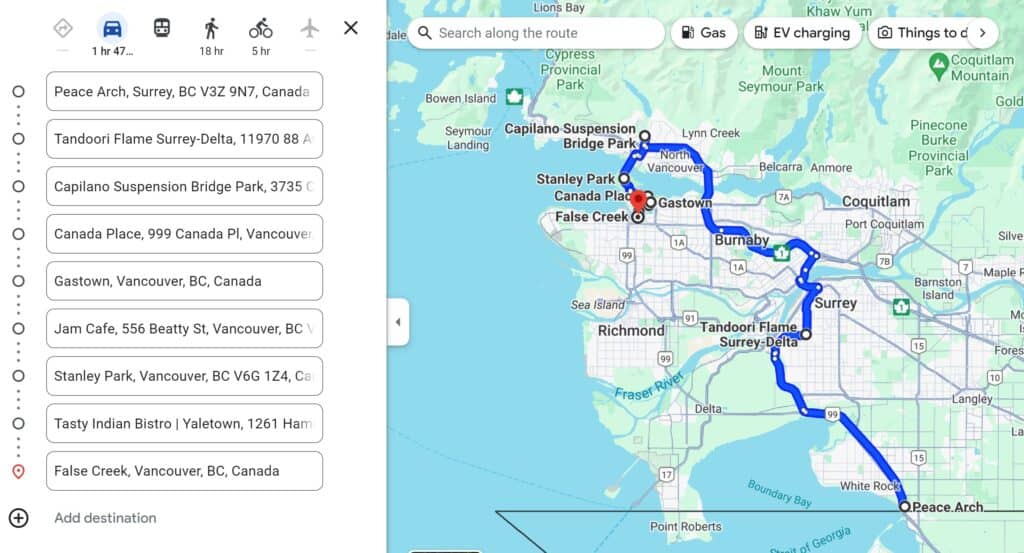
Upon arrival in Vancouver, you’ll be greeted by a city celebrated for its harmonious blend of urban sophistication and natural beauty. A visit to Stanley Park, one of North America’s largest urban parks, is essential for its seawall, beaches, and lush rainforest trails. Granville Island Market is a foodie’s paradise, offering an array of fresh produce, gourmet treats, and unique artisan shops. Explore the historic cobblestone streets of Gastown, famous for its steam clock and Victorian architecture. For a thrilling adventure, head to Capilano Suspension Bridge Park, offering treetop adventures and stunning canyon views.
Beyond Vancouver itself, the surrounding British Columbia region offers further exploration. A popular excursion is to Whistler Blackcomb, a world-renowned ski resort about a 1.5-hour drive north on the incredibly scenic Sea to Sky Highway. Even in summer, Whistler offers mountain biking, hiking, and vibrant village life. These regional attractions highlight the diverse experiences available, transforming a simple point-to-point journey into a comprehensive exploration of the region’s tourism offerings.
Planning Your Stay: Accommodation and Lifestyle Choices
Whether your trip between Seattle and Vancouver is for a quick getaway, a family vacation, or an extended business stay, finding the right accommodation is key to a comfortable and memorable experience. Both cities boast a wide array of options to suit every taste and budget, reflecting various lifestyle preferences.
From Luxury Resorts to Boutique Stays
For those seeking an indulgent experience, both cities offer world-class hotels and resorts that epitomize luxury travel. In Seattle, the Fairmont Olympic Hotel provides opulent surroundings and exceptional service in a historic setting, while The Edgewater offers a unique waterfront experience with stunning views of Elliott Bay and the Olympic Mountains. Vancouver mirrors this sophistication with properties like the Fairmont Pacific Rim, known for its sleek design, waterfront location, and exquisite dining options. The Rosewood Hotel Georgia offers a blend of historic elegance and contemporary comfort in the heart of downtown. For a more intimate and stylish experience, boutique hotels like The Opus Hotel in Vancouver provide personalized service and unique design aesthetics. These establishments often come with premium amenities, fine dining, spas, and concierge services, ensuring a stay that is as much a part of the destination as the attractions themselves.
Budget-Friendly Options and Extended Stays
Travel doesn’t always have to be about luxury. Both Seattle and Vancouver also cater to budget travel, with numerous affordable hotels, hostels, and guesthouses. Neighborhoods outside the immediate downtown core often present more economical choices without sacrificing convenience, thanks to robust public transportation networks. Websites specializing in hotel comparisons and reviews are invaluable tools for finding the best deals and understanding what to expect from each property.
For longer visits, such as business stays or long-term stay, serviced apartments and vacation rentals offer the comforts of home, including kitchens and living areas, which can be particularly advantageous for family trips. These options often provide more space and flexibility than traditional hotels, allowing guests to immerse themselves more deeply in the local lifestyle and culture. When booking, always consider factors like location relative to your planned activities, available amenities, and customer reviews to ensure your chosen accommodation aligns perfectly with your travel needs and expectations.
Making the Most of Your Trip: Essential Tips and Cultural Insights
A successful journey from Seattle to Vancouver involves more than just knowing the distance and choosing a mode of transport. It also requires an understanding of practical tips and cultural nuances that can enhance your overall experience. From navigating border protocols to appreciating local customs, preparation is key to a smooth and enjoyable trip.
Border Crossing Protocol and Documentation
As mentioned, proper documentation is paramount for an international journey. Ensure all travelers have a valid passport. For U.S. and Canadian citizens, a NEXUS card can significantly reduce border wait times at land and marine crossings, making it a valuable investment for frequent cross-border travelers. Before approaching the border, ensure you know what items are permissible. Restrictions apply to firearms, certain agricultural products, and even large quantities of alcohol or tobacco. Be honest and straightforward with border agents; their primary goal is to ensure national security and enforce customs laws. Checking the official websites of the Canada Border Services Agency (CBSA) and U.S. Customs and Border Protection (CBP) for the latest regulations and wait times is highly recommended.
Currency, Connectivity, and Local Customs
When traveling from the U.S. to Canada, remember that the local currency is the Canadian Dollar (CAD). While many establishments near the border or in major tourist areas might accept U.S. dollars, you’ll generally get a better exchange rate by paying in CAD or using a credit card that doesn’t charge foreign transaction fees. ATMs are widely available for cash withdrawals.
For connectivity, check with your mobile carrier about international roaming plans to avoid unexpected charges. Alternatively, purchasing a local SIM card upon arrival in Canada or utilizing Wi-Fi hotspots, which are common in both cities, are practical options.
Culturally, both Seattle and Vancouver are modern, cosmopolitan cities. However, subtle differences exist. Canadians are often perceived as slightly more reserved and polite. Tipping customs are similar to the U.S., with 15-20% being standard for good service. Embrace the local pace, enjoy the diverse culinary scenes (especially the fresh seafood in both coastal cities), and take advantage of the numerous outdoor activities that define the Pacific Northwest lifestyle.
Best Times to Visit
The “best” time to visit largely depends on your interests. Summer (June to August) offers the warmest weather and longest daylight hours, perfect for outdoor activities and enjoying the vibrant city life. However, this is also peak tourist season, meaning higher prices for accommodation and potentially longer waits at attractions and the border.
Spring (April to May) and Fall (September to October) are often considered ideal. The weather is generally pleasant, crowds are smaller, and prices might be more favorable. Fall brings stunning foliage, especially along scenic drives. Winter (November to March) offers opportunities for snow sports in nearby mountains like Whistler Blackcomb and cozy urban experiences, though the cities themselves can be quite rainy and grey. Always check the local weather forecasts closer to your travel dates to pack appropriately.
In conclusion, the journey from Seattle, Washington, to Vancouver, Canada, is more than just a matter of distance; it’s an exploration of diverse landscapes, cultures, and experiences. By understanding the travel options, planning for border crossings, and taking advantage of the countless attractions along the way, travelers can transform this relatively short trip into a rich and rewarding adventure, truly embodying the spirit of life out of the box.
LifeOutOfTheBox is a participant in the Amazon Services LLC Associates Program, an affiliate advertising program designed to provide a means for sites to earn advertising fees by advertising and linking to Amazon.com. Amazon, the Amazon logo, AmazonSupply, and the AmazonSupply logo are trademarks of Amazon.com, Inc. or its affiliates. As an Amazon Associate we earn affiliate commissions from qualifying purchases.