
The vast and varied landscapes of the United States stretch across continents and oceans, offering an incredible diversity of experiences for any traveler. Among its most distinct and alluring destinations are the rugged, icy wilderness of Alaska and the sun-drenched, volcanic islands of Hawaii. These two states, while both part of the American tapestry, could not be more different in climate, culture, and geography. Naturally, a question that arises for those planning an epic American adventure, or simply indulging in geographical curiosity, is: “How far is Alaska from Hawaii?”
The answer, as one might expect given their vastly different locations, is a significant distance. Alaska, situated in the far northwest of North America, shares a border with Canada and overlooks the Bering Sea, bringing it geographically close to Russia. Hawaii, on the other hand, is an archipelago located in the central Pacific Ocean, thousands of miles from the continental United States and even further from the Alaskan mainland.
Understanding the Geographical Divide
To truly grasp the distance between these two unique states, it’s helpful to consider their respective locations on the globe and the typical modes of travel between them. While both are U.S. states, their geographical separation necessitates significant travel time and planning.
Direct Distance and Flight Paths
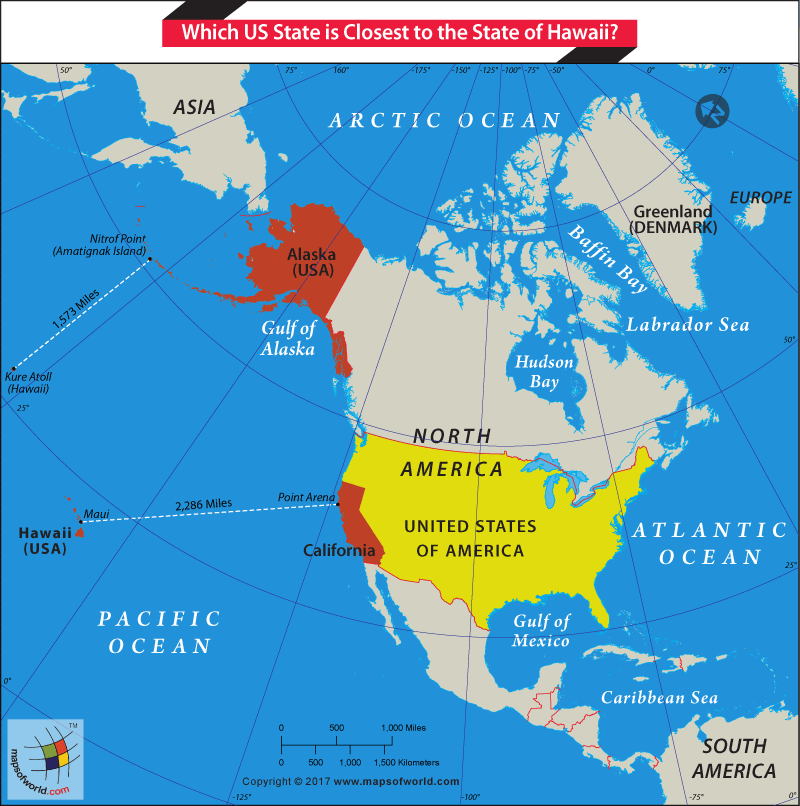
The most straightforward way to measure the distance between Alaska and Hawaii is by calculating the great-circle distance, the shortest distance between two points on the surface of a sphere. When measured from the major population centers of each state, such as Anchorage, Alaska, to Honolulu, Hawaii, the distance is approximately 2,500 to 3,000 miles (4,000 to 4,800 kilometers).
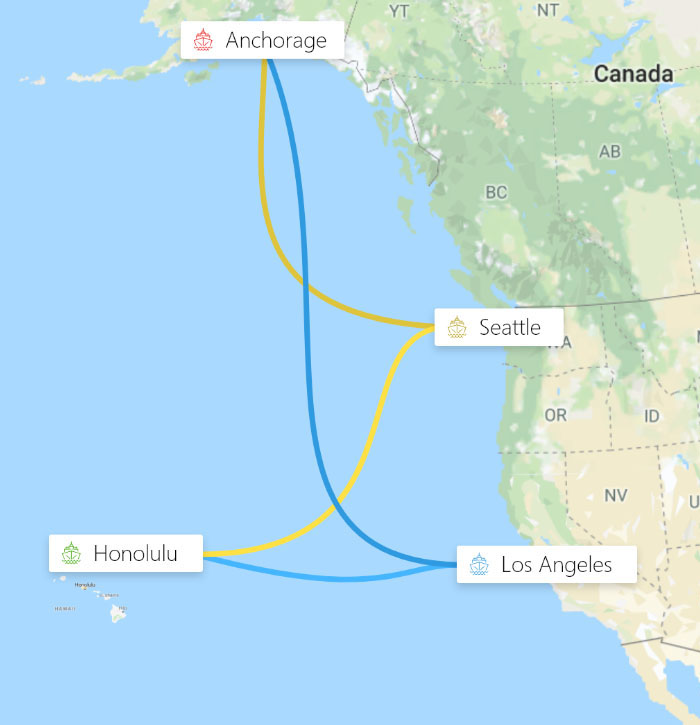
However, it’s crucial to remember that these are not direct, non-stop flights that a traveler would typically book. Flights between Alaska and Hawaii almost invariably involve at least one stopover, usually on the West Coast of the continental United States, in cities like Seattle, Portland, or San Francisco. This means the actual travel time, including layovers, can easily stretch to 8-12 hours or even more, depending on the specific itinerary and connection times.
For example, a flight from Anchorage to Honolulu might include a stop in Seattle. The flight from Anchorage to Seattle is roughly 5-6 hours. After a layover, the flight from Seattle to Honolulu is another 5-6 hours. This adds up to a substantial travel day, making it a journey that requires careful planning.
The vast expanse of ocean separating the Hawaiian Islands from the North American continent is the primary reason for this significant distance and the necessity of layovers. There are no direct ferry services or overland routes, making air travel the most practical and widely used method for traversing this considerable gap.
Exploring the Extremes: Alaska’s Vastness and Hawaii’s Isolation
The perceived distance between Alaska and Hawaii is amplified by their intrinsic characteristics. Alaska is the largest state in the U.S. by area, a land of immense scale, glaciers, mountains, and wildlife. Its sheer size means that even within Alaska itself, travel between different regions can be extensive. For instance, traveling from the remote wilderness of Barrow (now Utqiagvik) to the popular tourist destination of Juneau involves hundreds of miles and often multiple flights.
Hawaii, while a collection of islands, offers a concentrated yet diverse set of experiences. Its isolation in the Pacific has fostered a unique culture and ecosystem. The individual islands, such as Oahu, Maui, Kauai, and the Big Island (Island of Hawaii), are each distinct, and inter-island travel is common for visitors. However, the journey to Hawaii from any point on the mainland, let alone from the northernmost state, is a considerable undertaking.
Travel Considerations Between Alaska and Hawaii
Given the considerable distance, planning a trip that includes both Alaska and Hawaii requires careful consideration of travel logistics, time, and budget. These are not destinations you can easily hop between for a weekend getaway.

Booking Flights and Travel Time
When booking flights, travelers should be prepared for itineraries with layovers. It’s advisable to use flight comparison websites and to be flexible with dates and times if possible to find the most economical options. The cost of flights can also vary significantly depending on the season. During peak travel times, such as summer for Alaska and winter for Hawaii, prices tend to be higher.
The total travel time is a significant factor. A trip from Alaska to Hawaii should ideally be part of a longer vacation. Attempting to combine these destinations into a short trip would likely result in spending more time in transit than enjoying the actual locations. For instance, a traveler from Fairbanks, Alaska, might fly to Seattle and then to Honolulu. The journey is long, and often overnight flights are involved, meaning an entire day, or even two, can be dedicated to simply getting from one state to the other.
Accommodation and Experiences
The type of accommodation and the experiences sought in each state further highlight their differences and the planning required. In Alaska, travelers might opt for wilderness lodges, comfortable hotels in cities like Anchorage or Juneau, or even unique stays like remote cabins. Popular activities include wildlife viewing (whales, bears, moose), glacier tours, hiking in national parks like Denali National Park and Preserve, and exploring the culture of indigenous communities.
In Hawaii, the focus is often on beach resorts, luxurious villas, or family-friendly hotels. Visitors enjoy surfing, snorkeling, exploring volcanic landscapes such as those found in Hawaii Volcanoes National Park, visiting historical sites like Pearl Harbor, and experiencing the vibrant local culture and cuisine. The contrast between the raw, untamed beauty of Alaska and the tropical paradise of Hawaii is immense, and these differences inform the kind of accommodation and activities that are most appealing in each.
Planning an Alaskan-Hawaiian Adventure
Combining a trip to Alaska and Hawaii offers an unparalleled American travel experience, showcasing the country’s vast geographical and cultural diversity. However, the significant distance means that such a journey should be approached as a major undertaking.
Itinerary Suggestions and Duration
For travelers wishing to experience both states, a minimum of two to three weeks is highly recommended. This allows for sufficient time in each location to explore its key attractions without feeling rushed, and also accounts for the considerable travel time between them.
A possible itinerary could start with a week or more in Alaska, exploring areas like Seward for its fjords and marine life, or heading inland to witness the grandeur of Denali. After soaking in the Alaskan wilderness, one would then embark on the journey to Hawaii. The flight from a major Alaskan city to a West Coast hub, followed by the flight to Honolulu, would take up a significant portion of a day.
Once in Hawaii, a week or more could be spent exploring different islands, perhaps starting on Oahu to see Waikiki Beach and Pearl Harbor, then flying to Maui for its scenic drives and volcanic landscapes, or to the Big Island to witness active volcanoes.
Budgetary Considerations
The cost of such a grand tour is substantial. Flights alone will be a significant expense, especially when factoring in the intercontinental travel and likely stopovers. Accommodation in both states can range from budget-friendly options to luxurious resorts. Alaska can be particularly expensive, with tours, excursions, and food costs adding up. Hawaii also has a reputation for being a pricier destination, especially for beachfront accommodations and popular activities.
When budgeting, consider the cost of:
- Round-trip airfare from your origin to Alaska and then to Hawaii, and back home from Hawaii.
- Inter-island flights if visiting multiple Hawaiian islands.
- Accommodation in hotels, resorts, or other lodgings in both states.
- Activities and tours, such as glacier cruises in Alaska or surfing lessons in Hawaii.
- Food and dining expenses.
- Transportation within each state (rental cars, public transport).
- Any necessary travel insurance.
Despite the distance and the planning involved, the reward of experiencing the extreme contrasts between Alaska and Hawaii is immense. It offers a unique perspective on the geographical and cultural breadth of the United States, providing memories that will last a lifetime. The journey from the land of glaciers and the aurora borealis to the islands of sun, sand, and volcanoes is a testament to the incredible diversity our nation holds.
LifeOutOfTheBox is a participant in the Amazon Services LLC Associates Program, an affiliate advertising program designed to provide a means for sites to earn advertising fees by advertising and linking to Amazon.com. Amazon, the Amazon logo, AmazonSupply, and the AmazonSupply logo are trademarks of Amazon.com, Inc. or its affiliates. As an Amazon Associate we earn affiliate commissions from qualifying purchases.