
The vast Pacific Ocean separates two of the world’s most desirable destinations: Australia and Hawaii. For many travelers, the dream vacation involves experiencing the unique allure of both the Land Down Under and the Aloha State. However, the sheer distance between these two paradises can be a significant factor in planning such an ambitious journey. Understanding the geographical expanse, travel times, and considerations for bridging this gap is crucial for a seamless and unforgettable adventure.
Bridging the Pacific: Understanding the Distance
The question of “How far is Australia from Hawaii?” isn’t a simple one to answer with a single number. The distance varies depending on which specific points in Australia and Hawaii you’re measuring from. Australia, a continent-sized country, has a vast coastline, while Hawaii is an archipelago of numerous islands, each with its own unique characteristics and geographic coordinates.
Great Circle Distances: The Most Direct Path
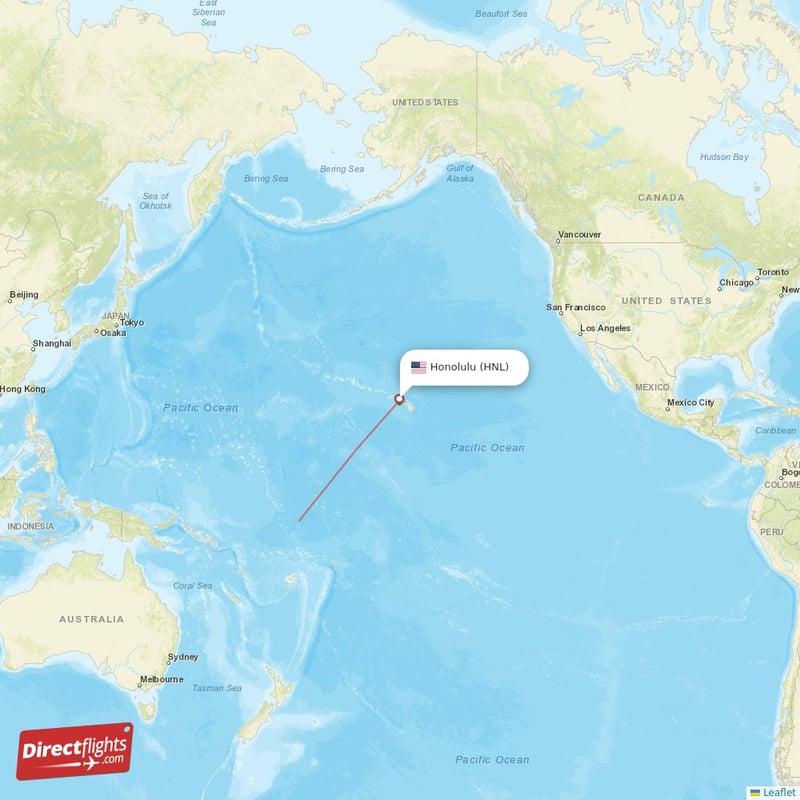
When discussing distances between far-flung locations, the concept of the “great-circle distance” is paramount. This represents the shortest distance between two points on the surface of a sphere, measured along the surface of the sphere. For Australia and Hawaii, this means we’re looking at the most direct, straight-line path across the globe.
- Sydney, Australia to Honolulu, Hawaii: A commonly cited comparison is between Sydney, Australia‘s largest city, and Honolulu, Hawaii‘s capital on the island of Oahu. The great-circle distance between these two iconic destinations is approximately 5,000 miles (or about 8,000 kilometers). This is a substantial distance, highlighting the considerable expanse of the Pacific Ocean.
- Perth, Australia to Honolulu, Hawaii: If you’re considering travel from Australia‘s west coast, say from Perth, the distance to Honolulu increases. Perth is significantly further west, making the journey to Hawaii a longer undertaking. The distance can approach 7,000 miles (over 11,000 kilometers), making it a considerably longer flight.
- Melbourne, Australia to Maui, Hawaii: Similarly, if you were to depart from Melbourne and aim for a different Hawaiian island like Maui, the distances would be comparable to those from Sydney, with slight variations. The remoteness of both destinations contributes to the significant mileage.
Time Zones and the International Date Line
Beyond the physical miles, the vast difference in time zones and the presence of the International Date Line add another layer of complexity to the journey. Australia spans multiple time zones, with the eastern parts of the country being significantly ahead of Hawaii. For instance, when it’s midday in Honolulu, it could be early the next morning or even later in the day in Sydney, depending on daylight saving.
The International Date Line, a conceptual line running north-south through the Pacific Ocean, further complicates travel. Crossing this line means you either gain or lose a full day. Traveling from Australia to Hawaii generally means you will “gain” a day, effectively arriving on the same calendar date you departed, or even the day before in some instances, depending on the direction of travel and specific flight times. Conversely, traveling from Hawaii to Australia means you will “lose” a day. This can be disorienting and requires careful planning when coordinating arrival and departure dates.
Planning Your Trans-Pacific Journey: Flights and Travel Time
The primary method of travel between Australia and Hawaii is by air. Due to the immense distance, direct flights are the most efficient but are also the most time-consuming.
Direct Flights: The Fastest (But Still Long) Option
Direct flights from major Australian cities like Sydney, Melbourne, and Brisbane to Honolulu, Hawaii are available, primarily operated by Hawaiian Airlines and Qantas.
- Flight Duration: A direct flight from Sydney to Honolulu typically takes around 9 to 10 hours. Flights from Melbourne might be slightly longer due to the greater distance. This is a considerable amount of time spent in the air, comparable to trans-Atlantic flights to Europe.
- Frequency: While direct flights exist, they may not operate daily from all Australian cities. It’s essential to check schedules well in advance, especially if you’re traveling during peak tourist seasons.
- Cost: Direct flights are generally more expensive than those with layovers, reflecting the convenience and speed. Booking in advance, being flexible with travel dates, and considering different airlines can help secure better fares.

Flights with Layovers: Balancing Cost and Time
For travelers seeking to reduce costs or those whose schedules don’t align with direct flight options, flights with layovers are a common alternative.
- Common Layover Destinations: The most frequent layover points for this route include cities on the west coast of North America, such as Los Angeles, San Francisco, or Vancouver. Occasionally, flights might also route through the Fiji islands or other Pacific hubs, though these are less common for direct transit to Hawaii.
- Total Travel Time: Flights with layovers can significantly increase your total travel time. Depending on the length of the layover, a journey from Australia to Hawaii could take anywhere from 15 to 30 hours or even longer. This requires a greater degree of patience and planning, especially for families or those with limited time.
- Cost Savings: The primary advantage of flights with layovers is often the potential for cost savings. By breaking up the journey and using different airline alliances, travelers can sometimes find significantly cheaper fares. However, it’s crucial to factor in the cost of meals, potential overnight stays during long layovers, and any associated visa requirements for transit countries.
Preparing for Your Journey: Beyond the Miles
The distance between Australia and Hawaii is not just a matter of mileage; it impacts every aspect of your travel planning, from packing to cultural immersion.
Packing for Two Worlds: Diverse Needs
The climates and environments of Australia and Hawaii are quite different, requiring a diverse packing list.
- Hawaii: Generally, Hawaii is known for its tropical climate. Expect warm, humid weather year-round. Your packing list should include lightweight clothing, swimwear, sun protection (sunscreen, hats, sunglasses), comfortable walking shoes for exploring attractions like Diamond Head, and perhaps a light rain jacket for occasional showers. For evenings out in resort areas like Maui or Kauai, slightly dressier casual wear might be appropriate.
- Australia: Australia is a vast continent with diverse climates. If you’re visiting Sydney or Melbourne, you might experience cooler temperatures, especially during their winter months (June-August), and require layers, including a jacket. If your itinerary includes the Great Barrier Reef or the tropical north like Queensland, you’ll need similar tropical attire to Hawaii. For desert regions like Uluru, light, breathable clothing and strong sun protection are essential. Consider the specific regions and seasons you’ll be visiting within Australia to pack appropriately.
Accommodation and Experiences: Tailoring Your Stay
The type of accommodation and the experiences you seek will also be influenced by the journey’s length and the desire to explore both destinations thoroughly.
- Accommodation Options: Both Australia and Hawaii offer a wide range of accommodation. In Hawaii, you’ll find everything from luxury beachfront resorts in Waikiki to charming boutique hotels and vacation rentals on islands like Kauai. Australia boasts world-class hotels in cities like Sydney, remote luxury lodges in the Outback, and beachfront apartments along the Gold Coast. Booking accommodations in advance is highly recommended for both destinations, especially during popular travel periods. Websites like Booking.com and Agoda can be useful for comparison and booking.
- Experiences and Itineraries: Given the distance, a combined trip often necessitates longer stays in each location to truly appreciate what they offer. A typical Hawaiian vacation might be 7-14 days, while exploring Australia often requires at least 2-3 weeks to cover a few key regions like Sydney, Melbourne, and the Great Barrier Reef. Therefore, a trip combining both could easily extend to a month or more. Consider dedicating specific types of experiences to each locale: perhaps focus on beach relaxation, surfing, and volcanic landscapes in Hawaii, and delve into city life, unique wildlife, and ancient geological wonders in Australia.
- Budget Considerations: The cost of travel between these two regions, combined with the expense of accommodation, activities, and dining in both popular tourist destinations, means a trip of this nature is often a significant investment. Budget travelers might opt for shorter stays, utilize hostels or budget-friendly apartments, and focus on free or low-cost activities. Luxury travelers can indulge in five-star resorts, private tours, and fine dining.
Navigating Culture and Local Life
While both Australia and Hawaii are known for their laid-back vibes and friendly locals, there are distinct cultural nuances to be aware of.
- Australian Culture: Australians are known for their directness, love of sports, and appreciation for the outdoors. Understanding local customs, such as the importance of “mateship” and a good sense of humor, can enhance your interactions. Exploring local pubs, attending a sports event, or visiting a national park like Kosciuszko National Park offers insight into Australian lifestyle.
- Hawaiian Culture: Hawaiian culture is rich in tradition, with a strong emphasis on aloha spirit, respect for the ‘aina (land), and a deep connection to the ocean. Learning a few basic Hawaiian phrases, attending a luau, or visiting historical sites like Pearl Harbor provides a glimpse into this unique Polynesian heritage. Engaging with local communities respectfully is key to a meaningful experience.
Ultimately, the distance between Australia and Hawaii is a testament to the sheer scale of our planet. While it presents a planning challenge, it also amplifies the reward of experiencing two profoundly different yet equally captivating corners of the world. With careful preparation, understanding the logistics, and embracing the spirit of adventure, the journey across the Pacific can be the gateway to an extraordinary travel experience.