
The question “How far is California from New York?” sparks the imagination, evoking images of vast landscapes, diverse cultures, and an epic transcontinental journey across the United States. It’s not just a query about mileage; it’s an inquiry into the very essence of American travel, encompassing considerations of time, cost, experience, and the incredible contrast between two of the nation’s most iconic states. Whether you’re planning a relocation, a cross-country adventure, or simply curious about the scale of the [United States], understanding this distance is the first step in unlocking a world of possibilities for travel and exploration.
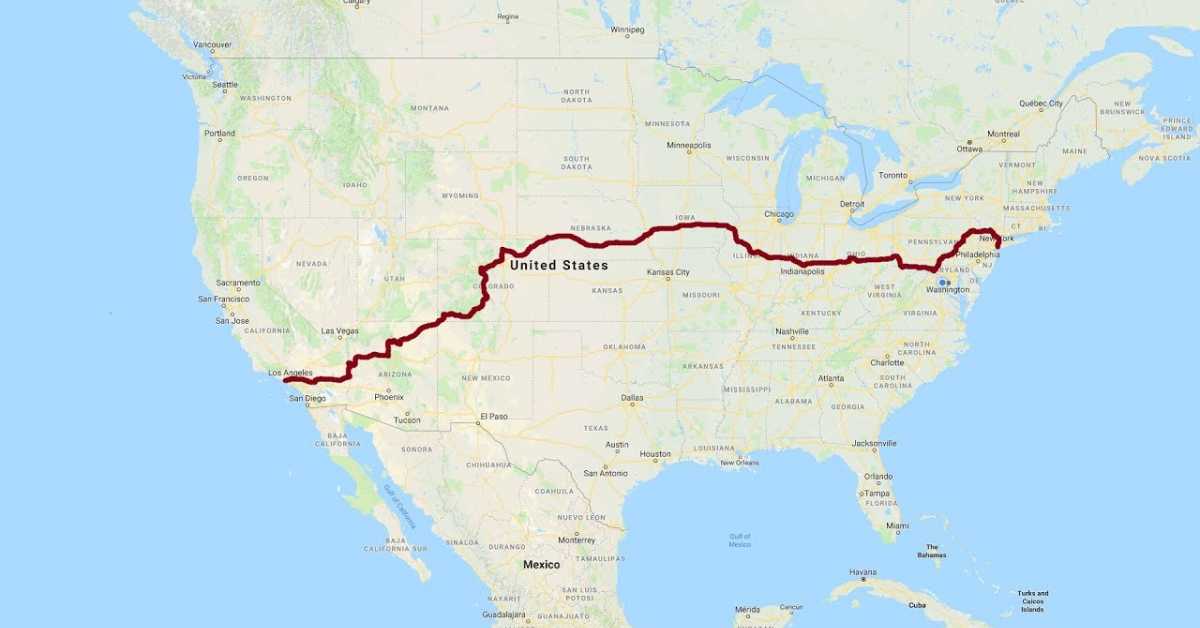
Bridging the Coasts: Understanding the Distance
At first glance, the distance between [California] and [New York] seems immense – and it is. These two states anchor opposite ends of the continental [United States], representing distinct geographical, cultural, and economic poles.
The Geographical Reality
When we talk about the distance, we often consider two primary metrics: “as the crow flies” and actual drivable routes. The direct, straight-line distance, or “as the crow flies,” between major cities like Los Angeles, [California], and New York City, [New York], is approximately 2,445 miles (3,935 kilometers). This is the shortest possible path, cutting across mountain ranges, plains, and deserts.
However, for practical travel, especially by road, the distance increases significantly due to the necessity of following established highways and avoiding impassable terrain. A typical driving route from [Los Angeles] to [New York City], for instance, might cover anywhere from 2,789 to over 3,000 miles (4,489 to 4,828 kilometers), depending on the specific roads taken and any detours for sightseeing. This translates to a non-stop driving time of around 40 to 45 hours, a feat rarely attempted without considerable rest stops. Realistically, a cross-country road trip of this magnitude typically spans 5 to 7 days, allowing for rest, exploration, and enjoying the journey.
More Than Just Miles: The Implied Journey
The sheer number of miles tells only part of the story. The journey from [California] to [New York] is a passage through nearly every biome and cultural landscape the [United States] has to offer. From the sunny beaches of the Pacific to the bustling streets of the Atlantic, travelers encounter everything from vast deserts and towering mountains to endless prairies and vibrant metropolitan areas. This implied journey underscores the diversity of the nation and the richness of experience available to those who undertake the trip. It’s a testament to the scale of the country, where a drive from one coast to the other is an odyssey in itself, deeply embedding itself in the American narrative of exploration and westward (or eastward) expansion.
Navigating the Continental Divide: Your Travel Options
Given the vast distance, choosing the right mode of transportation is crucial, heavily influencing the time, cost, and overall experience of your trip. Each option offers a unique perspective on crossing the [United States], catering to different preferences for speed, budget, and adventure.
Soaring Through the Skies: Air Travel
For most travelers, flying is the most practical and time-efficient way to bridge the gap between [California] and [New York]. Direct flights typically range from 5 to 6 hours, connecting major hubs such as Los Angeles International Airport (LAX), San Francisco International Airport (SFO), or San Diego International Airport on the West Coast, to John F. Kennedy International Airport (JFK), Newark Liberty International Airport (EWR), or LaGuardia Airport (LGA) on the East Coast.
While the actual flight time is relatively short, total travel time can extend to 8-10 hours or more when factoring in check-in, security, potential layovers, and airport transfers. Air travel offers unparalleled speed and convenience, making it ideal for business stays, short visits, or when time is of the essence. Booking in advance and being flexible with dates can significantly impact ticket prices, with options ranging from budget travel fares to luxury travel experiences in first class, complete with premium amenities and enhanced comfort.
The Epic American Road Trip: Driving Across the Country
Embarking on a road trip from [California] to [New York] is the quintessential American adventure. It’s an opportunity to truly experience the breadth of the country, stopping at national parks, quirky roadside attractions, and charming small towns along the way. As mentioned, a minimum of 40-45 hours of driving means planning for at least 4-7 days on the road, depending on your pace and how many scenic detours you wish to make.
Popular routes include Interstate 80, which traverses the northern [United States] through states like Nevada, Wyoming, and Nebraska, offering diverse landscapes and historical sites. Another option is Interstate 40, a southern route that follows parts of the historic Route 66, passing through the Grand Canyon region and into states like Texas and Oklahoma.
Planning is key for such an undertaking. This includes budgeting for fuel, food, and accommodation. Travelers can choose from a range of hotels, from budget-friendly motels in smaller towns to more elaborate resorts or boutique hotels in larger cities. Apartments or villas can also be rented for longer stops or when traveling with family, offering more space and amenities. The lifestyle of a road trip emphasizes freedom, discovery, and a deeper connection with the landscapes and local cultures encountered.
A Slower Pace: Train and Bus Travel
For those seeking a more relaxed and environmentally conscious journey, train and bus services offer compelling alternatives.

Amtrak, the national passenger rail service, provides several routes that connect the West Coast to the East Coast, though none are direct. Travelers would typically need to transfer trains. For example, one could take the California Zephyr from [California] to Chicago, and then connect to a train like the Lake Shore Limited to reach [New York City]. The total journey can take anywhere from 3 to 4 days, but it offers unparalleled scenic views, comfortable seating, dining cars, and even private suites for overnight travel. It’s a nostalgic and leisurely way to see the country, often appealing to those who appreciate the journey as much as the destination.
Bus services, such as Greyhound, offer the most economical option for crossing the country. While significantly cheaper than flying or driving, it is also the longest and most physically demanding mode of transport, with journeys often exceeding 60-70 hours, including numerous stops and transfers. This option is generally preferred by budget travelers or those without other means of transport.
Planning Your Transcontinental Journey: Practical Considerations
Once you’ve decided on your mode of transport, several other factors come into play to ensure a smooth and enjoyable trip from [California] to [New York]. These considerations touch upon destination choices, accommodation strategies, and the rich tourism opportunities awaiting you.
Choosing Your Destination Hubs
Both [California] and [New York] are vast states with multiple major cities and regions. Your specific starting and ending points will influence travel logistics. For instance, flying from [San Francisco] to Buffalo, [New York], will have different flight options and durations than flying from [Los Angeles] to [New York City]. When planning a road trip, choosing whether to explore northern [California] (e.g., [San Francisco], Lake Tahoe) or southern [California] (e.g., [Los Angeles], San Diego) will dictate your initial route and potential attractions. Similarly, in [New York], deciding between the urban grandeur of [New York City] and the natural beauty of the Adirondacks or Niagara Falls will shape your experience.
Accommodation and Lifestyle
Regardless of your travel style – be it luxury travel, budget travel, family trips, or business stays – securing appropriate accommodation is paramount. The [United States] offers an extensive array of lodging options.
In major cities like [New York City] and [Los Angeles], you’ll find everything from ultra-luxury hotels with concierge services and rooftop pools to charming boutique hotels, extended-stay apartments for longer visits, and budget-friendly hostels. For those seeking relaxation, opulent resorts dot the landscapes, particularly in areas like Palm Springs in [California] or the Hamptons in [New York]. When planning a long-term stay, perhaps for work or an extended holiday, booking furnished [apartments] or even villas can offer a home-away-from-home experience with greater privacy and amenities. Utilizing comparison websites, reading reviews, and booking in advance are essential tips to ensure you find the perfect place that fits your needs and budget.
What to See and Do: Tourism and Landmarks
A cross-country journey isn’t just about covering miles; it’s about the incredible landmarks and tourism opportunities that define each state.
In [New York City], you can explore iconic sites like the Statue of Liberty and Ellis Island, ascend the Empire State Building for breathtaking views, wander through the neon glow of Times Square, find tranquility in Central Park, or catch a world-class show on Broadway. Beyond the city, Upstate [New York] boasts natural wonders like Niagara Falls and the scenic Finger Lakes region.
[California] offers an equally diverse palette of attractions. In [San Francisco], marvel at the Golden Gate Bridge, explore Alcatraz Island, or ride a historic cable car. [Los Angeles] beckons with the glitz of Hollywood Walk of Fame, the magic of Disneyland, and the beaches of Santa Monica. Nature lovers can immerse themselves in the grandeur of Yosemite National Park, the stunning coastal drives of Big Sur, or the desert landscapes of Death Valley National Park.
Engaging with the local culture, savoring regional food experiences, and participating in unique activities are central to the travel experience. Consulting travel guides and seeking tips from locals can help uncover hidden gems and enhance your journey.
The Essence of the Journey: Beyond the Miles
Ultimately, the question of “How far is [California] from [New York]?” transcends a simple numerical answer. It’s about recognizing the vastness of the [United States] and the myriad ways one can traverse it. It’s about the opportunities for adventure, discovery, and personal growth that come with crossing such a significant distance.
Why Make the Trip?
People undertake this journey for a multitude of reasons: for business expansion, to reunite with family, for personal relocation, or simply for the sheer joy of experiencing the country’s diverse beauty. Each motivation adds a layer of personal significance to the miles covered, transforming a geographical distance into a meaningful life event. It’s a chance to witness the evolution of landscapes, architecture, and accents, providing a profound appreciation for the tapestry of American life.

Maximizing Your Experience
Whether you opt for the speed of air travel, the immersive experience of a road trip, or the relaxed pace of a train, preparation is key. Researching destinations, booking accommodation in advance, and understanding local customs will contribute to a smoother and more enjoyable journey. Embrace the unexpected, allow for flexibility, and savor every moment, from the panoramic views of the Rockies to the vibrant energy of [Times Square]. The journey between [California] and [New York] is more than just a trip across the country; it’s an invitation to create lasting memories and discover the incredible wonders that lie between the Atlantic and Pacific coasts.
LifeOutOfTheBox is a participant in the Amazon Services LLC Associates Program, an affiliate advertising program designed to provide a means for sites to earn advertising fees by advertising and linking to Amazon.com. Amazon, the Amazon logo, AmazonSupply, and the AmazonSupply logo are trademarks of Amazon.com, Inc. or its affiliates. As an Amazon Associate we earn affiliate commissions from qualifying purchases.