
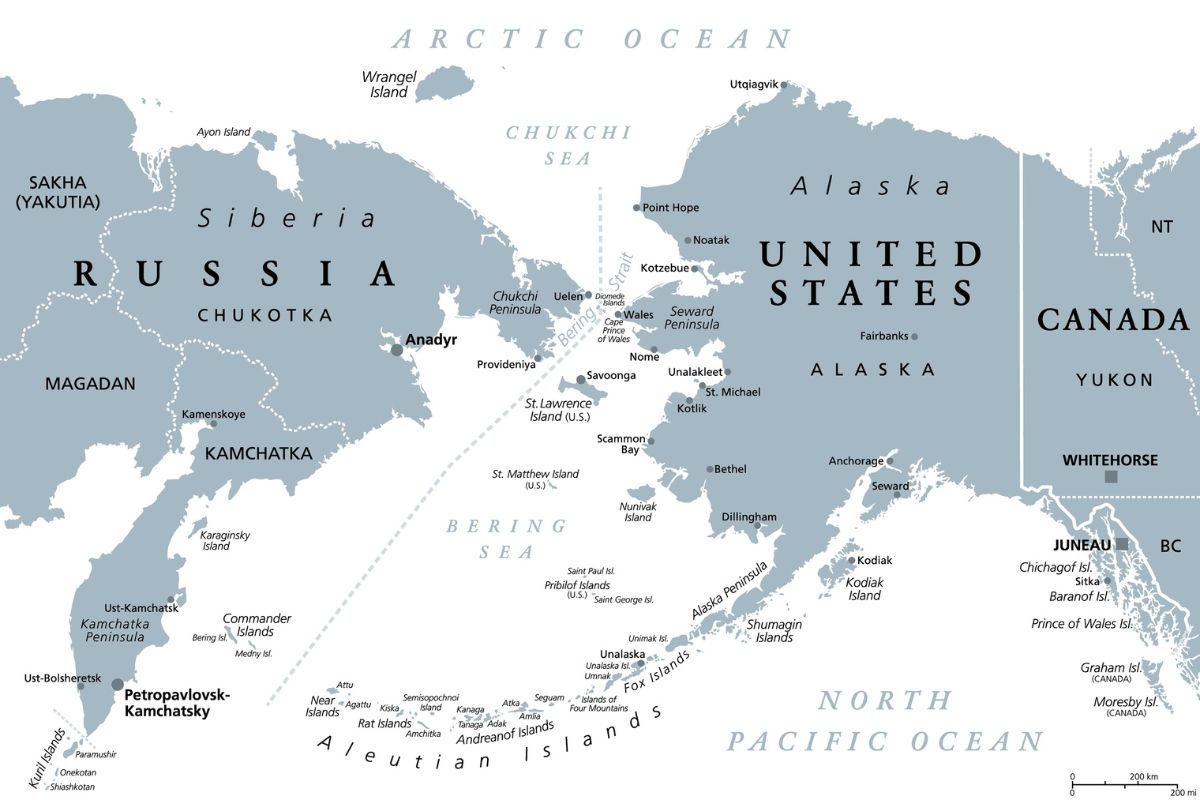
The question “How far is from Alaska to Russia?” often conjures images of vast, icy expanses and an almost unimaginable distance between continents. Yet, the reality is far more surprising and geographically intimate than most people realize. These two colossal nations, the USA and Russia, are separated by one of the world’s most unique and narrowest maritime borders: the Bering Strait. This slender stretch of water, teeming with history, wildlife, and extraordinary cultural significance, offers a profound perspective on global geography and the spirit of adventure.
For the intrepid traveler seeking destinations off the beaten path, the proximity of Alaska to Russia presents a compelling allure. It’s a region where the lines between yesterday and tomorrow blur, where indigenous cultures thrive against harsh backdrops, and where the raw power of nature is on full display. Understanding this unique geographical relationship unlocks a world of potential travel experiences, from expedition cruises through the Arctic Ocean to immersive cultural tours in remote Alaskan villages or the seldom-visited Russian Far East. This article delves into the fascinating proximity, the travel implications, and the unique lifestyle experiences awaiting those who venture to the literal edge of the world.

The Bering Strait: A Narrow Divide Between Continents
At its closest point, the distance between the mainland of Alaska and Russia is approximately 55 miles (88 kilometers). However, the real marvel of their proximity lies within the Bering Strait itself, specifically with the Diomede Islands. These two rocky outposts, Little Diomede belonging to the USA (part of Alaska) and Big Diomede belonging to Russia, are separated by a mere 2.4 miles (3.8 kilometers). This astonishingly short distance means that from Little Diomede, one can literally see Russia with the naked eye.
Geographic Proximity and the International Date Line
The Diomede Islands are perhaps the most tangible representation of this extraordinary closeness. Little Diomede hosts a small, predominantly Inupiat community, while Big Diomede is an uninhabited military outpost. Adding another layer of intrigue, the International Date Line runs precisely between these two islands. This unique geographical feature means that the residents of Little Diomede can look across to Big Diomede and see “tomorrow,” as it is almost a full day ahead due to the time zone difference. This remarkable setup has earned the islands the moniker “Tomorrowland” and “Yesterdayland,” creating a fascinating temporal divide over a minimal physical distance.
The Bering Strait is not just a geographical curiosity; it’s a vital waterway connecting the Pacific Ocean to the Arctic Ocean, and a critical migratory path for numerous marine species, including gray whales, bowhead whales, and various seabirds. Its harsh environment, characterized by extreme cold, strong currents, and seasonal sea ice, has historically limited human interaction across the strait, making the very idea of travel between the two landmasses a monumental undertaking.
A Land Bridge of Yesteryear: Beringia’s Legacy
Beyond current geography, the Bering Strait holds profound historical significance. During the last ice age, when vast amounts of the Earth’s water were locked in glaciers, sea levels dropped significantly, exposing a landmass known as Beringia. This land bridge connected what is now Alaska with Siberia, allowing ancient human populations and countless animal species to migrate between the continents. This migration route is widely accepted as the primary pathway for the peopling of the Americas.
Today, while the land bridge is submerged, its legacy endures in the shared genetic heritage and cultural similarities of indigenous communities on both sides of the strait, such as the Siberian Yupik and Yup’ik peoples. Exploring this region, whether virtually or physically, is to step back in time and witness the echoes of a prehistoric connection that shaped human civilization on an entire continent. The history intertwined with the geography makes this a landmark of global importance, attracting those interested in anthropology, geology, and unparalleled natural history.
Bridging Continents: Travel & Tourism Implications
While the physical distance is short, traveling directly from Alaska to Russia across the Bering Strait remains one of the world’s most challenging and rarely accomplished journeys. There are no commercial flights, ferries, or bridges connecting the two. However, for those captivated by the idea of experiencing this unique geopolitical and natural frontier, both sides offer incredible, albeit distinct, travel and tourism opportunities.
Experiencing the Edge of the World: Alaskan Adventures
Alaska, the largest state in the USA, is a wonderland for adventure tourism, offering everything from luxury expedition cruises to rugged budget travel options. To get close to the Bering Strait, travelers typically venture to northwestern Alaska.
- Nome: Famous as the finish line of the Iditarod Trail Sled Dog Race, Nome is a historic gold rush town and a key hub for travel in the region. Visitors can explore its rich mining history, experience vibrant Inupiat culture, and often spot unique wildlife like muskoxen and reindeer. Accommodation in Nome consists primarily of cozy hotels and guesthouses, providing essential amenities in a remote setting. Booking in advance is crucial, especially during peak seasons or events.
- Kotzebue: Situated above the Arctic Circle on the shores of Kotzebue Sound, this community offers deep dives into Alaska Native culture. The Northwest Arctic Heritage Center provides insights into traditional lifestyles and the natural environment. From Kotzebue, flightseeing tours can be arranged to spectacular areas, sometimes even offering distant views of the Bering Strait and the vast wilderness beyond. Lodging is typically simple, locally-run hotels or guesthouses.
- Anchorage and Fairbanks: While further inland, these cities serve as major gateways to Alaska’s interior and Arctic regions. Anchorage boasts a range of hotels from luxury resorts to budget-friendly apartments, making it an ideal base for broader Alaskan adventures. Visitors can explore the Alaska Native Heritage Center, the Alaska Wildlife Conservation Center, or utilize the Ted Stevens Anchorage International Airport for connecting flights to smaller communities. Fairbanks, known for its Northern Lights viewing, offers access to the Museum of the North and the University of Alaska Fairbanks, providing scientific and cultural context for Arctic exploration.
For those dreaming of even more remote locales, expedition cruises often ply the waters of the North Bering Sea and the Arctic Ocean, offering the chance to see St. Lawrence Island, with its communities of Gambell and Savoonga, and even potentially sail past the Diomede Islands. These cruises are a form of luxury travel, providing comfortable accommodation, expert guides, and a high level of service in extremely remote areas.
The Russian Far East: An Untamed Frontier
On the Russian side, the region closest to Alaska is the Chukotka Autonomous Okrug, a vast and sparsely populated area known for its pristine wilderness, unique indigenous cultures, and formidable challenges for visitors. Tourism here is nascent and highly specialized, appealing to the ultimate adventure traveler.
- Anadyr: The administrative center of Chukotka, Anadyr is the entry point for most visitors. It’s a modern town by Arctic standards, with colorful buildings standing out against the tundra. Basic hotels and guesthouses offer accommodation, but don’t expect the range of amenities found in larger Russian cities.
- Uelen: Located on the Bering Sea coast, Uelen is the easternmost settlement in Russia and the closest Russian village to the USA. It is a hub of Chukchi and Yupik culture, famous for its bone carving tradition. Reaching Uelen typically requires chartered flights or ice-strengthened expedition vessels, highlighting the extreme nature of travel in this region. Accommodation is almost exclusively in local guesthouses, providing an authentic, albeit rustic, experience.
- Expedition Cruises: The most common way for international tourists to explore the Chukotka coastline and approach the Bering Strait is via expedition cruises originating from Anadyr or sometimes Vladivostok further south. These voyages explore sites like Cape Dezhnev (the easternmost point of mainland Asia) and the remote Wrangel Island, a UNESCO World Heritage site known for polar bears and walruses. Such cruises offer a unique blend of adventure, luxury, and education, with comfortable cabins, gourmet food, and expert naturalists.
Tourism in Chukotka is a form of highly specialized, often luxury travel, due to the logistical complexities and costs involved. It’s for those who prioritize raw, untouched nature and cultural immersion over conventional tourist amenities.
The Diomede Islands: A Unique Perspective
For the ultimate “how far” experience, the Diomede Islands themselves are the key. While visiting Big Diomede is essentially impossible for tourists due to its military status, Little Diomede can be visited, though it requires significant planning. Access is primarily by bush plane from Nome to the island’s ice runway in winter, or by helicopter/boat in summer if conditions allow. There are no hotels or traditional accommodations on Little Diomede; visitors typically stay in local homes or with permission from the native corporation. This offers a profound opportunity for cultural exchange and a chance to gaze directly at Russia from just a few miles away, crossing the invisible boundary of the International Date Line with your eyes. It is a true long-term stay experience in terms of cultural immersion, though physically short due to limited services.
Logistics and Lifestyle: Planning Your Journey to the “Near Far”
Considering a journey to the Bering Strait region demands meticulous planning, an understanding of complex logistics, and an appreciation for the unique lifestyle dictated by its extreme environment. This is not a destination for spontaneous budget travel but rather for carefully curated expedition-style trips.
Visa Requirements and Access
Crossing the Bering Strait is not a simple border crossing. The geopolitical realities mean strict visa requirements for both sides. For USA citizens visiting Russia, a Russian visa is mandatory and often requires an invitation letter from a Russian tour operator or hotel. The process can be lengthy and complex. Similarly, for non-USA citizens wishing to visit Alaska, standard USA visa regulations apply. Furthermore, much of the Chukotka region is a restricted border zone, requiring special permits even for Russian citizens, let alone foreign visitors. Engaging with specialized tour operators who handle all necessary permits and invitations is highly recommended for any visit to the Russian Far East.
Travel Modes and Challenges
Direct travel across the Bering Strait for tourism is virtually nonexistent. While there have been a few historic swims, ice walks, and specialized expeditions, these are not commercial travel options.
- Commercial Flights/Ferries: There are no commercial flights or ferry services linking Alaska and Russia across the strait.
- Charter Flights: For journeys within Alaska’s remote regions, small charter planes are the lifeline, connecting communities like Nome and Kotzebue to larger hubs like Anchorage or Fairbanks. Similarly, within Chukotka, internal flights are the primary mode of long-distance transport.
- Expedition Cruises: These are arguably the most practical and popular way for international travelers to experience the Bering Strait area. Vessels, often ice-strengthened, embark from ports in Alaska (e.g., Seward, Nome) or Russia (e.g., Anadyr, Vladivostok) and navigate through the strait, allowing passengers to witness the Diomede Islands and observe the incredible wildlife and landscapes of both coastlines. These often fall into the category of luxury travel, offering extensive amenities and educational programs onboard.
- Ice Crossings: While historically people have walked or dogsledded across the frozen Bering Strait in winter (most famously Helen Thayer in 1988), these are extremely dangerous and not legally sanctioned for general tourism.
Accommodation and Amenities in Remote Regions
The lifestyle of travelers in the Bering Strait region is defined by its remoteness. In larger Alaskan cities like Anchorage or Fairbanks, you’ll find a full spectrum of accommodation options, from international hotel chains like the Grand Hyatt Hotel or Hilton to boutique hotels, vacation rentals, and budget-friendly motels. Here, booking is straightforward, and reviews are readily available for comparison.
However, as you venture into more remote Alaskan communities like Nome or Kotzebue, choices become limited. Hotels are typically independently owned, offer basic but comfortable amenities, and emphasize local hospitality. Advanced booking is essential, especially during cultural festivals or specific wildlife viewing seasons. Long-term stay options like furnished apartments are rare but might be found through local connections.
On the Russian side, especially in Chukotka, infrastructure is even more sparse. Anadyr has a few small hotels, but in villages like Uelen, accommodation means staying in guesthouses with local families, offering an unparalleled cultural immersion but with very basic amenities. Expedition cruises, however, offer a high level of comfort, with private cabins, dining rooms, and lounges, making them a preferred luxury travel choice for exploring this challenging environment without sacrificing comfort. Regardless of the choice, be prepared for higher costs due to the remote locations and the logistics involved in supplying these areas.

The Allure of the Bering Strait: A Dream Destination for Adventurers
The draw of the Bering Strait isn’t just about its geographical quirk; it’s about the entire experience of exploring a frontier where few have ventured. It appeals to a specific type of traveler: the adventurer, the cultural enthusiast, the wildlife photographer, and anyone seeking profound, transformative experiences.
This region offers unparalleled wildlife viewing opportunities, including polar bears, walruses, various whale species, and millions of migratory birds. The vibrant indigenous cultures on both sides of the strait, with their rich traditions, languages, and art forms, provide a rare glimpse into ancient ways of life adapted to extreme environments. Landmarks here are not just structures but vast, pristine landscapes – from the towering cliffs of the Diomede Islands to the expansive tundras of Chukotka and Arctic Alaska.
Responsible Travel and Conservation
Given the fragile ecosystems and delicate cultural fabric of this remote region, responsible tourism is paramount. Visitors are encouraged to choose tour operators committed to sustainable practices, respect local customs, and minimize their environmental footprint. Conservation efforts are crucial to protect the unique biodiversity and the traditional lifestyles of the indigenous peoples who call the Bering Strait home. This involves supporting local economies, participating in educational programs offered by cruise lines or local guides, and adhering to strict guidelines regarding wildlife interaction and waste management. It is a lifestyle choice for travelers to engage ethically with these precious destinations.
In conclusion, while Alaska and Russia are continents apart in geopolitical terms, they are incredibly close geographically, separated by a mere sliver of water and the intriguing International Date Line. This proximity creates a unique and challenging travel destination, rich in natural beauty, historical depth, and cultural significance. Whether exploring the Alaskan side through small-town stays and flightseeing or embarking on a specialized expedition cruise to the Russian Far East, a journey to the Bering Strait promises an unforgettable adventure to one of the planet’s most fascinating and untouched frontiers. It’s a testament to the enduring human spirit of exploration and a profound reminder of our interconnected world, even across the narrowest of divides.