
The idea of traversing the vast expanse between New York and California sparks the imagination of many a traveler. It’s a journey that encapsulates the sheer scale and incredible diversity of the United States, bridging the vibrant energy of the East Coast with the sun-drenched landscapes of the West Coast. Whether you’re planning a relocation, a cross-country adventure, or simply curious about the logistics, understanding the distance and the myriad ways to conquer it is the first step towards an unforgettable experience. This isn’t just about miles; it’s about time zones, varied landscapes, distinct cultures, and the plethora of travel and accommodation choices that shape the journey itself.
From the iconic skyscrapers of New York City to the sprawling beaches and redwood forests of California, the journey is a testament to the nation’s grandeur. It’s a trip that can be undertaken in a matter of hours by air, or stretched into an epic road trip lasting days, revealing the heartland of America one mile at a time. Each mode of transport offers a unique perspective on the country’s geography, its bustling cities, serene natural wonders, and the countless stories woven into its fabric. Let’s delve into the specifics of this monumental distance and explore how best to bridge it.
The Transcontinental Span: Understanding the Distance
The distance between New York and California is not a single, fixed number; it varies significantly depending on your specific starting and ending points, as well as the method of travel. Geographically, these two states represent the furthest continental points of the USA, with the Atlantic Ocean to the east of New York and the Pacific Ocean bordering California. This immense stretch means crossing multiple states, diverse terrains, and several time zones.
Geographic Realities and Approximate Figures
When we talk about the distance, we typically consider the major metropolitan areas. For instance, the distance from New York City on the East Coast to Los Angeles or San Francisco in California serves as the benchmark.
The straight-line, or “as the crow flies,” distance between New York City and Los Angeles is approximately 2,450 miles (3,943 kilometers). This is the shortest possible distance, useful for understanding the sheer scale but not practical for actual travel.
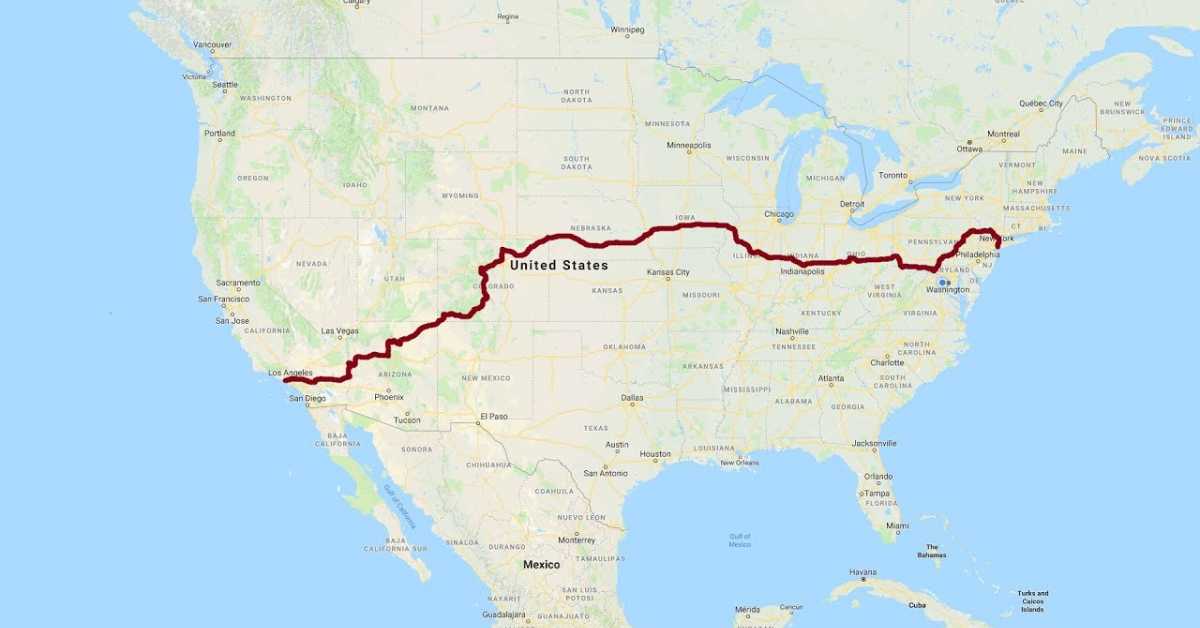
For those planning to drive, the road distance is considerably longer due to the winding nature of highways and the need to navigate around geographical features. The typical driving distance between New York City and Los Angeles ranges from 2,790 to 2,900 miles (4,490 to 4,667 kilometers), depending on the specific route taken. A common route might involve traversing states like Pennsylvania, Ohio, Indiana, Illinois, Missouri, Kansas, Colorado, Utah, Nevada, and finally California. This journey would typically take 40 to 45 hours of pure driving time, meaning a minimum of 4-6 days with reasonable stops for rest, meals, and sightseeing.
When considering flights, the travel time is significantly shorter. A direct flight from a major New York area airport to a major California airport generally takes around 5.5 to 6.5 hours in the air. However, accounting for boarding, taxiing, potential delays, and the three-hour time difference (which effectively adds time when traveling west), the total travel time can easily extend to 8-10 hours from door to door. These figures underscore the vast difference in travel time and experience across different modes of transport, each offering a distinct way to experience the transition from one coast to the other.
Time Zones and Their Impact
Traveling across the United States means crossing multiple time zones, a factor that significantly impacts travel planning and the perception of travel duration. Between New York and California, you will typically traverse three major time zones: the Eastern Time Zone (where New York resides), the Central Time Zone, and the Mountain Time Zone, before arriving in the Pacific Time Zone (where California is located).
This results in a three-hour time difference between the two coasts. For instance, if it’s 3:00 PM in New York City, it’s 12:00 PM in Los Angeles. This time difference is particularly noticeable when flying. When you fly from New York to California, a 6-hour flight will feel like arriving only 3 hours after you departed due to gaining three hours. Conversely, flying from California to New York, a 6-hour flight will mean arriving 9 hours later by your body clock, making jet lag a more prominent concern.
Understanding and accounting for these time changes is crucial for scheduling meetings, making onward travel plans, and adjusting to your new environment. It influences everything from meal times to sleep patterns, especially for those who are sensitive to circadian rhythm disruptions. Many travelers find it helpful to adjust their watches to the destination time zone as soon as they depart to begin acclimatizing themselves. For long-term stays or relocations, this adjustment period is an integral part of settling into the new lifestyle and rhythm of either the bustling East Coast or the laid-back West Coast.
Navigating the Distance: Travel Options and Experiences
The journey from New York to California can be as varied and exciting as the destinations themselves. Each mode of travel offers a unique set of advantages, catering to different budgets, time constraints, and preferences for exploration. From the swift convenience of air travel to the immersive adventure of a cross-country drive or the nostalgic charm of a train journey, there’s an option for every type of traveler.
Flying: The Fastest Route Across America
For most people, flying is the most practical and efficient way to bridge the gap between New York and California. Direct flights typically range from 5.5 to 6.5 hours, making it possible to have breakfast on one coast and lunch on the other.
Major airports serving the New York metropolitan area include John F. Kennedy International Airport (JFK), Newark Liberty International Airport (EWR), and LaGuardia Airport (LGA). On the California side, primary gateways are Los Angeles International Airport (LAX), San Francisco International Airport (SFO), and Oakland International Airport (OAK). All major US airlines, including Southwest Airlines, Delta Air Lines, American Airlines, and United Airlines, offer numerous daily flights on these popular routes.
Ticket prices can vary widely based on the season, how far in advance you book, and whether you opt for budget or premium carriers. Typically, a round-trip economy ticket can range from $200 to $600, but sales and off-peak travel can yield significantly lower fares. For those seeking a more luxurious experience, business or first-class tickets offer enhanced comfort, amenities, and service, aligning with a “luxury travel” lifestyle. Tips for booking include being flexible with travel dates, booking several months in advance, and considering flights into smaller, secondary airports (like Long Beach or Hollywood Burbank in California) which can sometimes offer cost savings. While it lacks the scenic stops of a road trip, flying is ideal for business travelers or those with limited time, maximizing their ability to experience a destination rather than the journey itself.
Driving: An Epic Cross-Country Adventure
Embarking on a cross-country drive from New York to California is an iconic American experience, offering unparalleled freedom and opportunities for exploration. This journey, covering nearly 3,000 miles, typically requires at least 4-6 days of dedicated driving, but most travelers prefer to stretch it out to 7-14 days or more to fully enjoy the sights.
Several major interstate highways connect the two coasts. Interstate 80 (I-80) is a popular northern route, stretching from Teaneck, New Jersey (just outside New York City), all the way to San Francisco. It passes through diverse landscapes, from the flat farmlands of the Great Plains to the rugged Rocky Mountains and the deserts of Nevada. Another option is a combination of Interstate 90 (I-90) further north, or a more southern route incorporating portions of the historic Route 66, which meanders through Illinois, Missouri, Oklahoma, Texas, New Mexico, Arizona, and into California.
This kind of trip is a traveler’s dream, offering countless attractions and destinations along the way. You could stop at natural wonders like Niagara Falls or Yellowstone National Park, vibrant cities like Chicago, St. Louis, Denver, or Las Vegas, or cultural landmarks like the Grand Canyon National Park. Planning is key for such an endeavor. Budgeting for fuel, accommodation (from budget hotels to roadside motels or campgrounds), and meals is essential. Travelers should also consider vehicle maintenance, emergency kits, and planning stops in advance, especially during peak travel seasons. A road trip offers the ultimate flexibility to explore local culture, taste regional foods, and uncover hidden gems, making it a truly immersive “experience” for adventurers and families alike.

Train Travel: A Scenic Journey Through the Heart of America
For those who prefer a slower pace and want to truly soak in the diverse landscapes of the United States without the hassle of driving, train travel offers a compelling alternative. Amtrak, the national passenger rail system, provides routes that can take you from the East Coast to California, typically involving at least one transfer.
A popular route might involve taking the Lake Shore Limited or Capitol Limited from New York City to Chicago’s Union Station. From Chicago, you can then board the legendary California Zephyr, which is widely considered one of the most scenic train routes in North America. The California Zephyr travels through the heart of the Midwest, across the vast Great Plains, up into the majestic Rocky Mountains (passing through cities like Denver and Salt Lake City), and finally descends through Nevada’s deserts and the Sierra Nevada mountains into California, terminating in Emeryville (near San Francisco).
The total duration of such a train journey typically spans 3 to 4 days (70-80 hours), excluding layovers. While considerably slower than flying, train travel offers panoramic views from comfortable observation cars, the convenience of moving freely, access to dining cars, and various accommodation options ranging from coach seats to private rooms and suites. This journey is less about speed and more about the “experience” – a chance to relax, read, converse with fellow travelers, and witness the changing tapestry of the American landscape unfold outside your window. For those seeking a unique travel adventure and an appreciation for the journey itself, Amtrak provides a romantic and picturesque way to travel from coast to coast.
Planning Your Transcontinental Journey: Beyond the Miles
Beyond simply choosing how to get from New York to California, a successful transcontinental journey involves meticulous planning that touches upon various aspects of travel, accommodation, and lifestyle. This comprehensive approach ensures that the trip not only covers the distance but also delivers a rich, fulfilling experience tailored to your preferences. From selecting the right places to stay to immersing yourself in local cultures, every decision contributes to the overall adventure.
Accommodation Choices Across the States
When traveling across the country, especially for multiple days or weeks, accommodation becomes a crucial consideration. The United States offers an unparalleled variety of lodging options, catering to every budget and travel style.
In major cities like New York City, Chicago, or Los Angeles, you’ll find everything from luxurious five-star hotels like properties by Marriott International, Hilton Worldwide, or Hyatt Hotels Corporation offering lavish suites and amenities, to boutique hotels with unique charm, and budget-friendly options. For those on a tighter budget or seeking a more communal experience, hostels are available.
Beyond traditional hotels, the rise of alternative accommodations provides flexible and personalized stays. Apartments and villas available through platforms like Airbnb or Vrbo are ideal for families, groups, or those planning a long-term stay. They offer kitchen facilities, extra space, and a more local living experience. Along popular driving routes, roadside motels offer convenient and affordable overnight stops. For outdoor enthusiasts, numerous campgrounds and resorts near national parks (like Yosemite National Park or the Grand Canyon National Park) combine lodging with access to nature.
When booking accommodation, consider location relative to attractions, transportation, and your route. Read reviews, compare prices, and look for loyalty programs if you frequently stay with a particular chain. Whether your trip is a short business stay, a family vacation, or a luxurious escape, tailoring your accommodation choices to your needs enhances the overall travel experience, contributing to a comfortable and memorable journey across the continent.
Exploring Diverse Destinations and Landmarks
The journey from New York to California is not just a passage but an opportunity to explore an incredible array of destinations and landmarks. Both states, and the regions in between, are teeming with cultural richness, historical significance, and breathtaking natural beauty, making the trip a true tourism guide.
In New York, the initial draw is often New York City. Here, iconic attractions like the Statue of Liberty, Empire State Building, Times Square, and Broadway theaters offer a glimpse into American urban culture and history. Central Park, the Brooklyn Bridge, and The Metropolitan Museum of Art are also must-visit sites.
As you head west, whether by car or train, the landscape and attractions shift dramatically. You might encounter the architectural marvels of Chicago, the vibrant music scene of Nashville, or the vastness of the Badlands and Black Hills in South Dakota. The Rocky Mountains, straddling the Continental Divide, offer spectacular scenic views and opportunities for hiking and wildlife spotting. Further west, cities like Las Vegas promise entertainment, while natural wonders like the Grand Canyon National Park, Zion National Park, and Bryce Canyon National Park in Utah and Arizona provide awe-inspiring landscapes.
Upon reaching California, the choices for exploration are boundless. From the iconic Golden Gate Bridge and vibrant neighborhoods of San Francisco to the glamorous allure of Hollywood and the beaches of Los Angeles, the state offers a blend of urban excitement and natural beauty. Family attractions like Disneyland Park and Universal Studios Hollywood are huge draws. For nature lovers, Yosemite National Park, Death Valley National Park, and Joshua Tree National Park present diverse ecosystems. Coastal drives along the Pacific Coast Highway (Route 1), passing through Big Sur and visiting the Santa Monica Pier, offer breathtaking ocean vistas. The wine regions of Napa Valley and the innovation hub of Silicon Valley further add to California’s appeal. Each stop offers a chance to engage with local culture, sample regional food, and create lasting memories, making the journey an extraordinary travel experience.

Crafting Your Ideal Lifestyle Travel Experience
The journey from New York to California is more than just covering a physical distance; it’s an opportunity to tailor a travel experience that perfectly aligns with your lifestyle and preferences. Whether you envision a grand, luxurious escape, a savvy budget-friendly adventure, a memorable family trip, or an efficient business stay, careful planning allows you to craft the ideal journey.
For the luxury traveler, the focus might be on premium air travel, staying in opulent suites at five-star resorts in New York City and Beverly Hills, enjoying gourmet dining experiences, and perhaps even hiring a private driver for a portion of the road trip through scenic routes like Big Sur. The emphasis is on comfort, exclusivity, and impeccable service, turning every aspect of the journey into a lavish experience.
Budget travelers, on the other hand, can meticulously plan to minimize costs without sacrificing adventure. This might involve booking flights during off-peak seasons, utilizing budget airlines, opting for hostels or more affordable apartments and motels, packing a cooler for road trip meals, and taking advantage of free attractions like national parks or city walking tours. The challenge and reward lie in discovering hidden gems and creating rich experiences through resourcefulness.
Family trips require a different set of considerations, focusing on engaging activities for all ages, comfortable and spacious accommodation, and flexible itineraries. Road trips can be ideal, allowing stops at kid-friendly attractions like amusement parks, children’s museums, or natural playgrounds. Choosing family resorts with pools and activities can provide much-needed downtime. Planning for snacks, entertainment, and regular breaks is key to a smooth journey with children.
For business stays, efficiency and connectivity are paramount. Direct flights, centrally located hotels with business amenities, and reliable Wi-Fi are essential. The goal is to minimize travel time and maximize productivity, often with little room for leisurely sightseeing, although a quick visit to a landmark or a fine dining experience might be incorporated as a reward.
Ultimately, the journey from New York to California is a canvas waiting for your personal touch. By considering these lifestyle aspects – whether it’s the thrill of a long drive, the swiftness of flight, or the scenic pace of a train – you can transcend the simple act of covering distance and create a truly memorable and enriching chapter in your travel story.
The journey from New York to California is a magnificent tapestry woven with miles, minutes, and memories. While the raw distance of nearly 3,000 miles (over 2,400 as the crow flies) presents a formidable challenge, it also opens up a world of possibilities for exploration and adventure. Whether you opt for the rapid convenience of air travel, the immersive discovery of a cross-country road trip, or the contemplative pace of a train journey, each path offers a unique perspective on the breathtaking diversity of the United States.
Beyond the physical distance, the journey is defined by the choices you make in travel style, accommodation, and the landmarks you choose to explore. From the vibrant urban landscapes of New York City to the serene natural wonders of Yosemite National Park and the bustling energy of Los Angeles, the USA offers an unparalleled wealth of experiences. This transcontinental voyage is not merely about traversing the miles; it’s about embracing the ever-changing scenery, savoring local cultures and cuisines, and creating a travel narrative that reflects your personal spirit of adventure. So, how far is New York from California? Far enough to inspire an unforgettable adventure.
LifeOutOfTheBox is a participant in the Amazon Services LLC Associates Program, an affiliate advertising program designed to provide a means for sites to earn advertising fees by advertising and linking to Amazon.com. Amazon, the Amazon logo, AmazonSupply, and the AmazonSupply logo are trademarks of Amazon.com, Inc. or its affiliates. As an Amazon Associate we earn affiliate commissions from qualifying purchases.