
The vast expanse of the United States stretches from the bustling metropolises of the East Coast to the sun-drenched shores of the West. For many, the iconic distance between New York City and Los Angeles (often abbreviated as LA) represents more than just miles; it embodies a cultural divide, a shift in lifestyle, and a significant journey for travelers. Understanding this distance is crucial for planning any trip, whether you’re contemplating a cross-country road trip, booking a flight, or simply curious about the geography of this immense nation.
The question “How far is New York from LA?” might seem straightforward, but the answer depends on the mode of transportation and the specific routes taken. This article will delve into the various ways to traverse this iconic distance, exploring the realities of air travel, the allure of the open road, and the logistical considerations for making this significant journey. We’ll also touch upon what makes these two cities such perennial magnets for tourists and residents alike, highlighting the unique experiences each offers.
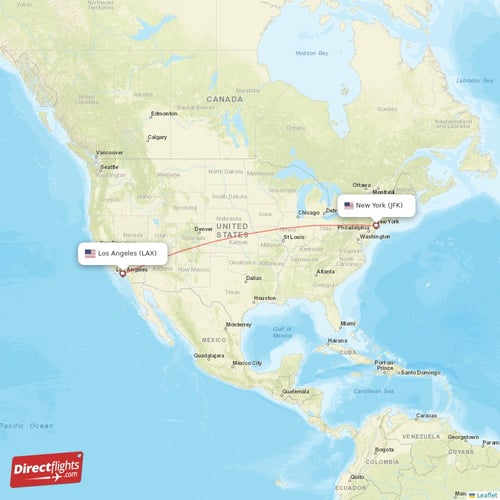
The Aerial Route: Bridging the Coast in Hours
When most people ask about the distance between New York and LA, they are often thinking about the most efficient way to cover it: by airplane. Air travel has revolutionized long-distance journeys, shrinking continents and making previously arduous trips a matter of hours.
Flight Times and Distances
The approximate great-circle distance, or the shortest distance between two points on the surface of a sphere, between New York and Los Angeles is around 2,445 miles (approximately 3,935 kilometers). However, actual flight paths can vary due to air traffic control, weather patterns, and other factors.
Direct flights between New York‘s major airports, such as John F. Kennedy International Airport (JFK), LaGuardia Airport (LGA), and Newark Liberty International Airport (EWR), and Los Angeles International Airport (LAX) are the most common and efficient way to travel between these cities. Typically, a non-stop flight will take between 5.5 and 6.5 hours, depending on the direction of travel. Flights heading east from LA to New York tend to be slightly shorter due to prevailing tailwinds in the jet stream.
Airlines like American Airlines, Delta Air Lines, United Airlines, and JetBlue Airways operate numerous daily flights on this highly trafficked route, offering a range of services from budget-friendly economy seats to premium classes with enhanced amenities. For those seeking a more luxurious experience, first-class and business-class options provide lie-flat seats, gourmet dining, and priority services.
Navigating the Airports and Beyond
Beyond the flight time itself, travelers need to account for the entire airport experience. This includes travel to and from the airport, check-in procedures, security screening, boarding, and baggage claim. In New York, reaching JFK or EWR from Manhattan can take anywhere from 45 minutes to over an hour, depending on traffic and the chosen mode of transport (taxi, ride-sharing service, public transit like the AirTrain). Similarly, in LA, traffic can significantly impact the journey to LAX, especially during peak hours.
The time zone difference also plays a role. New York operates on Eastern Time (ET), while Los Angeles is on Pacific Time (PT), a three-hour difference. This means that a 9 AM flight departing New York would arrive in Los Angeles around 12 PM Pacific Time, making it feel like you’ve gained three hours. Conversely, a 9 AM LA departure would land in New York around 5 PM Eastern Time, effectively losing three hours of your day.
While flying is undeniably the fastest method, it’s also important to consider the environmental impact and the often-associated costs, including airfare, baggage fees, and transportation to and from the airports. For many, however, the convenience and speed of air travel make it the preferred choice for bridging the distance between these two iconic American cities.
The Cross-Country Odyssey: The Open Road to the West
For those who crave adventure, embrace the journey, and wish to experience the diverse tapestry of the United States, the road trip from New York to LA offers an unforgettable experience. This is not merely a way to get from point A to point B; it’s an immersion into the heartland, a chance to witness landscapes change dramatically, and an opportunity to discover hidden gems along the way.
Driving Routes and Distances
The most direct driving route from New York to Los Angeles typically covers approximately 2,800 to 3,000 miles (around 4,500 to 4,800 kilometers), depending on the specific highways chosen. This is a significant undertaking, and it’s generally recommended to allow at least 4 to 6 days for the drive to make it enjoyable and safe, rather than a grueling marathon.
Several major interstate highways can be utilized for this cross-country trek. A common route might involve heading west on Interstate 80 (I-80) for a significant portion of the journey, traversing states like Pennsylvania, Ohio, Indiana, Illinois, Iowa, Nebraska, and Wyoming, before eventually connecting to routes that lead southwest through states like Utah, Nevada, and finally into California.
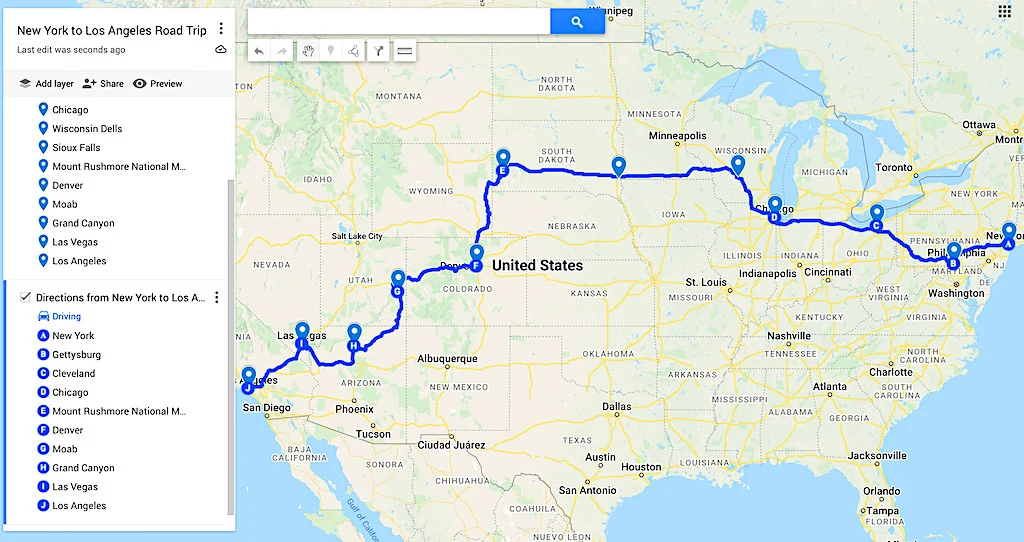
Another popular option is to take a more southerly route, utilizing highways such as Interstate 70 (I-70) through states like Missouri and Colorado, then transitioning to Interstate 40 (I-40) which famously follows much of the historic Route 66 through states like Oklahoma, Texas, New Mexico, and Arizona, before reaching California. This latter route offers a more nostalgic and culturally rich experience, passing through iconic roadside attractions and historic towns.
Experiencing the American Landscape and Culture
The beauty of a road trip lies in the freedom to stop and explore. Along the way, you can encounter a wealth of attractions. In the Midwest, you might find yourself marveling at the expansive farmlands, visiting cities like Chicago with its impressive architecture and vibrant music scene, or experiencing the unique landscapes of the Badlands National Park in South Dakota (though this would be a detour from the most direct routes).
As you head west, the terrain shifts dramatically. The Rocky Mountains offer breathtaking vistas, opportunities for hiking, and charming mountain towns. States like Colorado and Utah boast national parks renowned for their geological wonders, such as Arches National Park and Zion National Park.
Continuing southwest, the desert landscapes of Arizona and Nevada come into view. The awe-inspiring Grand Canyon National Park is a must-see for many road trippers, offering unparalleled views of one of the world’s natural wonders. You might also drive through the neon-lit spectacle of Las Vegas, a stark contrast to the natural beauty surrounding it.
Throughout the journey, you’ll encounter diverse American culture. From the friendly hospitality of small towns to the bustling energy of major cities, each stop offers a glimpse into the fabric of the nation. You can savor regional cuisines, from deep-dish pizza in Chicago to Tex-Mex in Texas and authentic Navajo tacos in New Mexico.
Planning a road trip requires careful consideration of vehicle maintenance, accommodation bookings (ranging from budget motels to charming boutique hotels and unique Airbnb stays), and packing for varied weather conditions. However, the rewards – the memories made, the sights seen, and the profound appreciation for the sheer scale and diversity of the United States – are immeasurable.
The Railroad Option: A Scenic Journey Through America
While less common than flying or driving for this specific route, the train offers a third, often overlooked, way to travel between New York and Los Angeles. This option appeals to those who seek a more relaxed pace, enjoy watching the landscape unfold, and appreciate the romanticism of train travel.
Amtrak Routes and Travel Times
Amtrak, the national passenger railroad company, offers several routes that can connect the East Coast to the West Coast, though a direct, single-train service from New York to LA doesn’t exist. Instead, travelers typically take a combination of trains.
A common route involves taking a train from New York Penn Station to Chicago Union Station. From Chicago, passengers can then board a westbound train, such as the Southwest Chief, which travels through states like Illinois, Iowa, Missouri, Kansas, Colorado, New Mexico, Arizona, and finally arrives at Los Angeles Union Station.
The total travel time for this rail journey can be substantial, often ranging from 65 to 75 hours, or approximately 3 to 4 days. This includes layover times in connecting cities, most notably Chicago. While this is significantly longer than flying, it allows for a unique travel experience.

The Allure of the Sleeper Car and Onboard Amenities
The primary advantage of this mode of transport is the ability to relax, read, work, or simply gaze out the window as the American scenery drifts by. Amtrak offers various accommodation options, including coach seats, roomettes (small private compartments with seats that convert to beds), and bedrooms (larger private compartments with more space and en-suite facilities). Opting for a sleeper car transforms the journey into a more comfortable and intimate experience, complete with meals served in the dining car.
Dining on Amtrak typically includes fresh, chef-prepared meals, a significant step up from typical airline fare. The communal dining car provides an opportunity to meet fellow travelers and share stories of the journey.
The route of the Southwest Chief, for instance, is renowned for its scenic beauty, passing through the stunning landscapes of the American Southwest, including deserts, mountains, and canyons. This offers a perspective on the country that is rarely seen from the confines of a highway or airplane window.
Choosing the train is a commitment to a slower, more deliberate form of travel. It’s an opportunity to disconnect from the rush of modern life and reconnect with the simple pleasure of movement and observation. While it may not be the quickest way to get from New York to LA, it provides a unique and memorable perspective on the vastness and beauty of the United States.
Whether you choose to soar through the skies, drive across the continent, or ride the rails, the journey from New York to LA is an epic undertaking that offers a profound understanding of the scale and diversity of the United States. Each mode of transport provides a distinct experience, catering to different travel styles and priorities, but all ultimately lead to two of the most vibrant and captivating cities in the world.