
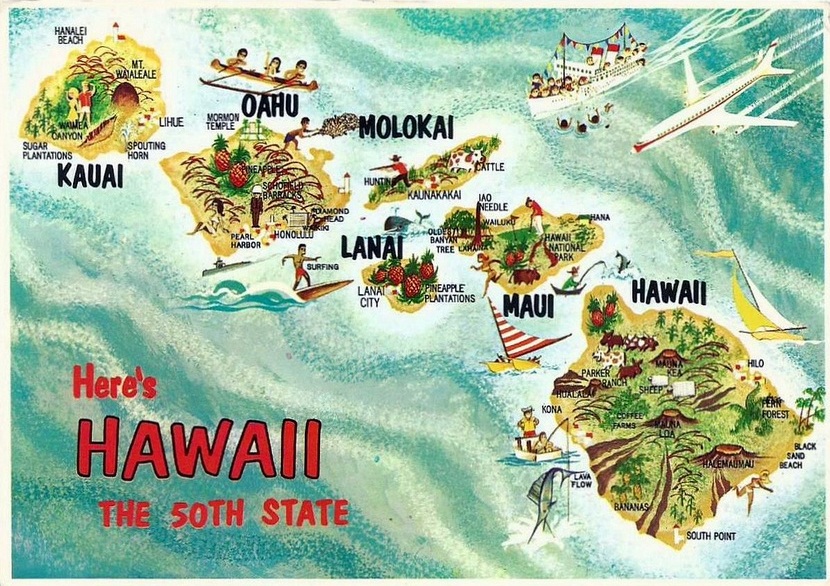
The mention of Hawaii instantly conjures images of pristine beaches, lush volcanic landscapes, and the gentle rhythm of the Pacific. It’s a dream destination for travelers worldwide, renowned for its unique blend of natural beauty, vibrant culture, and unparalleled hospitality. From luxury resorts nestled along Waikiki Beach to budget-friendly accommodations that offer a taste of local life, the Hawaiian Islands cater to every type of explorer. Yet, beneath this tranquil veneer lies a complex and compelling history, a journey from an independent Polynesian kingdom to the 50th state of the United States. Understanding how Hawaii became a state not only enriches the travel experience but also offers a profound appreciation for its distinct identity, its resilient people, and the landmarks that bear witness to its transformative past. This narrative is one of geopolitical intrigue, economic ambition, cultural clash, and ultimately, the will of a people to forge their own destiny within a larger nation.
From Ancient Kingdom to European Contact: The Dawn of Change
Before it became a beacon for global tourism, Hawaii was a thriving Polynesian civilization, a testament to incredible seafaring prowess and a sophisticated societal structure. Its history is deeply rooted in oral traditions, passed down through generations, painting a vivid picture of life before the arrival of outsiders.
The Polynesian Legacy and Royal Rule
Millennia ago, intrepid Polynesian navigators embarked on audacious voyages across the vast Pacific, guided by stars and currents, eventually discovering and settling the remote Hawaiian Islands. These early settlers brought with them their distinct culture, traditions, crops, and an intricate system of kapu (taboos) that governed daily life. Over centuries, various chiefdoms developed across the islands of Oahu, Maui, Kauai, and the Big Island, often engaging in warfare but also fostering impressive agricultural and aquacultural advancements.
The late 18th century saw a pivotal moment in Hawaiian history with the rise of King Kamehameha I. Through a combination of strategic alliances, formidable military campaigns, and diplomatic skill, Kamehameha I successfully unified the warring chiefdoms into a single Kingdom of Hawaii by 1810. This monumental achievement established a dynastic rule that would last for nearly a century, bringing stability and a recognized identity to the islands. Visitors today can still encounter the legacy of this era through magnificent statues like the iconic Kamehameha Statue in Honolulu, or by exploring sites that speak to the ancient Hawaiian lifestyle, often preserved within national parks and cultural centers that offer deep insights into local culture and heritage. Experiencing the hula, attending a luau, or visiting historical sites provides a tangible connection to this rich past, allowing tourists to appreciate the depth of Hawaiian cultural identity that existed long before statehood.
Western Arrival and Shifting Tides
The relative isolation of the Hawaiian Islands came to an end in 1778 with the arrival of British explorer Captain James Cook. Initially welcomed, his subsequent return and an altercation led to his death. However, Cook’s voyages opened the floodgates, marking the beginning of significant Western influence. European and American traders, whalers, and missionaries soon followed, eager to tap into the islands’ resources and spread their faith.
The introduction of foreign diseases, against which Hawaiians had no immunity, decimated the native population. Simultaneously, the influx of Western goods, ideas, and religious practices began to erode traditional Hawaiian culture and societal structures. The whaling industry, in particular, transformed key ports like Lahaina on Maui and Honolulu on Oahu into bustling, cosmopolitan centers, bringing economic prosperity but also further intertwining the kingdom’s fate with Western powers. The missionaries, while often well-intentioned, brought a strict Protestant morality that clashed with traditional Hawaiian beliefs, leading to profound changes in law, education, and social norms. The seeds of foreign control were gradually sown, often through land acquisitions, economic leverage, and the strategic positioning of Western residents within the Hawaiian government. This period of contact profoundly shaped the archipelago, transforming its lifestyle and setting the stage for the dramatic political shifts that would follow. Tourists exploring these historical towns today can still find remnants of this era, from missionary homes to old whaling ship logs, offering a glimpse into the crossroads of cultures.
The Seeds of Annexation: Economic and Political Pressures
The 19th century was a period of increasing pressure on the Hawaiian Kingdom from foreign powers, particularly the United States. Economic interests, primarily driven by a burgeoning agricultural industry, combined with geopolitical ambitions, gradually undermined the sovereignty of the monarchy and paved the way for a dramatic change in its political status.
The Rise of the Sugar Barons
The rich volcanic soil and tropical climate of Hawaii proved ideal for cultivating sugarcane, which became an incredibly lucrative export. American businessmen, many of whom were descendants of early missionaries, established vast sugar plantations across the islands. The demand for labor led to a massive influx of immigrants from China, Japan, Portugal, and the Philippines, creating the unique multi-ethnic tapestry that defines modern Hawaii. These “sugar barons” amassed considerable wealth and, crucially, political influence within the kingdom.
The Reciprocity Treaty of 1875 with the United States was a game-changer. It allowed Hawaiian sugar to enter the US market duty-free, supercharging the industry. In return, Hawaii granted the US exclusive rights to use Pearl Harbor as a naval base. This treaty cemented Hawaii’s economic dependence on the US and heightened American strategic interest in the islands. Companies like the Dole Food Company, which started with pineapple but represented the larger agricultural boom, exemplify this era. Today, visitors can tour places like the Dole Plantation on Oahu, a popular attraction that, while offering a fun experience, also stands as a symbol of the powerful agricultural industries that reshaped Hawaii’s economy and political landscape. The pursuit of profit by these powerful figures played a direct role in steering the kingdom towards annexation, demonstrating how economic forces often drive political destinies.
The Overthrow of the Monarchy
As the 19th century drew to a close, the Hawaiian monarchy found itself in an increasingly precarious position. King Kalākaua attempted to maintain Hawaiian sovereignty, but was eventually forced by a group of American and European businessmen, known as the “Missionary Party” or the “Reform Party,” to sign the “Bayonet Constitution” in 1887. This document severely limited the monarch’s power and disenfranchised many native Hawaiians, giving voting rights primarily to wealthy landowners and foreigners.
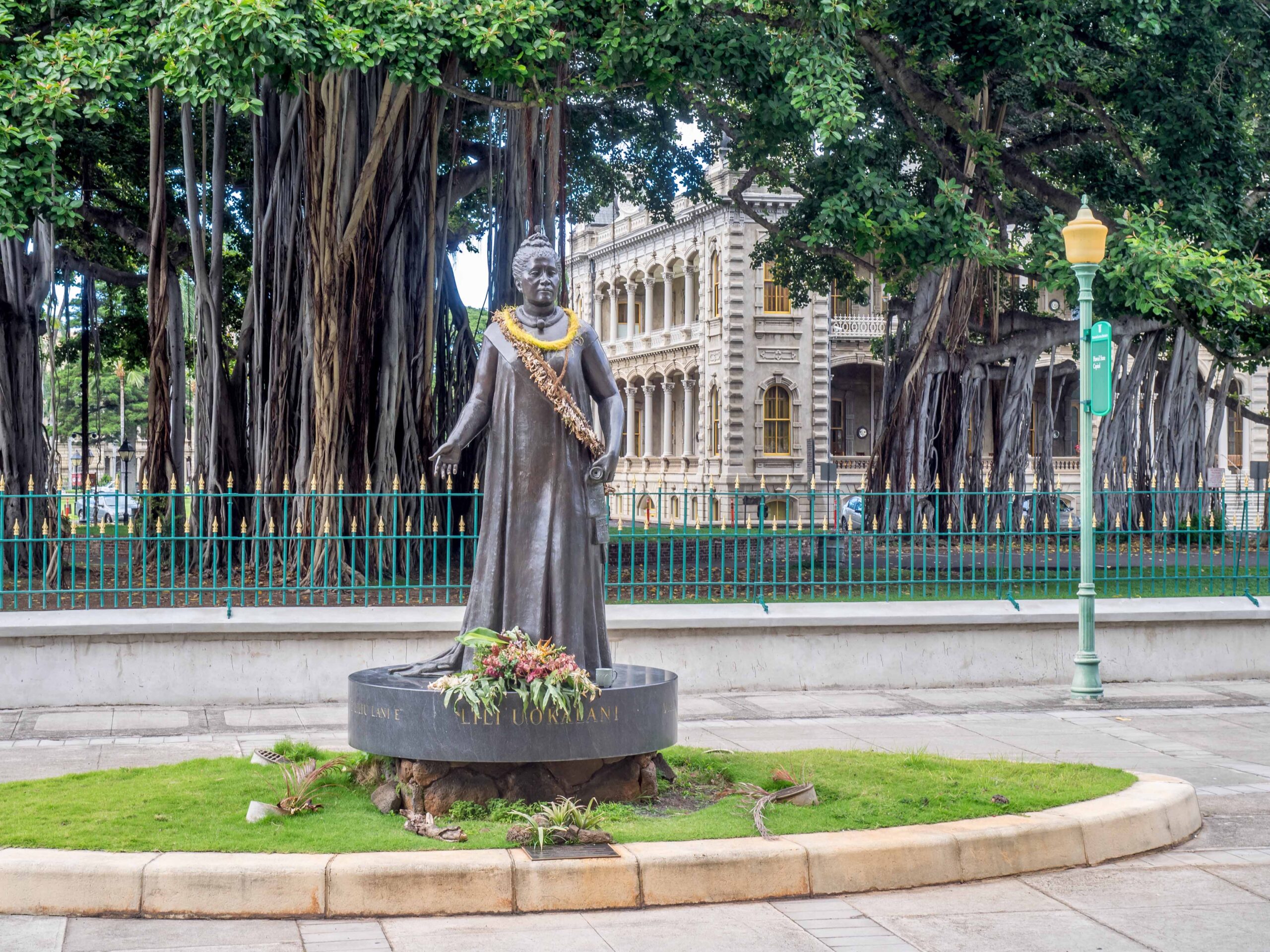
The last reigning monarch, Queen Liliʻuokalani, who ascended to the throne in 1891, was a staunch nationalist determined to restore power to the Hawaiian people and revise the “Bayonet Constitution.” Her efforts, however, were met with fierce opposition from the Annexation Club, a group of American and European residents backed by the powerful sugar interests. On January 17, 1893, with the tacit support of the United States minister to Hawaii and the landing of US Marines from the USS Boston, the monarchy was overthrown. The Queen was imprisoned in ʻIolani Palace, the only royal palace on US soil and now a poignant landmark in Honolulu that tells the story of her struggle. A Provisional Government was established, dominated by American residents, with Sanford B. Dole (cousin of James Dole, founder of Dole Food Company) as its president, immediately seeking annexation by the United States.
The Republic of Hawaii and US Hesitation
Following the overthrow, the Provisional Government of Hawaii declared itself the Republic of Hawaii in 1894, formalizing its desire for annexation by the United States. However, the path to annexation was not straightforward. US President Grover Cleveland, a strong anti-imperialist, was deeply disturbed by the illegal nature of the overthrow and attempted to restore the Queen. His efforts were thwarted by the Republic of Hawaii, which refused to relinquish power.
For several years, the question of Hawaii’s future remained a contentious issue in Washington D.C. The debate pitted anti-imperialists against those who saw strategic and economic advantages in acquiring the islands. The Republic of Hawaii persisted, tightening its grip internally and suppressing any attempts at counter-revolution, such as the Wilcox Rebellion of 1895. The political landscape shifted dramatically with the election of President William McKinley, a proponent of expansionism. The outbreak of the Spanish-American War in 1898, which highlighted Hawaii’s crucial strategic location as a coaling station and naval base in the Pacific, ultimately provided the impetus needed for annexation. On July 7, 1898, a joint resolution of Congress annexed Hawaii to the United States, transforming it into a US Territory. This period laid the groundwork for future development, including infrastructure that would later support both military and tourism needs, shaping the accommodation and travel options we see today.
A Territory at War: Pearl Harbor and the Path to Statehood
As a US Territory, Hawaii entered a new chapter, becoming intrinsically linked to the strategic interests of the United States. This connection would be tragically underscored by a pivotal event that would forever change the course of American history and accelerate Hawaii’s journey toward statehood.
Strategic Importance and Military Build-up
From the moment of annexation, Hawaii’s geopolitical significance grew exponentially. Its position in the middle of the Pacific Ocean made it an invaluable outpost for American naval and military power, a strategic bridge between the mainland and Asia. The United States began investing heavily in military infrastructure, transforming Oahu into a fortress of naval and air bases. The development of Pearl Harbor into the primary base for the US Pacific Fleet was central to this strategy.
The military presence brought jobs and further diversified the territorial economy, but it also highlighted the unique vulnerability of the islands. Despite being an integral part of the US defense strategy, Hawaiians, as territorial citizens, lacked full representation in Congress and could not vote in presidential elections. This disparity fueled a growing desire for statehood among the territory’s diverse population, who felt they deserved the same rights and responsibilities as their fellow Americans on the mainland. The military’s impact on local lifestyle and the burgeoning tourism sector was profound, creating unique experiences and attractions that intertwined historical significance with leisure travel. Many historic military sites have since been repurposed or preserved, offering compelling landmarks for visitors interested in this aspect of Hawaiian history.
The Attack on Pearl Harbor and its Aftermath
The strategic importance of Pearl Harbor was tragically realized on December 7, 1941, when the Imperial Japanese Navy launched a surprise attack on the naval base. This devastating assault, which crippled the US Pacific Fleet and killed over 2,400 Americans, plunged the United States into World War II. The attack transformed Hawaii from a distant territory into the immediate front line of a global conflict.
The aftermath saw the declaration of martial law across the islands, a stark reminder of their vulnerable position. Despite the hardships and racial prejudices faced by some of its diverse communities, the people of Hawaii demonstrated unwavering loyalty and resilience, contributing significantly to the war effort. The bravery of the Nisei (second-generation Japanese Americans) soldiers from Hawaii, who served with distinction in Europe, helped to challenge stereotypes and showcase the patriotism of the territory’s multi-ethnic population. Today, the Pearl Harbor National Memorial, including the solemn USS Arizona Memorial, stands as one of Hawaii’s most visited landmarks, a powerful testament to the sacrifices made and a somber reminder of a day that changed the world. This site is not just a landmark but a profound experience, deeply woven into the fabric of American history and a crucial piece of Hawaii’s identity.
Post-War Momentum and the Fight for Equality
The shared sacrifice and demonstrated loyalty during World War II significantly bolstered the argument for Hawaiian statehood. The war had exposed the hypocrisy of having a territory whose citizens fought and died for the nation, yet lacked full democratic rights. Organizations and individuals within Hawaii, representing its diverse ethnic groups, intensified their lobbying efforts in Washington D.C. They argued that statehood was a matter of equality, self-determination, and fundamental American principles.
The post-war era saw a growing national consensus that Hawaii was ready for statehood. Its economy was robust, its population was growing and diverse, and its strategic importance remained undiminished. While some senators still harbored reservations about admitting a non-contiguous, ethnically diverse state, the overwhelming sentiment leaned towards granting Hawaii its rightful place in the Union. This period also saw the expansion of air travel, which began to open Hawaii up to more widespread tourism, foreshadowing its future as a global travel destination. The vision of Hawaii as a complete and equal partner in the United States was becoming a reality, blending its unique local culture with the broader American identity.
The Golden Door: Hawaii Becomes the 50th State
The decades of lobbying, political maneuvering, and the unwavering dedication of the Hawaiian people culminated in one of the most significant moments in American history, marking the completion of the nation’s continental expansion.
Congressional Debates and Public Sentiment
The journey to statehood was long and arduous, spanning over six decades since annexation. Various bills were introduced in Congress over the years, only to face opposition driven by concerns about Hawaii’s non-contiguity, its ethnic diversity, and lingering fears of political instability. Southern congressmen, in particular, worried about the racial implications of admitting a state with a majority non-white population, fearing it would set a precedent.
However, the post-war civil rights movement, coupled with a growing awareness of Hawaii’s unique contributions and unwavering loyalty, began to shift public and political sentiment. Grassroots movements within the territory organized petitions, rallies, and sent delegates to Washington D.C. to plead their case. The media also played a role in portraying Hawaii as a vibrant, democratic, and truly American territory deserving of full recognition. The passage of the Alaska Statehood Act in 1958 provided a critical precedent, demonstrating that a non-contiguous territory could successfully integrate into the Union. This momentum made the prospect of Hawaiian statehood almost inevitable.
The Statehood Act of 1959
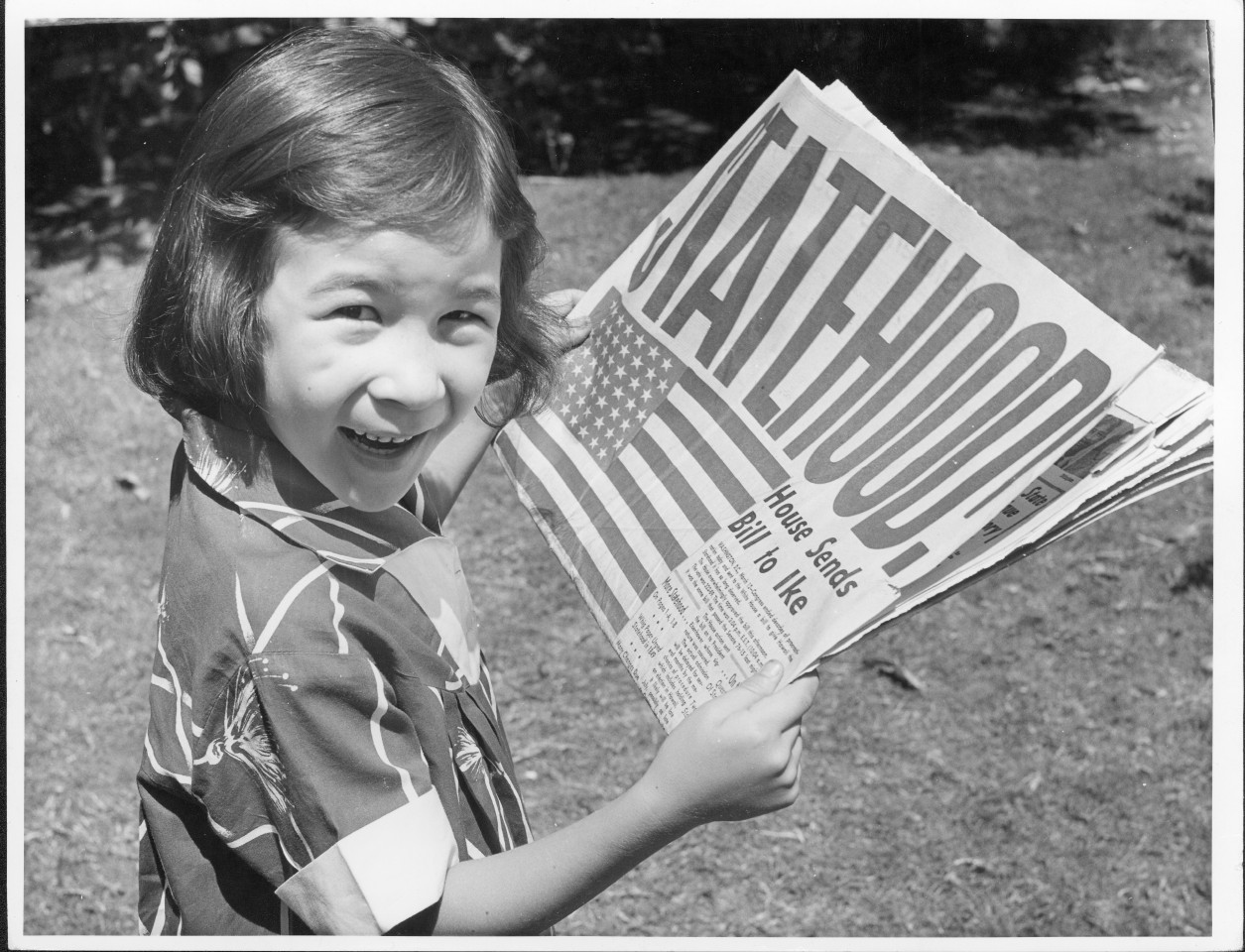
After decades of persistent advocacy, the final legislative hurdles were cleared. On March 12, 1959, the United States Congress passed the Hawaii Admission Act, which was signed into law by President Dwight D. Eisenhower on March 18, 1959. This act formally offered statehood to Hawaii, contingent upon a referendum vote by its residents.
The referendum, held on June 27, 1959, saw an overwhelming 94.3% of Hawaiian voters cast their ballots in favor of statehood. The result was a jubilant affirmation of their desire to join the Union. On August 21, 1959, President Eisenhower issued Proclamation 3309, officially declaring Hawaii the 50th state of the United States. Celebrations erupted across the islands, marking the end of a long and often contentious journey, and the beginning of a new era. This historic day brought full democratic representation to Hawaiians, giving them a voice in national politics and solidifying their place in the American mosaic. The moment was not just a political milestone but a cultural triumph, underscoring the resilience and unique identity of the Hawaiian people.
The Legacy of Statehood: Hawaii Today
Since achieving statehood, Hawaii has flourished as a vibrant and integral part of the United States. Its unique cultural heritage, a rich blend of Polynesian traditions, Asian influences, and American ideals, makes it a truly special place. Statehood significantly boosted Hawaii’s economy, particularly by accelerating the growth of its tourism industry. What was once a destination for intrepid explorers and the wealthy elite became accessible to a broader audience, thanks to advancements in air travel and the development of world-class accommodations, from luxury hotels to boutique resorts.
Today, Hawaii is a premier global travel destination, attracting millions who seek its stunning natural beauty – from the volcanic landscapes of Hawaii Volcanoes National Park to the towering cliffs of Napali Coast on Kauai, and the iconic silhouette of Diamond Head on Oahu. Visitors flock to experience its diverse culture through local cuisine, traditional music and dance, and historical landmarks that tell its compelling story. The transition to statehood did not erase Hawaii’s past; instead, it integrated it into a larger narrative, allowing its unique legacy to be shared with the world. Whether you’re exploring ancient sacred sites, relaxing on a pristine beach, or delving into the pivotal moments of World War II at Pearl Harbor, Hawaii offers a profound and multifaceted travel experience, a testament to its enduring spirit and remarkable history.
The story of “How Hawaii Became A State?” is far more than a political footnote; it is a captivating saga that intertwines exploration, economic ambition, cultural resilience, and geopolitical strategy. From the ancient seafaring Polynesians who first settled its shores to the complex web of foreign influence, the overthrow of its monarchy, and its strategic importance in global conflicts, Hawaii’s journey to statehood was a crucible that forged its unique identity. Today, as the 50th state, Hawaii stands as a vibrant mosaic of cultures, a beacon of natural splendor, and a testament to the enduring spirit of its people. For any traveler, understanding this profound history enriches the experience, turning a beautiful vacation into a deeper appreciation of a truly extraordinary place. Exploring its landmarks, immersing in its local culture, and appreciating its unique lifestyle offers a powerful connection to this remarkable past, ensuring that the legacy of the Hawaiian Islands continues to inspire and captivate for generations to come.
LifeOutOfTheBox is a participant in the Amazon Services LLC Associates Program, an affiliate advertising program designed to provide a means for sites to earn advertising fees by advertising and linking to Amazon.com. Amazon, the Amazon logo, AmazonSupply, and the AmazonSupply logo are trademarks of Amazon.com, Inc. or its affiliates. As an Amazon Associate we earn affiliate commissions from qualifying purchases.