
While the allure of Florida often conjures images of sun-drenched beaches, thrilling theme parks, and vibrant cityscapes, the Sunshine State also navigates complex legal matters, including the intricate calculation of alimony. For those embarking on a new chapter in their lives, whether after a vacation or a divorce, understanding Florida’s alimony framework is crucial. This guide delves into the factors that influence alimony awards in Florida, aiming to provide clarity on a subject that can significantly impact financial futures.
In Florida, alimony, also known as spousal support, is not a one-size-fits-all determination. Instead, it’s a carefully considered financial provision made by one spouse to the other after a divorce. The primary goal is to ensure that a spouse who may have sacrificed career advancement or earned less during the marriage is not left in a significantly disadvantaged financial position. Unlike child support, which is based on established guidelines, alimony in Florida involves judicial discretion, meaning a judge weighs various factors to arrive at a fair and equitable outcome.
Understanding the Different Types of Alimony in Florida
Before diving into the calculation process, it’s essential to grasp the various forms alimony can take in Florida. Each type serves a distinct purpose and has different durations and conditions.
Bridge-the-Gap Alimony
Often referred to as transitional alimony, Bridge-the-Gap Alimony is designed to help a spouse make a specific, short-term transition. This could involve enabling them to secure new housing, obtain education or training, or re-enter the workforce after a period of absence. The duration of bridge-the-gap alimony is typically limited and is intended to provide a financial bridge to a more stable financial future. It cannot exceed two years, regardless of the length of the marriage.
Rehabilitative Alimony
Similar to bridge-the-gap alimony, Rehabilitative Alimony aims to assist a spouse in becoming self-supporting. However, rehabilitative alimony usually involves a plan for the receiving spouse to acquire education, training, or experience to increase their earning capacity. This type of alimony is conditional on the receiving spouse fulfilling the terms of the rehabilitative plan. If the plan is successfully completed, the alimony may terminate sooner. Judges will consider the specific needs of the receiving spouse, the duration of the marriage, and the availability of rehabilitative programs when awarding this type of support.
Durational Alimony
When a marriage has been of a moderate or long duration, and rehabilitation or bridge-the-gap alimony is not sufficient, Durational Alimony may be awarded. This type of alimony provides financial support for a specific period, which is directly related to the length of the marriage. The purpose is to offer economic assistance for a defined duration, allowing the receiving spouse time to adjust financially. The actual amount and duration are determined by considering all the relevant statutory factors. For marriages lasting 3 to 7 years, durational alimony may last up to 5 years. For marriages lasting 7 to 17 years, it can extend up to 12.5 years. In marriages exceeding 17 years, the duration can be up to a lifetime, though often judges will set a specific duration within that framework.
Permanent Alimony
In marriages of long duration, particularly those where one spouse has been out of the workforce for an extended period and has limited earning potential, Permanent Alimony may be considered. This is the most substantial form of alimony, intended to provide long-term financial support to a spouse who is unlikely to become self-supporting. Unlike durational alimony, permanent alimony does not have a set end date and continues until the death of either spouse or the remarriage of the receiving spouse. Due to its significant impact, permanent alimony is awarded with considerable caution by the courts.
Whether to Award Alimony
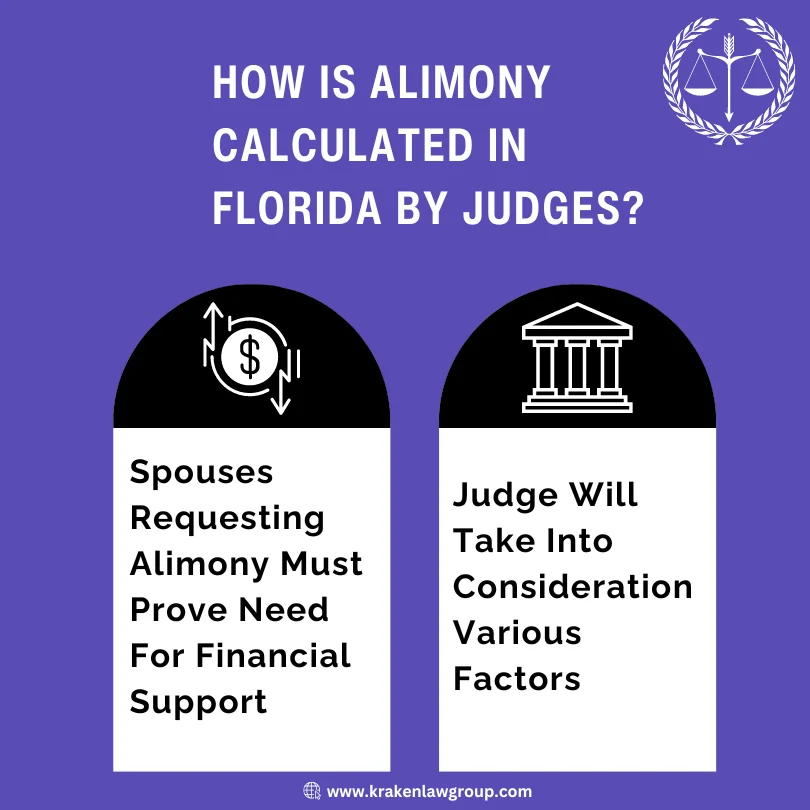
The first and most fundamental question a judge must answer is whether alimony is appropriate at all. Florida Statute 61.08 outlines the considerations for awarding alimony. A judge will look at the “need” of one spouse and the “ability to pay” of the other. This involves a thorough examination of each party’s financial circumstances.
Factors Influencing Alimony Calculations in Florida
The calculation of alimony in Florida is a complex process that hinges on a comprehensive evaluation of numerous factors. Judges have significant discretion, and no single factor dictates the outcome. Instead, they weigh all relevant aspects to achieve a just and equitable result.
Marriage Duration
The length of the marriage is a critical determinant in alimony awards. Florida law categorizes marriages into short-term (less than 7 years), moderate-term (7 to 17 years), and long-term (17 years or more).
- Short-term marriages: Alimony is generally disfavored in short-term marriages, unless there are compelling circumstances demonstrating a need.
- Moderate-term marriages: Durational alimony is more commonly awarded in moderate-term marriages, with the duration of alimony often tied to the length of the marriage.
- Long-term marriages: Permanent alimony is more likely to be considered in long-term marriages, especially if one spouse has significant earning potential while the other has limited prospects.
Standard of Living During the Marriage
Judges strive to ensure that the receiving spouse can maintain a standard of living reasonably close to that which they enjoyed during the marriage. This factor is particularly relevant when considering the amount of alimony. The court will consider the lifestyle the couple established, including housing, travel, entertainment, and other expenses, when determining the financial needs of the parties. For instance, a couple who frequently dined at fine restaurants like Bern’s Steak House or took luxurious trips to destinations like the Maldives might have a higher standard of living to consider than a couple with more modest spending habits.
Age and Health of Each Spouse

The physical and mental health of each spouse, as well as their age, can significantly impact their ability to earn income and their need for financial support. A spouse who is significantly older or suffers from a chronic illness that limits their earning capacity may have a greater need for alimony. Conversely, a younger and healthier spouse may be expected to become self-supporting more quickly.
Financial Resources of Each Spouse
This is a foundational element in alimony calculations. Courts meticulously examine the income, assets, and liabilities of both parties. This includes:
- Income: This encompasses wages, salaries, bonuses, commissions, investments, and any other sources of income.
- Assets: This includes real estate (like properties in Miami or Orlando), bank accounts, stocks, bonds, retirement funds, and other investments.
- Liabilities: This includes debts such as mortgages, car loans, credit card debt, and other financial obligations.
The court will assess the ability of the paying spouse to contribute financially and the need of the receiving spouse to receive support.
Earning Capacities of Each Spouse
Beyond current income, judges will consider each spouse’s potential earning capacity. This involves evaluating their education, skills, job experience, and employability. If one spouse has forgone career advancement to support the other’s career or to manage the household and children, the court will consider this sacrifice when determining alimony. For example, if one spouse was a stay-at-home parent during a marriage that included lavish trips to Walt Disney World and stays at hotels like the Grand Floridian Resort & Spa, their earning capacity might be significantly lower than the spouse who was the primary breadwinner.
Contribution to the Marriage
This factor acknowledges the non-monetary contributions made by each spouse to the marriage. This can include homemaking, childcare, and assisting in the other spouse’s career development or business. The court recognizes that these contributions, while not generating direct income, are vital to the success and functioning of the marital partnership.
Tax Treatment
The tax implications of alimony payments are also considered. In the United States, for divorce decrees finalized after December 31, 2018, alimony payments are no longer tax-deductible for the payer or taxable income for the recipient. However, for older decrees, this was a significant factor. Even with the change in tax law, judges may still consider the overall financial impact on both parties when structuring the alimony award.
The Alimony Calculation Process: A Judicial Balancing Act
While there isn’t a simple mathematical formula for alimony in Florida, judges utilize a structured approach to arrive at a decision.
Step 1: Determining Need and Ability to Pay
The initial step involves a thorough financial assessment of both parties. Each spouse must demonstrate their financial need for support and the other spouse’s ability to provide it. This requires detailed financial affidavits, tax returns, pay stubs, and other relevant documentation.
Step 2: Considering the Statutory Factors
Once need and ability to pay are established, the judge will systematically review all the factors outlined in Florida Statute 61.08. This comprehensive review ensures that all relevant aspects of the marriage and the parties’ financial situations are taken into account.
Step 3: Selecting the Appropriate Type of Alimony
Based on the marriage duration, the needs of the parties, and their earning capacities, the judge will determine which type of alimony, if any, is most appropriate. This could range from short-term bridge-the-gap alimony to long-term permanent alimony.
Step 4: Calculating the Amount and Duration
For durational and permanent alimony, judges will determine an appropriate amount and duration. While there isn’t a strict formula, some guidelines and presumptions exist, particularly for marriages of moderate and long duration. For example, there’s a presumption that durational alimony should not exceed the percentage of the marriage duration. For marriages over 17 years, permanent alimony is presumed to be appropriate, but this presumption can be overcome with evidence.
Step 5: Review and Modification
Alimony orders are not always set in stone. If there is a substantial change in circumstances for either party, such as a significant increase or decrease in income, remarriage, or a change in health, either party can petition the court to modify the alimony award. However, modification of permanent alimony is generally more difficult.
Navigating the complexities of alimony in Florida requires careful consideration of numerous factors and a nuanced understanding of the law. While the emotional aspects of divorce are paramount, ensuring financial stability for both parties is a key objective of the legal system. For individuals facing divorce, consulting with an experienced family law attorney is highly recommended to understand their rights and obligations regarding alimony. Just as one might plan a meticulously curated vacation to explore the diverse attractions of Florida, planning for financial security after divorce is an equally important undertaking.