
When planning a trip to the vibrant and sun-drenched city of Miami, Florida, understanding its weather patterns is paramount to ensuring a fantastic experience. Miami’s subtropical climate offers a unique blend of warmth and sunshine for much of the year, making it a desirable travel destination for many. However, like any tropical locale, it also experiences distinct seasons that can impact your visit. This comprehensive guide will delve into the nuances of Miami’s weather, covering its temperature, rainfall, humidity, and what you can expect during different times of the year. Whether you’re dreaming of lounging on the sandy shores of South Beach, exploring the Art Deco district, or immersing yourself in the lively cultural scene, knowing what to pack and when to visit will significantly enhance your Miami adventure.
Understanding Miami’s Climate: A Tropical Overview
Miami, Florida, is blessed with a tropical monsoon climate, characterized by hot, humid summers and warm, drier winters. This classification means that the city experiences significant rainfall, predominantly during the warmer months, and a notable difference between its wet and dry seasons. The proximity to the Atlantic Ocean and the Gulf of Mexico plays a crucial role in moderating temperatures, preventing extreme highs and lows that might be found in more continental climates.
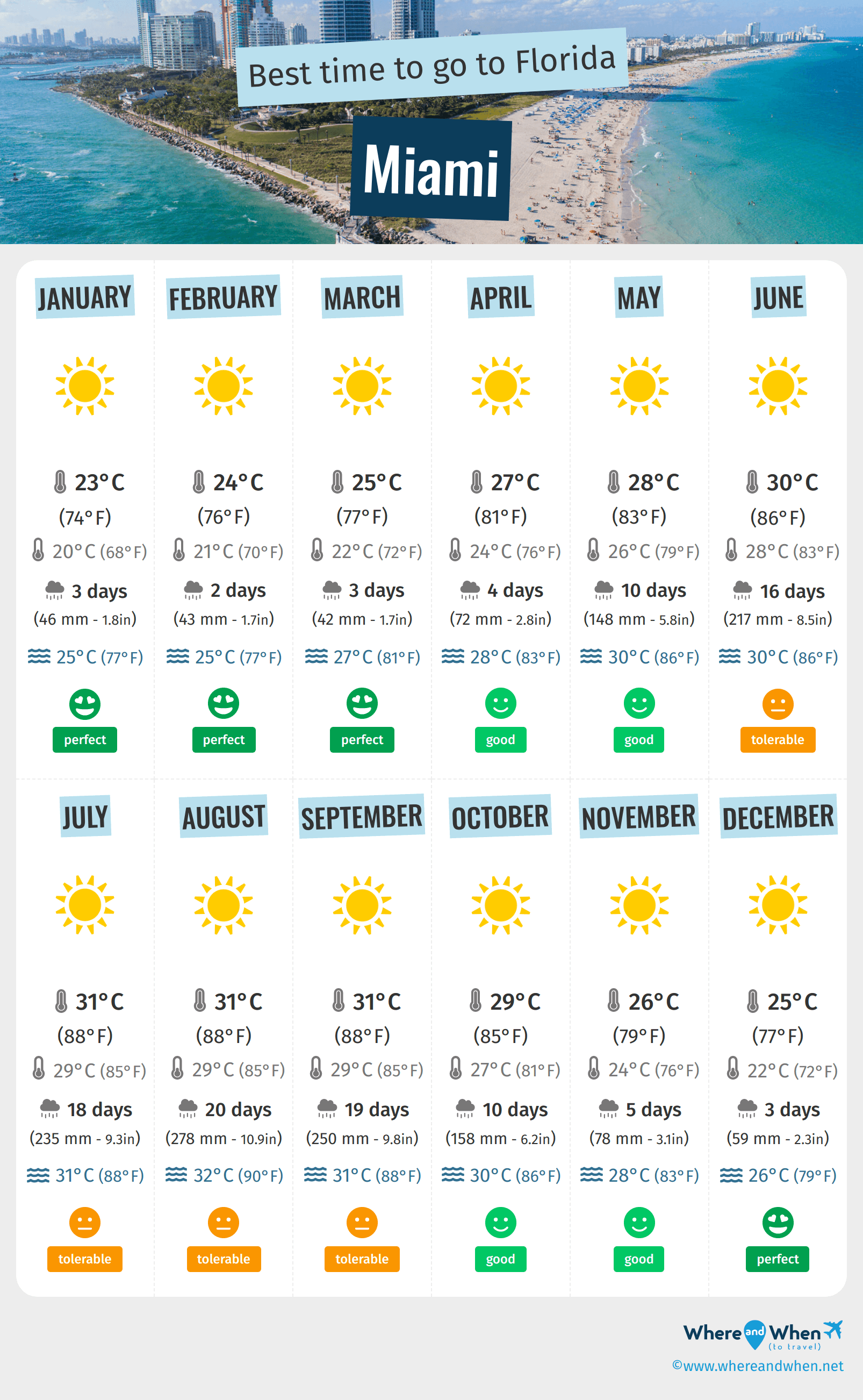
The average annual temperature in Miami hovers around a pleasant 76.5°F (24.7°C). This consistent warmth makes it an attractive destination year-round, but the experience of the weather can vary significantly depending on the season. High humidity is a common feature, especially during the summer months, which can make the temperatures feel even hotter. The prevailing winds, often coming off the ocean, can provide a welcome cooling effect along the coast, particularly in areas like Miami Beach.
Seasonal Breakdown: A Closer Look at Miami’s Weather
To truly grasp the weather in Miami, Florida, it’s beneficial to break it down by season. This will help you tailor your travel plans and expectations for your Miami getaway.
Summer (June to August): The Hot and Humid Season
Miami summers are synonymous with heat, humidity, and a good dose of sunshine, interspersed with dramatic, yet usually brief, afternoon thunderstorms. Temperatures during these months typically range from the high 80s to the low 90s Fahrenheit (around 31-33°C), with the heat index often pushing into the 100s (38°C+) due to the high humidity. The average daily temperature can reach around 83°F (28°C) in July.
Rainfall is at its peak during the summer. Expect daily showers or thunderstorms, which are common and often roll in during the afternoon. These storms are usually intense but short-lived, clearing up quickly to reveal sunshine again. They are a natural part of the tropical climate and can actually be refreshing, offering a temporary respite from the heat.
Despite the heat and humidity, summer is a popular time for travel to Miami, especially for those seeking vibrant nightlife, beach activities, and exploring attractions like the Vizcaya Museum and Gardens. It’s essential to stay hydrated, wear light, breathable clothing, and take advantage of air-conditioned indoor spaces during the hottest parts of the day. For accommodation, consider hotels with excellent air conditioning and pools for cooling off, such as the Fontainebleau Miami Beach or the Loews Miami Beach Hotel.
Autumn (September to November): Transition and Relief
As summer begins to wane, Miami enters its autumn season, which is a period of transition marked by slightly lower temperatures and decreasing humidity. September can still feel very summery, with temperatures in the mid-80s Fahrenheit (around 29-30°C) and still a good chance of rain. However, by October and November, the weather becomes noticeably more pleasant.
Average temperatures in October are around 80°F (27°C), and by November, they settle into the mid-70s Fahrenheit (around 24°C). Humidity also begins to decrease, making outdoor activities much more comfortable. While afternoon showers can still occur, they become less frequent and less intense than during the summer months.
Autumn is an excellent time to visit Miami for a variety of reasons. The weather is ideal for exploring outdoor attractions such as Everglades National Park, walking through the colorful streets of Wynwood, or enjoying a leisurely stroll along Ocean Drive. The hotel rates might also become more appealing as the peak summer season concludes. This period offers a sweet spot for those who want to experience Miami’s energy without the most extreme heat and humidity.
Winter (December to February): The Dry and Mild Season
Miami’s winters are its most celebrated time of year, offering a delightful escape from colder climates. During these months, the city experiences its driest and mildest weather. Temperatures typically range from the low 70s to the mid-70s Fahrenheit (around 22-24°C) during the day, with evenings cooling down to the 60s Fahrenheit (around 15-20°C). It’s rare for temperatures to dip significantly below 50°F (10°C).
Rainfall is at its lowest during the winter, making it an ideal time for outdoor exploration and beach relaxation. The humidity is also at its most comfortable level. This period attracts a large influx of tourists seeking sunshine and warmth, making it a peak season for hotels and flights. Booking well in advance is highly recommended, especially for popular resorts like the Acqualina Resort and Residences on the Beach or The Setai Miami Beach.
Winter in Miami is perfect for enjoying the city’s numerous festivals, outdoor dining experiences, and water sports. The clear skies and pleasant temperatures make it easy to visit landmarks like the Bayside Marketplace or take a day trip to the Florida Keys. For those looking for a more relaxed pace, the tranquil atmosphere of neighborhoods like Coral Gables or Coconut Grove is particularly appealing during these months.
Spring (March to May): Warming Up and Increasing Humidity
Spring in Miami is a gradual transition from the mild winter to the hot summer. March and April still offer very pleasant weather, with temperatures rising from the 70s to the low 80s Fahrenheit (around 21-27°C). Humidity starts to increase as the season progresses, but it’s generally manageable.
By May, the weather begins to feel more like summer, with temperatures climbing into the mid-80s Fahrenheit (around 29-30°C) and humidity levels rising. Rainfall also starts to pick up in late spring, signaling the approach of the summer wet season.
Spring is another fantastic time to visit Miami. The weather is generally conducive to enjoying all the city has to offer, from its beautiful beaches to its lively cultural attractions. Events like the Miami Music Week and Ultra Music Festival often take place in March, drawing a global crowd. This season offers a good balance of warmth and manageable humidity before the intense heat and rain of summer arrive. Consider visiting during this time for a vibrant experience with comfortable weather.
Factors Influencing Miami’s Weather
Beyond the general seasonal patterns, several factors contribute to the unique weather experienced in Miami, Florida. Understanding these influences can provide a deeper appreciation for the city’s climate.
Humidity: The Miami “Feel”
Humidity is a defining characteristic of Miami’s weather. The city’s location in a subtropical zone, combined with its proximity to large bodies of water, means that the air is often laden with moisture. During the summer months, relative humidity can frequently exceed 70% and often reach 80-90% in the early morning hours. This high humidity can make the already warm temperatures feel significantly hotter, a phenomenon often referred to as the “heat index” or “feels like” temperature. While it can be uncomfortable for some, it also contributes to the lush tropical vegetation that defines the landscape.
Rainfall Patterns: The Wet and Dry Seasons
Miami’s rainfall is not evenly distributed throughout the year. The city experiences a distinct wet season and a dry season.
- Wet Season: Typically runs from May through October, with the heaviest rainfall occurring between June and September. This is when the afternoon thunderstorms are most common. These storms are often intense but usually brief, providing much-needed cooling.
- Dry Season: Generally from November through April. This period is characterized by significantly less rainfall and more consistently sunny days. This is why winter and early spring are often considered the most ideal times to visit for those who prefer drier conditions.
Tropical Storms and Hurricanes: A Seasonal Consideration
Being a coastal city in Florida, Miami is susceptible to tropical storms and hurricanes. The Atlantic hurricane season officially runs from June 1 to November 30, with the peak activity usually occurring between August and October. While the chances of a direct hit are always present, preparedness and awareness are key. Most of the time, Miami enjoys beautiful weather, but it’s prudent for travelers to stay informed about weather forecasts during the hurricane season. Hotels in Miami, such as The Betsy South Beach or the Mandarin Oriental, Miami, are equipped with protocols for severe weather events.
Planning Your Miami Visit: Weather-Wise Tips
To make the most of your trip to Miami, Florida, consider these weather-specific tips:
Packing Essentials for All Seasons
Regardless of when you visit, a few essentials are always recommended for Miami:
- Lightweight Clothing: Pack breathable fabrics like cotton and linen for comfort in the heat and humidity.
- Sun Protection: Sunscreen, hats, and sunglasses are a must year-round.
- Rain Gear: A lightweight, packable umbrella or a waterproof jacket is advisable, especially during the summer and spring months.
- Swimwear: You’ll want to hit the beaches and pools!
- Comfortable Walking Shoes: For exploring the city’s diverse neighborhoods like Little Havana or the Design District.
Best Times to Visit for Different Preferences
- For Beach Lovers and Sun Seekers: Winter (December to February) and late autumn (October to November) offer the most reliable sunshine and comfortable temperatures.
- For Budget Travelers: Shoulder seasons like late spring (May) and early autumn (September) might offer slightly lower hotel rates, though you’ll contend with increased humidity and rain in May.
- For Vibrant Nightlife and Events: Summer and spring are bustling with activity, though the heat and humidity are higher.
- For Those Who Dislike Humidity: Winter and early spring are your best bet for the driest and most comfortable conditions.
Embracing the Elements
Miami’s weather is a significant part of its charm. Embrace the sunshine, don’t let the occasional downpour deter you, and always be prepared. With a little planning, you can ensure that the weather in Miami, Florida, enhances, rather than hinders, your unforgettable travel experience, whether you’re staying in a luxurious suite at the Faena Hotel Miami Beach or a charming apartment in Brickell.
LifeOutOfTheBox is a participant in the Amazon Services LLC Associates Program, an affiliate advertising program designed to provide a means for sites to earn advertising fees by advertising and linking to Amazon.com. Amazon, the Amazon logo, AmazonSupply, and the AmazonSupply logo are trademarks of Amazon.com, Inc. or its affiliates. As an Amazon Associate we earn affiliate commissions from qualifying purchases.