
The allure of Hawaii, a tropical paradise known for its stunning beaches, lush landscapes, and vibrant culture, beckons travelers from all corners of the globe. For those residing in the heartland of America, specifically the bustling metropolis of Chicago, the question of how long it takes to reach this island haven is a paramount concern when planning an escape. The journey from Chicago to Hawaii is a significant one, bridging vast distances and crossing multiple time zones. Understanding the flight duration is crucial for budgeting time, managing expectations, and making the most of your precious vacation days.
Several factors contribute to the overall travel time, and it’s not simply a matter of hopping on a plane and arriving a few hours later. The actual flight duration, potential layovers, time spent at airports, and the significant time difference all play a role in the total travel experience. This article aims to provide a comprehensive overview of what to expect when flying from Chicago to Hawaii, offering insights into typical flight times, the impact of layovers, and how to make your long journey as comfortable and efficient as possible.
Understanding Flight Durations and Key Considerations
When embarking on a flight from Chicago to Hawaii, travelers will encounter a substantial journey. The direct flight time itself is considerable, and the presence of layovers can significantly extend the overall travel duration. It’s important to distinguish between the time spent in the air and the total door-to-door travel experience.
Direct Flight Times: The Fastest Route
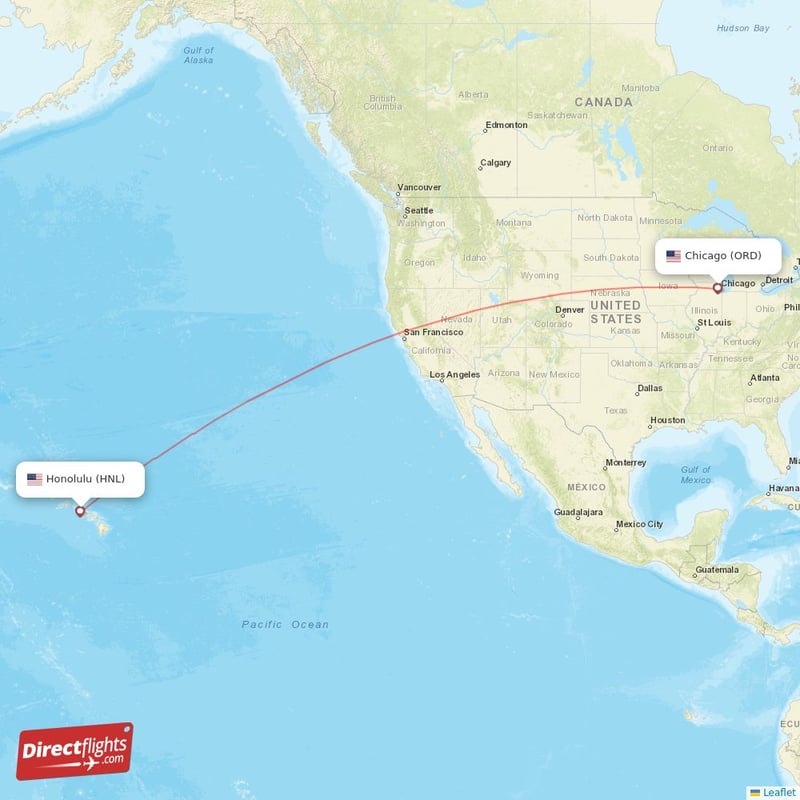
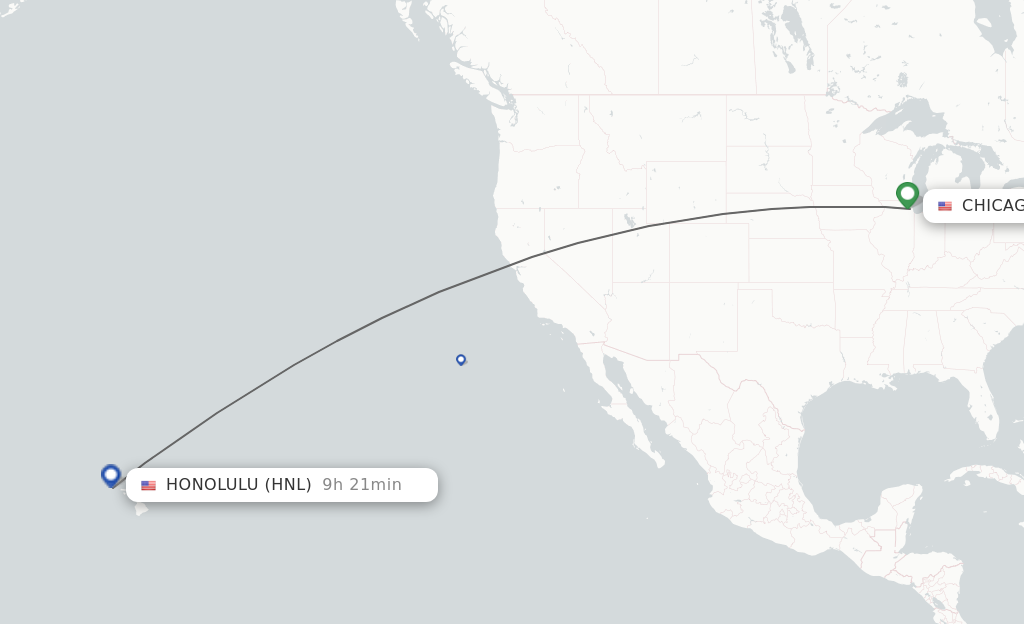
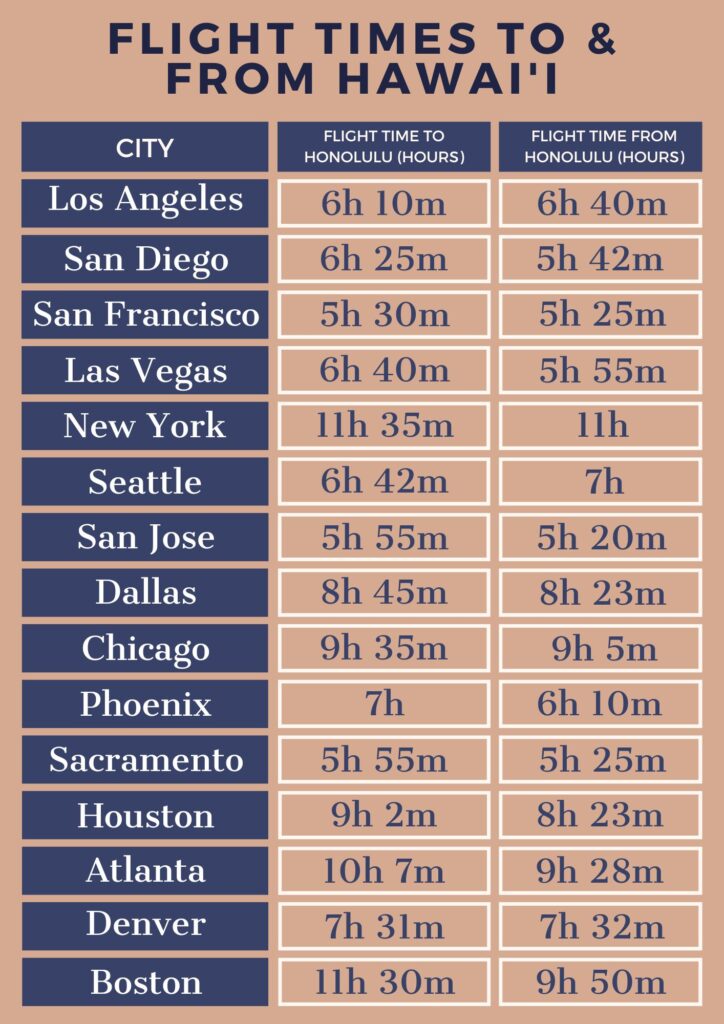
For those fortunate enough to find a non-stop flight, the time spent airborne from Chicago (typically O’Hare International Airport or Midway International Airport) to Hawaii (commonly Honolulu International Airport on Oahu) is generally in the range of 8 to 10 hours. This is a lengthy flight, comparable to transcontinental journeys within North America or even some transatlantic flights. The exact duration can vary slightly depending on factors such as wind speed, the specific route taken by the airline, and the model of aircraft. Airlines like United Airlines and Hawaiian Airlines have historically offered direct services, though availability can fluctuate.
While a direct flight offers the most efficient way to reach Hawaii, it’s important to note that these are not always readily available or the most affordable option. Many travelers opt for flights with layovers due to cost savings or wider scheduling flexibility.
Flights with Layovers: Extended Journeys
The vast majority of flights from Chicago to Hawaii will include at least one layover. These layovers are typically in major West Coast hubs, such as Los Angeles, San Francisco, or Seattle. The duration of these layovers can vary dramatically, from a brief 60-minute window to several hours, and sometimes even an overnight stay.
The total travel time for a flight with a layover can range anywhere from 11 hours to well over 20 hours, depending on the length of the stop. A common scenario might involve an 8-hour flight to a West Coast city, followed by a 3-hour layover, and then another 5-hour flight to Honolulu. This adds up to 16 hours of travel time, not including the time spent getting to and from airports, check-in procedures, security checks, and baggage claim.
It is crucial for travelers to carefully examine the total itinerary provided by airlines when booking. The “total travel time” displayed usually includes the layover duration. Always factor in buffer time for potential delays, especially during peak travel seasons. A shorter layover might seem appealing to minimize travel time, but it increases the risk of missing a connecting flight if the first leg of the journey is delayed. Conversely, a very long layover can lead to significant downtime at an airport, which can be tiring but also offers opportunities for a quick meal or some rest.
Navigating the Time Difference and Arrival Experience
Beyond the physical time spent traveling, the significant time difference between Chicago and Hawaii is a crucial aspect of the journey that impacts arrival and immediate acclimatization.
The Time Zone Shift: Losing Hours
Chicago operates on Central Time (CT), which is UTC-6 during standard time and UTC-5 during daylight saving time. Hawaii, on the other hand, observes Hawaii Standard Time (HST), which is UTC-10 year-round and does not observe daylight saving time. This means that Hawaii is consistently 4 or 5 hours behind Chicago.
For example, if you depart Chicago at 10:00 AM Central Time, and your flight is 9 hours long, you will technically land in Hawaii around 7:00 PM Central Time. However, due to the 5-hour time difference, this will be 2:00 PM Hawaii Standard Time. This time difference is often described as “losing time” as you travel west.
This significant shift can lead to immediate jet lag, even after a relatively short period of time. Arriving in Hawaii in the afternoon or evening local time means you’ve essentially lost a significant portion of your travel day to the time zone shift. Planning your first day in Hawaii with this in mind is essential. A lighter schedule, focusing on settling into your accommodation and perhaps a relaxed stroll along the beach, is often recommended rather than attempting strenuous activities.
Arrival at Hawaiian Airports: The Gateway to Paradise
Upon arrival at Honolulu International Airport (HNL), the main gateway to Hawaii, travelers will experience the welcoming aloha spirit. The airport is well-equipped to handle international and domestic arrivals, offering services such as baggage claim, car rental counters, and information desks. Depending on your final destination within Hawaii, you may need to catch a connecting flight to other islands like Maui, Kauai, or the Big Island (Island of Hawaii). Flights between the islands are typically short, ranging from 30 to 60 minutes.
For those arriving at Honolulu, the process of clearing customs and immigration (if applicable, though most flights from Chicago are domestic) and then proceeding to baggage claim and ground transportation can add another hour or so to your journey. If you’ve opted for a rental car, this is where you’ll collect it. Alternatively, shuttle services, taxis, and ride-sharing options are available to take you to your hotel or resort, such as the iconic Moana Surfrider, A Westin Resort & Spa or the luxurious Halekulani.
The transition from the airport to your accommodation marks the true beginning of your Hawaiian adventure. Even after a long flight, the beauty and tranquility of the islands often help to quickly alleviate travel fatigue.
Optimizing Your Travel Experience: Tips for a Smoother Journey
The long flight from Chicago to Hawaii presents an opportunity to prepare for your vacation and make the most of your time in the air and upon arrival.
Preparation and Comfort on the Flight
- Choose Your Seat Wisely: If possible, book your seat in advance. Aisle seats offer more freedom to move around, while window seats provide a view. Consider the location of restrooms and galley areas to minimize disturbances. For long flights, bulkhead seats or exit row seats can offer more legroom, though they may come with restrictions.
- Pack Smartly: Carry-on luggage should include essentials like medications, a change of clothes, toiletries, entertainment (books, downloaded movies, music), and a neck pillow, eye mask, and earplugs for better sleep. Keeping these items easily accessible will save you from rummaging through overhead bins.
- Stay Hydrated and Move: The dry cabin air can lead to dehydration. Drink plenty of water throughout the flight. It’s also crucial to get up and walk around the cabin every hour or two to improve circulation and reduce the risk of deep vein thrombosis. Simple in-seat stretches can also be beneficial.
- Entertainment is Key: Long flights can be monotonous. Download movies, TV shows, podcasts, and music before you depart. Most airlines offer in-flight entertainment systems, but having your own curated selection ensures you have plenty to keep you occupied.
- Comfortable Attire: Wear loose-fitting, comfortable clothing. Layers are advisable as cabin temperatures can fluctuate.
Making the Most of Layovers
- Strategic Layover Selection: If you have a choice, opt for layovers in airports that offer more amenities, such as comfortable lounges (especially if you have lounge access), diverse dining options, or even opportunities for a brief exploration if the layover is exceptionally long and you have ample time. Airports like San Francisco International Airport and Los Angeles International Airport have a wide array of shops and restaurants.
- Utilize Lounge Access: If you have elite status with an airline, a premium credit card that offers lounge access, or are willing to purchase a day pass, airport lounges can provide a much-needed respite from the crowded terminal. They offer quiet spaces, complimentary food and drinks, and Wi-Fi.
- Stay Connected: Take advantage of layovers to catch up on emails, charge your devices, and communicate with loved ones. Most airports offer free Wi-Fi.
Arrival and Post-Flight Acclimatization
- Immediate Hydration and Nutrition: Upon arrival in Hawaii, prioritize rehydrating and having a healthy meal. This will help your body adjust to the new environment and combat travel fatigue.
- Gentle Activity: Instead of immediately diving into a packed itinerary, engage in light activities like a walk on the beach or a leisurely swim. This helps your body naturally adjust to the new time zone.
- Embrace the Local Rhythm: Hawaii operates on “island time,” a more relaxed pace of life. Try to adopt this mindset from the moment you arrive. Don’t rush your experiences; savor them.
By considering these factors and implementing practical strategies, the long flight from Chicago to Hawaii can transform from a daunting ordeal into a manageable prelude to an unforgettable vacation. The key lies in meticulous planning, prioritizing comfort, and embracing the journey as part of the overall Hawaiian experience.