
Embarking on a journey from the mile-high city of Denver to the sun-drenched shores of Hawaii is a dream for many. This transpacific flight, bridging the continental United States with the remote island paradise, involves a significant time commitment. Understanding the duration of this flight is crucial for effective travel planning, whether you’re anticipating a direct journey or considering layovers. The length of the flight from Denver to Hawaii is not a static figure; it’s influenced by several key factors that can add or subtract from the total travel time.
Factors Influencing Flight Duration
The time spent in the air between Denver and Hawaii is a dynamic equation, shaped by a confluence of variables. While the sheer distance is a primary determinant, atmospheric conditions, aircraft type, and the specific airline’s route can all play a substantial role. For travelers, gaining insight into these elements allows for a more realistic expectation of their journey and can aid in selecting the most efficient travel options.

The Direct Flight Advantage
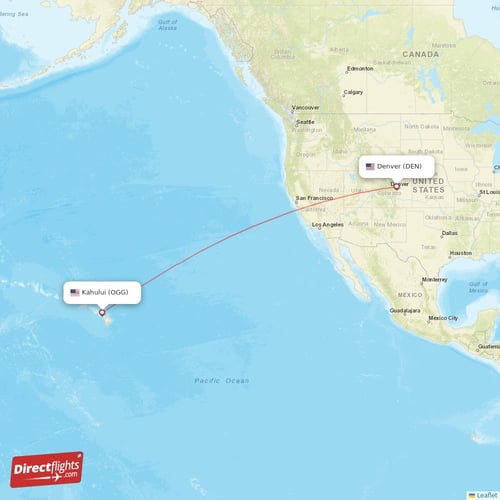
When seeking the most expedient route, a direct flight from Denver International Airport to one of Hawaii’s major airports, such as Daniel K. Inouye International Airport on Oahu or Kahului Airport on Maui, is the most time-efficient choice. These non-stop services bypass the need for intermediate stops, significantly reducing the overall travel time. The flight path typically traverses a considerable portion of the continental United States before venturing over the vast expanse of the Pacific Ocean.
The typical duration for a direct flight from Denver to Hawaii hovers around 5 to 6 hours. This is the airborne time, meaning it excludes the time spent on the ground for taxiing, boarding, and deplaning. The exact time can fluctuate based on the specific island destination within Hawaii as well. Flights to islands like Kauai or the Big Island might be slightly longer or shorter depending on air traffic control and routing. Airlines operating these routes, such as United Airlines and sometimes others depending on seasonal demand, strive for optimal flight paths to minimize fuel consumption and passenger travel time.
The Impact of Wind Patterns and Jet Streams
The flight path from Denver to Hawaii is not merely a straight line on a map. Aircraft navigate utilizing prevailing wind patterns, most notably the jet stream. The jet stream is a fast-flowing current of air found in the upper atmosphere. Depending on the direction of travel, flying with the jet stream, known as a tailwind, can significantly reduce flight times. Conversely, flying against it, or a headwind, will increase the duration.
On the route from Denver to Hawaii, travelers often benefit from tailwinds. The prevailing winds in the upper atmosphere generally flow from west to east. However, the direct flight from the mainland to the islands is a westward journey. While the jet stream typically flows from west to east, its precise position and strength can vary. Pilots and flight planners meticulously study meteorological data to leverage tailwinds and mitigate headwind effects. This can lead to variations of 15 to 30 minutes, and sometimes more, in flight duration. Understanding these meteorological influences provides a deeper appreciation for the complexities of transoceanic aviation.
The Role of Aircraft Type and Airline Scheduling
The type of aircraft used for a flight from Denver to Hawaii can also subtly influence its duration. Modern jetliners are designed for efficiency and speed, but there can still be marginal differences in cruising speeds between various models. For instance, a Boeing 777 might have a slightly different optimal cruising speed compared to an Airbus A330. While these differences are usually minor in the context of a long-haul flight, they are factored into flight planning.
Furthermore, airline scheduling is a critical component. Airlines aim to optimize their flight schedules based on passenger demand, aircraft availability, and operational costs. This can sometimes influence the precise flight paths chosen. While safety and efficiency are paramount, airlines may make minor adjustments to routes to align with their broader operational strategies. This is why, even on direct flights between the same two points, you might notice slight variations in advertised flight times between different airlines or even on different days with the same airline.
Flights with Layovers: Extending the Journey
For travelers whose budgets or schedules necessitate a stopover, the total travel time from Denver to Hawaii can extend considerably. Flights with layovers typically involve a stop in another major U.S. city before continuing on to the islands. This adds not only the flight time of the first leg but also the layover duration itself, which can range from a couple of hours to an entire day or more, depending on the chosen itinerary.
Common Layover Hubs and Their Impact
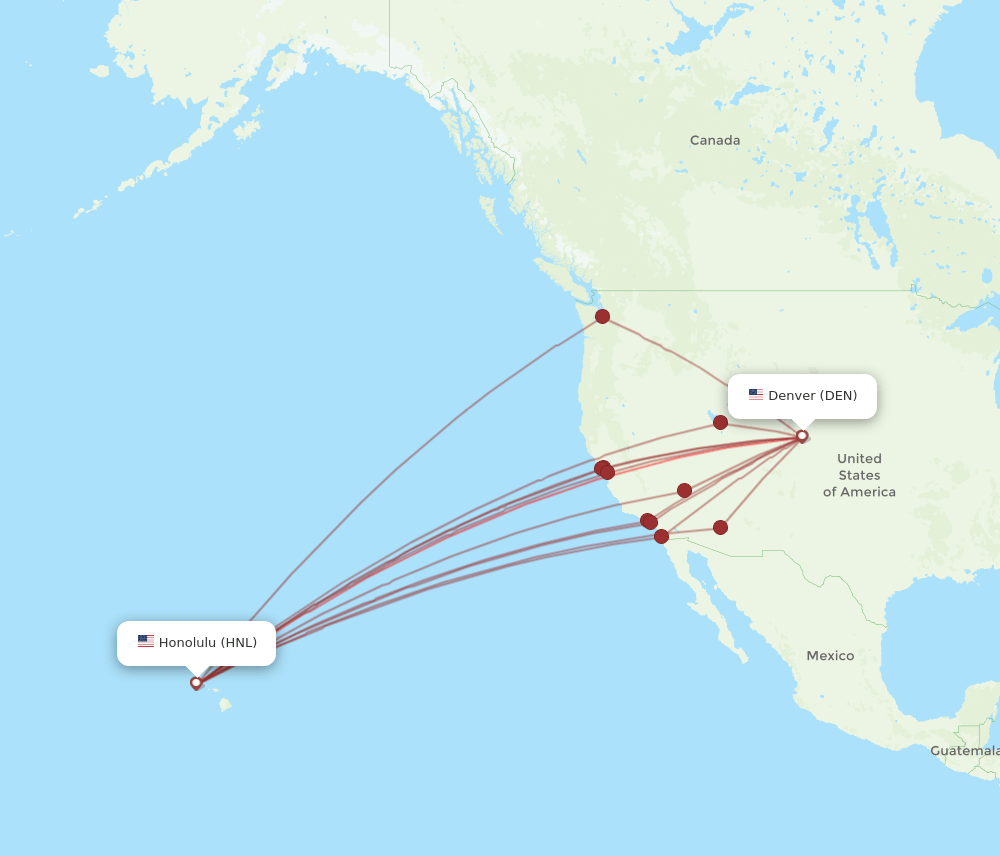
The most common layover cities for flights from Denver to Hawaii are typically on the West Coast of the United States. Cities like Los Angeles, San Francisco, and Seattle serve as major hubs for transpacific travel. The flight time from Denver to these West Coast cities is generally around 2 to 3 hours.
Once you arrive at the layover city, you must disembark, navigate the airport, and proceed to your next gate. The duration of this layover is a significant factor. A short layover, say 1.5 to 2 hours, might feel rushed, especially if your incoming flight is delayed or if you need to change terminals. Longer layovers, while allowing for more relaxed transitions, naturally extend the overall journey. A typical layover duration can add anywhere from 2 to 8 hours, or even more, to the total travel time. Consequently, a flight from Denver to Hawaii with one stopover can easily extend to a total travel time of 8 to 14 hours, sometimes longer if the layover is extensive or if there are multiple connections.
Calculating Total Travel Time with Stops
To accurately gauge the total travel time for a flight with layovers, it’s essential to consider all components of the journey. This includes:
- Flight time to the layover city: The duration of the initial flight from Denver.
- Layover duration: The time spent at the connecting airport. This is the period between your scheduled arrival at the layover city and your scheduled departure for Hawaii.
- Flight time from the layover city to Hawaii: The duration of the second flight segment.
- Time for deplaning, transferring, and boarding: Although part of the layover, it’s worth mentally accounting for the time required to move through the airport.
For example, a flight from Denver to Los Angeles might take 2.5 hours. If your layover in Los Angeles is 3 hours, and the flight from Los Angeles to Honolulu takes another 5.5 hours, your total travel time, excluding time spent at the gate before boarding the first flight and after deplaning the second, would be approximately 11 hours. This calculation becomes even more critical when factoring in potential delays, which can significantly disrupt carefully planned itineraries. Thoroughly reviewing your itinerary and accounting for these various segments is key to managing expectations for a journey involving stopovers.
Planning Your Hawaiian Adventure
Knowing the expected flight duration is a foundational step in planning your trip to Hawaii. This knowledge influences decisions about when to depart, how much time to allocate for the journey, and what to pack for the flight. Whether you opt for a direct flight to maximize your time on the islands or a connecting flight to potentially save on airfare, understanding the time commitment involved is paramount to a smooth and enjoyable travel experience.
Choosing the Right Flight for Your Itinerary
The choice between a direct and a connecting flight often boils down to prioritizing time versus cost. If your primary goal is to reach the beaches of Maui or the volcanic landscapes of the Big Island as quickly as possible, a direct flight is undeniably the superior option. It minimizes the disruption to your schedule and allows you to begin your vacation sooner. Many travelers find the efficiency of a non-stop journey well worth any potential increase in ticket price.
However, if budget is a significant consideration, flights with layovers can offer substantial savings. These routes often require a more flexible approach to travel, as you must be prepared for longer travel days. It’s important to research various airlines and their routes, paying close attention to the total travel time, including layover durations. Sometimes, a strategically chosen layover can provide an opportunity to briefly explore another city or simply break up a very long journey. When comparing options, always look at the total door-to-door travel time, not just the flight hours, to make an informed decision that aligns with your vacation plans and personal preferences.
Preparing for the Flight
Regardless of whether you choose a direct flight or one with layovers, preparation is key to a comfortable journey. Since flights from Denver to Hawaii are long, packing essentials for the duration is recommended. This includes comfortable clothing, layers for varying cabin temperatures, entertainment options such as books, downloaded movies, or music, and any personal comfort items like a neck pillow or eye mask.
Staying hydrated is also crucial, especially on longer flights. Many travelers find it beneficial to carry an empty reusable water bottle through security and fill it up once airside. For flights involving layovers, familiarizing yourself with the connecting airport can reduce stress during transit. Checking gate information upon arrival and knowing the general layout of the airport can save valuable time. By anticipating the length of your journey and preparing accordingly, you can transform a potentially tiring flight into a more relaxed prelude to your Hawaiian adventure.