
Hawaii, the enchanting archipelago nestled in the heart of the Pacific Ocean, beckons travelers with its pristine beaches, lush volcanic landscapes, and vibrant Polynesian culture. The dream of experiencing the aloha spirit often comes with a crucial logistical question: “How long is it to fly to Hawaii?” While the answer isn’t a single, simple number, it’s heavily influenced by your starting point. This guide will delve into the various flight durations to this tropical paradise, taking into account departure locations across the United States and beyond, and will also touch upon factors that can affect your journey, from layovers to time zone adjustments.
Understanding Flight Durations to Hawaii
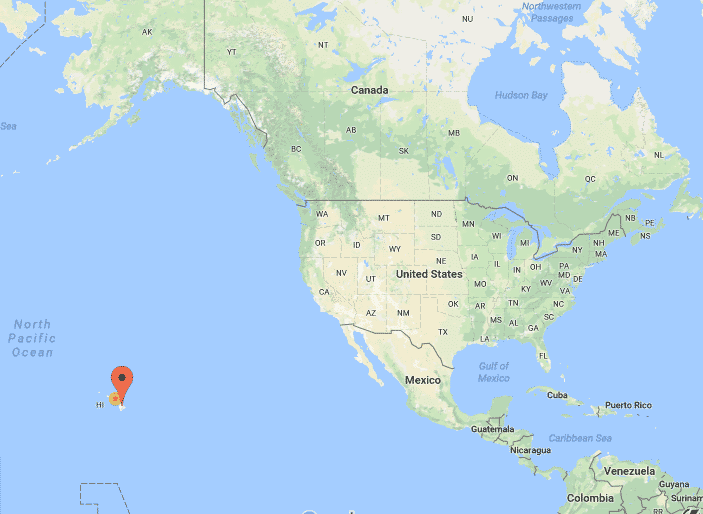
The time it takes to reach Hawaii is a significant consideration for any traveler planning a trip to this iconic destination. Understanding these durations can help in planning your itinerary, packing, and managing expectations for your travel day. Several factors contribute to the overall flight time, with the most prominent being the geographical distance from your departure city.
West Coast Departures: The Shortest Route
For travelers residing on the western seaboard of the United States, flights to Hawaii are generally the shortest and most direct. Cities like Los Angeles, San Francisco, and Seattle are geographically closest to the Hawaiian Islands, making them prime departure points for a swift journey.
Los Angeles to Honolulu
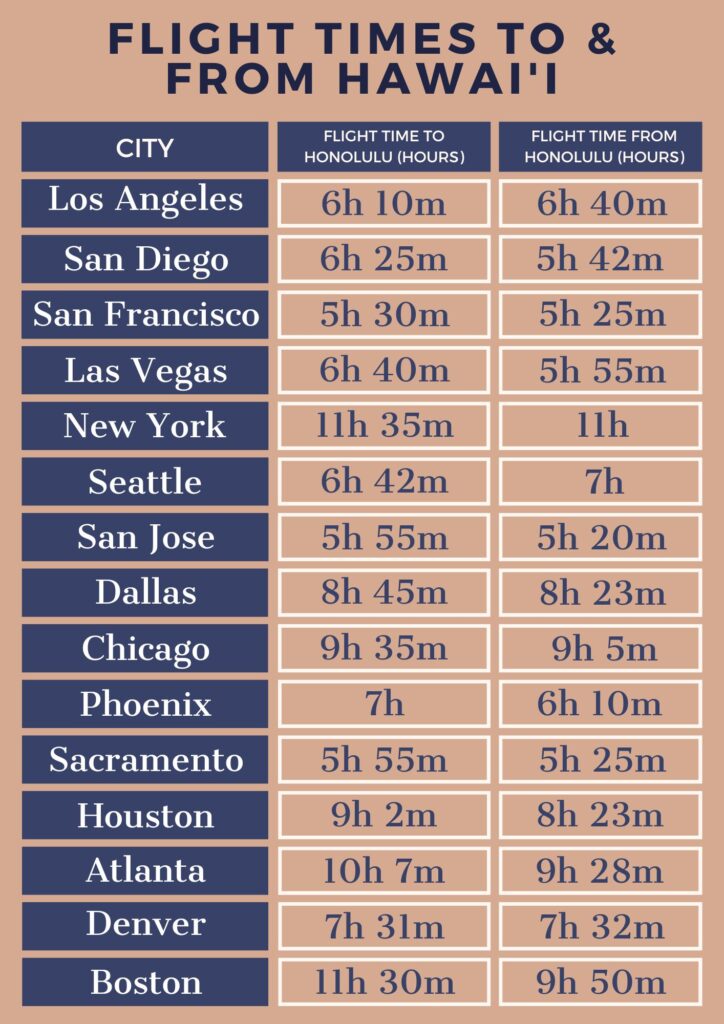
Flights from Los Angeles International Airport (LAX) to Honolulu International Airport (HNL) on the island of Oahu typically range from 5 to 6 hours. This direct flight offers a convenient option for many, allowing for a relatively quick transition from the mainland hustle to island relaxation. Airlines like Hawaiian Airlines, United Airlines, and Delta Air Lines frequently operate this route, providing a good number of daily options. The convenience of this route makes it a popular choice for weekend getaways or shorter vacations.
San Francisco to Honolulu
Similarly, from San Francisco International Airport (SFO), the flight to Honolulu hovers around the 5 to 6-hour mark. The proximity of California to Hawaii means that direct flights are readily available and often competitively priced. The flight path usually takes you over the Pacific, with the breathtaking sight of the islands gradually appearing as you approach.
Seattle to Honolulu
Departing from Seattle-Tacoma International Airport (SEA), the flight duration to Honolulu is slightly longer, typically falling between 5.5 to 6.5 hours. While still considered a relatively short transpacific flight, the extra half hour to an hour is due to the increased distance from Washington State compared to California.
Mountain Time Zone Departures: A Moderate Journey
For those in the Mountain Time Zone, such as Denver, the flight duration to Hawaii increases. The additional distance means a longer time in the air, but direct flights are still commonly available, making the journey manageable.
Denver to Honolulu
A direct flight from Denver International Airport (DEN) to Honolulu generally takes between 7 to 8 hours. This longer flight time requires a bit more preparation, including packing snacks, entertainment, and comfortable attire for the extended period in the air. Airlines like United Airlines and sometimes Southwest Airlines offer this route. It’s important to note that while direct flights are available, they might not be as frequent as those from the West Coast.
Midwest and East Coast Departures: The Long Haul
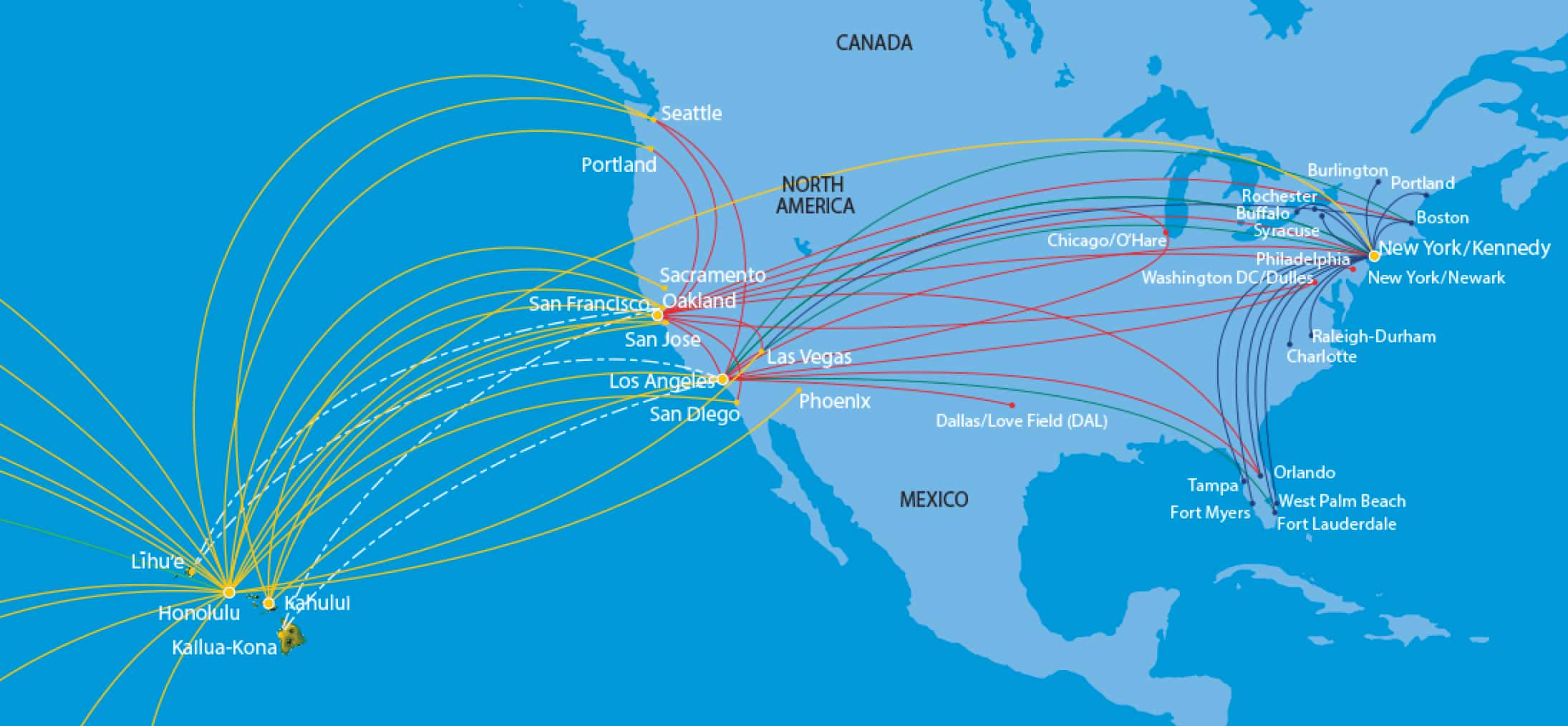
Travelers from the Midwest and East Coast of the United States face the longest flight durations to Hawaii. These journeys often involve either longer direct flights or, more commonly, a layover on the West Coast.
Chicago to Honolulu
Flights from Chicago O’Hare International Airport (ORD) to Honolulu can range from 9 to 10 hours for direct flights. However, direct flights from Chicago are less common. More typically, travelers will find flights with a stopover in a West Coast city like Los Angeles or San Francisco. When factoring in a layover, the total travel time can easily extend to 10 to 13 hours, sometimes even more, depending on the layover duration.
New York City to Honolulu
For East Coast travelers originating from New York City (e.g., John F. Kennedy International Airport – JFK or Newark Liberty International Airport – EWR), the flight to Honolulu is the most extensive. Direct flights are extremely rare and very long, often exceeding 10 hours. The most practical approach for most New Yorkers is to book a flight with a layover, usually on the West Coast. This typically results in a total travel time of 10 to 14 hours, including the layover. This extended journey necessitates careful planning, ensuring comfortable seating, plenty of entertainment, and adequate rest during the travel day.
Other Major East Coast Cities
Similar to New York City, cities like Boston, Washington D.C., and Miami will also experience flight durations comparable to Chicago and New York, with the majority of options involving a layover on the West Coast, leading to total travel times of 10 to 13 hours or more.
Factors Influencing Flight Time
Beyond the departure and arrival points, several other elements can influence how long your flight to Hawaii actually takes. Understanding these nuances can help you prepare for your journey and manage expectations.
Direct Flights vs. Flights with Layovers
The most significant factor affecting travel time is whether you opt for a direct flight or a flight with one or more layovers.
Direct Flights
Direct flights are undeniably the quickest way to reach Hawaii. They eliminate the need to disembark, navigate a new airport, and wait for a connecting flight. As seen with West Coast departures, direct flights can make the journey feel relatively short. However, direct flights are not always available from all cities, and when they are, they might come with a higher price tag.
Flights with Layovers
For many travelers, especially those on the East Coast or in the Midwest, flights with layovers are the most common and often the most economical choice. Layovers typically occur on the West Coast, where airlines have major hubs. While a layover adds to the overall travel time, it can also provide a break during a long journey. The length of the layover is a critical factor; a short layover of 1-2 hours can add around 3-5 hours to your total travel time, whereas a longer layover can push it to 10-12 hours or more. It’s essential to carefully review the total travel time when booking flights with layovers, ensuring it aligns with your schedule and tolerance for extended travel.
Airline and Aircraft Type
While less impactful than departure location or layovers, the specific airline and aircraft type can introduce minor variations in flight duration. Different airlines may have slightly different flight paths due to air traffic control preferences or fuel optimization strategies. Similarly, the cruising speed of various aircraft models can account for minor differences. However, these variations are typically measured in minutes rather than hours and are usually not a primary concern for most travelers.
Weather and Air Traffic
Unforeseen circumstances such as weather patterns and air traffic congestion can also cause delays, extending flight times. While airlines strive to maintain schedules, severe weather in the departure, arrival, or en route regions can lead to diversions or delays. Similarly, busy air corridors, especially around major airports, can result in holding patterns, adding to the flight duration. These are factors that are beyond your control, but it’s wise to build some buffer time into your travel plans, especially if you have time-sensitive connections or reservations immediately upon arrival.
Time Zone Changes
It’s crucial to remember that when you fly to Hawaii, you will be crossing time zones. Hawaii observes Hawaii Standard Time (HST), which is UTC-10. This means that when you arrive in Hawaii, the local time will be significantly earlier than what you are accustomed to on the mainland United States.
East Coast to Hawaii
For example, if you depart from New York City at 9 AM EST, and your flight is 10 hours long, you might arrive in Honolulu around 2 PM HST on the same calendar day. However, factoring in the 5-hour time difference means that if you hadn’t traveled, it would be 7 PM EST. This time difference can significantly impact your perception of travel time and your ability to adjust to your new surroundings.
West Coast to Hawaii
From the West Coast, the time difference is 3 hours. A 6-hour flight departing Los Angeles at 10 AM PST will arrive in Honolulu at 1 PM HST. If you hadn’t traveled, it would be 1 PM PST. This smaller time difference makes adjusting to local time a bit easier for West Coast travelers.
Planning Your Hawaiian Adventure
Knowing how long it takes to fly to Hawaii is just the first step in planning your dream vacation. Once you have a handle on flight durations, you can better choose your departure city, select flights that suit your schedule, and prepare for the journey.
Choosing Your Island and Accommodation
Hawaii is comprised of several distinct islands, each offering a unique experience. Oahu is home to the bustling capital of Honolulu and the famous Waikiki Beach, offering a blend of city life and beach relaxation. Maui is renowned for its stunning beaches, the scenic Hana Highway, and the majestic Haleakala National Park. Kauai, known as the “Garden Isle,” boasts dramatic cliffs, lush rainforests, and the breathtaking Na Pali Coast. The Big Island of Hawaii offers a diverse landscape, from active volcanoes at Hawaii Volcanoes National Park to black sand beaches and coffee plantations.
When it comes to accommodation, Hawaii offers a wide array of options to suit every budget and travel style. You can choose from luxurious beachfront resorts like the Grand Hyatt Hotel on Maui or charming boutique hotels in historic towns. For families or longer stays, consider renting an apartment or a private villa. Numerous booking platforms allow you to compare prices and read reviews, ensuring you find the perfect place to stay. Popular areas for hotels include Waikiki on Oahu, Ka’anapali on Maui, and Poipu on Kauai.
Packing and Preparation
Given the flight durations, especially for those coming from further afield, packing smart is essential. Comfortable clothing is a must, as you’ll be spending a considerable amount of time in transit. Don’t forget essentials like sunscreen, a hat, swimwear, and light jackets for cooler evenings. For longer flights, consider bringing a neck pillow, eye mask, and earplugs to maximize comfort and sleep.
Embracing the Aloha Spirit
Upon arrival, remember that Hawaii operates on its own rhythm. The “aloha spirit” encourages a relaxed and welcoming atmosphere. While flight times can be long, the reward of stepping onto Hawaiian soil, breathing in the fragrant air, and experiencing the laid-back lifestyle is well worth the journey. Whether you’re seeking adventure, relaxation, or cultural immersion, your trip to Hawaii is sure to be an unforgettable experience. Remember to factor in the time difference when planning your first day’s activities, allowing yourself time to adjust and settle in before embarking on your island explorations.