
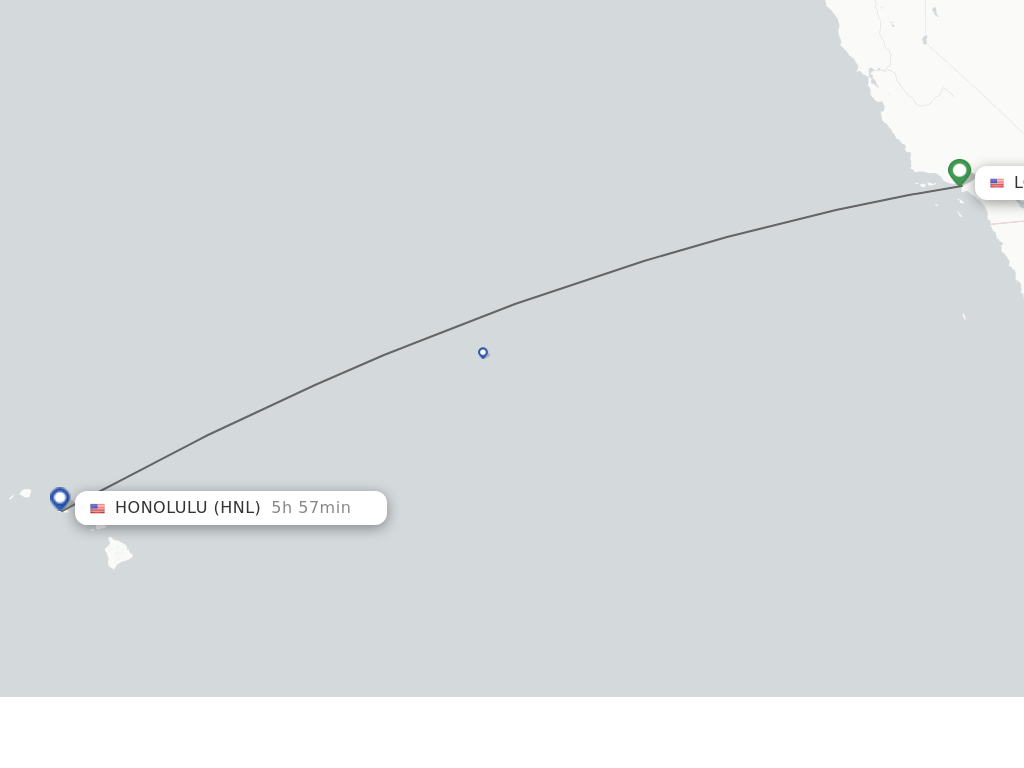
Embarking on a journey from the bustling metropolis of Los Angeles to the serene shores of Hawaii is a quintessential American dream. The allure of the Aloha State, with its vibrant culture, stunning landscapes, and endless opportunities for adventure and relaxation, draws millions of visitors each year. For many, the first logistical question that arises when planning this dream vacation is: How long is the flight? While seemingly a straightforward query, the answer can vary based on several factors. Typically, a direct flight from Los Angeles to one of Hawaii’s major islands clocks in at approximately 5 hours to 6 hours and 15 minutes.
This article will delve into the specifics of flight durations, explore the key factors that influence travel time, highlight major airports and airlines serving this popular route, and offer insights into planning your ultimate Hawaiian escape. From understanding the nuances of air travel to selecting the perfect island retreat and navigating your way around, consider this your comprehensive guide to crossing the vast Pacific Ocean for an unforgettable experience. Whether you’re a seasoned globetrotter or planning your first island getaway, knowing what to expect during your journey is the first step toward a seamless and enjoyable vacation.
Understanding Flight Duration: The Core Factors
The stated flight time of 5 to 6 hours is an average for a direct route. However, several elements can subtly or significantly alter your actual travel duration. Understanding these factors will help you better predict your journey and manage expectations, especially when considering different airlines or itineraries.
Direct vs. Connecting Flights
The most significant factor influencing your total travel time is whether you opt for a direct or a connecting flight.
- Direct Flights: As mentioned, direct flights from Los Angeles to major Hawaiian airports generally range from 5 to 6.25 hours. These are often the preferred choice for convenience and speed, offering a seamless journey across the Pacific.
- Connecting Flights: While less common for this popular route, connecting flights can significantly extend your travel time. These typically involve a stopover at another airport, adding several hours due to layovers and the additional leg of travel. For instance, a flight from Los Angeles to a less-frequented Hawaiian airport might require a connection through Honolulu or another West Coast hub, pushing total travel time well past 8 hours, sometimes exceeding 10-12 hours depending on the layover duration. Always prioritize direct options for this route if minimizing travel time is your goal.
Aircraft Type and Air Speed
The type of aircraft used for your flight also plays a subtle role in flight duration. Modern commercial airliners are designed for efficiency and speed, but there can be variations. Larger, wide-body jets, often used for longer routes, tend to fly at higher cruising altitudes and speeds compared to smaller narrow-body aircraft. However, the differences for a route of this length are usually minor, perhaps shaving off 15-30 minutes at most. What’s more impactful is the wind speed and direction encountered during the flight.
Weather Conditions and Air Traffic
Nature and logistics have a substantial say in actual flight times.
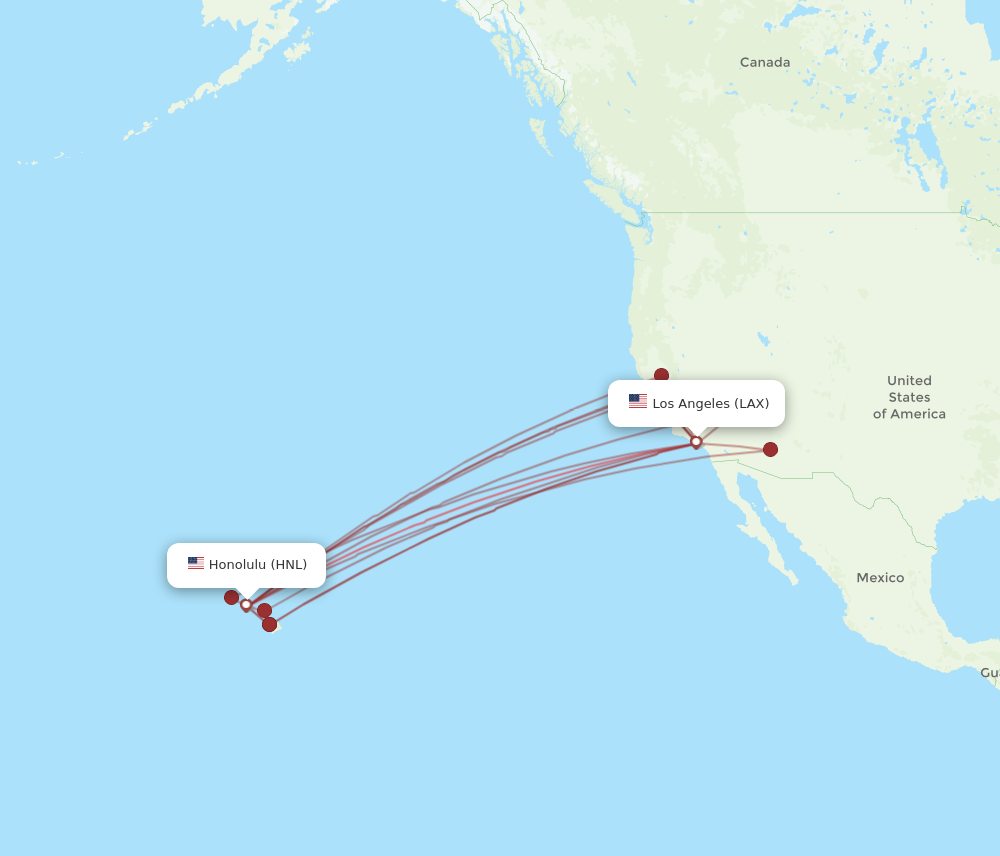
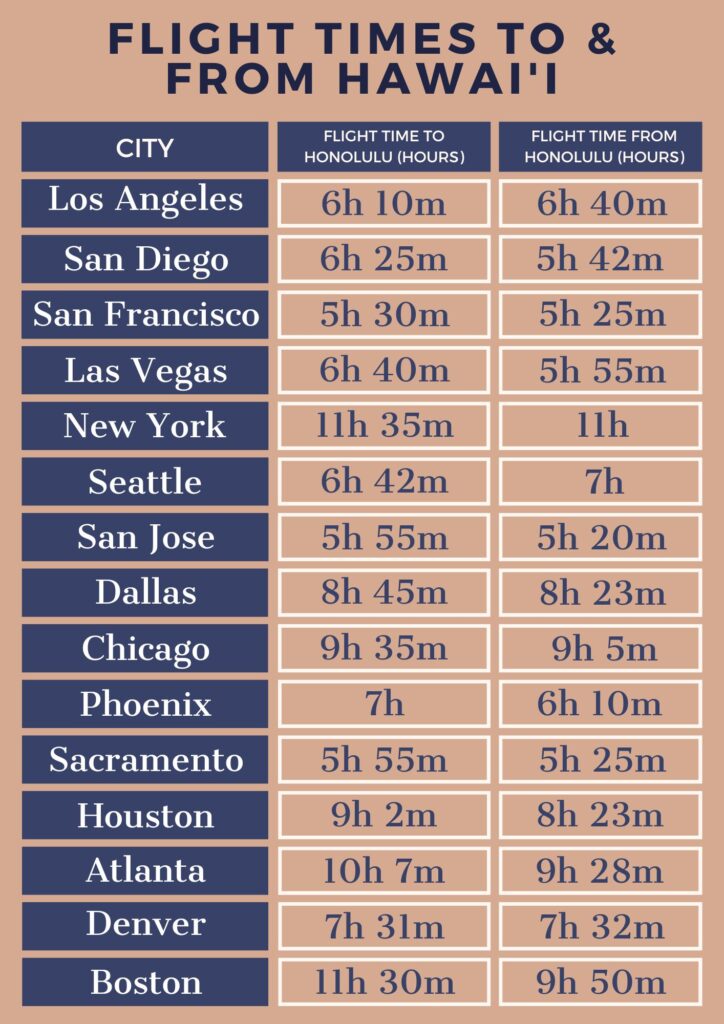
- Tailwinds and Headwinds: Flights from Los Angeles to Hawaii typically benefit from prevailing tailwinds, which can reduce flight time. Conversely, the return journey often faces headwinds, making the flight back to the mainland slightly longer, typically ranging from 5.5 to 6.5 hours. These natural phenomena can cause variations of 20-45 minutes.
- Air Traffic Control (ATC): Heavy air traffic at departure (e.g., LAX) or arrival airports (e.g., Daniel K. Inouye International Airport in Honolulu) can lead to delays in takeoff or holding patterns upon arrival. While typically not adding hours, these can cause 15-30 minute variations, contributing to the overall journey time.
Specific Departure and Arrival Airports
While the starting point is Los Angeles, the specific airport within Hawaii you fly into will also impact your flight duration. Hawaii comprises several islands, each with its own major airport.
- Daniel K. Inouye International Airport (HNL) on Oahu: This is the primary gateway to Hawaii and the closest major airport from Los Angeles. Direct flights usually take around 5 hours to 5 hours 30 minutes.
- Kahului Airport (OGG) on Maui: Flights to Maui are slightly longer, typically 5 hours 30 minutes to 5 hours 45 minutes, due to its position further west.
- Lihue Airport (LIH) on Kauai: Expect flights to Kauai to be in the 5 hours 45 minutes to 6 hours range.
- Kona International Airport (KOA) and Hilo International Airport (ITO) on the Big Island: The Big Island is the furthest, with direct flights often taking 6 hours to 6 hours 15 minutes.
Considering these variables, it’s always best to check the specific flight details provided by your chosen airline for the most accurate estimated travel time.
Major Airports and Routes Between Los Angeles and Hawaii
The route between Los Angeles and Hawaii is one of the busiest trans-Pacific corridors, served by numerous airlines and connecting to all major Hawaiian islands.
Los Angeles International Airport (LAX)
Los Angeles International Airport, or LAX, is one of the world’s busiest airports and the primary departure point for flights to Hawaii from Southern California. LAX offers an extensive network of flights, with multiple daily departures to various Hawaiian destinations. Its sheer size means a wide array of amenities, dining options, and lounges, but also implies the need for ample time to navigate security and gate transfers, especially during peak travel seasons.
Key Hawaiian Airports
Hawaii is an archipelago, and most visitors fly into one of the following main airports, depending on their desired island experience:
- Daniel K. Inouye International Airport (HNL), Oahu: Located in Honolulu, HNL is the busiest airport in Hawaii and the main entry point for international travelers and those heading to popular spots like Waikiki, Pearl Harbor, and Diamond Head.
- Kahului Airport (OGG), Maui: Serving the “Valley Isle,” OGG is your gateway to world-famous beaches, the scenic Road to Hana, and the majestic Haleakala National Park.
- Lihue Airport (LIH), Kauai: For those seeking lush landscapes, dramatic cliffs of the Na Pali Coast, and the “Grand Canyon of the Pacific,” Waimea Canyon, LIH is the destination.
- Kona International Airport (KOA) and Hilo International Airport (ITO), Big Island: The Big Island boasts two major airports, serving the west (Kona side) and east (Hilo side) coasts. KOA is popular for resort stays and coffee farm tours, while ITO is closer to Hawaii Volcanoes National Park and lush rainforests.
Popular Airlines Serving the Route
A competitive market ensures frequent flights and various options for travelers. Key airlines flying direct from LAX to Hawaii include:
- Hawaiian Airlines: The flagship carrier of Hawaii, known for its authentic island hospitality.
- United Airlines: A major legacy carrier with a strong presence on this route.
- Delta Air Lines: Another prominent US airline offering frequent services.
- American Airlines: Provides regular flights to multiple Hawaiian islands.
- Southwest Airlines: Offers budget-friendly options with its unique baggage policy.
- Alaska Airlines: Another popular choice, especially for those seeking competitive fares.
These airlines typically offer a range of cabin classes, from economy to first class, allowing travelers to choose their desired level of comfort for the journey across the Pacific.
Beyond the Flight: Planning Your Hawaiian Getaway
Once you’ve factored in the flight duration, the real fun begins: planning your activities and accommodations in Hawaii. The website’s focus on Travel, Hotels, Tourism, Accommodation, Landmarks, and Lifestyle aligns perfectly with crafting an unforgettable island experience.
Choosing Your Hawaiian Island
Each Hawaiian island offers a distinct personality and set of experiences:
- Oahu: The Gathering Place: Home to the capital city of Honolulu and the iconic Waikiki Beach, Oahu is a vibrant blend of urban sophistication and natural beauty. Explore historical sites like Pearl Harbor, hike to the summit of Diamond Head, or catch waves on the legendary North Shore.
- Maui: The Valley Isle: Renowned for its stunning beaches like Kaanapali Beach, luxurious resorts in areas like Lahaina, and natural wonders such as the scenic Road to Hana and sunrise at Haleakala National Park. Maui offers a balance of adventure and indulgence.
- Kauai: The Garden Isle: Lush, green, and wild, Kauai is perfect for nature lovers. Explore the dramatic cliffs of the Na Pali Coast, hike through Waimea Canyon, or relax on the pristine beaches of Poipu.
- Big Island of Hawaii: The Orchid Isle/Volcano Island: The largest and youngest island, offering incredible diversity from active volcanoes in Hawaii Volcanoes National Park to snow-capped Mauna Kea and black sand beaches. Popular towns include Kailua-Kona and Hilo.
- Lanai and Molokai: For a truly off-the-beaten-path experience, consider these smaller, less developed islands offering tranquility and unique cultural insights.
Accommodation Options in Hawaii
Hawaii caters to every traveler’s budget and style, from opulent resorts to charming boutique hotels and budget-friendly vacation rentals.
- Luxury Resorts: Islands like Maui and Oahu boast world-class resorts such as the Four Seasons Resort Maui at Wailea or The Ritz-Carlton, Kapalua, offering unparalleled amenities, fine dining, and stunning oceanfront views.
- Boutique Hotels: For a more intimate and personalized experience, consider boutique hotels that often highlight local art and culture.
- Vacation Rentals (Apartments, Villas): Ideal for families or longer stays, vacation rentals offer more space and the flexibility of self-catering.
- Budget Stays: Hostels and smaller guesthouses are available, especially in areas like Honolulu and Lahaina, for the cost-conscious traveler.
Booking in advance is highly recommended, especially during peak seasons, to secure the best rates and desired locations.
Activities and Attractions
Hawaii is an adventurer’s paradise and a haven for relaxation.
- Beaches: Sunbathe on white, black, or even green sand beaches. Swim, snorkel, or simply relax by the Pacific waters.
- Water Sports: Learn to surf in Waikiki, go paddleboarding, kayaking, or embark on a whale-watching tour (seasonal).
- Hiking: Explore lush rainforests, volcanic craters, and dramatic coastlines on countless trails across the islands.
- Cultural Experiences: Immerse yourself in the rich Hawaiian culture through luaus, hula performances, historical tours, and interactions with local communities.
- Food: Savor fresh poke, traditional plate lunches, shaved ice, and world-renowned coffee.
Best Time to Visit and Travel Tips
Hawaii enjoys pleasant weather year-round, but generally, the dry season (April to October) offers less rain and warmer temperatures, while the wet season (November to March) can bring more precipitation but also bigger waves for surfing. Shoulder seasons (April-May, September-October) often provide a good balance of weather and fewer crowds. Remember to pack light, reef-safe sunscreen, comfortable walking shoes, and a sense of aloha.
Making the Journey Comfortable: Tips for Long-Haul Flights
While 5-6 hours isn’t an ultra-long-haul flight, it’s still a significant amount of time to spend in the air. Preparing adequately can make a world of difference for your comfort and arrival readiness.
Pre-Flight Preparations
- Booking and Seating: Book your flights well in advance for better prices and seat selection. Consider paying extra for seats with more legroom if comfort is a priority. Window seats offer views, while aisle seats provide easier access for stretching.
- Packing Smart: Pack essentials like medications, a change of clothes, toiletries, and any valuables in your carry-on. Don’t forget your swim gear so you can hit the beach soon after landing!
- Documents: Ensure your ID and any necessary travel documents are easily accessible.
- Hydration: Start hydrating a day before your flight. Avoid excessive caffeine and alcohol, which can contribute to dehydration.
During the Flight
- Stay Hydrated: Drink plenty of water throughout the flight.
- Move Around: Get up and stretch every couple of hours to promote circulation and prevent stiffness. Do simple leg and foot exercises in your seat.
- Comfort: Wear loose, comfortable clothing. Bring a neck pillow, eye mask, and earplugs or noise-canceling headphones for better rest.
- Entertainment: Load up your devices with movies, TV shows, podcasts, or e-books. Most airlines offer in-flight entertainment, but having your own backup is always a good idea.
- Snacks: Pack some healthy snacks to avoid reliance on airline food or to satisfy cravings between meal services.
Arriving in Hawaii
- Time Zones: Hawaii observes Hawaii Standard Time (HST), which does not follow Daylight Saving Time. This means a 3-hour difference from Los Angeles during Daylight Saving Time and a 2-hour difference outside of it. Adjust your watch during the flight to minimize jet lag.
- Ground Transportation: Upon arrival, have your ground transportation plans sorted. Rental cars are popular and often recommended for exploring the islands, but taxis, ride-shares, and shuttle services are also available.
The flight from Los Angeles to Hawaii is a relatively short trans-oceanic journey, typically lasting between 5 and 6.5 hours for a direct route. While this duration is influenced by factors like the specific Hawaiian island, aircraft type, and weather conditions, it is a manageable travel time that serves as a mere prelude to the paradise that awaits. By understanding these dynamics and preparing thoughtfully, your journey across the Pacific will be a comfortable and exciting part of your overall Hawaiian adventure. So, pack your bags, prepare for a relatively swift flight, and get ready to say “Aloha” to the islands!