
The vast expanse of the United States is a tapestry woven with diverse landscapes, vibrant cultures, and iconic cities. Among the most celebrated cross-country journeys is the one connecting the bustling metropolis of New York to the sun-drenched shores of Los Angeles. This iconic route, stretching across thousands of miles, represents more than just a geographical distance; it’s a quintessential American adventure, a transition from the historic East Coast to the glamorous West Coast.
Determining the precise mileage between these two titans of industry and culture depends on the chosen mode of transport and the specific route taken. However, for the most common travel methods, we can establish a clear understanding of the distances involved. This exploration will delve into the mileage, the experience of traversing this distance, and the myriad of possibilities that await travelers on this remarkable journey.

The Direct Distance: Understanding the Mile Markers
When contemplating the question “How Many Miles From New York To Los Angeles?”, the most straightforward answer comes from understanding the direct, or “as the crow flies,” distance. This is the shortest possible route, assuming no terrestrial obstacles. Geographically, New York and Los Angeles are separated by approximately 2,445 miles (3,934 kilometers). This figure serves as a baseline, a fundamental understanding of the sheer scale of the continent.
However, for any traveler, this direct distance is largely theoretical. Our actual journeys are dictated by the infrastructure of roads, railways, and flight paths. The realities of travel introduce variations, making the practical mileage slightly different.
Driving Distance: A Road Trip Across America
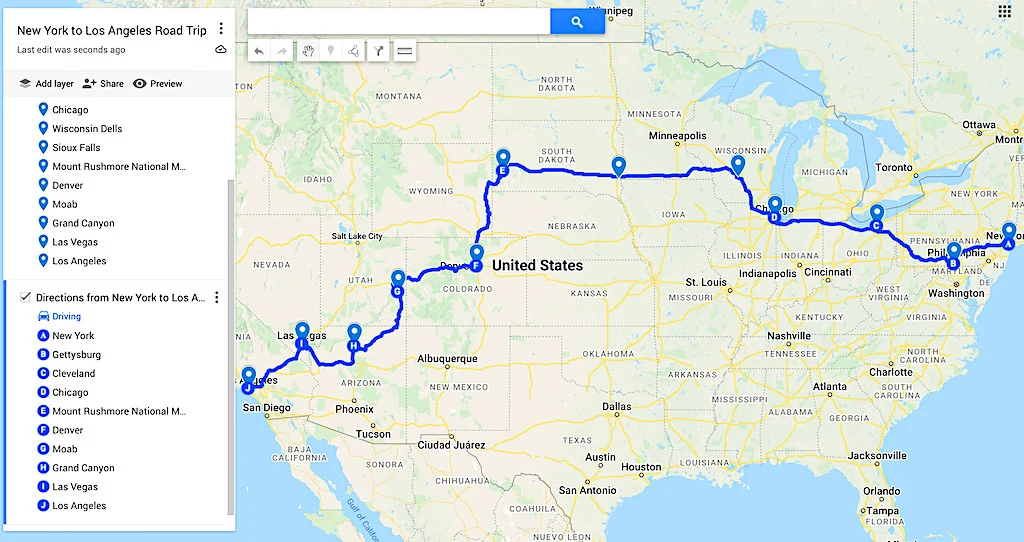
The allure of a cross-country road trip is deeply ingrained in the American psyche. The freedom to set your own pace, discover hidden gems along the way, and witness the changing landscapes firsthand makes driving a popular choice for many. The most common driving routes between New York and Los Angeles typically span between 2,700 and 3,000 miles, depending on the chosen highways and any detours taken.
The most popular and efficient driving route often involves taking Interstate 80 (I-80) for a significant portion of the journey. This transcontinental highway cuts through the heartland of America, offering a glimpse into the diverse topography of states like Pennsylvania, Ohio, Illinois, Iowa, Nebraska, Wyoming, Utah, and Nevada. From Nevada, travelers then typically head south towards California.
Another viable route might involve heading south earlier, perhaps through states like Virginia or Tennessee, before making its way westward. This route can offer a different set of attractions and regional flavors. Regardless of the specific path, driving this distance is a significant undertaking, often requiring at least four to five days of dedicated driving, assuming long travel days. Many opt for a longer itinerary, dedicating a week or more to truly experience the journey and explore the attractions along the way.
The mileage itself is a statistic, but the experience of driving is rich with sensory details: the endless ribbon of asphalt, the changing sky, the iconic roadside diners, and the vast, open spaces that define the American landscape. Planning a driving trip requires meticulous attention to detail, from vehicle maintenance and route planning to accommodation and fuel stops.
Flying: The Fastest Way to Bridge the Gap
For those with time constraints or a preference for speed, flying remains the most practical method to travel between New York and Los Angeles. The aerial distance, while closely mirroring the direct mileage, is traversed in a matter of hours. Commercial flights typically cover the approximately 2,450-mile distance in about five to six hours of flight time, not including time spent at airports for check-in, security, and boarding.
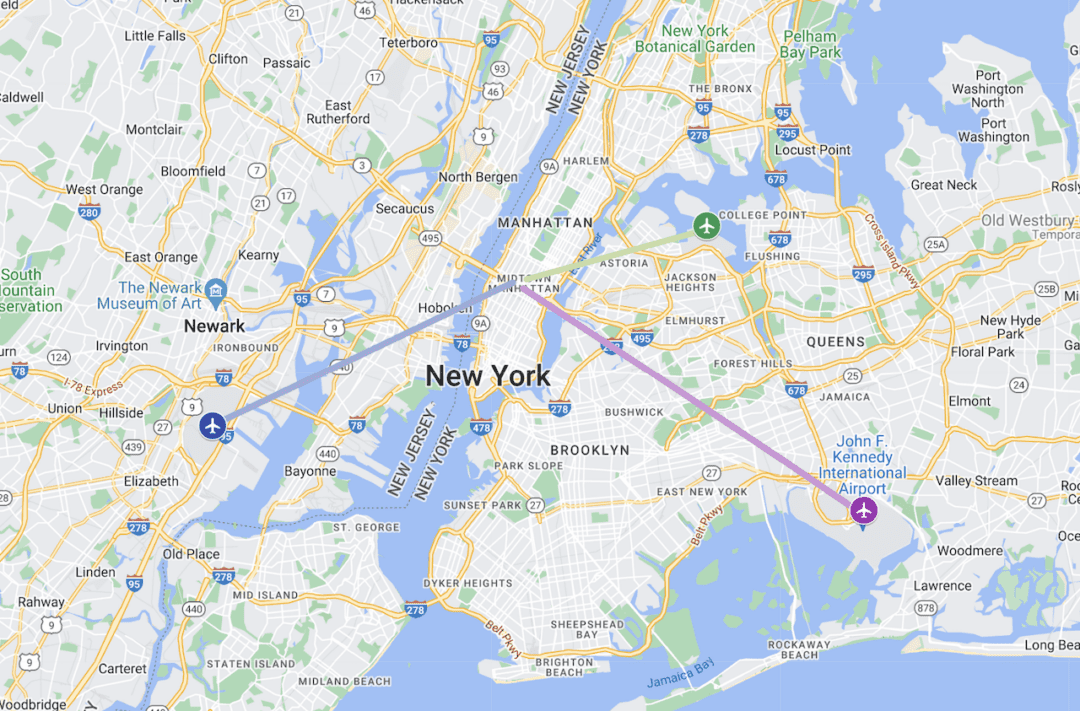
The primary airports serving New York are John F. Kennedy International Airport (JFK), LaGuardia Airport (LGA), and Newark Liberty International Airport (EWR). On the Los Angeles side, travelers typically arrive at Los Angeles International Airport (LAX), or potentially at smaller airports like Hollywood Burbank Airport (BUR) or Long Beach Airport (LGB).
While the flight itself is a swift transition, the overall travel time includes the logistics of getting to and from airports, navigating terminals, and potential delays. Nonetheless, flying offers an unparalleled efficiency in covering the vast geographical expanse. The mileage conquered in mere hours is a testament to modern aviation technology.
Train Travel: A Scenic and Relaxing Alternative
For a more leisurely and scenic approach, train travel offers a unique perspective on the American continent. While not as direct or as fast as flying, a train journey from New York to Los Angeles is an experience in itself, often involving transfers and a longer overall travel time. The Amtrak routes that connect these two cities typically involve a journey of around 2,800 to 3,000 miles, depending on the specific train and route combination.
The most common Amtrak route would likely involve taking a train from New York to Chicago, and then transferring to another train bound for Los Angeles. The journey can take anywhere from 65 to 75 hours, or even longer, making it a multi-day adventure. This extended travel time, however, is part of its appeal for those who appreciate the slower pace and the opportunity to witness the changing scenery unfold.
Travelers on the train can enjoy comfortable seating, dining car services, and often the option of sleeper cars for overnight journeys. It’s a chance to disconnect from the hurried pace of modern life and immerse oneself in the vastness of the United States. The mileage covered by train is substantial, and the experience provides a profound appreciation for the scale of the country.
Navigating the Journey: Experiences and Considerations
The distance between New York and Los Angeles is not just a number; it represents a journey with diverse experiences and practical considerations. Whether one chooses to drive, fly, or take the train, the decision impacts not only the mileage covered but also the overall travel narrative.
Destinations Along the Way: Uncovering America’s Heart
The driving and train routes between New York and Los Angeles offer an unparalleled opportunity to explore a multitude of destinations that define the American experience. This journey is a living museum of geography, history, and culture.
For those driving on I-80, iconic stops include the vibrant city of Chicago, with its impressive architecture and world-class museums like the Art Institute of Chicago. Further west, travelers can witness the dramatic landscapes of the Rocky Mountains in Wyoming or explore the unique geological formations of Arches National Park and Canyonlands National Park in Utah. The vastness of the Great Basin in Nevada offers a stark beauty, leading towards the vibrant lights of Las Vegas, a city that is a landmark in its own right.
If a more southern route is taken, opportunities abound to explore the rich history of states like Virginia, visit the musical hubs of Nashville, Tennessee, or witness the natural wonders of the Grand Canyon National Park in Arizona. Each state and each town offers a unique slice of American life, from its local cuisine to its historical landmarks.
Accommodation Choices: From Luxury Resorts to Budget Stays
The vastness of the journey necessitates planning for accommodation. The options are as varied as the landscape itself, catering to every budget and travel style.
Hotels are ubiquitous along major travel corridors, offering everything from well-known chains like Marriott and Hilton to independent boutique establishments. In larger cities like Chicago or Denver, travelers can find luxurious hotels and resorts, such as the Four Seasons Hotel Chicago or the Ritz-Carlton Denver, offering premium amenities and services. For those seeking apartment-style living or longer stays, serviced apartments are also increasingly available.
Budget-conscious travelers can find a plethora of affordable motels and budget hotels lining the highways. Campgrounds and RV parks are also plentiful, particularly in national and state parks, offering a more immersive experience with nature. For those who prefer unique accommodations, consider villas or vacation rentals in popular tourist areas. The selection of accommodation plays a significant role in the overall travel experience, influencing both comfort and cost.
Lifestyle Considerations: Tailoring the Trip to Your Needs
The decision of how to travel and what to see is deeply personal and often dictated by lifestyle.
Luxury Travel enthusiasts might opt for first-class flights, private car services, and stays in five-star hotels or exclusive resorts. They might focus on renowned golf courses, gourmet dining experiences, and high-end shopping in cities like New York or Los Angeles.
Budget Travelers will prioritize cost-effective options, such as economy flights, driving their own vehicle, or opting for dormitory-style accommodation or hostels. They might focus on free attractions, picnicking, and seeking out local, affordable eateries.
Family Trips often require a balance of convenience, entertainment, and affordability. Driving allows for flexibility with children, with plenty of stops for stretching and exploring. Attractions like theme parks, interactive museums, and national parks that offer educational programs are often high on the itinerary.
Business Stays, while potentially shorter, still involve significant mileage for those traveling between New York and Los Angeles. The focus here is typically on efficient travel, comfortable and well-equipped hotels with business amenities, and quick access to meeting locations.
The Ultimate Destination: Arrival in the City of Angels
After traversing thousands of miles, the arrival in Los Angeles marks the culmination of a remarkable journey. This sprawling metropolis, famous for its entertainment industry, beautiful beaches, and diverse neighborhoods, offers a wealth of attractions.
From the iconic Hollywood Walk of Fame and the grandeur of the Griffith Observatory to the sun-kissed sands of Santa Monica and Venice Beach, Los Angeles is a city that embodies a distinct Californian lifestyle. The mileage covered during the trip transforms into the anticipation of experiencing this legendary city. Whether one arrives after a long drive, a swift flight, or a scenic train ride, the transition from New York to Los Angeles is a profound experience, a testament to the vastness and diversity of the United States. The journey itself, with all its stops, sights, and experiences, is as memorable as the destination.