
California, a state synonymous with diverse landscapes, vibrant cities, and unparalleled natural beauty, is home to a staggering nine national parks, more than any other state in the United States. From the lowest point in North America to the tallest trees on Earth, and from sun-baked deserts to active volcanoes, these protected areas offer an extraordinary mosaic of ecosystems, geological wonders, and recreational opportunities. For travelers seeking adventure, tranquility, or a deep dive into nature’s grandeur, California’s national parks present an endless array of experiences, perfectly aligning with the spirit of exploration and discovery championed by our travel guides and destination insights.
Each of these nine national parks tells a unique story, inviting visitors to immerse themselves in breathtaking scenery, rich history, and thrilling activities. Whether you’re a seasoned backpacker, a family on a road trip, or a luxury traveler seeking an exclusive nature retreat, the Golden State’s parks cater to every lifestyle and interest. Understanding what each park offers, how to plan your visit, and where to find the best accommodation will transform your trip from a mere vacation into an unforgettable journey. This comprehensive guide will navigate you through California’s national treasures, offering insights into their distinct characteristics, ideal visitor experiences, and practical tips for making the most of your adventure.
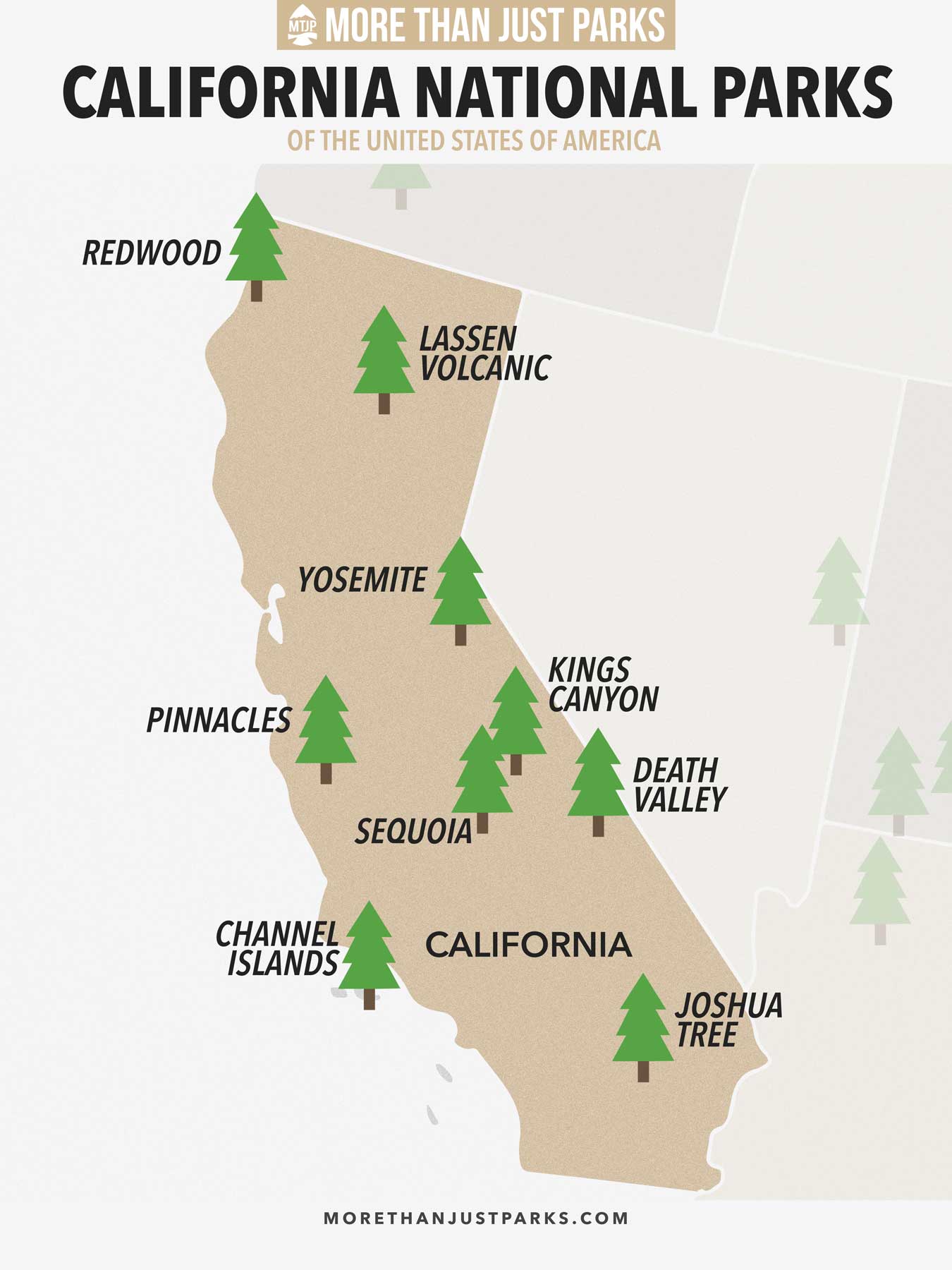
A Journey Through California’s National Parks: Diversity and Grandeur
California’s national parks are a testament to the state’s incredible geographical diversity. They encompass everything from towering mountains and glacial valleys to ancient forests, vast deserts, and secluded islands. This section delves into the iconic natural landmarks that define many of these parks, offering a glimpse into the awe-inspiring beauty that awaits.
Iconic Giants and Ancient Wonders
At the heart of California’s national park system are some of the most renowned and majestic landscapes on the planet, often grouped due to their proximity and shared mountainous terrain.
Yosemite National Park: Perhaps the most famous of all, Yosemite is a UNESCO World Heritage site celebrated for its granite cliffs, giant sequoia groves, and magnificent waterfalls. El Capitan and Half Dome stand as iconic monoliths, drawing rock climbers and photographers from around the globe. Yosemite Falls, one of the tallest waterfalls in North America, thunders spectacularly in spring and early summer, captivating visitors with its raw power. The park offers extensive hiking trails, from leisurely strolls in Yosemite Valley to strenuous ascents that reward with panoramic views of the Sierra Nevada mountain range. Accommodation options range from historic hotels like the Ahwahnee Hotel (formerly The Majestic Yosemite Hotel) offering luxury travel experiences, to more budget-friendly campgrounds and rustic cabins. Nearby gateway towns such as Oakhurst, Mariposa, and Groveland provide additional lodging choices, restaurants, and local culture. For those seeking unique stays, glamping options are becoming increasingly popular outside the park boundaries, offering a blend of wilderness immersion and creature comforts.
Sequoia National Park and Kings Canyon National Park: These two parks are administered as one unit, protecting vast wilderness areas of the southern Sierra Nevada mountains and, most notably, groves of giant sequoia trees. Sequoia National Park is home to the General Sherman Tree, the largest tree on Earth by volume, standing as a living testament to ancient life. Visitors can wander through the Giant Forest, marveling at these colossal wonders, or climb Moro Rock for breathtaking views of the surrounding mountains and canyons. Kings Canyon National Park, true to its name, features one of the deepest canyons in North America, carved by glaciers. Its remote wilderness offers exceptional backpacking, fishing, and stargazing opportunities, making it a prime destination for adventure travel and those seeking solitude. Accommodation ranges from lodges within the park, such as Wuksachi Lodge in Sequoia and John Muir Lodge in Kings Canyon, to various hotels and resorts in nearby Three Rivers. Family trips often gravitate here for the accessible trails and awe-inspiring scale of the trees.
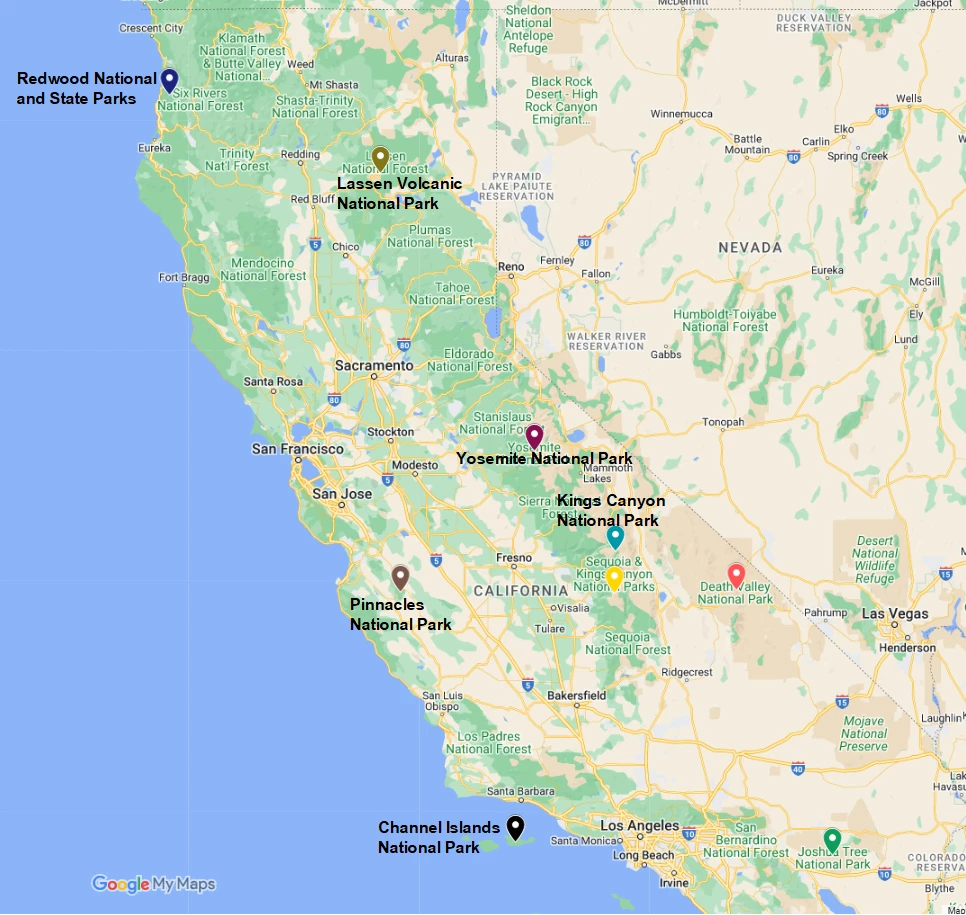
Deserts of Striking Contrast
Beyond the towering forests, California’s national parks also safeguard vast, mesmerizing desert landscapes that defy conventional notions of barrenness, revealing surprising biodiversity and striking geological formations.
Death Valley National Park: A land of extremes, Death Valley holds the record for the lowest point in North America at Badwater Basin, 282 feet below sea level. It is also one of the hottest places on Earth. Despite its formidable reputation, the park is surprisingly diverse, featuring vibrant badlands at Zabriskie Point, colorful mineral deposits at Artist’s Palette, vast salt flats, and towering sand dunes. Springtime brings ephemeral wildflowers that carpet the desert floor in a dazzling display. Activities include scenic drives, hiking, and exploring historical sites like the ghost town of Rhyolite just outside the park. For accommodation, Furnace Creek Ranch (now The Oasis at Death Valley) offers a comfortable resort experience, complete with a golf course, while more rustic options are available in nearby towns like Beatty, Nevada. This park is a destination for robust adventurers, photographers, and those fascinated by extreme environments.
Joshua Tree National Park: Where the Mojave Desert meets the Colorado Desert, Joshua Tree is famous for its namesake trees, unique rock formations, and clear starry nights. It’s a mecca for rock climbers, hikers, and anyone seeking inspiration in its otherworldly landscape. Landmarks such as Skull Rock, Barker Dam, and Hidden Valley offer accessible trails and stunning photographic opportunities. The park’s distinct aesthetic has also made it a cultural landmark, attracting artists and musicians. The towns of Yucca Valley, Twentynine Palms, and Palm Springs serve as excellent bases for exploration, offering a range of accommodation from quirky boutique hotels to luxurious desert resorts, catering to both budget travel and upscale lifestyle preferences. Many unique Airbnb and villa rentals have also sprung up in the area, offering a more local culture experience.

Coastal Splendor and Volcanic Landscapes
California’s natural heritage extends beyond its towering mountains and vast deserts to include pristine island ecosystems and the fascinating, fiery remnants of ancient geological activity. These parks offer unique perspectives on the state’s diverse environmental tapestry.
Pacific Majesty
Along California’s rugged coastline and just offshore, two national parks protect vital ecosystems and offer distinct experiences centered around water and ancient trees.
Channel Islands National Park: Often referred to as “North America’s Galapagos,” this park comprises five of the eight Channel Islands off the coast of Southern California. Accessible only by boat or plane, these islands are a haven for endemic species, marine life, and incredible geological formations like sea caves. Santa Cruz Island, the largest, offers diverse hiking and kayaking opportunities, while Anacapa Island is famous for its lighthouse and seabird colonies. Visitors can enjoy snorkeling, diving, whale watching, and bird watching in this pristine marine environment. There are no hotels on the islands themselves, emphasizing a true wilderness experience with camping as the primary accommodation. However, coastal cities like Ventura and Oxnard provide numerous hotel, resort, and apartment options for pre- and post-trip stays, alongside charming local culture and excellent seafood. This is an ideal destination for eco-tourists and those seeking an authentic, off-the-beaten-path adventure.
Redwood National and State Parks: This unique collaboration between the National Park Service and the California Department of Parks and Recreation protects nearly half of the world’s old-growth coast redwood forests, including the tallest trees on Earth. Walking through these ancient groves is a truly humbling experience, with giants reaching skyward, creating a cathedral-like canopy. Beyond the awe-inspiring trees, the parks also encompass prairies, oak woodlands, wild rivers, and 40 miles of rugged coastline. Visitors can hike through magical fern canyons, drive scenic routes, or kayak on the Klamath River. The blend of forest and ocean offers unique wildlife viewing opportunities, including Roosevelt elk. Accommodation ranges from rustic cabins and campgrounds within the parks to hotels and motels in nearby towns like Orick, Klamath, and Arcata. These parks offer a peaceful retreat and a chance to connect with some of the planet’s most ancient living organisms, perfect for family trips and nature photographers.
Volcanic Mysteries
Venturing into the northern reaches of California, another national park offers a striking contrast to the coastal giants and desert landscapes, showcasing the raw power of geological forces.
Lassen Volcanic National Park: Situated in Northern California, Lassen Volcanic is one of the few places on Earth where all four types of volcanoes can be found: shield, composite, cinder cone, and plug dome. Its most prominent feature, Lassen Peak, last erupted spectacularly between 1914 and 1921. Today, the park is a captivating landscape of boiling mudpots, fumaroles, hot springs, and sulfurous vents, reminders of the active geothermal forces beneath the surface. Hiking to the summit of Lassen Peak provides panoramic views, while trails around Manzanita Lake and through areas like Sulphur Works offer more accessible ways to experience the park’s volcanic wonders. This park is a fascinating destination for geology enthusiasts, hikers, and those looking for a different kind of wilderness experience. Accommodation includes a lodge within the park, Lassen Park Camper Cabins, and various options in nearby Mineral, Chester, and Susanville, offering a quieter, more secluded getaway compared to the more crowded southern parks.
Planning Your California National Park Adventure
Embarking on a journey through California’s national parks requires careful planning to ensure a smooth, enjoyable, and responsible trip. From choosing the right accommodation to understanding local nuances, every detail contributes to a richer experience.
Beyond the Trails: Accommodation and Lifestyle Choices
When planning your national park visit, selecting the right accommodation is paramount, shaping your entire lifestyle experience. The choices are as diverse as the parks themselves, catering to every budget and preference.
Hotels and Resorts: For those who prefer comfort and amenities after a day of exploration, gateway towns near each park often boast a range of hotels and resorts. For example, Yosemite offers the luxurious Ahwahnee Hotel within the park, while towns like El Portal and Midpines feature more moderately priced hotels. Near Joshua Tree, you’ll find an array of unique boutique hotels and stylish desert resorts in Palm Springs or Yucca Valley, many offering wellness amenities, gourmet dining, and stunning desert views. These options align with a luxury travel lifestyle, providing a seamless blend of natural immersion and sophisticated comfort. Websites like ours specialize in reviews, comparisons, and booking assistance for such diverse accommodation, from spacious suites to charming villas.
Campgrounds and Rustic Stays: For the budget-conscious traveler or those seeking a deeper connection with nature, camping within the parks is an iconic experience. Most parks offer various campgrounds, from developed sites with amenities to primitive backcountry options. Lodgepole Campground in Sequoia and Camp 4 in Yosemite are highly sought after. Beyond traditional camping, glamping has emerged as a popular option, offering comfortable tents or cabins with beds, heating, and sometimes even private bathrooms, bridging the gap between camping and luxury travel. This type of accommodation caters to family trips and those who enjoy a rustic yet comfortable lifestyle. Booking well in advance is crucial, especially for peak seasons, as demand for these unique stays is incredibly high.
Long-term Stays and Rentals: For extended visits, particularly around parks like Joshua Tree or the Redwood National and State Parks, vacation rentals like apartments or villas can offer more space, privacy, and kitchen facilities. These are ideal for groups, families, or those wanting to explore the local culture more intimately. Websites dedicated to accommodation comparison can help you find the perfect long-term stay, often providing better value than nightly hotel rates.
Essential Tips for Responsible Tourism
Engaging with California’s national parks is not just about visiting, but about experiencing them responsibly. Sustainable tourism practices ensure these natural wonders are preserved for future generations, while thoughtful planning enhances your own journey.
Booking and Preparation: National Park Service websites are invaluable resources for up-to-date information on entrance fees, permits (especially for popular trails like Half Dome), and reservation systems. Many parks now require timed entry reservations during peak seasons to manage crowds. Always check weather conditions, pack appropriate gear for varying temperatures and terrains, and carry plenty of water. For popular parks like Yosemite or Death Valley, early morning visits often provide cooler temperatures and fewer crowds, enhancing your experience of these magnificent landmarks.
Local Culture and Food: Don’t overlook the vibrant local culture in the towns surrounding the parks. Many feature unique shops, art galleries, and restaurants serving fresh, local cuisine. In towns like Mammoth Lakes near the Sierra Nevada or Twentynine Palms in the desert, you can find everything from casual diners to upscale dining experiences, showcasing the diverse culinary landscape of California. Engaging with local communities not only supports the regional economy but also provides deeper insights into the area’s heritage and way of life. Look for farmers’ markets and community events to truly immerse yourself.
Activities and Experiences: Beyond hiking, each park offers a plethora of activities. Kayaking in the Channel Islands, stargazing in Death Valley or Joshua Tree, bird watching in the Redwoods, or exploring geothermal features in Lassen Volcanic are just a few examples. Consider joining ranger-led programs for educational insights into the park’s ecology, history, and geology. These guided experiences can transform a simple visit into an enriching educational adventure. Always follow park regulations, stay on marked trails, and practice Leave No Trace principles to protect these fragile ecosystems.
Seasonal Considerations: California’s parks present different personalities throughout the year. Spring brings wildflowers and cascading waterfalls, while summer offers warm weather perfect for long hikes and camping (though often crowded). Fall presents vibrant foliage and comfortable temperatures, ideal for photography, especially in Yosemite. Winter can transform higher elevation parks into snowy wonderland, perfect for snowshoeing or cross-country skiing, though road closures are common. Desert parks, conversely, are best visited in cooler months from fall to spring. Planning around the seasons can significantly impact your experience, offering distinct beauty and activity options.
In conclusion, the nine national parks of California are not merely destinations; they are gateways to understanding the extraordinary natural and geological tapestry of the American West. From the ancient groves of Sequoia and Redwood to the stark beauty of Death Valley and the volcanic wonders of Lassen, each park offers a unique blend of adventure, tranquility, and profound natural beauty. By leveraging detailed guides, smart accommodation choices, and responsible tourism practices, your journey through these magnificent landmarks promises to be an unparalleled experience, weaving together the thrill of travel with the deep satisfaction of connecting with the wild heart of California. Start planning your epic national park adventure today, and discover why the Golden State truly has it all.
LifeOutOfTheBox is a participant in the Amazon Services LLC Associates Program, an affiliate advertising program designed to provide a means for sites to earn advertising fees by advertising and linking to Amazon.com. Amazon, the Amazon logo, AmazonSupply, and the AmazonSupply logo are trademarks of Amazon.com, Inc. or its affiliates. As an Amazon Associate we earn affiliate commissions from qualifying purchases.