
Understanding the population of a city like Boston is not merely an exercise in statistics; it’s a gateway to grasping the very essence of its existence, its rhythm, and its appeal. For travelers, business visitors, and those contemplating a longer stay, knowing the human scale of Boston provides crucial context. This vibrant New England metropolis, steeped in history yet buzzing with modern innovation, draws millions each year. So, how many people truly call Boston home, and how does this number impact your experience?
The question “How Many People Are In Boston?” can be answered in several ways, depending on the definition of “in Boston” and the timeframe. We need to consider the official city limits, the broader metropolitan area, and the dynamic influx of visitors. Each of these figures tells a different story about the city’s life and its capacity to host.
The Pulse of the City: Permanent Residents and Their Impact
When asking about the population of Boston, the most straightforward answer refers to the number of people who officially reside within the city’s administrative boundaries. This is the foundational figure, reflecting the permanent community that shapes the city’s character year-round.
Official Population Figures and Demographics
According to the most recent estimates from the U.S. Census Bureau, the population of the City of Boston hovers around 675,000 to 700,000 individuals. This number, while substantial, doesn’t fully capture the demographic richness and diversity of this historic city. Boston is a melting pot, attracting people from all walks of life, educational backgrounds, and cultural origins. This diversity is evident in its neighborhoods, its culinary scene, and its intellectual landscape. The city boasts a significant student population, with world-renowned universities like Harvard University, Massachusetts Institute of Technology (MIT), and Boston University drawing tens of thousands of students each academic year. This youthful energy infuses Boston with a dynamic spirit, contributing to its lively arts, entertainment, and nightlife scenes.
Beyond students, Boston is a hub for healthcare, finance, technology, and education, attracting a skilled workforce from across the globe. This constant influx of talent fuels the city’s economy and innovation. The median age in Boston is relatively young compared to the national average, a testament to its appeal for students and young professionals. The city is also a significant center for LGBTQ+ life and a destination for those seeking a progressive and inclusive environment.
The demographic composition is constantly evolving, influenced by migration patterns, economic opportunities, and the city’s ongoing development. Understanding these resident demographics helps travelers anticipate the local culture, the types of businesses they’ll encounter, and the general atmosphere of different districts. For instance, areas around university campuses will naturally have a younger, more student-oriented vibe, while financial districts will be dominated by a professional crowd during weekdays.
Neighborhood Dynamics and Population Density
The population isn’t uniformly distributed across Boston. The city is comprised of distinct neighborhoods, each with its own unique character, history, and population density. Downtown Boston, with its mix of historic buildings and modern skyscrapers, experiences a surge of activity during business hours but is less densely populated by residents in the evenings compared to residential areas. Neighborhoods like Allston, known for its large student population, are considerably denser. Back Bay, with its elegant brownstones and upscale boutiques, offers a more refined residential experience. South Boston has undergone significant gentrification, transforming from a working-class Irish-American stronghold to a trendy area with a growing population of young professionals.
This variation in density means that the “feel” of Boston can change dramatically as you move from one area to another. High-density areas buzz with activity, offering endless dining and entertainment options, while more sparsely populated residential pockets provide a quieter, more community-focused atmosphere. For tourists, this means opportunities to experience diverse facets of city life simply by exploring different neighborhoods. Whether you’re looking for the historic charm of the North End, the academic atmosphere near Cambridge, or the waterfront views of the Seaport District, each area offers a distinct population dynamic.
Beyond the City Limits: The Greater Boston Metropolitan Area
While the official city population gives us a baseline, to truly understand the scale and influence of Boston, we must look at the Greater Boston metropolitan area. This expansive region encompasses the city and its surrounding suburbs, creating a much larger, interconnected community.

Defining the Metropolitan Area and its Population Scale
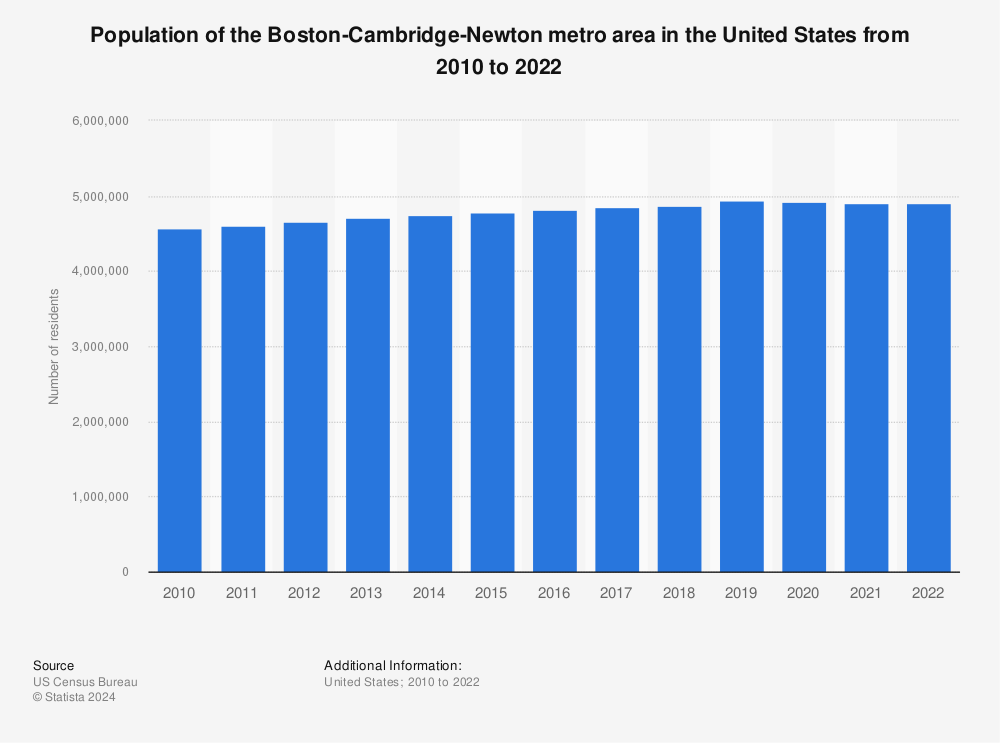
The Boston metropolitan area, often referred to as Greater Boston, includes not only the City of Boston itself but also numerous surrounding cities and towns in Massachusetts, and even extending into New Hampshire. Different statistical definitions exist for this area, such as the Boston-Cambridge-Newton, MA-NH Metropolitan Statistical Area (MSA). By these broader definitions, the population of the Greater Boston area swells dramatically, often exceeding 4.9 million residents.
This vastly larger population figure highlights Boston‘s role as the economic and cultural engine for a significant portion of New England. The daily commute patterns of millions of people flow into and out of the city, influencing traffic, public transportation usage, and the demand for services. Understanding this metropolitan scale is crucial for comprehending the city’s influence on regional development, its housing market, and the diverse range of experiences available within easy reach of the city center. When planning a visit, knowing about the Greater Boston area can open up possibilities for exploring charming smaller towns, accessing natural attractions, or experiencing a different pace of life while still being connected to the urban core.
Commuters and Their Daily Impact
The substantial population of the Greater Boston area means a significant number of people commute into the city for work, education, and leisure. This daily influx is a defining characteristic of Boston‘s urban life. The Massachusetts Bay Transportation Authority (MBTA), commonly known as the “T,” plays a critical role in moving these commuters. Its extensive network of subway lines, buses, and commuter rail services facilitates the daily migration.
This constant ebb and flow of people impacts everything from rush hour traffic to the vibrancy of the city center during weekdays. For visitors, this means that Boston can feel incredibly alive and busy, particularly during business hours. The presence of commuters also contributes to the city’s diverse culinary scene, with numerous eateries catering to the lunchtime crowds. Businesses, from small cafes to large corporations, rely on this steady stream of workers and consumers. The economic activity generated by these commuters is immense, supporting a wide array of industries and services across the metropolitan region. Understanding the commuter culture is also key to navigating the city efficiently, as public transportation usage surges during peak hours.
The Transient Population: Visitors and Their Footprint
Beyond permanent residents and daily commuters, Boston welcomes a massive number of visitors each year. This transient population significantly impacts the city’s economy, infrastructure, and overall atmosphere, especially during peak tourist seasons.
Tourism Statistics and Visitor Demographics
Boston is a world-renowned tourist destination, attracting millions of domestic and international visitors annually. Pre-pandemic figures often placed the annual visitor count in the range of 20-30 million people. These visitors come for a variety of reasons: to explore its rich American history, visit iconic landmarks like the Freedom Trail and Faneuil Hall Marketplace, experience its vibrant arts and culture scene, attend major sporting events, or pursue educational opportunities.
The demographic profile of these visitors is as diverse as the city itself. Families on vacation, couples seeking a romantic getaway, business travelers attending conferences, and solo explorers all contribute to the city’s vibrant visitor landscape. International tourists often come from countries like Canada, the United Kingdom, Germany, and France, drawn by Boston‘s historical significance and its reputation as a leading educational and cultural center. The economic impact of tourism is substantial, supporting hotels, restaurants, retail businesses, and numerous attractions. For travelers, this means that Boston is well-equipped to cater to a wide range of interests and budgets, with ample accommodation options and a plethora of activities to choose from.
The Role of Hotels, Accommodation, and Travel Services
The sheer volume of visitors necessitates a robust tourism and hospitality sector. Boston boasts a wide array of accommodation options, from luxurious downtown hotels like the Four Seasons Hotel Boston and the Fairmont Copley Plaza to boutique inns, budget-friendly motels, and vacation rental apartments. The availability and pricing of hotels are directly influenced by the demand generated by tourists, business travelers, and convention attendees. Major convention centers, such as the Boston Convention and Exhibition Center, attract large groups, significantly impacting hotel occupancy rates.
Beyond hotels, the city offers extensive travel services, including tour operators, transportation providers, and attractions that cater specifically to visitors. Walking tours, harbor cruises, and museum passes are popular ways for tourists to experience the city. The presence of these services reflects Boston‘s commitment to providing a seamless and enjoyable experience for its guests. The city’s infrastructure, including its international airport, Logan International Airport, is designed to handle a high volume of air traffic, further facilitating global tourism. For anyone planning a trip, understanding the interplay between visitor numbers and the hospitality industry can help in making informed booking decisions and securing the best travel experiences. Whether seeking a luxury suite, a charming resort, or a comfortable apartment for a longer stay, Boston‘s accommodation sector is geared to meet diverse needs.
In conclusion, answering “How Many People Are In Boston?” reveals a complex and dynamic urban ecosystem. From its core resident population of nearly 700,000, to the over 4.9 million inhabitants of the Greater Boston area, and the millions of annual visitors, the human scale of Boston is immense. This vibrant confluence of permanent residents, daily commuters, and international travelers creates the rich tapestry of culture, commerce, and history that defines this iconic American city. Whether you’re planning a weekend getaway, a business trip, or considering a long-term stay, understanding these population dynamics will undoubtedly enhance your appreciation and experience of Boston.