
[California], the Golden State, has long captivated the imagination of people worldwide. From its stunning coastlines and majestic mountains to its innovative tech hubs and vibrant cultural scenes, it represents a unique blend of natural beauty, economic opportunity, and diverse lifestyles. But behind the allure of Hollywood glamour, [Silicon Valley] innovation, and the serene beauty of [Yosemite National Park], lies a fundamental question that shapes its character, infrastructure, and overall experience: how many people call [California] home? Understanding the state’s population isn’t just about a number; it’s about comprehending the forces that drive its economy, influence its travel and tourism industry, dictate accommodation trends, and define its unique cultural tapestry.
As of the latest estimates (typically reflecting data from late 2023 or early 2024), the population of [California] hovers just under 39 million residents. This makes it the most populous state in the [United States] by a significant margin, representing roughly one-eighth of the entire nation’s population. While [California] has recently experienced a slight population decline after decades of rapid growth, primarily due to factors like housing costs and out-migration, it remains a demographic powerhouse. This immense population is not evenly distributed, creating distinct urban centers and vast stretches of less populated natural landscapes, each offering unique experiences for residents and visitors alike.
The sheer volume of people in [California] has profound implications for every aspect of life within the state, particularly for those interested in travel, tourism, and accommodation. It fuels a dynamic economy, sustains a rich array of cultural activities, and presents both opportunities and challenges for infrastructure and resource management. For travelers, it means a bustling atmosphere in major cities, a wide array of dining and entertainment options, and often, the need for advanced planning when visiting popular landmarks and destinations.
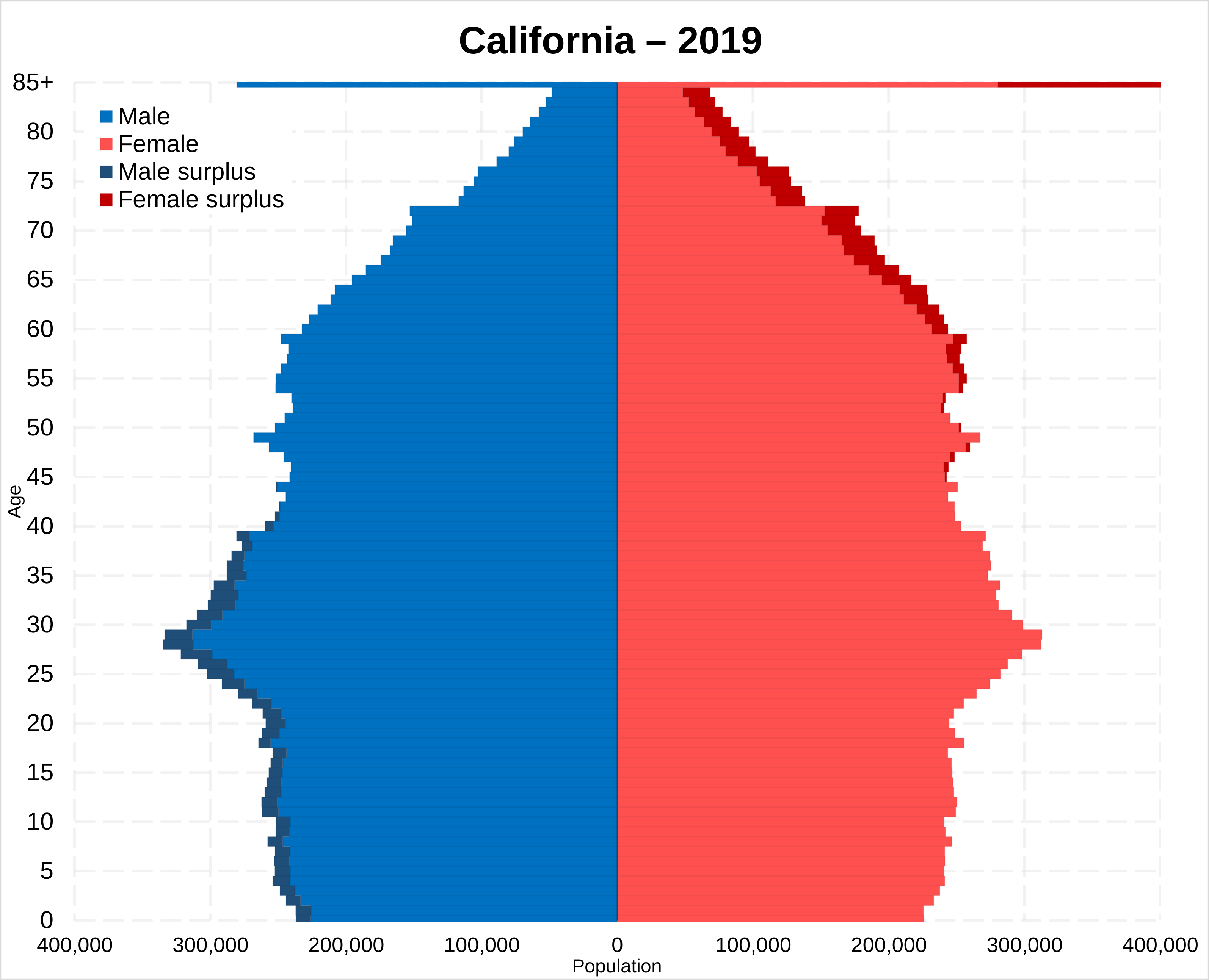
A Snapshot of California’s Population Dynamics
The demographic makeup of [California] is as varied and vibrant as its landscapes. Understanding its population dynamics provides crucial context for anyone planning to live, work, or explore this expansive state.
The Golden State’s Demographic Landscape
[California]’s population, as mentioned, is around 39 million, a number that reflects a complex interplay of birth rates, death rates, and migration patterns. For many years, the state was a magnet for people from across the [United States] and around the world, drawn by its economic opportunities, particularly in tech, entertainment, and agriculture, as well as its desirable climate and lifestyle. This led to explosive growth throughout the 20th century and into the early 21st.
However, recent trends indicate a slight contraction. While the state’s birth rate continues to exceed its death rate, domestic out-migration to other states has surpassed international immigration and in-state births. Factors contributing to this shift include the high cost of living, particularly housing, and evolving remote work opportunities that allow some residents to relocate without changing jobs. Despite this recent deceleration, [California] remains a diverse melting pot, home to a vast array of ethnicities, languages, and cultures, which enriches its social fabric and its tourism offerings. The diversity is reflected in everything from its culinary scene to its myriad festivals and cultural events, making it a truly global state within the [United States].

Understanding Population Density Across Regions
The 39 million residents are not spread uniformly across [California]’s vast 163,695 square miles. Instead, the population density varies dramatically from bustling metropolitan areas to sparsely populated deserts and mountainous regions.
Urban Hubs: The majority of [California]’s population resides in a few key metropolitan areas.
- The [Los Angeles] metropolitan area, including [Los Angeles] County and surrounding regions, is the largest, home to over 13 million people. This dense concentration makes [Los Angeles] a global epicenter for entertainment, culture, and commerce, but also contributes to its legendary traffic and high demand for accommodation.
- The [San Francisco] Bay Area, encompassing cities like [San Francisco], [San Jose], and [Oakland], is another major population center, particularly known for its tech industry in [Silicon Valley]. Its unique geography, with the bay and surrounding hills, means high density in concentrated urban pockets.
- [San Diego], located in Southern [California] near the Mexican border, is another significant urban area, known for its beautiful beaches, military presence, and growing biotech industry.
- The [Sacramento] metropolitan area, the state capital, also contributes significantly to the population, serving as a hub for government and agriculture.
These urban centers are characterized by their vibrant economies, diverse communities, extensive infrastructure, and often, competitive housing markets. For tourists, these are the primary gateways to experience [California]’s famous landmarks, world-class dining, and cultural attractions.

Coastal vs. Inland: The vast majority of [California]’s population hugs the coast, from [San Diego] in the south to the [San Francisco] Bay Area in the north. This coastal preference is driven by historical settlement patterns, climate, and access to trade routes. Inland areas, particularly the Central Valley, while agriculturally rich, have lower population densities outside of cities like [Fresno]. Further inland, the vast deserts of Southern [California] and the rugged Sierra Nevada mountains are even more sparsely populated, offering stark contrasts to the urban sprawl. This geographical distribution means that while major cities are dense and bustling, tranquil retreats are often just a few hours’ drive away, from the serene beaches of [Big Sur] to the alpine lakes of [Lake Tahoe].
Understanding this regional distribution is key for travelers. A trip to [Los Angeles] or [San Francisco] will involve navigating crowds and urban landscapes, while a visit to [Death Valley National Park] or [Redwood National Park] will offer solitude and immersive natural experiences, albeit with fewer immediate amenities.
The Influence of Population on California’s Tourism and Travel
The sheer number of people in [California], coupled with its appeal as a global travel destination, fundamentally shapes its tourism and travel industry. This influence extends from the types of attractions that thrive to the availability and cost of accommodation.
Bustling Destinations and Iconic Landmarks
With nearly 39 million residents and millions more visitors each year, [California]’s major tourist attractions are almost perpetually bustling. The state’s diverse population ensures a constant stream of domestic tourism, supplementing the significant international visitor numbers. This high demand allows for the sustainment of world-class facilities and experiences, but also necessitates careful planning for travelers.
Iconic landmarks like the [Golden Gate Bridge] in [San Francisco], the [Hollywood Sign] in [Los Angeles], and the [Disneyland Resort] in [Anaheim] are prime examples. These aren’t just visited by out-of-state tourists; they are also popular destinations for [California] residents on weekend trips or holidays.
- [Disneyland Resort] draws millions annually, a testament to its enduring appeal to families from across the state and beyond. Its intricate infrastructure and entertainment offerings are supported by this massive user base.
- The [Golden Gate Bridge] serves as both a vital transportation artery for the Bay Area’s dense population and a breathtaking landmark for global visitors, making it a constantly active site.
- [Hollywood] and its adjacent attractions like the [Walk of Fame], [Universal Studios Hollywood], and the [Griffith Observatory], thrive on the constant flow of people, offering a glimpse into the entertainment industry that defines much of [Los Angeles]’s identity.
- Natural wonders, while often offering more solitude, also see significant traffic. [Yosemite National Park], for instance, experiences peak season congestion, requiring reservation systems to manage visitor flow effectively. Other national parks like [Joshua Tree National Park] and [Death Valley National Park], despite their remote nature, also draw considerable crowds, especially during cooler months, due to the large population base within a few hours’ drive.
The presence of so many people also fosters a vibrant local culture, making cities exciting places to explore. From the bustling streets of [Chinatown] in [San Francisco] to the trendy neighborhoods of [Beverly Hills] in [Los Angeles], and the historic [Gaslamp Quarter] in [San Diego], each area offers unique experiences shaped by the communities that inhabit them. The demand generated by this population ensures that there’s always something new to discover, from innovative restaurants to eclectic art galleries.
Navigating Accommodation and Hospitality Trends
The sheer population density and high tourist volume in [California] have a significant impact on its accommodation and hospitality sectors. Demand for [hotels], resorts, apartments, and villas is consistently high, especially in popular tourist destinations and major cities.
- High Demand and Pricing: In areas like [Los Angeles], [San Francisco], [San Diego], and coastal towns like [Santa Barbara], [Monterey], and [Carmel-by-the-Sea], accommodation can be expensive and book up quickly, particularly during peak seasons or major events. The presence of a large local population means that even off-season demand from residents for staycations or weekend getaways keeps occupancy rates relatively high. This trend extends to luxury travel, where exclusive resorts and boutique hotels thrive, as well as to budget travel, with a wide array of motels and hostels catering to different price points.
- Diverse Accommodation Options: To meet this varied demand, [California] offers an extensive range of accommodation types. From opulent five-star [resorts] in [Palm Springs] and [Napa Valley] to family-friendly suites near [Disneyland Resort], and charming bed-and-breakfasts along the [Pacific Coast Highway], there’s something for every traveler. The popularity of long-term stays is also rising, with many visitors opting for serviced apartments or vacation rentals, particularly in larger cities or for business trips to places like [Silicon Valley].
- Booking and Reviews: Given the high demand, booking well in advance is almost always recommended, especially for popular periods or unique properties. Leveraging online booking platforms and consulting reviews for comparison is crucial to secure the best rates and ensure a satisfactory stay. The competitive market means that properties are constantly striving to offer excellent amenities and services, making reviews a valuable resource for discerning travelers.
- Emergence of Unique Stays: Beyond traditional hotels, [California]’s diverse landscape and population have fostered a boom in unique accommodation experiences, from glamping sites in national parks to charming [villas] in wine country and cozy [apartments] in vibrant urban neighborhoods. These options cater to travelers seeking more authentic or unconventional stays, further diversifying the market.
The Rich Tapestry of Local Culture and Experiences
[California]’s large and diverse population is the bedrock of its incredibly rich and varied cultural landscape. The confluence of myriad ethnicities, traditions, and influences creates an environment where local culture flourishes, offering unparalleled experiences for travelers.
- Culinary Mecca: The state’s demographic diversity translates directly into a world-class culinary scene. From authentic Mexican taquerias in Southern [California] to vibrant Asian fusion restaurants in [San Francisco]’s [Chinatown] and farm-to-table dining experiences in [Napa Valley], the food scene is a testament to its multicultural inhabitants. Chefs and restaurateurs are constantly innovating, driven by a discerning local populace and a steady stream of curious tourists. Food festivals, farmers’ markets, and diverse street food options are commonplace, offering endless gastronomic adventures.
- Arts and Entertainment: With major entertainment hubs in [Los Angeles], a thriving arts scene in [San Francisco], and burgeoning creative communities throughout the state, [California]’s population supports a robust calendar of cultural events. Museums like the [Getty Center] and the [Museum of Modern Art], live music venues, theaters, and independent art galleries are sustained by a large and appreciative audience. Festivals celebrating music, film, art, and heritage are integral to the [California] experience, offering deep dives into local traditions and contemporary expressions.
- Community and Lifestyle: The varied population segments also contribute to distinct lifestyle trends. From the laid-back beach culture of [Santa Monica Pier] to the high-tech, fast-paced rhythm of [Silicon Valley], and the adventurous outdoor pursuits around [Lake Tahoe], different regions offer different ways of life. Travelers can immerse themselves in these local lifestyles, whether it’s by exploring surf towns, hiking in pristine wilderness, or indulging in the luxury offerings of [Beverly Hills]. This allows for a travel experience that can be tailored to any interest, from luxury travel to budget travel, family trips to business stays.
Lifestyle and Economic Impact: A Magnet for Many
[California]’s population density and diversity are not merely statistical facts; they are central to its identity as a global economic powerhouse and a trendsetter in lifestyle. The continuous influx and movement of people contribute to its vibrant economy and diverse social fabric, shaping both opportunities and challenges.
Diverse Lifestyles: From Luxury to Budget Travel
The sheer size and diversity of [California]’s population mean that it caters to an incredibly broad spectrum of lifestyles and, consequently, travel preferences. This is a state where extreme luxury coexists with accessible budget options, reflecting the varied economic realities and choices of its residents and visitors.
- Luxury Travel: For those seeking opulence, [California] offers world-class experiences. From the exclusive boutiques and gourmet dining of [Beverly Hills] and [Palm Springs] to the renowned wineries of [Napa Valley] and the high-end [resorts] along the coast of [Santa Barbara] and [Monterey], luxury travel is a significant segment. The state’s affluent residents and high-income visitors sustain a thriving market for upscale [hotels], private villas, bespoke tours, and fine dining. Destinations like [Catalina Island] offer exclusive retreats, attracting those looking for serenity coupled with premium services.
- Budget Travel: Conversely, [California] also accommodates budget-conscious travelers. The extensive public transportation systems in major cities, a plethora of affordable dining options (especially in ethnically diverse neighborhoods), and a wide range of hostels and budget-friendly hotels make exploration possible without breaking the bank. Furthermore, the state’s numerous state parks, free public beaches, and accessible natural landmarks like [Golden Gate Park] in [San Francisco] provide cost-effective ways to enjoy its beauty. Backpacking and road-tripping along routes like the [Pacific Coast Highway] also remain popular, catering to adventurers seeking experiences over extravagance.
- Family and Business Stays: The large population, especially with its significant number of families, fuels demand for family-friendly attractions and accommodations like those found near [Disneyland Resort] or the [San Diego Zoo]. Simultaneously, [California]’s role as a global economic leader, particularly in tech and entertainment, means a constant flow of business travelers, necessitating a robust infrastructure for business stays, conference facilities, and corporate [accommodation] in cities like [San Francisco], [Los Angeles], and [San Jose].
This ability to cater to such a wide range of lifestyles is a direct consequence of its populous and diverse demographic, ensuring that [California] remains an attractive destination for virtually everyone.
The Job Market and Economic Vibrancy
[California]’s large population is both a product and a driver of its formidable economic vibrancy. As the world’s fifth-largest economy (if it were a country), the state’s diverse industries, from technology and entertainment to agriculture and tourism, attract talent from across the globe, contributing to its population growth and dynamism.
- Economic Magnet: The promise of high-paying jobs in [Silicon Valley]’s tech giants, the allure of Hollywood’s entertainment industry, and the opportunities in [California]’s vast agricultural sector have historically drawn millions. This robust job market provides a stable foundation for the state’s economy and its residents, creating a strong consumer base that supports local businesses, including those in the travel and tourism sectors.
- Impact on Services: A large population necessitates and sustains an extensive service industry. This includes everything from hospitality staff at [hotels] and [resorts] to tour guides, restaurant workers, and transportation providers. The tourism sector alone employs hundreds of thousands, directly benefiting from both resident travel and external visitors. This economic activity, in turn, generates tax revenue that helps fund public services and infrastructure projects, further enhancing the state’s appeal.
- Innovation and Entrepreneurship: The concentration of diverse talent and a critical mass of educated individuals fosters a fertile ground for innovation and entrepreneurship. This is evident not just in tech, but also in new culinary trends, sustainable tourism practices, and unique cultural offerings. The competitive environment spurred by a large population often leads to higher quality services and more innovative experiences for both residents and tourists.
Infrastructure and Sustainability Challenges
While a large population brings many benefits, it also poses significant challenges, particularly concerning infrastructure and sustainability. [California]’s experience is a microcosm of global issues related to managing growth.
- Traffic and Transportation: One of the most palpable impacts of [California]’s population density, especially in its major urban centers, is traffic congestion. Cities like [Los Angeles] and [San Francisco] are infamous for their crowded freeways. While extensive public transportation systems exist, they are often stretched to capacity. For travelers, this means budgeting extra time for transit, especially when navigating between popular sites. However, initiatives to expand public transport, including high-speed rail, aim to alleviate some of these pressures.
- Resource Management: A population of nearly 39 million puts immense pressure on natural resources, particularly water and energy. [California] is frequently at the forefront of conservation efforts, implementing innovative water management strategies and leading the nation in renewable energy adoption. These efforts, though sometimes controversial, are essential for sustaining the state’s population and environment.
- Environmental Impact: With such a large human footprint, environmental conservation is a critical concern. Protecting [California]’s pristine national parks like [Yosemite National Park] and [Redwood National Park], preserving its diverse ecosystems, and combating issues like air pollution and wildfires are ongoing challenges. Sustainable tourism practices are becoming increasingly important, with many visitors seeking eco-friendly accommodation and activities that minimize their impact on the environment. Landmarks such as [Hearst Castle] and [Alcatraz Island] have specific visitor management plans to preserve their historical and ecological integrity.
Planning Your Visit: What to Expect in a Populous State
Visiting a state as populous and popular as [California] requires a strategic approach to ensure a smooth and enjoyable trip. Understanding the dynamics of its population and tourism flow can help you make the most of your adventure.
Best Times to Visit and Crowd Management
To avoid the heaviest crowds and potentially higher prices, timing your visit to [California] can be crucial.
- Peak Seasons: Summer (June to August) is generally the busiest, especially in family-friendly destinations like [Disneyland Resort] and coastal areas. School holidays and major festivals also contribute to increased crowds and demand. National Parks like [Yosemite National Park] see their highest visitor numbers during these months.
- Shoulder Seasons: Spring (April to May) and Fall (September to November) are often considered the best times to visit. The weather is typically pleasant, crowds are thinner than in summer, and prices for [accommodation] and flights can be more reasonable. This is an ideal time for exploring cities like [San Francisco] and [Los Angeles], visiting [Napa Valley] for wine tasting, or hiking in the national parks before the winter snows.
- Off-Peak: Winter (December to March) offers a different experience. While mountainous regions like [Lake Tahoe] thrive with winter sports, coastal and southern [California] areas can be milder and less crowded. This is a good time to explore urban attractions, enjoy desert landscapes around [Palm Springs] and [Joshua Tree National Park], or visit landmarks like [Hearst Castle] with fewer people.
Regardless of the season, popular attractions often utilize reservation systems or timed entry to manage visitor flow. Checking these requirements in advance is highly recommended. For example, some parts of [Yosemite National Park] may require reservations during peak season, and tours to [Alcatraz Island] typically sell out weeks in advance.
Tips for Seamless Travel and Exploration
Navigating a populous state like [California] efficiently enhances the travel experience. A few strategic tips can make a significant difference:
- Book in Advance: This is perhaps the most important tip for [California]. Flights, [hotels], popular tours (e.g., [Alcatraz Island], [Universal Studios Hollywood]), and even dining reservations, particularly in major cities or during peak season, should be secured well ahead of time. This guarantees availability and often results in better prices.
- Consider Public Transportation and Rideshares: In densely populated areas like [Los Angeles] and [San Francisco], relying solely on a car can lead to frustration due to traffic and parking challenges. Utilize extensive public transportation networks, rideshare services, or even walking to explore city centers. For example, [San Francisco]’s iconic cable cars and BART system are efficient ways to get around.
- Explore Beyond the Obvious: While iconic landmarks are a must-see, [California]’s large population supports a wealth of lesser-known gems. Venture into local neighborhoods, discover hidden beaches, or explore less-traveled state parks. Places like [Golden Gate Park] offer a huge urban oasis, and the diverse communities in [Los Angeles] provide endless cultural discoveries beyond the [Walk of Fame] or the [Hollywood Sign].
- Flexibility and Patience: Despite the best planning, unforeseen delays or crowds can occur. Embracing a flexible attitude and exercising patience will ensure a more enjoyable trip. [California] is vast and vibrant; there’s always something new to discover, even if your initial plan gets slightly altered.
- Embrace the Diversity: Engage with the local culture and people. Strike up conversations, try new cuisines, and participate in local events. The state’s demographic richness is one of its greatest assets, offering unique perspectives and memorable interactions. From the bustling energy of [Pier 39] to the artistic charm of [Carmel-by-the-Sea], each place has its own story, shaped by its inhabitants.
In conclusion, the question “How many people are in [California]?” goes far beyond a simple statistic. It reveals the heart of a state defined by its scale, diversity, and dynamic energy. With nearly 39 million residents, [California] is a vibrant tapestry of cultures, industries, and landscapes, profoundly influencing every aspect of travel, tourism, and lifestyle within its borders. Understanding this demographic reality allows travelers to better appreciate its bustling cities, navigate its famous landmarks, and immerse themselves in the rich experiences that only the Golden State can offer.