
New York City, often referred to simply as New York or the “Big Apple,” is a metropolis of unparalleled energy, diversity, and global influence. More than just a city, it’s a vibrant ecosystem where millions of stories unfold daily, a place where dreams are chased, and cultures converge. For anyone planning a visit, considering a move, or simply curious about what makes this iconic destination tick, understanding its population is fundamental. The sheer number of people living within its five boroughs not only defines its scale but also profoundly shapes its unique character, its infrastructure, its economy, and the very experiences visitors and residents enjoy. From the towering skyscrapers of Manhattan to the artistic enclaves of Brooklyn, the dynamic neighborhoods of Queens, the vibrant culture of The Bronx, and the suburban charm of Staten Island, each borough contributes to a colossal human tapestry that is New York, New York.

This article delves into the fascinating demographics of New York City, exploring not just the raw numbers, but also how this immense population impacts everything from daily life and economic opportunities to its status as a premier global travel destination. We’ll uncover the historical growth that forged this urban giant, examine the diversity that fuels its cultural richness, and discuss the implications for travel, accommodation, and the overall visitor experience.
A City of Millions: Understanding New York’s Population Dynamics
At the heart of New York City’s allure lies its extraordinary population density and the sheer volume of people who call it home. These figures aren’t just statistics; they represent the pulsating lifeblood of the city, dictating everything from the rhythm of its streets to the availability of its accommodations and the vibrancy of its cultural scene. Understanding these dynamics is crucial for any traveler seeking to truly grasp the essence of the Big Apple.
The Sheer Scale: New York City’s Resident Count
New York City consistently ranks as the most populous city in the United States. As of recent estimates, the city’s population hovers around 8.5 to 8.8 million residents. This makes it an urban behemoth, with a population larger than many countries. To put this into perspective, imagine an entire nation condensed into an area of just over 300 square miles. This incredible concentration of people translates directly into its iconic skyline, its bustling avenues, and the relentless energy that defines the urban experience. The density is staggering, particularly in Manhattan, where high-rises stack homes and offices skyward, illustrating an unparalleled example of vertical living and urban planning. For tourists, this means a city brimming with life at all hours, where opportunities for dining, entertainment, and exploration are virtually endless. However, it also means navigating crowded spaces, especially in popular areas like Times Square or during peak hours on the subway.
Borough Breakdown: A Mosaic of Communities
The city’s vast population isn’t uniformly distributed; it’s spread across its five distinctive boroughs, each possessing its own unique character, demographics, and appeal. This diversity is a key factor in New York City’s global appeal, offering a microcosm of the world within a single metropolitan area.
- Brooklyn: Often vying with Manhattan for the largest population, Brooklyn is typically home to over 2.6 million residents. It’s renowned for its vibrant arts scene, diverse neighborhoods, historic brownstones, and iconic landmarks like the Brooklyn Bridge and Coney Island. Its residential areas offer a glimpse into local New York life, making it a fantastic base for travelers seeking an authentic experience beyond the typical tourist hubs.
- Queens: The largest borough geographically and one of the most ethnically diverse urban areas in the world, Queens houses approximately 2.3 million people. It’s a culinary paradise, reflecting its global population with an incredible array of international cuisines. From the bustling streets of Jackson Heights to the artistic vibe of Long Island City, Queens offers a different side of the Big Apple, often with more affordable accommodation options and a less frenetic pace than Manhattan.
- Manhattan: Despite its iconic status and dense skyline, Manhattan usually ranks third in population, with around 1.6 to 1.7 million residents. However, its daytime population swells dramatically with commuters and tourists, making it the epicenter of business, culture, and tourism. It’s home to world-famous landmarks like the Empire State Building, Central Park, and Broadway theaters, and offers an unparalleled selection of luxury hotels and experiences.
- The Bronx: With over 1.4 million residents, The Bronx is the birthplace of hip-hop and boasts significant green spaces, including Pelham Bay Park and the New York Botanical Garden. It offers a rich cultural experience and a look into the vibrant, resilient spirit of New York’s communities.
- Staten Island: The smallest borough in terms of population, with just under 500,000 residents, Staten Island offers a more suburban feel and stunning views of the Manhattan skyline, particularly from the free Staten Island Ferry, which is a tourist attraction in itself, offering views of the Statue of Liberty and Ellis Island.
Beyond the City Limits: The Greater Metropolitan Area
While the five boroughs constitute New York City, the metropolitan area extends far beyond, encompassing parts of New York State, New Jersey, and Connecticut. This larger region, often referred to as the New York-Newark-Jersey City Metropolitan Statistical Area, is home to a staggering 20 to 23 million people, making it one of the most populous urban agglomerations in the world. This vast commuter belt contributes significantly to the city’s daytime population and its economic powerhouse status. For travelers, understanding this larger scope can be important for airport choices (JFK Airport, LaGuardia Airport, and Newark Liberty International Airport all serve the region) and for exploring attractions just outside the immediate city, like beaches or national parks.
A Legacy of Growth: Historical Population Trends
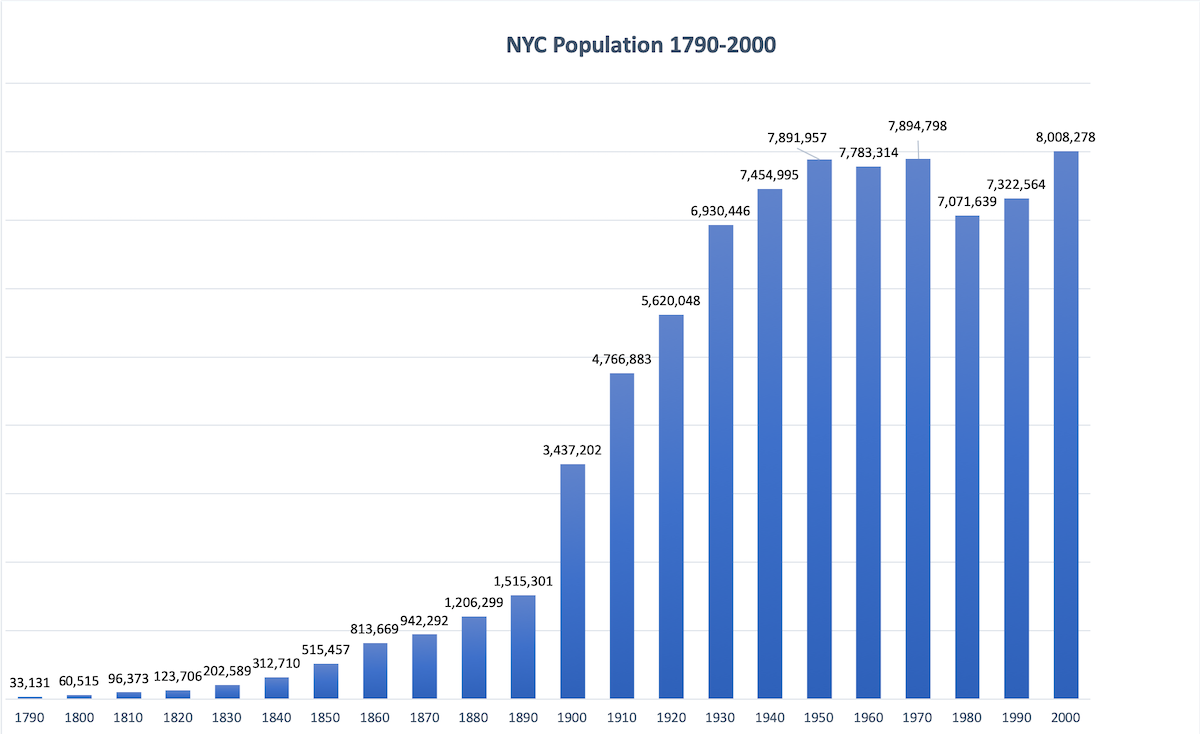
New York City’s population growth is a story of continuous immigration and economic opportunity. From its early days as a Dutch trading post, New Amsterdam, to its emergence as a global financial and cultural capital, the city has always been a magnet for people seeking a new life. The late 19th and early 20th centuries saw massive waves of immigrants arriving through Ellis Island, swelling the population and shaping the city’s diverse ethnic fabric. While growth has stabilized compared to these boom periods, the city continues to attract residents from across the United States and the world, drawn by its dynamic job market, world-class educational institutions, and unparalleled cultural scene. This continuous influx ensures a constant refresh of ideas, perspectives, and entrepreneurial spirit, which is a key aspect of the New York lifestyle.

The Human Tapestry: Demographics and Diversity
The demographics of New York City are as varied as its neighborhoods. It’s truly a global city, with over 800 languages spoken and no single ethnic group forming a majority. This incredible diversity is its greatest strength, contributing to a rich tapestry of cultures, cuisines, and traditions. This multiculturalism is evident everywhere, from the street food vendors in Queens and the fashion trends in SoHo to the performing arts on Broadway. Understanding this demographic mix enriches the travel experience, allowing visitors to explore distinct ethnic enclaves like Chinatown, Little Italy, or Harlem, each offering a unique glimpse into the world. The age distribution is also broad, with a significant young professional population fueling its nightlife and innovation, alongside established communities contributing to its stability and history. Income levels vary widely, reflecting both extreme wealth and areas facing economic challenges, contributing to the city’s ongoing discussions about equity and accessibility.
The Vibrant Pulse: How Population Shapes the New York Experience
The sheer number of people in New York City isn’t just a numerical fact; it’s the fundamental force that shapes nearly every aspect of life and travel in the Big Apple. From its towering economy to its unparalleled cultural offerings and the very infrastructure that keeps it moving, the population is the engine of its dynamic existence.
Economic Engine and Job Hub
With millions of residents, New York City is one of the world’s most significant economic powerhouses. Its diverse population provides a massive workforce and consumer base, driving industries from finance (epitomized by Wall Street and the New York Stock Exchange) and technology to fashion, media, and the arts. This robust economy creates immense job opportunities, drawing talent from around the globe and further contributing to its demographic growth. For business travelers, this means a city buzzing with activity, conference centers, and a wide array of business-friendly accommodations, from boutique hotels to large conference resorts. The city’s economic vitality also ensures a constant stream of new restaurants, shops, and experiences, catering to both its affluent residents and its millions of visitors.
Cultural Melting Pot and Culinary Delights
The diverse population makes New York City an unparalleled cultural melting pot. This is perhaps most deliciously evident in its food scene. Every street corner seems to offer a new culinary adventure, reflecting the countless ethnic backgrounds of its residents. From Michelin-starred restaurants to humble food trucks, from authentic Sichuan cuisine in Flushing to classic New York-style pizza, the options are limitless. Beyond food, the population fuels a vibrant arts and entertainment scene. Broadway shows, world-class museums like the Metropolitan Museum of Art and the Museum of Modern Art (MoMA), countless music venues, and independent art galleries thrive because of the vast audience and the creative talent pool available. This rich cultural landscape provides endless opportunities for travelers to immerse themselves in diverse experiences, from high art to street performances, catering to every lifestyle.
Urbanization, Infrastructure, and Innovation
Supporting a population of nearly nine million people requires an immense and complex infrastructure. New York City is a marvel of urban planning and engineering. Its subway system, operated by the MTA, is one of the largest and most extensive in the world, moving millions of people daily. Its iconic bridges, tunnels, and network of roads are constantly being maintained and upgraded. This scale of urbanization drives innovation, from sustainable building practices to smart city technologies aimed at improving quality of life for its dense population. For tourists, the efficient public transportation system is a blessing, allowing easy access to attractions across the boroughs. However, the sheer volume of users also means crowded trains and buses, especially during rush hour, a quintessential New York experience in itself.
Navigating the Challenges: Cost of Living and Congestion
While the large population contributes to New York City’s vibrancy, it also presents significant challenges. The most prominent are the incredibly high cost of living and persistent urban congestion. Housing, in particular, is notoriously expensive, impacting residents’ ability to find affordable accommodation and contributing to a competitive rental market. For travelers, this translates to higher hotel prices, especially in prime Manhattan locations. Budget travelers might need to look for hotels in Brooklyn or Queens or consider alternative accommodation like apartment rentals.
Traffic congestion is another daily reality, affecting commuters and adding time to journeys for visitors using taxis or ride-shares. Pedestrian traffic in popular areas like Times Square or around Rockefeller Center can be overwhelming. The city continuously grapples with these issues, implementing strategies like congestion pricing, improving public transit, and developing affordable housing initiatives. Despite these challenges, the allure of New York’s opportunities and lifestyle continues to draw people, demonstrating the enduring appeal of this bustling metropolis.
Visiting the Big Apple: Embracing the Energy of Its Residents
Experiencing New York City is not just about seeing its famous sights; it’s about feeling the pulse of its millions of residents, understanding the energy they create, and immersing oneself in the unique atmosphere that only such a densely populated, diverse city can offer. The city’s inhabitants are as much a part of its character as its towering buildings and iconic landmarks.
Iconic Landmarks and Must-See Attractions
The sheer number of people living in and visiting New York City supports an incredible array of world-famous landmarks and attractions. Every year, tens of millions of tourists flock to see sights that are globally recognized. The Statue of Liberty stands as a beacon of freedom in New York Harbor. The Empire State Building and One World Trade Center offer breathtaking panoramic views of the urban expanse. Central Park provides a verdant oasis in the heart of the concrete jungle, a gathering place for locals and tourists alike. Times Square, with its dazzling billboards and relentless crowds, is an electrifying sensory experience.
Beyond these giants, there are countless other points of interest: the historic grandeur of Grand Central Terminal, the contemplative space of the 9/11 Memorial & Museum, the architectural innovation of the High Line, and the bustling cultural scenes of neighborhoods like Greenwich Village and DUMBO. The existence and maintenance of these landmarks are intertwined with the city’s population – both in terms of the workforce that built and preserves them, and the vast audience that visits them, keeping them financially viable and culturally significant. For travelers, these landmarks are not merely static monuments but vibrant spaces alive with the energy of the people experiencing them.
Finding Your Perfect Stay: Accommodation in a Populous City
The extensive population and high demand for space in New York City directly influence its accommodation landscape. The city boasts an enormous range of hotels, suites, resorts, apartments, and villas to cater to every taste and budget, reflecting the diverse needs of both its residents and its visitors. From ultra-luxury establishments like The Plaza Hotel or the St. Regis in Manhattan to more budget-friendly options in Long Island City or Downtown Brooklyn, there’s truly something for everyone.
Hotel chains like Marriott, Hilton, and Hyatt have multiple properties across the boroughs, offering familiar comforts and loyalty program benefits. Boutique hotels provide unique, localized experiences, often blending into specific neighborhood aesthetics. For longer stays or family trips, apartment rentals or serviced apartments are popular choices, offering more space and the ability to experience local living. However, due to the high population density and constant demand, booking in advance is always recommended, especially during peak tourist seasons. Comparing prices and amenities is crucial, and considering locations outside of central Manhattan can often yield better value without sacrificing accessibility, thanks to the robust public transit system.
Exploring Like a Local: Transportation and Neighborhoods
Navigating a city of millions might seem daunting, but New York City’s public transportation system is a testament to urban efficiency. The MTA subway and bus network allows residents and visitors alike to traverse the city with relative ease, offering a glimpse into daily New Yorker life. Riding the subway is an essential New York experience, connecting you directly with the city’s pulse and its diverse populace. Beyond the subway, ferries (like the scenic Staten Island Ferry), extensive walking paths (such as the High Line or across the Brooklyn Bridge), and bike-share programs offer alternative ways to explore.
To truly embrace the city’s energy, delve into its distinct neighborhoods. Each borough is a collection of smaller communities, each with its own character. Explore the historic streets of Greenwich Village for its bohemian charm, the upscale boutiques and art galleries of SoHo, the industrial chic of DUMBO with its stunning Manhattan views, or the rich history and culture of Harlem. Engaging with these local environments allows travelers to step away from the overwhelming tourist crowds and experience the city through the eyes of its residents, discovering hidden gems, local eateries, and unique cultural experiences.
The Lifestyle Appeal: Why People Choose New York
Despite the challenges of high costs and crowds, millions choose to live in New York City, drawn by its unparalleled lifestyle offerings. It’s a city that offers something for everyone, regardless of their interests or budget, making it a prime subject for lifestyle publications.
- Luxury Travel: For those seeking indulgence, New York delivers with world-class dining, high-end shopping on Fifth Avenue, exclusive clubs, and opulent accommodations.
- Budget Travel: Despite its reputation, budget-conscious travelers can still enjoy New York by utilizing public transport, exploring free attractions like Central Park or walking the Brooklyn Bridge, and seeking out affordable ethnic eats.
- Family Trips: The city offers countless family-friendly attractions, from the American Museum of Natural History to the Bronx Zoo and the playful pier at Chelsea Piers.
- Business Stays: Its status as a global business hub means top-tier facilities, excellent connectivity, and a professional environment conducive to business travel.
The constant hum of activity, the sense of being at the center of innovation and culture, and the endless possibilities for personal and professional growth are what bind this vast and diverse population to the city. This collective spirit defines the New York lifestyle and is infectious for anyone who visits.
Planning Your New York Adventure: Tips for Every Traveler
Embarking on a journey to New York City is an exciting prospect, but navigating a metropolis of nearly nine million people requires some forethought. With the right planning, every traveler can maximize their experience and truly savor the dynamic energy of the Big Apple.
Best Times to Visit and Budgeting Considerations
Understanding the population dynamics also helps in planning the ideal time for your visit. Peak tourist seasons generally align with school holidays and major events, leading to larger crowds and higher prices for flights and accommodation. Spring (April-May) and Fall (September-October) offer pleasant weather and vibrant cultural calendars, but also increased visitor numbers. Winter, particularly outside of the holiday season, can offer a more budget-friendly experience with fewer crowds, despite the colder temperatures. Summers are hot and humid, but the city comes alive with outdoor festivals and activities.
Budgeting for a trip to New York is essential due to the higher cost of living. Accommodation will likely be your largest expense. As mentioned, considering hotels in Brooklyn or Queens can significantly reduce costs without compromising convenience. Utilizing the MTA subway system is far more economical than taxis or ride-shares for transportation. Take advantage of the city’s many free attractions, like walking across the Brooklyn Bridge, exploring Central Park, or riding the Staten Island Ferry. Seek out local eateries and food trucks for delicious and affordable meals, especially in ethnically diverse neighborhoods. Planning meals and activities in advance can help you stay within your budget while still experiencing the best the city has to offer.
Immersive Experiences: Beyond the Tourist Trail
To truly connect with the spirit of New York and its people, venture beyond the most famous tourist attractions. The beauty of a city this populated and diverse is the endless array of unique local experiences. Catch a live jazz show in Harlem, browse independent bookstores in Greenwich Village, explore the street art in Bushwick, or spend an afternoon wandering through the markets in Flushing, Queens. Visit a local brewery, attend a free concert in a park, or simply sit on a bench in a bustling square and observe the myriad of lives unfolding around you. These immersive experiences allow you to tap into the authentic local culture, taste the real New York food scene, and truly understand the daily rhythms of the city’s residents. Websites and local blogs can be invaluable resources for discovering these hidden gems and local activities, turning your trip into a richer, more personal adventure.
Safety and Practical Advice for Exploring a Bustling Metropolis
While New York City is generally a safe place for tourists, especially in well-trafficked areas, it’s always wise to exercise common sense, as you would in any large city. Be aware of your surroundings, keep an eye on your belongings, and avoid walking alone in deserted areas late at night. The sheer number of people means pickpocketing can occur in crowded places like Times Square or busy subway stations.
Practical tips include wearing comfortable shoes, as you’ll be doing a lot of walking. Utilizing apps for public transportation can help you navigate the subway system efficiently. Always carry a portable charger for your phone, as you’ll rely on it for navigation, photos, and communication. Don’t be afraid to ask for directions; New Yorkers, despite their fast-paced reputation, are often willing to help. Embrace the fast pace and the energy, but also remember to take moments to pause and appreciate the unique vibrancy of this incredible city.
In conclusion, the population of New York, New York is more than just a number; it’s the very soul of the city. It dictates its scale, fuels its economy, shapes its culture, and defines the extraordinary experience of visiting or living in one of the world’s most iconic metropolises. Understanding these dynamics allows travelers to appreciate the city’s complex beauty, navigate its challenges, and ultimately, fall in love with the unreplicable energy of the Big Apple.
LifeOutOfTheBox is a participant in the Amazon Services LLC Associates Program, an affiliate advertising program designed to provide a means for sites to earn advertising fees by advertising and linking to Amazon.com. Amazon, the Amazon logo, AmazonSupply, and the AmazonSupply logo are trademarks of Amazon.com, Inc. or its affiliates. As an Amazon Associate we earn affiliate commissions from qualifying purchases.