
Towering majestically over the vibrant metropolis of Chicago, the Willis Tower stands as an enduring symbol of architectural ambition and human ingenuity. For decades, its distinctive silhouette has defined the city’s skyline, drawing millions of visitors from across the globe keen to witness its impressive scale and breathtaking views. Often sparking curiosity and debate, one of the most frequently asked questions about this colossal structure revolves around its sheer verticality: just how many stories does the Willis Tower truly boast?
More than just a building, the Willis Tower is a testament to the bold spirit of Chicago, a city synonymous with groundbreaking architecture and a rich history of innovation. Formerly known as the Sears Tower, this iconic landmark has held its place in the annals of global architecture, having reigned as the world’s tallest building for nearly a quarter-century. Its presence profoundly influences Chicago’s identity as a premier travel destination, offering an unparalleled experience for those seeking to immerse themselves in urban grandeur and panoramic vistas. This comprehensive guide will delve into the definitive answer to its story count, explore the architectural marvel behind its construction, trace its fascinating history, and offer insights into how best to experience this quintessential American landmark during your next trip to the Windy City.

The Vertical Marvel: Unpacking the Willis Tower’s Stature
When gazing up at the Willis Tower, its immense height is immediately apparent. But translating that visual spectacle into a precise number of stories helps truly grasp its monumental scale. The building’s design and construction were revolutionary for their time, pushing the boundaries of what was thought possible in skyscraper architecture. Understanding its vertical dimensions is key to appreciating its enduring legacy.
The Definitive Story Count
Let’s address the central question directly: the Willis Tower comprises 110 stories. This impressive number places it among the select few supertalls globally that push the limits of vertical construction. Reaching an architectural height of 1,450 feet (442 meters), or 1,730 feet (527 meters) when factoring in its twin antennae, the tower offers a unique perspective on the urban landscape of Chicago and beyond. While it no longer holds the title of the world’s tallest building, having been surpassed by structures like the Burj Khalifa in Dubai and One World Trade Center in New York City, its 110 stories remain a remarkable feat of engineering and a significant benchmark in skyscraper history.
Each of these stories represents a level of office space, mechanical floors, and, crucially for tourists, the world-famous Skydeck Chicago on the 103rd floor. The sheer number of floors means that the journey from the ground lobby to the observation deck is an experience in itself, with high-speed elevators whisking visitors upward at an exhilarating pace, offering a taste of the tower’s colossal verticality. This vast number of stories also highlights the building’s massive capacity, housing thousands of tenants and employees within its vertical confines, operating like a self-contained city within a city.
Beyond the Numbers: Architectural Ingenuity
The architectural brilliance behind the Willis Tower’s 110 stories lies in its innovative “bundled-tube” design. Conceived by architect Bruce Graham and structural engineer Fazlur Rahman Khan of Skidmore, Owings & Merrill (SOM), this groundbreaking concept was a game-changer for supertall construction. Instead of a single, rigid core, the tower is composed of nine square “tubes” bundled together to form a square base. As the building rises, specific tubes terminate at various heights, creating the tower’s distinctive stepped-back appearance.
This design was not merely aesthetic; it was profoundly functional, offering unprecedented structural stability against high winds and minimizing sway, crucial for a building of its extreme height in a city known for its strong gusts. The bundled-tube system allowed for a more efficient distribution of structural loads and greater flexibility in floor plate sizes at different elevations. This meant that the Willis Tower could achieve its remarkable 110 stories without requiring an excessively massive or inefficient structural frame, setting a new standard for future skyscraper projects worldwide. It’s this intelligent design that enables the building to gracefully stand at such an immense height, providing both functionality for its occupants and an inspiring spectacle for onlookers.
A Journey Through Time: The Tower’s Legacy
The history of the Willis Tower is as rich and layered as its 110 stories. From its ambitious inception to its current status as a cherished landmark, the tower has undergone transformations that reflect economic shifts, corporate rebranding, and evolving perceptions of urban identity. Understanding its past is essential to appreciating its present significance as a global icon and a cornerstone of Chicago tourism.
From Sears Tower to Willis Tower
The building broke ground in 1970 and was completed in 1973, commissioned by Sears, Roebuck and Company, then the world’s largest retailer. Its original name, the Sears Tower, quickly became synonymous with innovation and corporate power. For 25 years, it proudly held the title of the tallest building in the world, a symbol of America’s economic might and architectural prowess. Generations grew up knowing it simply as the Sears Tower, and its name was etched into the collective memory of Chicago residents and international visitors alike.
However, in 2009, a significant change occurred. Willis Group Holdings, a global insurance broker, acquired the naming rights to the tower as part of its lease agreement for a substantial portion of the building. On July 16, 2009, the iconic Sears Tower officially became the Willis Tower. This renaming sparked considerable debate and nostalgia, particularly among longtime Chicagoans who felt a deep attachment to the original name. Despite the official change, many still affectionately refer to it by its former moniker, a testament to its powerful historical resonance. The transition illustrates how landmarks, while physical constants, can evolve in their identity, reflecting the dynamism of the business world and the enduring power of historical memory.
A Symbol of Chicago’s Ambition
Beyond its impressive statistics and changing names, the Willis Tower is profoundly a symbol of Chicago’s unwavering ambition and its pivotal role in architectural history. Chicago itself is often considered the birthplace of the skyscraper, and the Willis Tower stands as a culmination of this legacy. It embodies the city’s forward-thinking approach to urban development and its willingness to push boundaries in design and engineering.
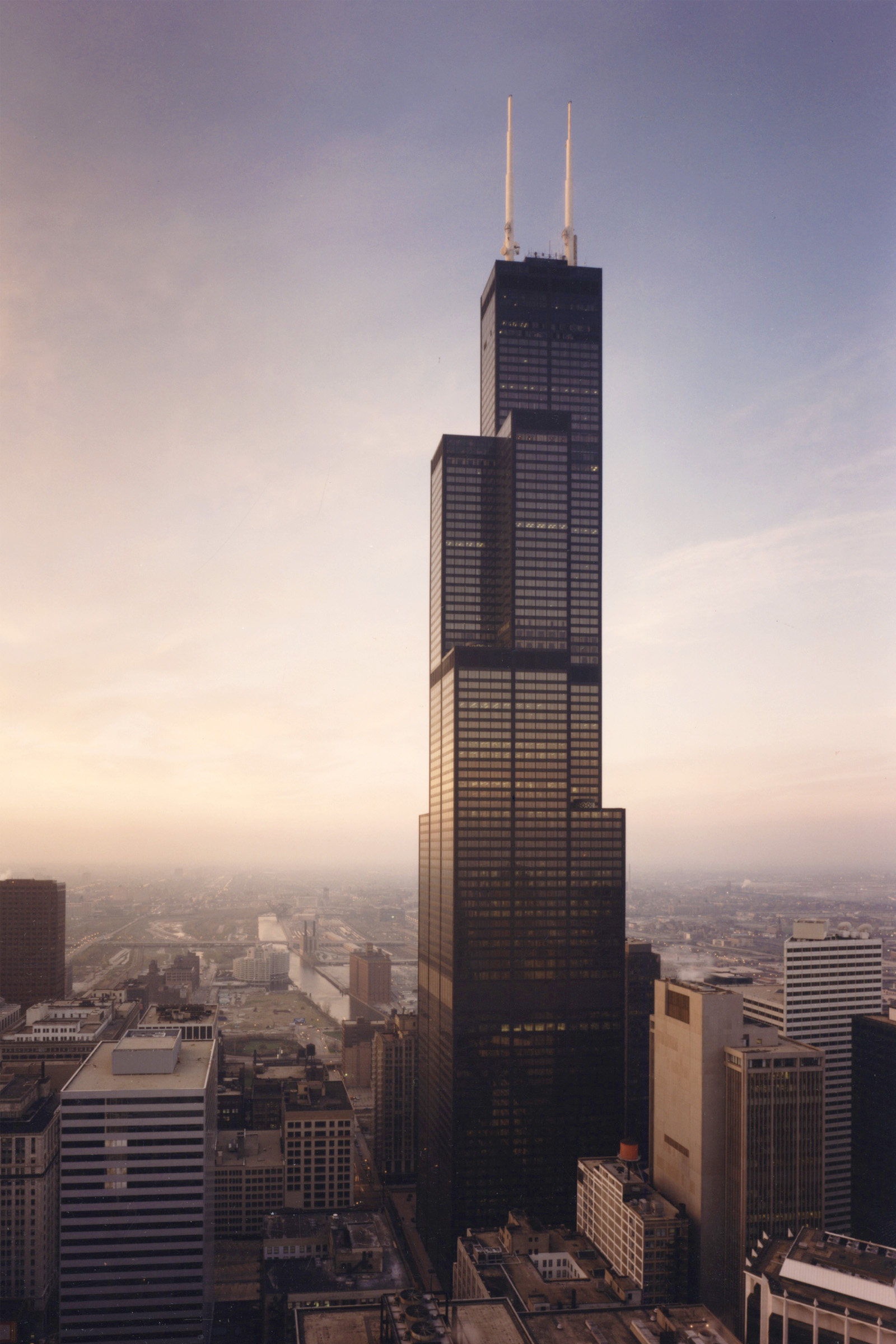
Its construction solidified Chicago’s reputation as a global center for architecture and a hub for innovative urban planning. The tower not only provided vast commercial space but also became an immediate tourist attraction, drawing attention to Chicago as a destination for both business and leisure travel. Its presence on the skyline inspired other ambitious projects and contributed to the city’s economic vitality. Today, the Willis Tower remains a proud testament to Chicago’s enduring spirit, a beacon of progress, and a must-see landmark for anyone exploring the architectural wonders of the Midwest. It represents not just a building, but a philosophy of growth and an unyielding commitment to urban excellence that continues to shape the city’s identity.
Experiencing the Heights: Visitor Information
For many, the allure of the Willis Tower isn’t just about its impressive number of stories or its historical significance; it’s about the tangible experience of ascending to its upper reaches and witnessing the world from an unparalleled vantage point. As a cornerstone of Chicago’s tourism industry, the tower offers a world-class visitor experience that combines thrilling views with educational insights, making it a highlight for any travel itinerary.
The Skydeck Chicago Experience
The heart of the Willis Tower visitor experience is the Skydeck Chicago, located on the 103rd floor. This observation deck, situated approximately 1,353 feet (412 meters) above the streets of Chicago, offers truly breathtaking panoramic views that stretch across four states: Illinois, Indiana, Wisconsin, and Michigan. On a clear day, the expanse of Lake Michigan appears endless, and the grid of Chicago’s streets forms an intricate tapestry below.
The ultimate thrill at the Skydeck is undoubtedly The Ledge – four transparent glass boxes that extend 4.3 feet (1.3 meters) out from the building. Stepping onto The Ledge offers an exhilarating, albeit slightly vertigo-inducing, sensation of floating above the city, with nothing but a clear glass floor separating you from the ground almost a quarter of a mile below. It’s an unforgettable photo opportunity and a genuine test of courage for many. Beyond the views, the Skydeck also features interactive exhibits that delve into Chicago’s history, culture, and architecture, enhancing the educational aspect of the visit. It’s a comprehensive attraction that caters to adventurers, history buffs, and families alike, making it a prime example of successful urban tourism.
Planning Your Visit: Travel and Accommodation Insights
A visit to the Willis Tower seamlessly integrates into any Chicago travel itinerary. To make the most of your experience, consider these tips. Booking tickets online in advance is highly recommended, especially during peak tourist seasons, to avoid long queues. Early mornings or late evenings often provide fewer crowds and magical sunrise/sunset views. The tower is centrally located in Chicago’s Loop district, making it easily accessible via public transportation (CTA trains and buses) or ride-sharing services.
For accommodation, Chicago offers a vast array of hotels to suit every lifestyle and budget. If luxury travel is your preference, consider staying at upscale resorts like The Langham Chicago or Thompson Chicago, which offer opulent suites and world-class amenities within easy reach of the tower. For budget-conscious travelers or those seeking a more social experience, hostels or boutique hotels in areas like River North or the West Loop provide excellent options. Many apartments and vacation villas are also available for longer stays or family trips, providing the comfort and convenience of home.
Beyond the Willis Tower, Chicago is brimming with attractions. Explore the iconic public art at Millennium Park, including the famous Cloud Gate (The Bean), wander through the esteemed Art Institute of Chicago, or indulge in some retail therapy along the Magnificent Mile. A boat tour along the Chicago River offers a fantastic perspective on the city’s architectural wonders, including the Willis Tower. Don’t forget to savor Chicago’s renowned food scene, from deep-dish pizza to Michelin-starred restaurants, ensuring a truly immersive travel experience.
Beyond the Stories: The Willis Tower’s Enduring Relevance
While the specific number of stories provides a concrete measure of the Willis Tower’s grandeur, its true significance extends far beyond mere numerical data. It represents a living landmark, constantly adapting and reaffirming its position not just as a monumental structure but as a vital component of Chicago’s identity and global appeal. The tower’s relevance in contemporary travel, tourism, and lifestyle discussions continues to grow, even as the global landscape of skyscrapers evolves.
A Modern Landmark in a Historic City
The Willis Tower stands as a profound example of how historic landmarks continue to hold immense value in the modern era. Despite the emergence of taller, more futuristic structures around the world, its iconic status remains unchallenged in North America. Its timeless design and the sheer audacity of its original construction continue to captivate. It serves as a physical beacon, guiding visitors through the sprawling urban fabric of Chicago, and providing a constant point of reference for both locals and tourists.
For travelers, the tower isn’t just an item to check off a list; it’s an experience that encapsulates the spirit of Chicago itself – a blend of historical reverence and contemporary dynamism. Its enduring presence contributes significantly to the city’s unique cultural tapestry, intertwining with other famous places such as Grant Park, Navy Pier, and the numerous world-class museums on the Museum Campus. The Willis Tower’s prominence ensures that Chicago remains a top-tier destination for those interested in architecture, history, and urban exploration.

The Willis Tower in a Global Context
In a world increasingly dotted with supertalls like the Shanghai Tower and Taipei 101, the Willis Tower maintains its distinction not through height alone, but through its historical precedence and its pioneering spirit. It was, for a time, the benchmark against which all other tall buildings were measured, and its architectural innovations continue to influence modern construction. It represents a significant chapter in the ongoing narrative of human aspiration to build ever higher and more ingeniously.
For those planning global travel experiences, visiting the Willis Tower offers a chance to connect with a piece of engineering history that shaped the very definition of a skyscraper. It appeals to a diverse range of lifestyles, from luxury travelers seeking premium experiences to budget travelers looking for iconic sights, and families embarking on educational adventures. The tower epitomizes the blend of engineering prowess, historical depth, and modern visitor engagement that defines the best global landmarks. Its story is one of innovation, transformation, and enduring appeal, cementing its place not just as a Chicago icon, but as a universally recognized marvel of the built world.
In conclusion, the Willis Tower, with its definitive 110 stories, is far more than just a colossal stack of floors. It is a masterpiece of design, a beacon of Chicago’s rich history, and a vibrant hub for tourism and business. Whether you marvel at its architectural ingenuity, delve into its storied past, or brave The Ledge for unparalleled views, the Willis Tower promises an unforgettable experience. It continues to beckon travelers from all corners of the earth, inviting them to witness a piece of history and gaze out upon the breathtaking expanse of the United States from its lofty heights.