
While the allure of sun-drenched beaches and vibrant theme parks often dominates discussions about Florida, the Sunshine State also relies on a dedicated cadre of educators to keep its educational institutions running smoothly. Among these vital personnel are substitute teachers, whose flexible roles ensure that learning continues uninterrupted when permanent teachers are absent. Understanding their compensation is crucial for those considering this profession, as well as for parents and school administrators seeking to grasp the financial realities of the education sector. This article delves into the earning potential of substitute teachers across Florida, examining the factors that influence their pay, from district-specific rates to experience levels and educational qualifications.
The landscape of substitute teacher pay in Florida is not uniform. Much like the diverse array of attractions, from the historic St. Augustine to the bustling metropolis of Miami, each school district operates with its own budget and compensation structure. This means that a substitute teacher in one county might earn a different daily rate than their counterpart in another, even if they possess similar qualifications and experience. This variability underscores the importance of researching specific school districts for accurate salary information.
Factors Influencing Substitute Teacher Salaries in Florida
Several key elements contribute to the salary of a substitute teacher in Florida. These factors, ranging from the administrative policies of the employing district to the individual’s professional background, collectively shape their earning potential.
District-Specific Compensation Structures
The most significant determinant of a substitute teacher’s pay is the school district they work for. Large urban districts, such as those in Miami-Dade County or Orange County, often have more substantial budgets and may offer higher daily rates compared to smaller, rural districts. These differences can be quite pronounced, leading to a considerable variation in annual income for substitute teachers working full-time equivalents. For instance, districts with a higher cost of living, which often correlates with higher teacher salaries overall, may also extend this to their substitute pool. Conversely, districts facing budgetary constraints might offer more modest compensation.
Beyond the base daily rate, some districts offer additional incentives or higher pay tiers for specific circumstances. This could include compensation for covering classes that require specialized skills, such as in special education or advanced placement courses. Furthermore, districts may have policies regarding longevity pay or bonus structures for substitutes who consistently work a certain number of days throughout the school year. This emphasis on district-level policies highlights the need for prospective substitute teachers to thoroughly investigate the pay scales and employment terms of each district they are interested in.
Educational Qualifications and Certification
The level of a substitute teacher’s education and whether they hold a valid Florida teaching certificate can significantly impact their earnings. Generally, individuals with a bachelor’s degree and a state-issued teaching certificate command higher daily rates than those with only a high school diploma and a temporary permit. The certification process in Florida typically requires a college degree and passing state-mandated exams, demonstrating a commitment to professional standards.
Districts often differentiate pay based on these qualifications. A substitute with a full Florida Professional Teaching Certificate might earn a considerably higher daily rate than someone holding a Temporary Certificate or a Substitute Permit. This distinction reflects the perceived value of formal teacher training and the ability to fulfill the role with a higher degree of pedagogical understanding. For individuals aspiring to maximize their earning potential as substitute teachers, obtaining the necessary certifications and maintaining them through professional development is a prudent strategy. This aligns with the broader understanding of education as a field where advanced qualifications translate to greater earning capacity, similar to how specialized knowledge enhances the appeal of certain travel destinations or hotels.
Experience and Longevity
Experience is another critical factor in determining how much substitute teachers make in Florida. As substitute teachers gain more experience, they often become more valuable to school districts. This value can translate into higher pay rates, especially in districts that have structured pay scales that account for years of service. A substitute who has worked in a district for several years, demonstrating reliability, adaptability, and a strong understanding of classroom management, may be compensated at a higher level than a novice substitute.
Some districts may have a tiered pay system where the daily rate increases after a certain number of days worked or years of employment. This encourages long-term commitment and acknowledges the accrued expertise of seasoned substitutes. While the pay for substitute teaching is generally on a daily basis, accumulating years of experience can lead to a more stable and predictable income stream over time. This is akin to how frequent visitors to a particular resort might eventually qualify for loyalty programs or preferential rates, reflecting their established relationship and consistent patronage.
Subject Area Specialization and Demand
In certain instances, substitute teachers with specialized skills or certifications in high-demand subject areas may earn more. For example, a substitute with a background in science, technology, engineering, or mathematics (STEM) fields, or a certified special education teacher, might be compensated at a higher rate due to the ongoing need for qualified professionals in these areas. The demand for substitutes in these specific disciplines can drive up their daily rates, as districts compete to fill these crucial positions.
The overall demand for substitute teachers within a district also plays a role. During periods of high teacher absenteeism, such as during flu season or when there are widespread professional development opportunities, the demand for substitutes increases. In such scenarios, districts might offer slightly higher daily rates or bonuses to attract a larger pool of available substitutes. Conversely, during times of lower demand, the compensation might remain at its standard level. This dynamic mirrors the principles of supply and demand seen in various aspects of the tourism industry, where prices can fluctuate based on seasonal demand and availability.
Typical Daily Rates and Annual Income Estimates
Pinpointing an exact average salary for substitute teachers in Florida is challenging due to the significant regional variations. However, by examining typical daily rates across different types of districts and considering full-time equivalent work, one can derive an estimated annual income.
District-Level Salary Ranges
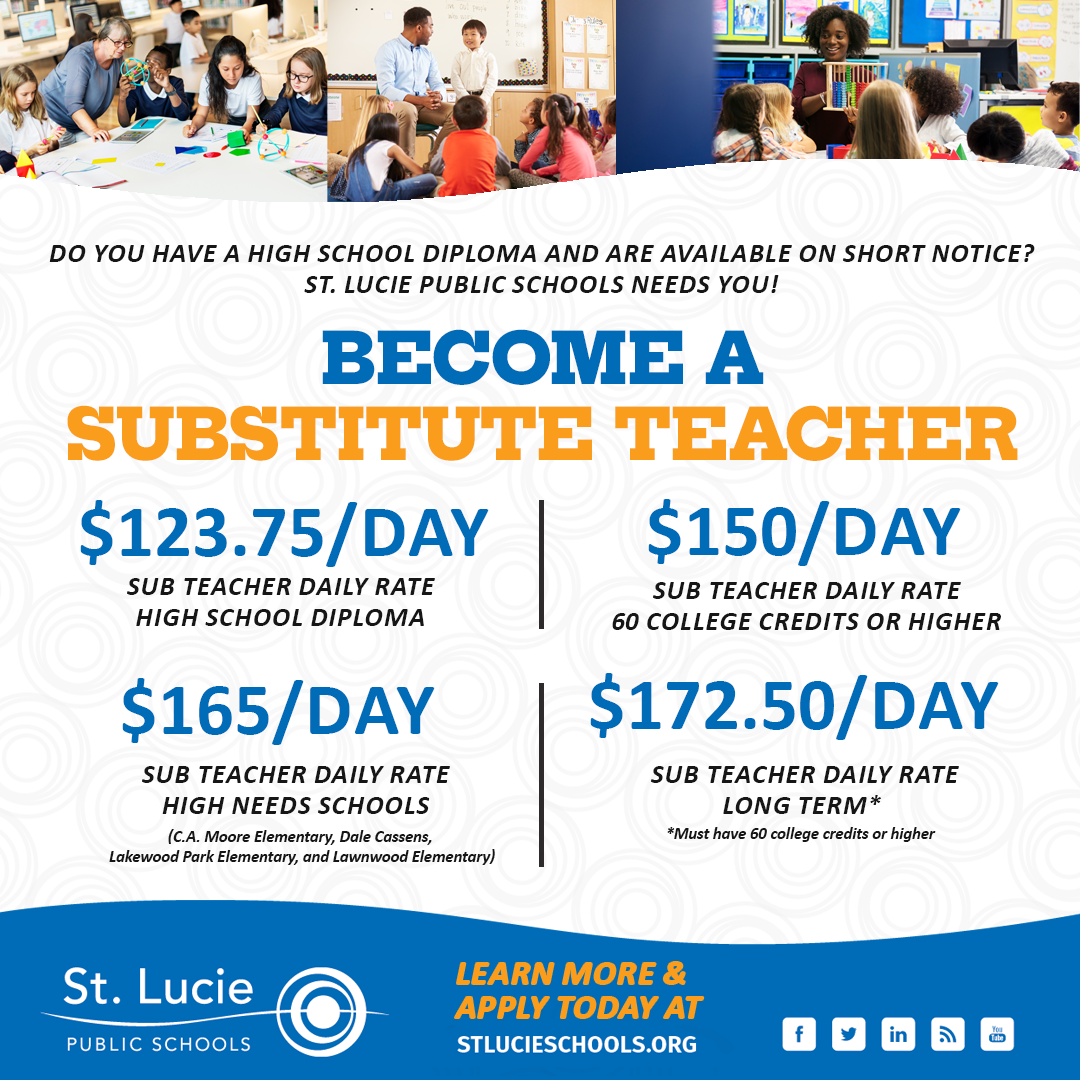
As previously mentioned, school districts are the primary arbiters of substitute teacher pay. In large metropolitan areas, daily rates can range from approximately $100 to $160 or more for individuals with a bachelor’s degree and a valid certificate. Smaller, more rural districts might offer rates closer to $80 to $120 per day. Districts that require a Temporary Certificate or a Substitute Permit may have lower daily rates, typically falling in the $70 to $100 range.
Some districts also implement a pay differential for different types of assignments. For instance, covering a kindergarten class might have a standard rate, while covering a high school Advanced Placement physics class could command a higher daily rate. This reflects the specialized knowledge and experience required for such roles. Additionally, substitute teachers who work through third-party staffing agencies may have different pay structures compared to those directly employed by the school district.
Estimating Annual Earnings
To estimate annual earnings, it’s important to consider how many days a substitute teacher typically works. A full school year in Florida comprises approximately 180 instructional days. If a substitute teacher were to work every day of the school year at an average daily rate of $120, their gross annual income would be around $21,600 ($120 x 180 days). However, most substitute teachers do not work every single day. Their work schedules can fluctuate based on their availability, the number of teacher absences, and their personal preferences.
For substitute teachers who work consistently, aiming for 4-5 days a week throughout the school year, their annual income could potentially range from $18,000 to $30,000 or more, depending on the district’s pay scale and their qualifications. Those with advanced degrees or specialized certifications, working in districts with higher pay rates, might exceed this range. It’s also important to note that substitute teaching is often a flexible employment option, allowing individuals to set their own schedules. This flexibility, while beneficial for some lifestyles, means that annual income can vary significantly from one substitute to another. This is similar to how lifestyle choices, such as opting for budget travel versus luxury travel, directly influence one’s overall expenditure and financial experience.
Potential for Higher Earnings and Career Progression
While the daily rates for substitute teaching might not always rival those of tenured, full-time teachers, there are avenues for substitute teachers to increase their earning potential. As discussed, obtaining a full Florida teaching certificate and accumulating experience are primary methods. Furthermore, some districts offer higher pay for long-term substitute positions, where an individual steps in for a teacher who is on an extended leave of absence, such as maternity leave or a sabbatical. These roles often require a deeper commitment and a more comprehensive understanding of the curriculum, hence the higher compensation.
For those who find substitute teaching a rewarding career, it can also serve as a stepping stone to a permanent teaching position. Many districts prioritize hiring experienced substitute teachers for full-time vacancies. This provides valuable classroom experience and a proven track record within the district, often leading to a more competitive salary and benefits package upon securing a permanent role. In essence, substitute teaching can be a well-compensated part-time or flexible career, or a strategic entry point into the permanent teaching profession, offering a range of possibilities for individuals passionate about education. This mirrors the journey of discovering hidden gems in local culture or exploring lesser-known attractions, where initial exploration can lead to deeper engagement and greater rewards.
Navigating the Substitute Teaching Landscape in Florida
For aspiring substitute teachers in Florida, understanding the compensation structure is just the first step. Successfully navigating the landscape involves proactive research, meeting qualification requirements, and maintaining a professional demeanor.
Researching Specific School Districts and Requirements
The most critical piece of advice for anyone considering substitute teaching in Florida is to thoroughly research the requirements and pay scales of the school districts within their desired geographic area. Each district will have its own application process, background check procedures, and specific educational or certification prerequisites. Many district websites provide detailed information on their human resources or employment pages, including current salary schedules for substitute teachers.
It is also beneficial to connect with district HR departments or principals to gain a clearer understanding of the daily rates, the types of assignments available, and any opportunities for advancement. Some districts may prefer substitutes with a teaching certificate, while others may accept individuals with a bachelor’s degree and a substitute permit. Understanding these nuances will help in tailoring applications and expectations. This meticulous research is akin to planning a trip, where understanding the details of accommodation options, local tips, and available experiences is key to a successful journey.
Obtaining Necessary Qualifications and Certifications
To maximize earning potential and secure more consistent work, obtaining the appropriate qualifications and certifications is paramount. This typically involves a bachelor’s degree from an accredited institution. For those who wish to teach in Florida as a substitute with a higher pay rate, pursuing a Florida teaching certificate is highly recommended. This process usually involves passing relevant subject matter exams and fulfilling other state-specific requirements.
For individuals who do not yet possess a teaching certificate, many districts offer a Temporary Certificate or a Substitute Permit, which allows them to substitute teach under specific conditions. However, the daily pay for these roles is generally lower. Investing in teacher preparation programs or pursuing further education can lead to higher pay and more stable employment opportunities in the long run. This commitment to professional development is a recurring theme, whether one is aiming to be a master chef experiencing new cuisines or a seasoned traveler seeking out unique landmarks.

Maintaining Professionalism and Building a Reputation
Beyond qualifications and district policies, a substitute teacher’s professionalism and reputation play a significant role in their success and earning potential. This includes arriving on time, being prepared, effectively managing classrooms, and maintaining positive relationships with students, teachers, and school staff. A substitute teacher who is reliable, adaptable, and demonstrates strong classroom management skills is more likely to be requested repeatedly by teachers and principals.
Building a strong reputation can lead to more consistent work assignments and potentially higher-paying, long-term substitute positions. Many districts maintain lists of preferred substitutes, and being on such a list is a testament to a substitute’s efficacy and reliability. In a profession where trust and dependability are highly valued, cultivating a positive professional image is as crucial as the academic qualifications themselves. This mirrors the importance of excellent service in the hospitality industry, where positive reviews and word-of-mouth recommendations can significantly impact the success of a hotel or a tour operator.
In conclusion, the compensation for substitute teachers in Florida is a multifaceted issue influenced by district policies, educational background, experience, and subject-area demand. While the daily rates can vary, a dedicated and qualified substitute teacher can build a stable and rewarding career in education, contributing significantly to the learning environment of Florida’s students.