
Understanding the financial landscape for educators in New York is crucial for aspiring teachers, current professionals contemplating a move to the Empire State, or even those simply interested in the economic fabric of a major global city. While New York is synonymous with ambition and opportunity, the realities of teacher salaries can vary significantly, influenced by a multitude of factors. This exploration delves into the earning potential of teachers across New York State, considering the impact of experience, location, and the specific district they serve.
The Average Teacher Salary in New York: A Broad Overview
The notion of an “average” teacher salary in New York can be a useful starting point, but it’s essential to recognize its inherent limitations. This average represents a distillation of data from across the entire state, encompassing the bustling metropolises of New York City and its surrounding suburbs, as well as more rural and less populated areas upstate. Consequently, the figures can mask substantial disparities.

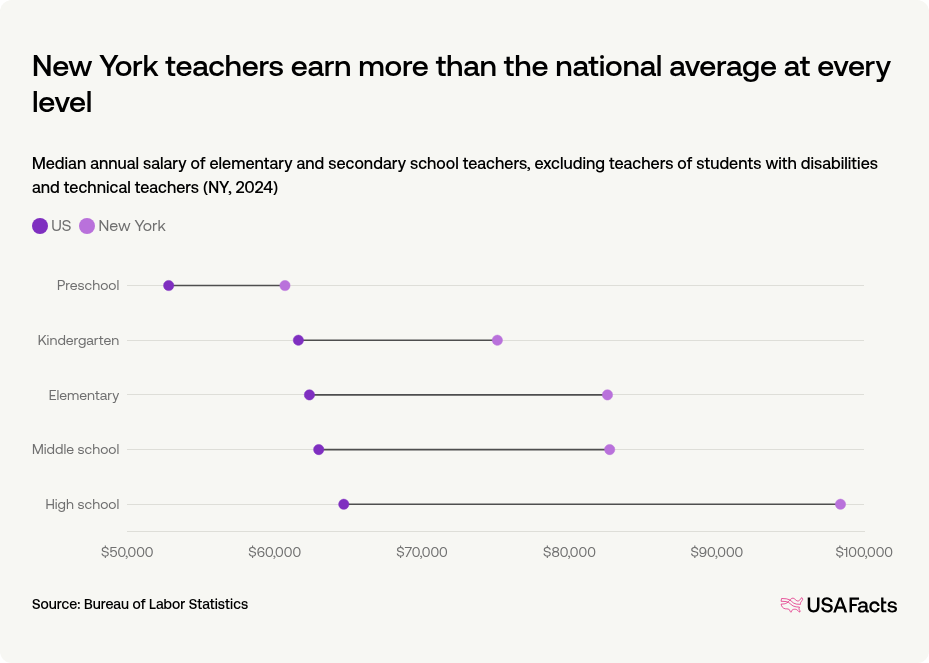
Generally, teachers in New York State tend to earn more than the national average. This is largely attributed to the state’s high cost of living, particularly in downstate regions, and a strong union presence that advocates for competitive compensation. However, to truly grasp what a teacher can earn, it’s imperative to look beyond the statewide average and examine the nuances.
Factors Influencing Teacher Salaries in New York
Several key elements contribute to the variation in teacher salaries throughout New York. Understanding these factors provides a clearer picture of earning potential and the career trajectory of an educator in the state.
Experience Level and Education
Like many professions, teaching salaries in New York are heavily influenced by a teacher’s years of experience and their educational qualifications. Entry-level teachers, those just starting their careers, will naturally earn less than their more seasoned counterparts. As teachers accumulate experience, they typically move up salary scales, with incremental increases awarded for each year of service.
Beyond experience, advanced degrees play a significant role. Teachers holding a Master’s degree or even a Doctorate will often command higher salaries than those with a Bachelor’s degree alone. Many New York school districts have established salary schedules that explicitly reward further academic achievement, recognizing the increased knowledge and expertise that advanced degrees represent. This can be a significant motivator for teachers seeking to enhance their earning potential throughout their careers. Professional development, certifications, and specialized training can also contribute to salary increases, further demonstrating a commitment to the profession and a desire for continuous improvement.
Location, Location, Location: The Impact of Geographic Region
The adage “location, location, location” holds true for teacher salaries in New York. The cost of living is a primary driver of salary differentials. Teaching in New York City, with its exceptionally high housing costs and general expenses, generally yields a higher salary compared to teaching in a more rural or suburban district upstate.
New York City, with its five boroughs – Manhattan, Brooklyn, Queens, the Bronx, and Staten Island – represents a vast and diverse educational landscape. The New York City Department of Education is the largest school system in the United States, and salaries for its teachers are typically among the highest in the state. This is a direct reflection of the economic realities and the demand for educators in such a densely populated and vibrant urban center.
In contrast, districts in upstate New York, such as those around Buffalo, Rochester, or Syracuse, may offer lower nominal salaries. However, the cost of living in these areas is considerably less than in the metropolitan region. Therefore, the purchasing power of a teacher’s salary in these upstate cities might be comparable, or even greater, than in New York City, despite the lower headline figure. When considering a teaching position in New York, it is vital to research the specific cost of living in the intended location to accurately assess the real value of the salary offered.
School District and Union Contracts
The specific school district a teacher works for is another critical determinant of their salary. New York has a multitude of school districts, each with its own budget, salary schedules, and collective bargaining agreements. Larger, more affluent districts, particularly those in the suburban counties surrounding New York City, often have the resources to offer more competitive salaries and benefits.
Teachers’ unions play an instrumental role in shaping these compensation packages. Unions like the New York State United Teachers (NYSUT) and local affiliates negotiate contracts on behalf of their members, advocating for fair wages, comprehensive benefits, and favorable working conditions. These contracts often include detailed salary schedules that outline pay based on years of experience and educational attainment. Consequently, teachers in districts with strong union representation may find their salaries are more standardized and potentially higher than those in non-unionized or weaker unionized districts.
The specifics of these union contracts can be complex, outlining not just base salary but also stipends for extra duties, coaching positions, or specialized roles. Understanding the collective bargaining agreement for a particular district is therefore essential for any teacher seeking to fully comprehend their earning potential.
Salary Ranges Across Different Teaching Roles and Levels
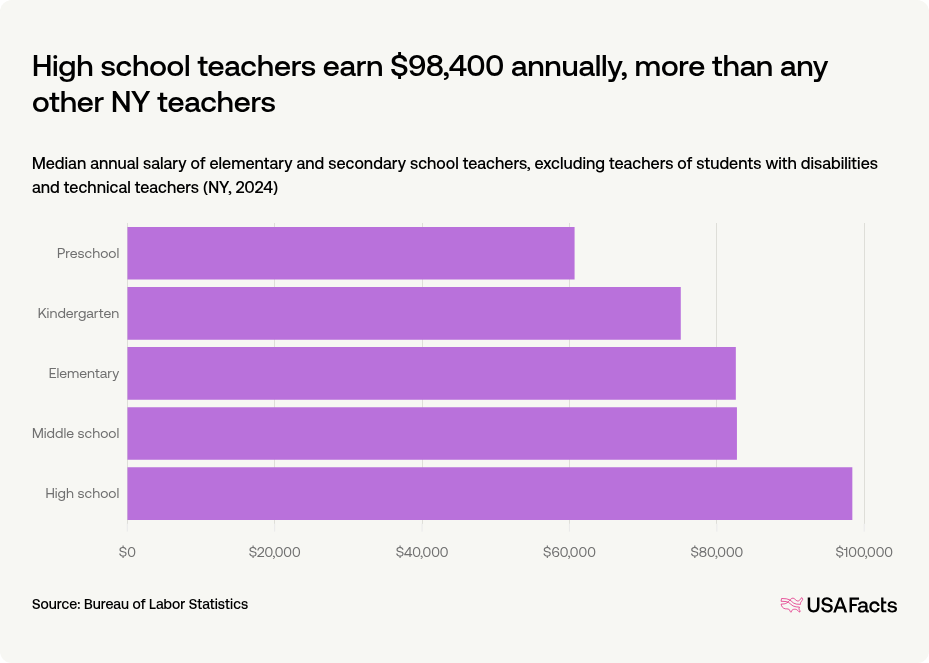
While a general overview of teacher salaries in New York is informative, it’s also beneficial to consider how earnings might differ across various teaching roles and educational levels.
Elementary School Teachers
Elementary school teachers, who lay the foundational educational groundwork for young learners, typically earn salaries that fall within the broader range for teachers in New York State. Their compensation is primarily determined by their experience, education, and the specific school district’s salary schedule. In New York City, for instance, an entry-level elementary school teacher might start in the $50,000-$60,000 range, while experienced teachers with advanced degrees could earn upwards of $90,000 or even $100,000. In more affordable upstate districts, these figures might be somewhat lower.
Middle and High School Teachers
Middle and high school teachers, who often specialize in specific subject areas, generally have salary potential comparable to their elementary school counterparts. However, the demand for teachers in certain subjects, such as STEM (Science, Technology, Engineering, and Mathematics) fields, can sometimes lead to higher starting salaries or additional incentives in an effort to attract qualified educators. Teachers with advanced certifications or those coaching extracurricular activities may also see their total compensation increase. The salary progression will follow the same pattern as elementary teachers, with experience and further education leading to higher earnings.
Special Education Teachers
Special education teachers are in high demand across New York State. Their specialized skills and the often more intensive nature of their work can lead to competitive salaries. Many districts offer salary differentials or bonuses for special education teachers to attract and retain them. Like other teaching roles, their earnings will be contingent on experience, educational qualifications, and the district’s compensation structure. The complexity and vital importance of their role often translate into robust salary offerings, reflecting the value placed on supporting students with diverse learning needs.
Substitute Teachers
Substitute teachers in New York generally earn less than their full-time, permanent counterparts. Their pay is typically on a daily basis. The rates can vary significantly depending on the district and whether the substitute holds a permanent teaching license. A daily rate might range from $150 to $300 or more, depending on the factors mentioned. While substitute teaching can offer flexibility, it is generally not a path to the same level of earning potential as a permanent teaching position.
Beyond Base Salary: Benefits and Additional Compensation
It’s important to remember that a teacher’s total compensation package in New York extends beyond their base salary. A significant portion of their remuneration comes in the form of benefits, which can add substantial value to their overall financial well-being.
Health Insurance and Retirement Plans
Most New York school districts provide comprehensive health insurance plans for their teachers and their families. These plans often include medical, dental, and vision coverage. The cost to the teacher for these benefits is usually subsidized by the district, making them a valuable perk.
Furthermore, New York State offers robust retirement plans for teachers, primarily through the New York State Teachers’ Retirement System (NYSTRS). This system provides a defined-benefit pension, offering retired teachers a guaranteed income stream based on their years of service and final average salary. The security and long-term financial stability provided by such a pension plan are significant components of a teacher’s overall compensation and are a major draw for the profession.
Extracurricular Activities and Additional Duties
Many teachers supplement their income by taking on additional responsibilities beyond their classroom duties. This can include coaching sports teams, advising student clubs, leading summer school programs, or participating in curriculum development committees. These roles often come with stipends that can add a noticeable amount to a teacher’s annual earnings. While these roles require extra time and commitment, they can be a rewarding way to increase income and contribute more broadly to the school community.
Conclusion: A Rewarding Career with Variable Financial Rewards
In conclusion, New York offers a dynamic and generally well-compensated environment for teachers, though significant variability exists. The average salary provides a baseline, but the actual earnings of a teacher are a complex interplay of experience, educational attainment, geographic location, and the specific policies of their employing school district. While New York City and its surrounding affluent suburbs tend to offer the highest nominal salaries, the lower cost of living in many upstate regions can offer comparable, if not superior, purchasing power.
The robust benefits packages, including comprehensive health insurance and secure retirement plans through the NYSTRS, add considerable value to a teacher’s overall compensation. Coupled with opportunities for supplemental income through extracurricular activities, a career in teaching in New York can be financially rewarding, especially for those dedicated to shaping the minds of the next generation. For those considering New York as a teaching destination, thorough research into specific district salary schedules and cost of living is highly recommended to make an informed decision about their career path.