
The vibrant landscape of Texas, a state renowned for its sprawling ranches, bustling cities, and rich cultural tapestry, offers a unique blend of opportunities and experiences. For those considering a career in education within the Lone Star State, understanding the financial realities of a teacher’s salary is paramount. Beyond the noble calling of shaping young minds, an educator’s income significantly influences their lifestyle choices, from the neighborhoods they can call home to their ability to explore the state’s diverse landmarks or embark on international adventures. This comprehensive guide delves into the nuances of teacher salaries in Texas, exploring how compensation packages impact daily living, travel aspirations, and the overall quality of life for these dedicated professionals.
Understanding Teacher Salaries Across Texas
The financial compensation for teachers in Texas is a complex mosaic, influenced by numerous factors that extend beyond simple experience or educational attainment. While the state aims to attract and retain talented educators, the specifics of their paychecks vary significantly, directly shaping their capacity for leisure, travel, and comfortable accommodation.
Key Factors Influencing Teacher Pay
Several pivotal elements determine how much a teacher in Texas earns, each contributing to a diverse range of salaries across the state’s vast educational system. Understanding these factors is crucial for both prospective and current educators planning their financial future and lifestyle.
Experience and Education: Unsurprisingly, a teacher’s journey in the classroom is often directly correlated with their earning potential. Entry-level teachers, fresh out of university, typically start at the lower end of the salary spectrum. As they accumulate years of experience, their salaries tend to increase incrementally. Similarly, advanced degrees, such as a Master’s or Doctorate, often command a higher base salary or provide additional stipends. For instance, a teacher holding a Master’s degree might see an annual supplement that, over time, could fund more extensive travel experiences or allow for upgrades in their chosen accommodation during vacations. This progression is not just about professional growth but also about enhancing one’s personal lifestyle.
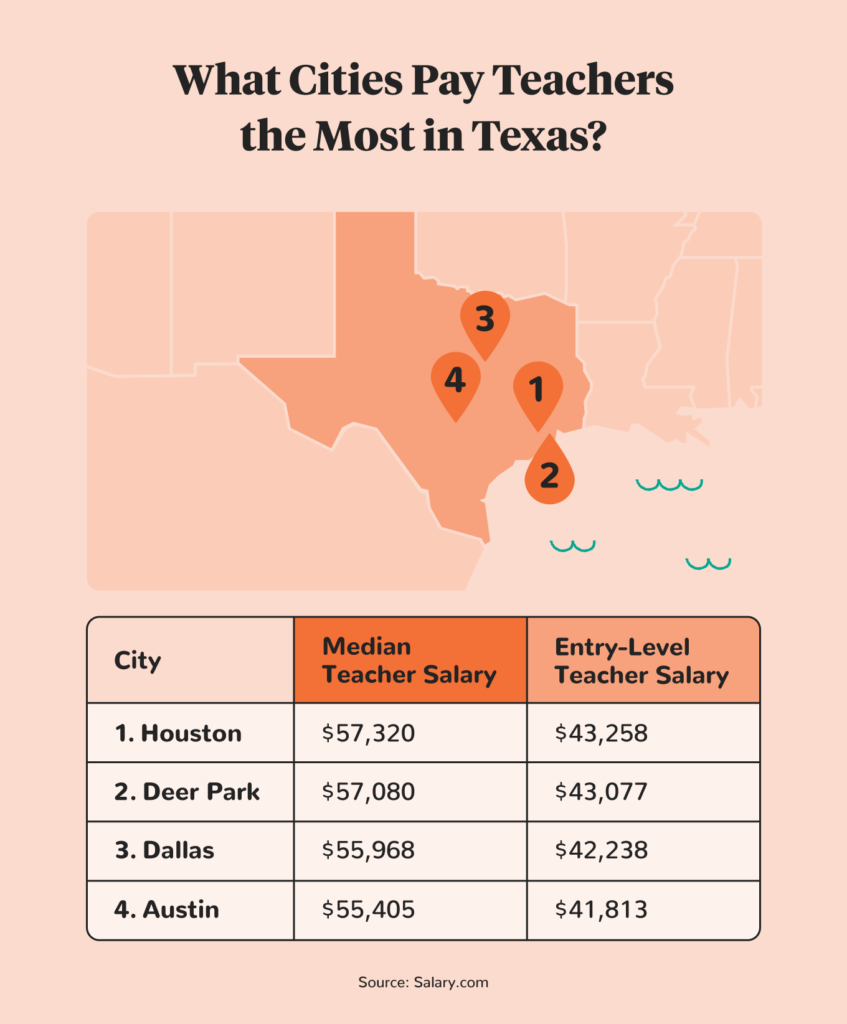
Geographic Location: Urban vs. Rural Differences: The adage “location, location, location” holds significant weight in teacher salaries. Major metropolitan areas like Houston, Dallas, Austin, and San Antonio often offer higher starting salaries and more robust pay scales compared to smaller, more rural districts. This is often a strategic move by urban districts to attract talent in competitive markets and to help offset the generally higher cost of living in these bustling cities. Conversely, rural districts, while perhaps offering a lower base salary, might present a more affordable cost of living, which could balance out the overall financial picture and potentially leave more disposable income for local tourism or weekend getaways within Texas. A teacher in a rural district might find it easier to afford a charming bed and breakfast in a nearby town for a staycation, while their urban counterpart might need to save more for a similar experience.

Subject Matter Expertise: Not all subjects are created equal when it comes to teacher compensation. Educators specializing in high-demand fields such as STEM (Science, Technology, Engineering, and Mathematics), special education, or bilingual education often receive stipends or higher base salaries. These incentives are designed to address shortages in critical areas and ensure that students have access to qualified teachers in these essential disciplines. For a teacher with specialized skills, these additional earnings can translate into greater flexibility for luxury travel experiences, perhaps a family trip to Europe during the summer break, or the ability to invest in more comfortable accommodation options, like suites or resorts, during their travels.
Salary Ranges by District and Experience
While specific figures fluctuate annually, a general understanding of salary ranges provides valuable insight into the financial landscape for Texas educators.
Entry-Level Salaries: For a first-year teacher with a bachelor’s degree, salaries in Texas typically range from approximately $40,000 to $60,000 annually. Districts in larger cities or those with a higher cost of living, like Austin or Dallas, usually offer starting salaries at the higher end of this scale, sometimes exceeding $55,000-$60,000. These initial earnings lay the foundation for a teacher’s financial independence, influencing their choices regarding housing accommodation, daily expenses, and the beginnings of their travel fund for exploring local attractions or planning short trips.
Mid-Career and Experienced Teachers: As teachers gain experience, their salaries see a steady increase. A mid-career teacher (5-10 years of experience) can expect to earn anywhere from $55,000 to $75,000, while highly experienced educators (15+ years) or those with advanced degrees and leadership roles can command salaries upwards of $70,000 to $90,000, and sometimes even higher in top-paying districts. This significant growth in income over a career span allows for considerable lifestyle upgrades. An experienced teacher might find themselves capable of affording longer, more luxurious vacations, booking stays in boutique hotels, or even considering international travel to destinations like Mexico or beyond, turning long-held travel dreams into reality. The stability provided by these salaries enables better financial planning for significant travel experiences.
The Financial Landscape: Salaries, Benefits, and Cost of Living
Beyond the base salary, the overall financial well-being of a Texas teacher is heavily influenced by their benefits package and the prevailing cost of living in their specific area. These elements collectively determine their disposable income and, by extension, their capacity for discretionary spending on tourism, travel, and leisure.
Beyond the Base Salary: Benefits and Supplemental Pay
A teacher’s total compensation extends well beyond their annual paycheck. A robust benefits package significantly contributes to their financial security and peace of mind, indirectly enhancing their ability to enjoy a desired lifestyle.
Health Insurance and Retirement Plans: Most Texas school districts offer comprehensive health insurance plans, often with a significant portion of the premiums covered by the employer. This crucial benefit protects teachers from potentially devastating medical costs, freeing up personal funds that might otherwise be allocated to healthcare expenses. Similarly, participation in the Teacher Retirement System of Texas (TRS) ensures a secure retirement, providing a defined benefit plan that contributes to long-term financial stability. Knowing that future accommodation and living expenses in retirement are somewhat covered allows teachers to more confidently allocate current income towards experiences, such as booking longer stays in comfortable villas or apartments during extended travels.
Stipends and Professional Development: Many districts offer additional stipends for coaching sports, sponsoring clubs, teaching advanced placement courses, or taking on leadership roles. These supplemental earnings, though perhaps not massive, can accumulate and provide welcome boosts to a teacher’s disposable income. Such funds could be earmarked for a special weekend getaway to a Texas landmark like The Alamo or a trip to Space Center Houston, allowing them to enjoy local attractions without dipping into their core budget. Furthermore, opportunities for professional development, often funded by districts, can enhance skills and open doors to higher-paying positions while potentially including travel to conferences, offering a unique blend of learning and exploration.

Navigating the Texas Cost of Living
The true value of a teacher’s salary is always relative to the cost of living in their area. Texas is a vast state with significant variations in expenses, and these differences directly impact a teacher’s purchasing power and lifestyle choices.
Housing, Utilities, and Transportation: Housing is often the largest expenditure for any household, and Texas is no exception. While generally more affordable than coastal states, housing costs in major metropolitan areas like Austin, Dallas, and Houston have seen substantial increases. A teacher in Austin might find their salary stretched thin trying to afford a spacious apartment or a house, while a teacher in a smaller city like Laredo or McAllen might enjoy more favorable housing options. Utility costs, transportation expenses (especially in a sprawling state requiring significant driving), and groceries also factor into the equation. These fundamental costs determine how much remains after essential bills are paid – the critical amount available for lifestyle enhancements.
Impact on Lifestyle and Disposable Income: The interplay between salary and cost of living directly dictates a teacher’s disposable income. In areas with a lower cost of living, a moderate teacher’s salary might afford a very comfortable lifestyle, allowing for frequent weekend trips, dining out, and more liberal spending on local tourism and attractions. Conversely, a higher salary in an expensive city might barely cover essential living expenses, leaving less room for spontaneous travel or luxury accommodation choices. This balance is crucial when considering where to teach in Texas, as it directly affects the ability to pursue personal passions, including travel and leisure activities that are central to a fulfilling life. Understanding this balance is key to planning memorable experiences, from staycations exploring the San Antonio Riverwalk to more ambitious journeys.
Teacher Salaries and the Texas Lifestyle: Travel and Leisure Opportunities
For many, the appeal of a teaching career lies not just in its purpose but also in the generous vacation time, particularly the long summer breaks. These periods offer invaluable opportunities for travel and leisure, but a teacher’s salary ultimately dictates the scope and style of these adventures.
Exploring Texas on a Teacher’s Budget
Texas itself is a vast playground, brimming with diverse landscapes, historical sites, and vibrant cities. Teachers, with careful budgeting, can certainly explore much of what their home state has to offer.
Weekend Getaways and Staycations: Even on a moderate salary, Texas teachers can enjoy enriching weekend getaways. A trip to Galveston for a beach escape, exploring the wine country near Fredericksburg, or immersing oneself in the cowboy culture of Fort Worth are all within reach. Staycations, exploring one’s own city’s hidden gems, are also popular, leveraging local tourism opportunities without the cost of extensive travel. These shorter trips often involve staying in charming local hotels, comfortable guesthouses, or utilizing short-term rental apartments, providing a change of scenery without breaking the bank. Many teachers leverage their time off to visit natural landmarks like Big Bend National Park or Guadalupe Mountains National Park, demonstrating that incredible experiences don’t always require international flights.
Budget-Friendly Accommodation Options: To maximize travel within a teacher’s budget, smart accommodation choices are key. Instead of luxury resorts, many opt for budget-friendly hotels, family-owned inns, or vacation rentals like apartments or villas, especially for longer stays. Websites offering comparisons of accommodation options become invaluable tools. Camping in state parks, staying with friends or family, or even exploring house-sitting opportunities can further reduce travel costs, allowing more funds for experiences, dining, and souvenir shopping. A teacher’s ability to travel frequently often hinges on their savvy in finding affordable and comfortable places to stay.
Planning Vacations: From Mexico to Europe
The long summer break presents the ideal window for more ambitious travel. While some teachers might embark on international journeys, others might opt for extensive road trips across the United States.
Long-term Stay Considerations during summer breaks: For those dreaming of a longer escape, perhaps an extended stay in Mexico or a multi-week exploration of Europe, meticulous financial planning is essential. Saving throughout the year, taking advantage of budget travel deals, and choosing more economical accommodation like hostels or long-term apartment rentals become critical. The aim is to stretch their summer income or accumulated savings to create memorable experiences. Some teachers even use their breaks for educational tours or professional development trips that combine learning with cultural immersion, often with some costs partially subsidized.
Balancing Travel Dreams with Financial Realities: While the desire for extensive travel is common, a teacher’s salary often necessitates a balance between grand aspirations and financial realities. This might mean choosing one significant international trip every few years instead of annually, or opting for more budget-conscious destinations. It can also mean making lifestyle adjustments throughout the year to save specifically for travel, prioritizing experiences over other discretionary spending. The lifestyle of a Texas teacher, while rewarding in its own right, requires strategic financial planning to truly unlock the world of travel and tourism opportunities available to them.
Career Progression and Financial Growth for Texas Educators
The journey of a teacher in Texas isn’t static; there are clear pathways for professional development and financial growth. These opportunities not only enhance an educator’s impact in the classroom but also significantly improve their earning potential, thereby expanding their lifestyle choices and travel horizons.
Pathways to Higher Earnings
For dedicated educators, various avenues exist to increase their income, directly influencing their ability to enjoy a richer personal and travel life.
Advanced Degrees and Certifications: Pursuing a Master’s degree, a Ph.D., or specialized certifications (e.g., in administration, counseling, or specific high-demand subjects) almost invariably leads to a higher salary. These credentials not only make a teacher more valuable to their district but also open doors to new roles with increased pay. The investment in higher education can yield substantial returns, allowing for more frequent and extensive travel, booking more upscale hotels, or even considering luxury travel experiences during time off. This commitment to continuous learning is a direct investment in a more comfortable and adventurous lifestyle.
Leadership Roles and Administrative Positions: Moving beyond the classroom into leadership roles, such as department head, instructional coach, assistant principal, or principal, represents a significant jump in salary. These administrative positions come with greater responsibilities but also with considerably higher pay scales, often reaching six figures for experienced administrators in larger districts. For a teacher aspiring to these roles, the financial benefits can transform their lifestyle, enabling them to pursue grand travel plans, invest in vacation properties, or simply enjoy a greater sense of financial freedom. The ability to afford long-term stays in desirable destinations or to consistently choose premium accommodation becomes a reality.
Investing in a Fulfilling Texas Life
Ultimately, understanding a teacher’s salary in Texas is about more than just numbers; it’s about the quality of life it affords. With thoughtful planning, even a modest salary can facilitate a life rich in experiences.
Financial Planning for Travel and Future Experiences: Savvy financial planning is a cornerstone for Texas teachers who wish to integrate travel and leisure into their lives. This includes creating dedicated savings accounts for vacations, researching travel deals, being flexible with travel dates to take advantage of off-peak pricing, and utilizing loyalty programs for hotels and airlines. By prioritizing experiences and making informed financial decisions, teachers can ensure their income supports their adventurous spirit, allowing them to visit iconic landmarks, explore new cultures, and create lasting memories. They might plan an annual family trip to South Padre Island, or a more culturally immersive tour of Grapevine and its historic sites.
Embracing the Texas Lifestyle: Despite the financial considerations, a career in teaching in Texas offers immense personal and professional satisfaction. The state’s diverse geography, from the piney woods of East Texas to the deserts of El Paso and the beaches of Corpus Christi, means that countless opportunities for local tourism and exploration are always at hand. With careful budgeting, strategic career moves, and a passion for discovery, Texas educators can build a lifestyle that is both financially stable and rich in travel and cultural experiences, truly living “life out of the box.”
In conclusion, while the question “How much does a teacher make in Texas?” yields a range of answers, it’s clear that the profession offers a foundation for a rewarding life. The compensation, combined with benefits and opportunities for growth, allows teachers to not only contribute meaningfully to their communities but also to pursue a lifestyle that includes exploring their vast state and venturing beyond its borders, making the most of their invaluable time off. The journey of a Texas teacher is ultimately a blend of dedication, financial acumen, and a keen desire for discovery.
LifeOutOfTheBox is a participant in the Amazon Services LLC Associates Program, an affiliate advertising program designed to provide a means for sites to earn advertising fees by advertising and linking to Amazon.com. Amazon, the Amazon logo, AmazonSupply, and the AmazonSupply logo are trademarks of Amazon.com, Inc. or its affiliates. As an Amazon Associate we earn affiliate commissions from qualifying purchases.