
When considering a move to the Grand Canyon State, or perhaps investing in a vacation home in a vibrant city like Scottsdale or Phoenix, understanding property taxes is a crucial part of your financial planning. Arizona, while known for its stunning desert landscapes and thriving tourism sector, operates on a system of property taxation that can significantly impact the cost of ownership. Unlike many states that have high property tax rates, Arizona has a reputation for being more moderate, but this doesn’t mean it’s negligible. The actual amount you’ll pay is a complex interplay of several factors, including the value of your property, its classification, and the specific local tax rates set by counties and municipalities. This guide aims to demystify Arizona property taxes, providing a clear picture for potential homeowners and investors.
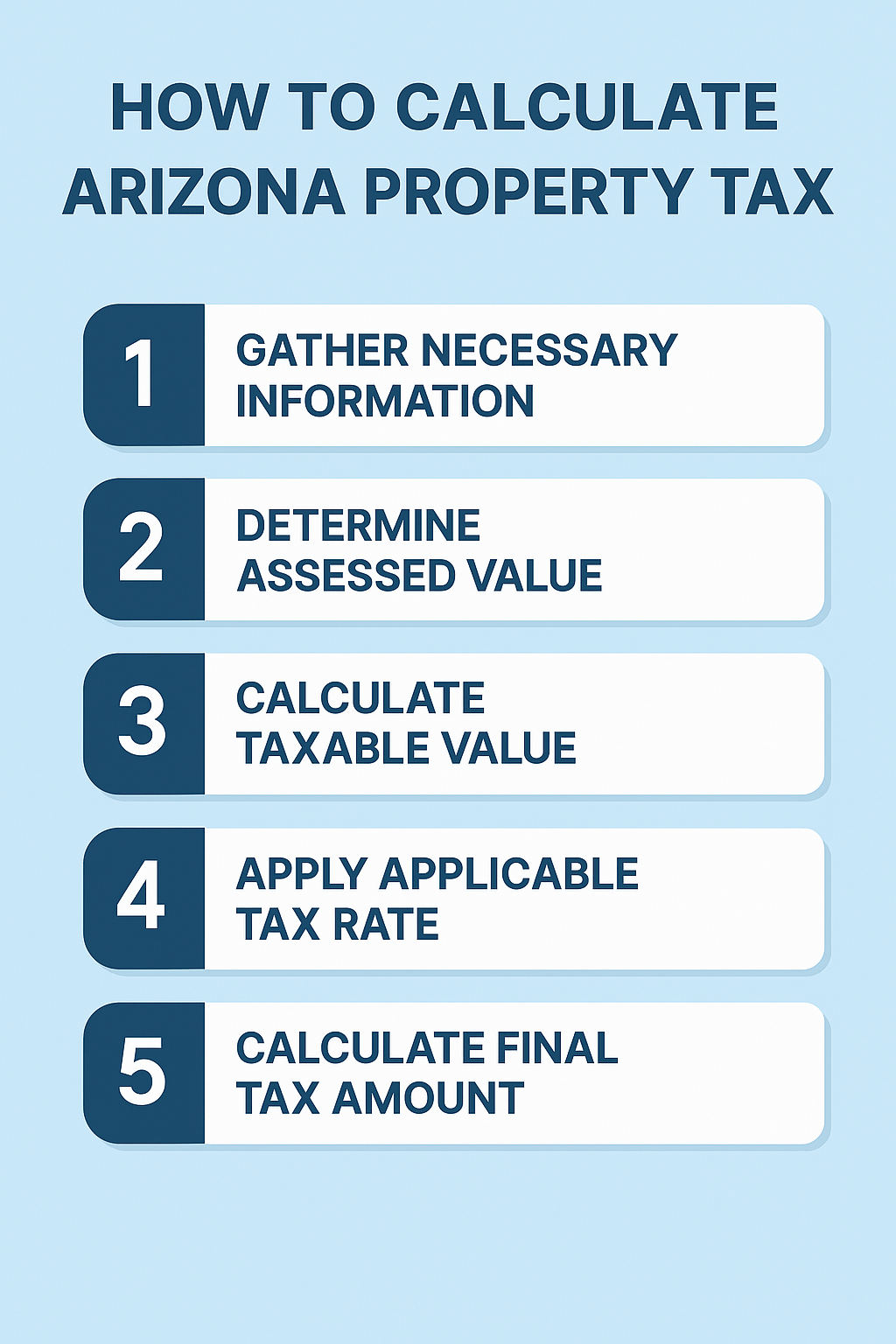
The core of Arizona‘s property tax system lies in its valuation and assessment processes. The Arizona Department of Revenue oversees this, but the actual assessment is conducted at the county level by individual county assessors. These assessors are responsible for determining the “full cash value” of a property, which is essentially what the property would sell for on the open market. From this full cash value, a “limited assessed value” is derived, which is the figure used for calculating property taxes. This limited assessed value is typically a percentage of the full cash value, and this percentage can vary based on the property’s classification.
Understanding Property Valuation and Classification in Arizona
The foundation of any property tax calculation is the accurate valuation of the property itself. In Arizona, this process is managed by the county assessor’s office in each of the state’s 15 counties. They are tasked with determining the “full cash value” (FCV) of your property. This is not an arbitrary number; it’s an estimation of the price your property would fetch on the open market in a typical sale. The assessor’s office uses various methods to arrive at this figure, including comparing your property to recently sold similar properties in your area, considering the cost to replace your property, and analyzing the income it might generate (for rental properties).
Property Classes and Their Impact on Assessed Value
Once the FCV is established, it’s crucial to understand how Arizona classifies properties, as this directly affects how much of the FCV is subject to taxation. Arizona categorizes properties into several classes, each with its own assessment ratio:
- Class 1: Vacant Land: This class typically includes undeveloped land that is not currently being used for agricultural or commercial purposes. The limited assessed value for Class 1 properties is 10% of their full cash value.
- Class 2: Residential Property: This is the most common class for homeowners and includes single-family residences, townhouses, and condominiums. The limited assessed value for Class 2 properties is also 10% of their full cash value. This favorable ratio is a key reason why Arizona is often considered to have relatively moderate property taxes for homeowners compared to other states.
- Class 3: Commercial Property: This class encompasses properties used for business purposes, such as office buildings, retail stores, and industrial facilities. The limited assessed value for Class 3 properties is 15% of their full cash value.
- Class 4: Agricultural Property: Land actively used for farming or ranching falls into this category. The assessment ratio for Class 4 properties is 15% of their full cash value.
- Class 5: Impacted Property: This is a more specialized classification for properties affected by specific environmental factors or government actions. The assessment ratio for Class 5 properties is 10% of their full cash value.
It’s important to note that while the assessment ratios are set by the state, the FCV is determined locally by the county assessor. This means that two identical properties in different counties could have different FCVs, leading to different tax bills.
The Role of Tax Rates and Levies
After determining the limited assessed value (LAV) of your property, the next step in calculating your property tax bill involves understanding the tax rates, often referred to as “levies.” These rates are not uniform across the state. Instead, they are set annually by various local government entities that have the authority to levy taxes. These entities include:
- County governments: Your county board of supervisors sets tax rates to fund county services like sheriff’s departments, roads, and public health.
- Municipalities (Cities and Towns): Cities like Tucson, Mesa, and Chandler establish their own tax rates to pay for services such as police and fire departments, parks, and local infrastructure.
- School districts: Property taxes are a significant source of funding for public education in Arizona. Each school district determines its own tax levy to support local schools.
- Special districts: Various other special districts, such as fire districts, library districts, and community college districts, may also levy taxes to fund their specific services.
The tax rate is typically expressed in dollars per $100 of assessed value, or as a mill rate. A mill is one-tenth of a cent, or $0.001. So, a tax rate of 10 mills would mean $10 in tax for every $1,000 of assessed value. The total tax rate for a property is the sum of the rates set by all the taxing jurisdictions in which the property is located.
To illustrate, imagine a residential property in Maricopa County with a full cash value of $400,000.
- The limited assessed value would be 10% of $400,000, which is $40,000.
- If the combined tax rate from the county, city, school district, and any applicable special districts is, for example, 0.80% (or 8 mills), the annual property tax would be: $40,000 (LAV) * 0.0080 (tax rate) = $320.
This example highlights the relatively low tax burden for residential property owners in Arizona, even with a substantial property value. However, it’s essential to remember that these rates can fluctuate year to year based on budgetary needs of the local governments and the overall property tax base in the jurisdiction.
Factors Influencing Local Tax Rates
Several factors contribute to the variations in tax rates from one jurisdiction to another:
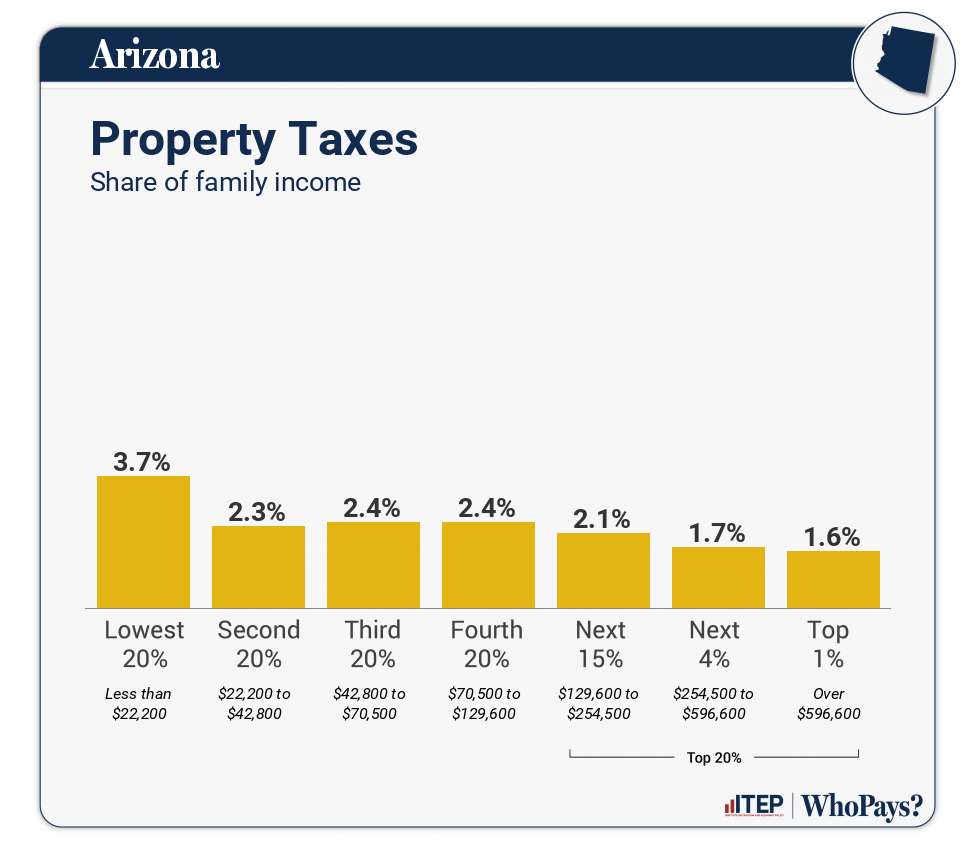
- Level of Services: Areas with a higher demand for public services or those offering more extensive amenities (e.g., well-funded schools, numerous parks) may have higher tax rates to support these services.
- Property Tax Base: A jurisdiction with a larger and more valuable property tax base might be able to maintain services with lower individual tax rates, as the overall revenue generated is higher. Conversely, a jurisdiction with a smaller tax base might require higher rates.
- Debt Obligations: Local governments may issue bonds for infrastructure projects or other capital improvements. The repayment of this debt is often funded through property taxes, which can influence the overall levy.
- Voter-Approved Levies: In some cases, voters may approve specific tax increases to fund particular projects or initiatives, such as school improvements or public safety enhancements.
When you are researching areas to live or invest in, it is highly recommended to check the specific property tax rates for the exact location you are interested in. This information is typically available on the county assessor’s website or through the county treasurer’s office.
Estimating Your Arizona Property Tax Bill
While a precise calculation requires knowing your property’s exact assessed value and the precise tax rates for its location, you can develop a strong estimate by following a few key steps. This will help you budget effectively, whether you’re looking at a starter home in Phoenix, a luxury villa in Sedona, or an investment property in Flagstaff.
Step 1: Determine Your Property’s Full Cash Value (FCV)
The first step is to get an idea of your property’s FCV. If you are a current homeowner, you can find this information on your annual property tax statement or by visiting your county assessor’s website. For prospective buyers, you can refer to recent sales data for comparable properties in the area or work with a real estate agent to get an estimated FCV. For example, if you are considering a condo in Scottsdale listed for $500,000, that might be a good starting point for estimating its FCV.
Step 2: Calculate Your Limited Assessed Value (LAV)
Once you have an estimated FCV, you need to determine your LAV based on your property’s classification. As previously discussed:
- For most residential properties (Class 2), the LAV is 10% of the FCV.
- For vacant land (Class 1), it’s also 10% of the FCV.
- For commercial and agricultural properties (Classes 3 & 4), it’s 15% of the FCV.
Using our Scottsdale condo example with an estimated FCV of $500,000, and assuming it’s a Class 2 residential property, the LAV would be:
$500,000 (FCV) * 0.10 (assessment ratio) = $50,000 (LAV)
Step 3: Identify the Applicable Tax Rates (Levies)
This is where local research is essential. You’ll need to find the combined tax rate for the specific jurisdiction your property is located in. You can usually find this information on the county treasurer’s or assessor’s website. These websites often provide online tools or downloadable documents listing the tax rates for different areas within the county. Let’s assume that for your chosen property in Scottsdale, the combined tax rate from the city, school district, and county is 0.75% (or 7.5 mills).
Step 4: Calculate Your Estimated Annual Property Tax
Finally, you multiply your LAV by the combined tax rate.
Using our Scottsdale example:
$50,000 (LAV) * 0.0075 (tax rate) = $375
This would be the estimated annual property tax. Remember that this is an approximation. Actual tax bills can be influenced by various factors, including any exemptions or special assessments that might apply to your property.
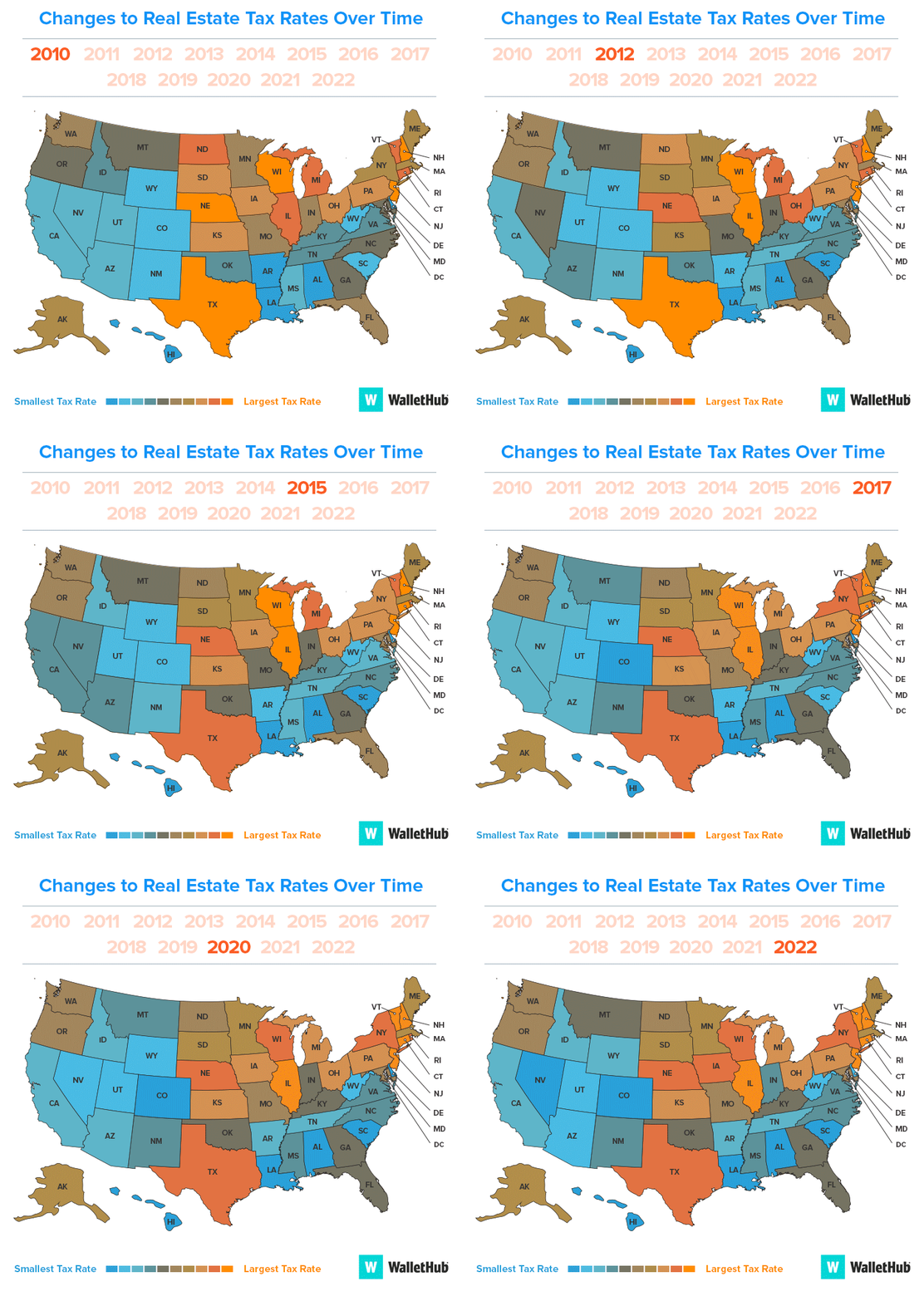
Potential Exemptions and Reductions
Arizona does offer certain property tax exemptions that can reduce your tax burden. The most common is the “Head of Family” exemption, which provides a limited reduction in the assessed value for homeowners who occupy their primary residence. There are also specific exemptions for disabled veterans and surviving spouses. It is advisable to inquire with your county assessor’s office about any exemptions you may be eligible for.
Understanding Arizona‘s property tax system is key to making informed decisions about property ownership. While generally more affordable than many other states, it’s a system with local nuances that require diligent research. Whether you’re planning a permanent move to enjoy the sunny climate or seeking a seasonal escape, factoring in property taxes will contribute to a more accurate picture of your overall cost of living or vacationing in the Grand Canyon State.