
Navigating the intricate network of bridges and tunnels that crisscross the vibrant landscape of New York can be a thrilling aspect of any visit. Whether you’re embarking on a scenic drive along the Hudson River, heading to explore iconic landmarks in Manhattan, or venturing out to discover the charm of Long Island, understanding the toll system is crucial for a smooth and budget-friendly journey. This comprehensive guide delves into the cost of tolls across New York, offering insights into pricing structures, payment methods, and tips to help you manage your travel expenses effectively.
The state of New York is renowned for its extensive toll infrastructure, designed to maintain and operate vital transportation arteries. These tolls contribute to the upkeep of iconic structures like the George Washington Bridge, the Verrazzano-Narrows Bridge, and the Triborough Bridge (now officially the Robert F. Kennedy Bridge), among many others. For travelers, this translates to a series of charges that can accumulate, especially for those planning extensive road trips or frequent cross-borough commutes.
Understanding the varying rates, especially for different vehicle classes, is key. A standard passenger car will incur different charges than a larger vehicle like an SUV, truck, or motorcycle. Furthermore, toll rates can fluctuate based on the direction of travel, the time of day (peak vs. off-peak hours), and whether you’re utilizing specific express lanes or services.
Understanding the Toll System in New York
The toll system in New York is managed by several authorities, with the primary ones being the Metropolitan Transportation Authority (MTA), which oversees many bridges and tunnels connecting New York City boroughs and to Long Island, and the New York State Thruway Authority, responsible for the vast New York State Thruway system. Each authority has its own set of pricing policies and payment mechanisms.
Key Toll Authorities and Their Networks
The MTA operates some of the most frequently used toll facilities within the metropolitan area. These include:
-
Bridges:
- Robert F. Kennedy Bridge (formerly Triborough Bridge)
- Bronx-Whitestone Bridge
- Throgs Neck Bridge
- Verrazzano-Narrows Bridge
- [Henry Hudson Bridge](https://lifeoutofthebox.com/henry- hudson-bridge)
- Marine Parkway-Gil Hodges Memorial Bridge
- Cross Bay Parkway Bridge
-
Tunnels:
- Queens-Midtown Tunnel
- Hugh L. Carey Tunnel (formerly Brooklyn-Battery Tunnel)
The New York State Thruway Authority manages the New York State Thruway, a major toll highway stretching across the state, connecting New York City to cities like Buffalo and the Canadian border. This system includes numerous toll plazas and bridges, with a different pricing structure than the MTA facilities.
Common Toll Rates for Passenger Vehicles
For a standard passenger vehicle (typically defined as a car, van, or small SUV with two axles), toll rates can vary significantly. It’s important to consult the official websites of the respective toll authorities for the most up-to-date and precise pricing. However, as a general guide:
-
MTA Bridges and Tunnels: Tolls for passenger vehicles typically range from approximately $9.55 to $12.75 for E-ZPass holders. Non-E-ZPass users (toll-by-mail) can expect higher rates, often around $11.75 to $16.50. Specific bridges, like the Verrazzano-Narrows Bridge, often have higher tolls due to their significant infrastructure and traffic volume. For instance, the Verrazzano-Narrows Bridge has one of the highest tolls for a single crossing in the country.
-
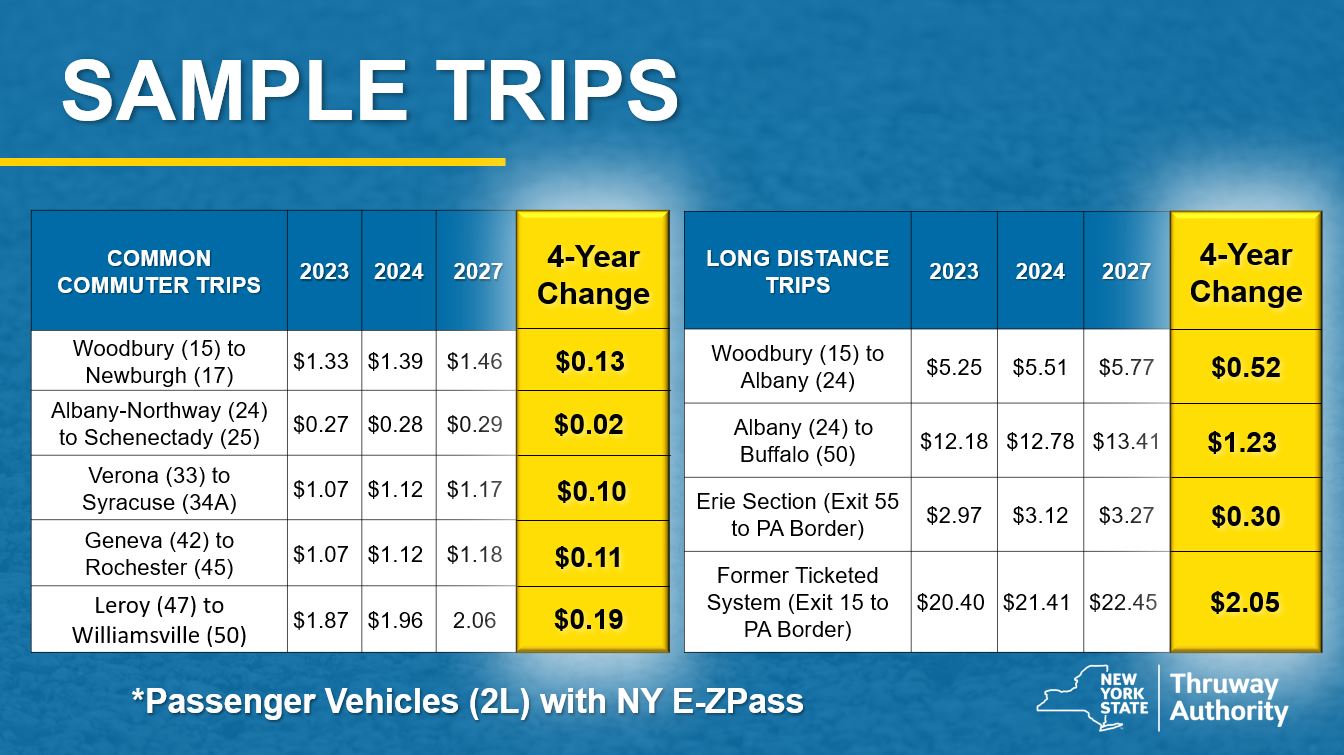
New York State Thruway: The Thruway operates on a different model, often with toll collection points along its length. Rates are generally calculated based on the distance traveled. For a passenger vehicle, this can mean tolls ranging from a few dollars for shorter trips to tens of dollars for longer journeys covering significant portions of the Thruway. For example, a trip from Albany to Buffalo via the Thruway would involve a substantial toll charge.
-
George Washington Bridge: This iconic bridge, connecting Fort Lee, New Jersey, to Manhattan, New York, also has its own set of tolls. For passenger vehicles, E-ZPass rates are typically around $17.00, with toll-by-mail rates being higher. It’s crucial to note that tolls on the George Washington Bridge are collected only for eastbound traffic into New York.
It is imperative to check the official websites for the MTA and the New York State Thruway Authority for the most current toll rates, as these are subject to change. These websites provide detailed rate schedules for all vehicle classes and frequently asked questions.
Navigating Payment Options and Discounts
Making toll payments in New York is a streamlined process, largely dominated by electronic toll collection. Understanding your options can save you money and prevent unexpected charges.
Electronic Toll Collection (E-ZPass)

The most prevalent and cost-effective method of paying tolls in New York is by using an E-ZPass transponder. E-ZPass is an electronic toll collection system used across many states in the eastern United States, including New York.
-
Benefits of E-ZPass:
- Discounted Rates: E-ZPass holders consistently pay lower toll rates compared to those who opt for the toll-by-mail system. The savings can be substantial, especially for frequent travelers.
- Convenience: E-ZPass allows you to pass through toll plazas without stopping, saving time and reducing traffic congestion. The toll is automatically deducted from your linked account.
- Multiple Payment Options: You can link your E-ZPass to a credit card, debit card, or bank account for automatic replenishment, ensuring your account is always funded.
-
How to Get an E-ZPass: You can obtain an E-ZPass transponder by visiting the official E-ZPass New York website or by purchasing one at various retail locations. There might be a small monthly or annual fee associated with the transponder itself, but this is often offset by the toll discounts.
Toll-By-Mail System
For those who do not have an E-ZPass transponder, New York employs a toll-by-mail system. When you pass through a toll plaza without an active transponder, a camera captures your license plate information. A bill for the toll, plus an administrative fee, will be mailed to the registered owner of the vehicle.
- Higher Costs: As mentioned, toll-by-mail rates are significantly higher than E-ZPass rates. This is a deliberate strategy to encourage the adoption of electronic toll collection.
- Timeliness is Key: It is crucial to pay toll-by-mail invoices promptly to avoid late fees and potential penalties. If you receive a toll bill, check it carefully for accuracy and make the payment by the due date.
Special Considerations and Potential Discounts
While general discounts are primarily tied to E-ZPass usage, there might be specific programs or considerations for certain groups:
- Commuter Plans: Some toll authorities may offer commuter discount plans for frequent users of specific bridges or tunnels. These plans often require a dedicated application and may have eligibility criteria.
- Local Resident Discounts: In some instances, residents of areas immediately surrounding a toll facility might be eligible for reduced rates. However, these are less common for major bridges and tunnels in New York City.
- Disability Exemptions: New York offers toll exemptions for eligible vehicles carrying individuals with qualifying disabilities. Specific application and documentation processes are required to avail these exemptions.
It is always advisable to thoroughly research the specific toll facility you plan to use and check the relevant authority’s website for any available discount programs or special provisions.
Planning Your Trip and Managing Toll Costs
Effectively managing toll costs requires a bit of planning, especially if you’re undertaking a multi-day trip or exploring different regions of New York.
Budgeting for Tolls
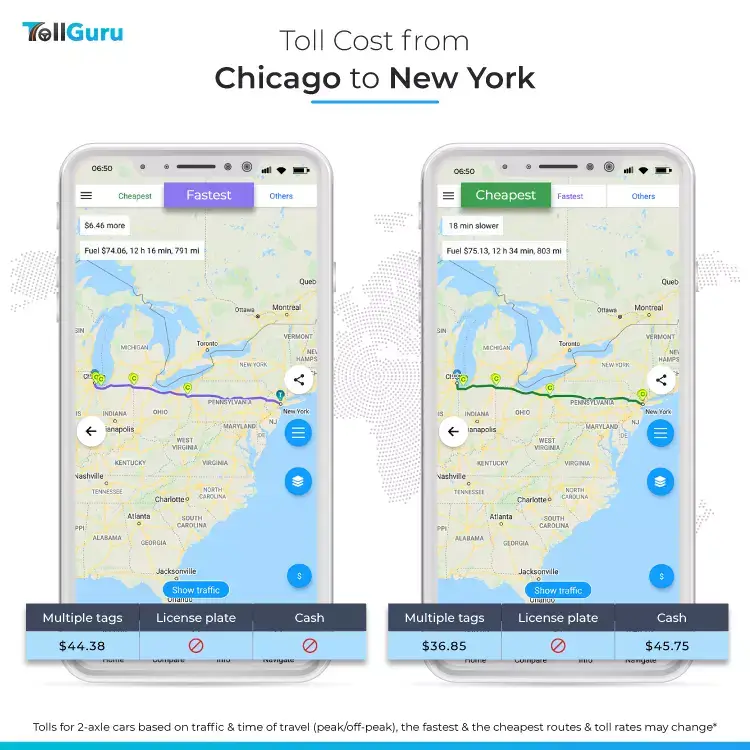
When planning your itinerary, factor in the estimated toll costs for each leg of your journey. Websites for the MTA and New York State Thruway Authority often have toll calculators or rate charts that can help you estimate expenses. For example, if you are planning a trip to visit attractions in Manhattan and plan to cross the George Washington Bridge or enter through the Hugh L. Carey Tunnel, you should add those specific tolls to your budget. Similarly, if your travels take you upstate on the New York State Thruway, budget for those per-mile tolls.
Understanding Peak vs. Off-Peak Hours
Some toll rates, particularly on bridges and tunnels leading into Manhattan, can be higher during peak commuting hours (typically morning and evening weekdays) and lower during off-peak hours and weekends. If your schedule is flexible, consider traveling during off-peak times to save money.
Avoiding Unnecessary Tolls
While tolls are unavoidable for crossing many key arteries, especially into and within New York City, there are strategies to minimize them:
- Route Planning: Utilize GPS navigation apps like Google Maps or Waze. These apps often provide options to avoid tolls, although this may result in longer travel times and navigating through local streets, which can be congested.
- Ferry Services: For certain crossings, like between Manhattan and Staten Island, the Staten Island Ferry is a free alternative to toll bridges or tunnels. It’s a scenic and cost-effective way to experience the New York Harbor and see landmarks like the Statue of Liberty.
- Public Transportation: For travel within New York City, relying on MTA subways and buses is often the most economical and efficient option, completely bypassing toll roads.
The Cost of Convenience
Ultimately, New York’s toll system is designed to fund critical infrastructure and manage traffic flow. While the costs can add up, understanding the system, utilizing E-ZPass, and planning your routes can help you navigate these expenses efficiently. Whether you’re a tourist exploring iconic landmarks like the Empire State Building or a business traveler attending meetings, being informed about tolls ensures a smoother and more predictable travel experience. Remember to always refer to the official toll authority websites for the most current and accurate information.