
Navigating the complexities of unemployment benefits in Texas can be a daunting task, especially when you’re facing unexpected job loss. While the immediate concern is often securing a new position, understanding the financial support available through the Texas Workforce Commission (TWC) is crucial for maintaining stability during this transition. This article aims to demystify the process, outlining how much unemployment you can expect to receive, the factors that influence your benefit amount, and the key steps involved in claiming your benefits.
The primary purpose of unemployment insurance in Texas is to provide a temporary safety net for individuals who have lost their jobs through no fault of their own. It’s not intended to replace your full salary but rather to offer partial wage replacement, helping you cover essential living expenses while you search for new employment. The amount you receive is calculated based on your past earnings and is subject to certain eligibility requirements and maximum limits.

Understanding Your Texas Unemployment Benefit Amount
The calculation of your weekly unemployment benefit in Texas is a multi-step process determined by the Texas Workforce Commission (TWC). The core components that dictate your potential benefit amount are your base period earnings and the maximum benefit amount.
The Base Period and Your Earnings
To determine your eligibility and the amount you might receive, the TWC will examine your employment and earnings history during what’s known as your “base period.” In Texas, the base period typically consists of the first four of the last five completed calendar quarters before you file your claim. For example, if you file your claim in October, the base period would likely be July of the previous year through June of the current year.
The TWC looks at your “wages paid” during this base period. Specifically, they will calculate your average weekly wage. This is done by taking the total wages paid to you during the quarter with the highest earnings within your base period and dividing it by 13. This figure is then used to determine your weekly benefit amount.
Calculating Your Weekly Benefit Amount (WBA)
Once your average weekly wage is established, the TWC uses a formula to calculate your Weekly Benefit Amount (WBA). Generally, your WBA is approximately 4% of your average weekly wage from the highest-earning quarter of your base period. This means that individuals who earned higher wages during their base period will likely receive a higher WBA.
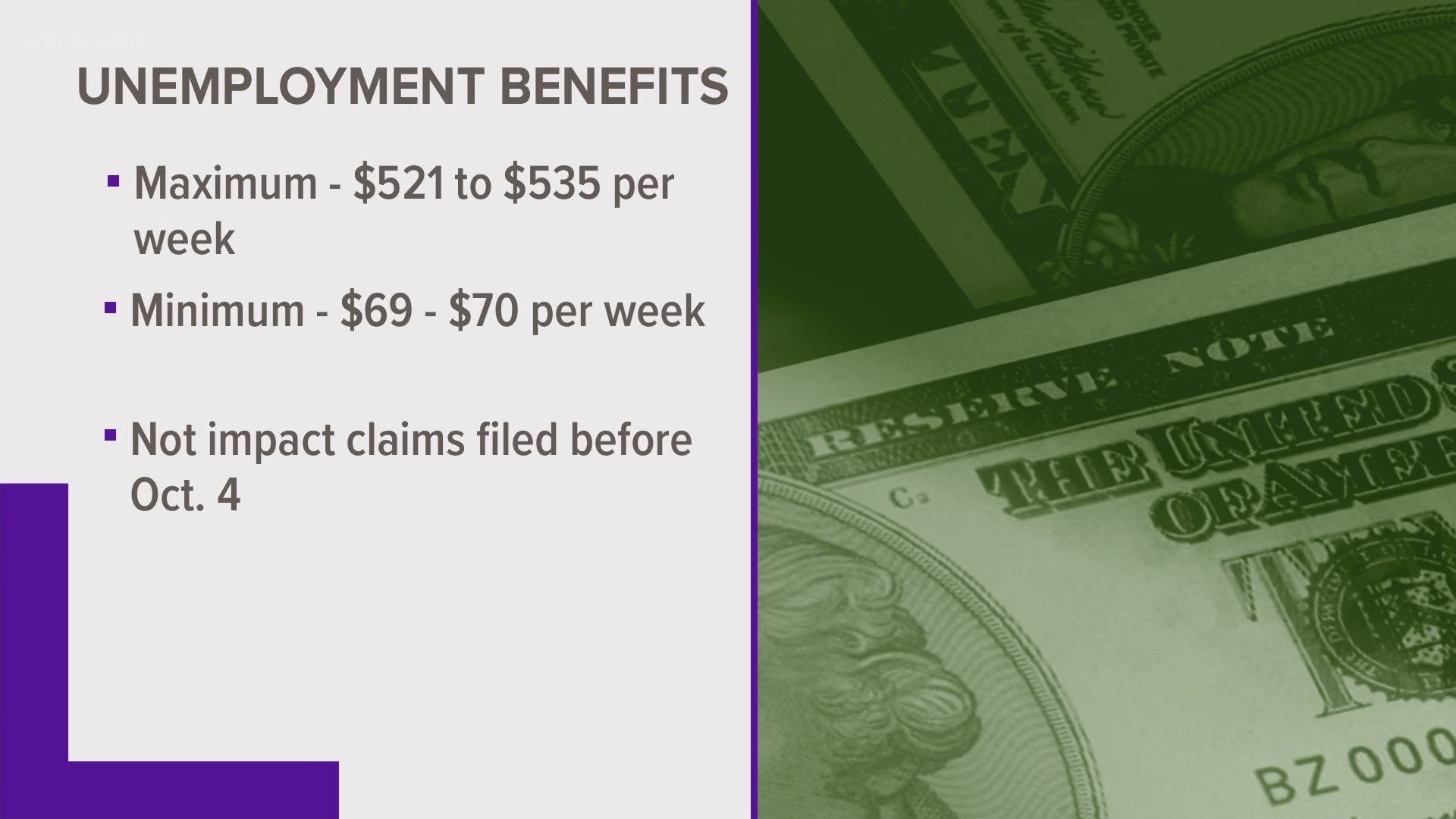
However, there are statutory limits to how much you can receive. As of recent regulations, the maximum WBA in Texas is set at $521 per week. This cap applies regardless of how high your average weekly wage might have been. Conversely, there is also a minimum WBA, which is typically $85 per week. You must have earned a minimum amount during your base period to qualify for any benefits at all.
Maximum Benefit Amount and Duration
Beyond the weekly payment, there’s also a limit on the total amount of unemployment benefits you can receive throughout your claim. This is known as the Maximum Benefit Amount (MBA). The MBA is generally 26 times your WBA. So, if your WBA is $300, your MBA would be $7,800 ($300 x 26).
The duration of your unemployment benefits is typically limited to a maximum of 26 weeks. However, this can be extended during periods of high unemployment as declared by the federal government. These extended benefits are often tied to specific economic conditions and may not always be available.
It’s important to remember that these calculations are based on your earnings from employers who reported and paid unemployment taxes on your wages. If you were an independent contractor or self-employed in a role where unemployment taxes weren’t paid on your behalf, you may not be eligible for regular unemployment benefits. The Texas Workforce Commission has specific rules regarding the types of employment that qualify.
Eligibility Requirements for Texas Unemployment Benefits
Receiving unemployment benefits isn’t automatic. You must meet several criteria set by the TWC to be deemed eligible. These requirements are in place to ensure that benefits are provided to those who genuinely need them due to job loss beyond their control.
Qualifying Reasons for Separation
The most fundamental requirement is that you must have lost your job through no fault of your own. This generally includes situations like:
- Layoffs: When your employer reduces staff due to economic reasons, restructuring, or lack of work.
- Company Closures: If the business you worked for shuts down.
- Mass Layoffs: Similar to layoffs, but often involving a larger number of employees.
Conversely, you will likely be disqualified from receiving benefits if you were fired for misconduct or if you quit your job without good cause. What constitutes “misconduct” or “good cause” is determined by the TWC on a case-by-case basis, considering all the facts and circumstances. For example, quitting to take a better job elsewhere or due to personal reasons unrelated to the employer’s actions generally won’t qualify. If you were fired for repeated tardiness, insubordination, or violation of company policy, you may also be denied benefits.
Work Search Requirements
Once you begin receiving unemployment benefits, you are required to actively search for suitable work each week. The TWC mandates specific work search activities, which can include:
- Registering with the TWC’s job matching system.
- Applying for jobs that match your skills and experience.
- Attending job fairs.
- Networking with potential employers.
- Participating in career counseling or training programs.
You will need to keep a detailed record of your work search efforts, as the TWC may request this information to verify your compliance. Failure to meet these work search requirements can lead to a suspension or termination of your benefits.
Ability and Availability to Work
You must also be physically able to work and available to accept suitable employment. This means that you cannot be incapacitated by illness or injury to the point where you cannot perform job duties, and you cannot have personal circumstances that prevent you from accepting a job offer. If you are temporarily unable to work due to a medical condition, you may need to provide documentation to the TWC.
Previous Earnings Threshold
As mentioned earlier, you must have earned a minimum amount of wages during your base period to be eligible for unemployment benefits. The TWC has specific thresholds for this, designed to ensure that only individuals with a demonstrated attachment to the workforce qualify. If you earned very little during your base period, you might not meet this minimum requirement.
How to File and Manage Your Texas Unemployment Claim
The process of filing for and managing your unemployment benefits in Texas involves several key steps, all of which can be handled primarily through the Texas Workforce Commission’s online portal.
Filing Your Initial Claim
The first step is to file your claim as soon as possible after you become unemployed. Delays in filing can result in a loss of benefits. You can file your claim online through the TWC’s website, which is the fastest and most efficient method. You will need to provide detailed information about your employment history, including:
- Your personal information (Social Security number, date of birth, contact details).
- Details of your most recent employer(s), including their name, address, and dates of employment.
- The reason for your separation from your last job.
- Information about any other employers you worked for during your base period.
You may also file by phone, but online filing is generally recommended.
Weekly Certifications
After you file your initial claim, you must “certify” your claim each week to continue receiving benefits. This is done by answering a series of questions confirming that you were unemployed, able to work, available for work, and actively searching for employment during the previous week. You can certify online or by phone. It is crucial to certify on time, as late certifications can lead to a loss of benefits for that week.
Receiving Your Benefits
If your claim is approved and you have certified your claim, you will receive your benefits via direct deposit or a debit card. The TWC typically processes payments within a few business days after you certify. The amount you receive will be your calculated WBA, minus any deductions for things like federal income tax withholding (if you opt for it) or child support obligations.
Staying Informed and Responsive
It is essential to stay in communication with the TWC throughout your claim. They may contact you for additional information or to schedule interviews. Promptly responding to any requests from the TWC is vital to avoid delays or disqualification of your benefits. Regularly checking your TWC account online for messages and updates is also a good practice.
If you disagree with a decision made by the TWC regarding your claim, you have the right to appeal. The appeal process typically involves a hearing where you can present your case. Understanding the timelines and procedures for appeals is important if you believe an error has been made.
Navigating unemployment in Texas can be a challenging period, but by understanding how your benefits are calculated, the eligibility requirements, and the claims process, you can better position yourself to receive the financial support you need while you work towards your next career opportunity.