
Perched majestically amidst the glittering skyline of Chicago, a city celebrated for its pioneering architecture and vibrant urban pulse, stands an iconic structure that has long captured the world’s imagination. Once universally known as the Sears Tower, this colossal edifice, now officially the Willis Tower, remains an enduring symbol of human ingenuity, engineering prowess, and the relentless pursuit of vertical grandeur. For decades, the simple question “How tall is Sears Tower Chicago?” resonated globally, becoming a benchmark for skyscraper aspirations.
Beyond mere dimensions, the tower represents a significant chapter in architectural history and a must-visit attraction for anyone exploring the Windy City. Its commanding presence offers breathtaking panoramic views that stretch across the urban tapestry, the serene expanse of Lake Michigan, and even into four different states on a clear day. For travelers, architects, and casual tourists alike, understanding its sheer scale is often the first step in appreciating its profound impact on Chicago’s identity and its place in the pantheon of global landmarks. Join us as we delve into the impressive statistics, rich history, and unforgettable experiences awaiting at one of the world’s most recognizable buildings.
A Skyscraper of Record-Breaking Heights and Iconic Design
The Willis Tower isn’t just tall; it’s a titan that has continuously pushed the boundaries of what’s possible in skyscraper construction. Its design, conceived by the visionary firm Skidmore, Owings & Merrill with lead architect Bruce Graham and structural engineer Fazlur Rahman Khan, introduced revolutionary concepts that influenced countless subsequent projects worldwide. Constructed between 1970 and 1973, it stood for nearly a quarter-century as the tallest building in the world, a testament to the ambitious spirit of its era and the groundbreaking engineering solutions employed. Today, while other structures have surpassed its absolute height, its status as a quintessential architectural marvel remains unchallenged, continuing to draw millions of visitors annually who seek to gaze upon its majesty and from its lofty heights.
Unpacking the Numbers: The Willis Tower’s Impressive Stature
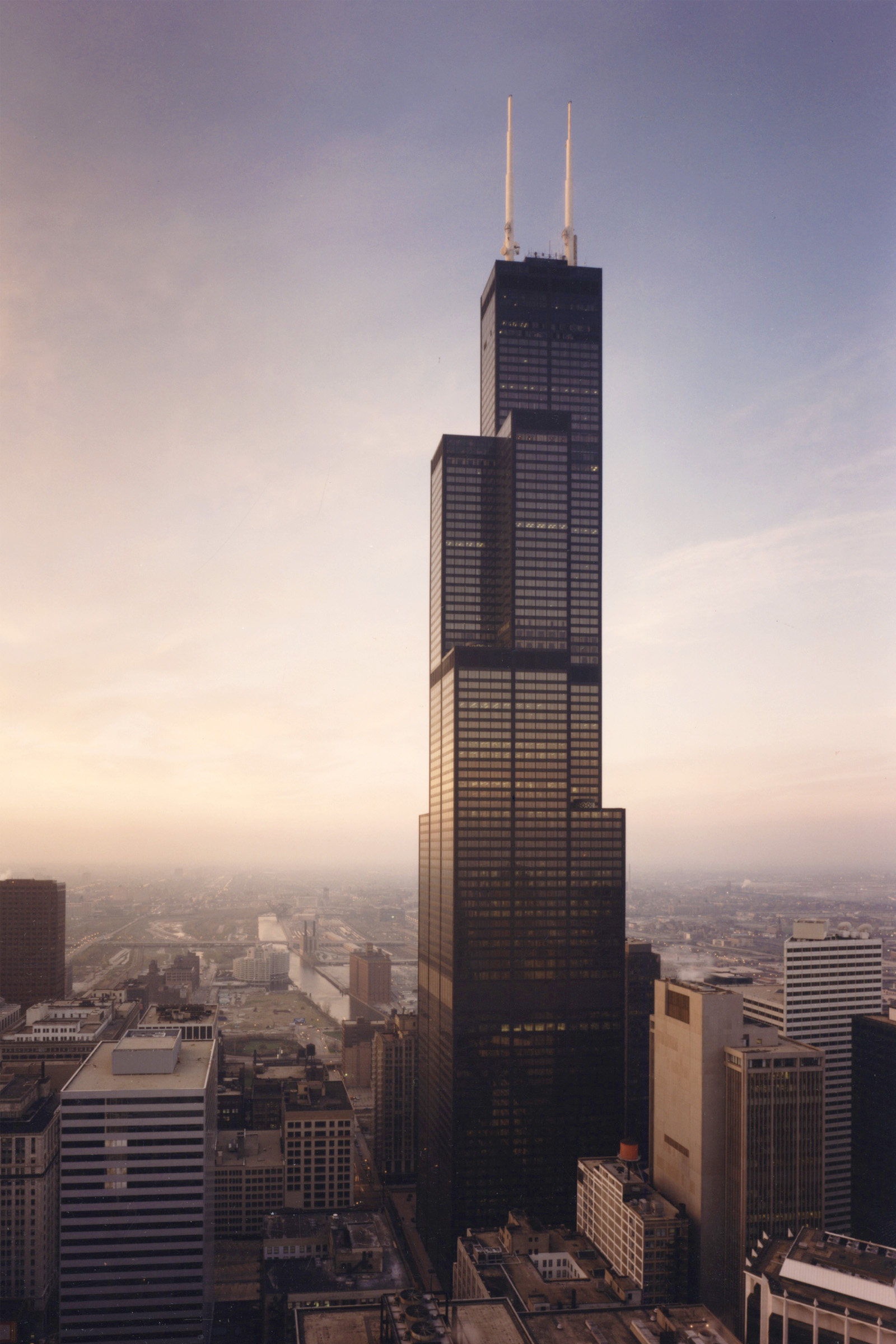
When answering “How tall is Sears Tower Chicago?”, it’s essential to consider its various measurements. The primary architectural height of the Willis Tower to the top of its roof is 1,450 feet (442 meters). However, this impressive figure doesn’t even account for its twin antenna spires. When measured to the tip of its taller western antenna, the total height reaches an astonishing 1,729 feet (527 meters). This distinction is crucial because while the roof height determines its architectural status, the antenna height significantly adds to its visual dominance over the cityscape.
The tower boasts 108 stories above ground, with an additional three underground levels. This makes it one of the few buildings in the world with over 100 floors, each contributing to its immense vertical presence. The highest occupied floor, primarily used for communications and mechanical systems, is at 1,438 feet (438 meters). For public access, the famous Skydeck Chicago observation deck is located on the 103rd floor, offering unparalleled views from an elevation of approximately 1,353 feet (412 meters). This makes Skydeck Chicago one of the highest public observation decks in the entire United States.
To put its height into perspective, for many years, the Willis Tower dwarfed even other legendary skyscrapers like the Empire State Building in New York City. Although it has been surpassed by giants like the Burj Khalifa in Dubai and One World Trade Center in New York City, it held the title of the world’s tallest building for 24 years, from its completion in 1973 until the Petronas Towers were finished in Kuala Lumpur in 1998. It remains the third-tallest building in the United States and the Western Hemisphere, a testament to its enduring significance and an impressive feat of engineering that continues to inspire.

From Sears Tower to Willis Tower: A Legacy of Innovation
The history of this magnificent structure is as compelling as its height. Commissioned by Sears, Roebuck & Co., a then-dominant retail giant that needed a consolidated office space for its vast number of employees, the tower was designed to be a symbol of their corporate power and a monument to American industry. The architectural firm Skidmore, Owings & Merrill pioneered a revolutionary “bundled tube” structural system, an innovation by Fazlur Rahman Khan. This system, which essentially groups nine structural “tubes” into a single building, allowed for unprecedented height, superior wind resistance, and greater flexibility in floor plate sizes. The tubes terminate at different heights, giving the tower its distinctive stepped silhouette that tapers as it rises, a design that is both aesthetically pleasing and structurally efficient.
Construction involved an immense amount of steel and concrete, with thousands of workers toiling for years to bring the vision to life. The building was officially topped out on May 3, 1973, and opened its doors in 1974. For decades, it was affectionately known worldwide as the Sears Tower. However, in 2009, the naming rights were acquired by Willis Group Holdings, a global insurance broker, leading to its official renaming as the Willis Tower. Despite the name change, many locals and visitors still refer to it by its original moniker, acknowledging its profound historical legacy. The building’s black-anodized aluminum and bronze-tinted glass facade contribute to its sleek, imposing presence, reflecting the ever-changing Chicago sky and embodying a timeless modernist aesthetic. It stands not merely as an office building, but as a masterpiece of late 20th-century architecture and a beacon of urban development.
Beyond the Height: Experiencing the Willis Tower
While the statistics of the Willis Tower’s height are undoubtedly impressive, the true magic lies in the experience it offers. For any visitor to Chicago, a journey to the top of this skyscraper is a pilgrimage that promises exhilaration, wonder, and an unparalleled perspective of one of America’s greatest cities. It’s more than just an observation deck; it’s an immersive dive into the city’s vastness and an intimate encounter with the sky. From the ground floor’s engaging exhibits to the thrilling projection into the void, the tower ensures every visitor leaves with a lasting memory. The entire experience is carefully crafted to highlight not just the views, but also the history, engineering, and cultural significance of the building itself.
The Thrill of Skydeck Chicago and The Ledge
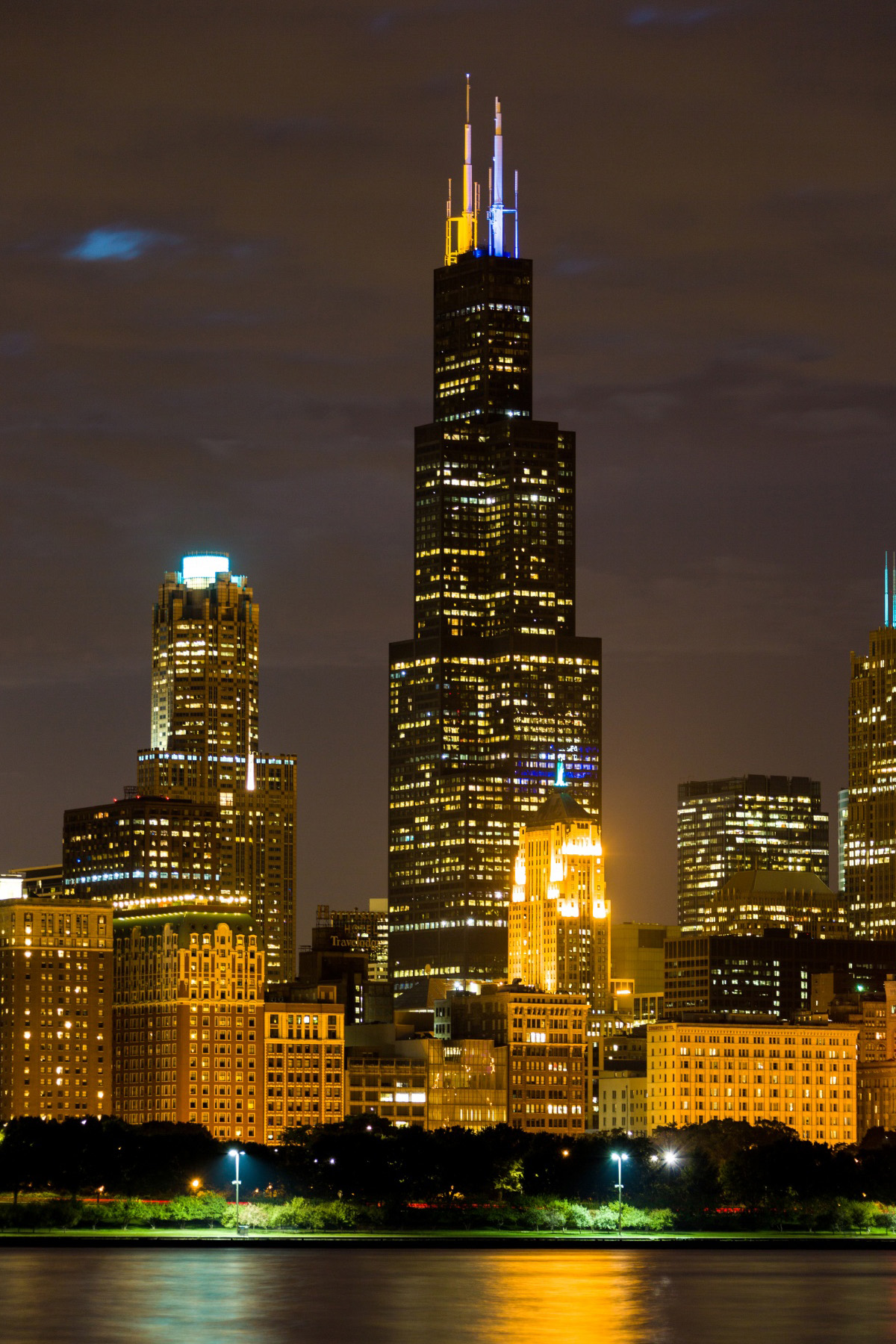
The crown jewel of the Willis Tower experience is without a doubt Skydeck Chicago. Located on the 103rd floor, this world-renowned observation deck offers 360-degree views of up to 50 miles on a clear day, encompassing Lake Michigan, the sprawling urban grid of Chicago, and the distant plains of Illinois, Indiana, Michigan, and Wisconsin. The journey to the Skydeck itself is part of the adventure, with high-speed elevators whisking visitors upwards at remarkable speeds, accompanied by interactive screens providing details about the tower and the city.
However, the ultimate thrill at Skydeck Chicago is undoubtedly The Ledge. Opened in 2009, The Ledge consists of four transparent, glass box balconies that extend approximately 4.3 feet (1.3 meters) out from the building’s facade. Stepping onto The Ledge is an experience that combines awe with a jolt of adrenaline, as you find yourself suspended 1,353 feet (412 meters) above the streets below, with nothing but clear glass between you and the ground. The feeling of floating above the city is both terrifying and exhilarating, offering unparalleled photo opportunities and a unique perspective that no other observation deck can rival. It’s a genuine test of nerves and a moment of pure spectacle.
To make the most of your visit, consider going early in the morning or later in the evening to avoid peak crowds. Sunset views are particularly spectacular, painting the city in golden hues before the twinkling lights emerge. Tickets can be purchased online in advance to save time, and for those seeking a more exclusive experience, VIP options are sometimes available. Don’t forget your camera, as the vistas from Skydeck Chicago and The Ledge are truly postcard-worthy, capturing the dynamic beauty of Chicago from an extraordinary vantage point.
A Hub of Activity: What’s Inside and Around the Tower
While Skydeck Chicago is the primary tourist draw, the Willis Tower is a bustling complex that serves as a vital hub for businesses and offers a range of amenities. The vast majority of its floors are dedicated to office space, housing numerous companies across various industries, making it a significant economic engine for Chicago’s central business district, often referred to as The Loop. The building is a micro-city in itself, complete with its own zip code and a daily population of thousands of workers.
At ground level and within the lower floors, visitors will find a variety of dining options, from casual cafes perfect for a quick bite to more upscale restaurants ideal for business lunches or relaxed dinners. These eateries cater not only to the tower’s occupants but also to tourists and locals exploring the area. The lobby areas often feature rotating art installations and permanent displays that delve into the tower’s history, its architectural innovations, and its role in Chicago’s development. The Willis Tower isn’t just a place to look from; it’s also a destination to explore within.
Surrounding the Willis Tower is the vibrant heart of downtown Chicago, a district teeming with cultural institutions, shopping opportunities, and other iconic landmarks. Within walking distance, you can find other architectural marvels, the financial district, and access to the city’s efficient public transportation system. The tower acts as a gravitational center, making it an excellent starting point for further exploration of Chicago’s offerings. Whether you’re interested in art, history, commerce, or simply people-watching, the area around the Willis Tower provides a rich tapestry of urban experiences.
Planning Your Chicago Adventure: Beyond the Tower
A visit to the Willis Tower is often the highlight for many travelers to Chicago, but the city offers a wealth of other attractions and experiences that cater to every interest. From world-class museums and stunning public art to delectable culinary scenes and lively entertainment districts, Chicago is a destination that rewards extended exploration. Incorporating other landmarks and local flavors into your itinerary will provide a comprehensive and unforgettable Chicago adventure, showcasing the diverse appeal of this dynamic metropolis.
Exploring Chicago’s Architectural Wonders and Cultural Gems
Beyond the Willis Tower, Chicago is an open-air museum of architectural innovation. A must-do activity is an architectural boat tour along the Chicago River. These tours provide fascinating insights into the city’s skyline, highlighting masterpieces by renowned architects and recounting the history of their construction. You’ll gain a deeper appreciation for the urban landscape, from historic Art Deco buildings to modern glass towers, all while enjoying a unique perspective from the water.
Millennium Park is another essential stop, famous for its iconic Cloud Gate sculpture (affectionately known as “The Bean”), Crown Fountain, and the stunning Jay Pritzker Pavilion. Nearby, the Art Institute of Chicago houses an extraordinary collection spanning centuries and cultures, making it one of the top art museums in the world. For family-friendly fun and entertainment, Navy Pier offers Ferris wheel rides, boat tours, restaurants, and shops, all with spectacular views of Lake Michigan.
No visit to Chicago would be complete without indulging in its celebrated local culture and cuisine. Sink your teeth into a classic Chicago deep-dish pizza, sample a Chicago-style hot dog, and explore the vibrant neighborhoods known for their blues and jazz clubs. The city’s theater scene is world-class, and the shopping along the Magnificent Mile offers everything from high-end boutiques to major department stores. Whether your interest lies in history, art, food, or entertainment, Chicago presents an unparalleled array of choices.
Where to Stay and How to Get Around
Chicago offers a diverse range of accommodation options to suit every preference and budget, ensuring a comfortable stay for all travelers. For luxury seekers, hotels like The Langham Chicago and the Four Seasons Hotel Chicago provide exquisite amenities, impeccable service, and often breathtaking views of the city or Lake Michigan. These establishments are frequently located in prime areas like River North or the Magnificent Mile, offering easy access to shopping, dining, and cultural attractions.
Mid-range and boutique hotels are plentiful in areas like The Loop, near the Willis Tower and other business districts, providing convenience for both business travelers and tourists. For budget-conscious visitors, numerous chain hotels and hostels are available further out from the city center but still well-connected by public transport. Additionally, apartment and short-term rental options are popular for families or those planning longer stays, offering more space and flexibility. Booking in advance, especially during peak tourist seasons or major conventions, is always advisable to secure the best rates and availability.
Getting around Chicago is remarkably easy thanks to its comprehensive public transportation system, the CTA. The iconic ‘L’ train system (short for elevated train) provides efficient access to most major attractions and neighborhoods, including direct routes to both O’Hare and Midway airports. Buses supplement the ‘L’ lines, offering extensive coverage throughout the city. For those who prefer to walk, downtown Chicago is highly pedestrian-friendly, with many attractions, including the Willis Tower, within comfortable walking distance of each other. Ride-sharing services and taxis are also readily available. Whether you’re on a family trip, a romantic getaway, a business stay, or a solo adventure, Chicago’s blend of world-class attractions, diverse accommodations, and efficient transit ensures a seamless and memorable travel experience.
In conclusion, the question “How tall is Sears Tower Chicago?” opens the door to understanding a true architectural giant, now proudly known as the Willis Tower. With its impressive architectural height of 1,450 feet (442 meters) and a total height of 1,729 feet (527 meters) to its antenna tip, it remains a dominant feature of the Chicago skyline and a testament to human innovation. More than just numbers, the Willis Tower offers the exhilarating Skydeck Chicago and The Ledge experiences, providing views that etch themselves into memory. As a pivotal landmark and a gateway to exploring Chicago’s rich culture, stunning architecture, and vibrant lifestyle, the Willis Tower is an absolute must-visit destination for anyone traveling to this incredible city. Prepare to be inspired by its grandeur and captivated by the panoramic beauty it unveils.