
Becoming a notary public in Florida is a straightforward process that can open doors to various income-generating opportunities. Whether you’re looking to supplement your current income, start a new career, or simply offer a valuable service to your community, understanding the requirements and steps involved is crucial. This guide will walk you through the entire process, from initial eligibility to maintaining your commission, ensuring you have all the information you need to successfully become a notary in the Sunshine State.
Eligibility and Application Requirements
To become a notary public in Florida, you must meet specific criteria set forth by the state. These requirements are designed to ensure that all notaries are qualified and trustworthy individuals. Understanding and fulfilling these prerequisites is the first and most essential step in the process.

Age and Residency
The primary requirement for becoming a notary public in Florida is that you must be at least 18 years of age. This ensures that applicants are considered legal adults capable of understanding and executing official duties. Furthermore, applicants must be legal residents of Florida. This means you must have established a permanent home in the state and intend to remain a resident. If you are not a legal resident but are an active member of the U.S. military stationed in Florida, you may also be eligible.
Education and Criminal Background
Florida law also mandates that applicants possess a minimum of a high school education or its equivalent. This is to ensure that individuals can read, write, and understand the instructions and laws pertaining to notarial acts. A critical component of the application process is a background check. Applicants must not have been convicted of any felony or any crime involving moral turpitude. Failure to meet these educational or criminal background standards will disqualify you from becoming a notary public. It is advisable to review the specific statutes and rules regarding disqualifying offenses with the Florida Department of State to ensure your eligibility.
United States Citizenship or Legal Status
To serve as a notary public in Florida, you must also be a citizen of the United States or have the legal right to reside and work in the United States. This typically means holding a valid green card or other appropriate documentation that grants you legal resident alien status. Proof of your legal status will be required during the application process.
The Application and Commissioning Process
Once you have confirmed your eligibility, the next phase involves completing the official application and undergoing the commissioning process. This involves several key steps that must be followed precisely to ensure your application is processed correctly.
Completing the Application Form
The first formal step is to download and accurately complete the official Florida Notary Public application form, which is available on the Florida Department of State’s website. This form will require you to provide personal information, including your name, address, date of birth, and contact details. You will also need to affirm that you meet all the eligibility requirements. It is imperative to fill out this form truthfully and completely. Any omissions or inaccuracies can lead to delays or rejection of your application.
Completing a Notary Education Course
Florida requires all first-time applicants for a notary commission to complete a mandatory three-hour course of study approved by the Department of State. This course covers the duties, responsibilities, and legal limitations of a Florida notary public, including sections on ethics, fraud prevention, and proper notarial procedures. Upon successful completion of the course, you will receive a certificate of completion, which must be submitted with your application. It is crucial to select an approved course provider to ensure your completion is recognized by the state. Many online providers offer these courses, allowing for flexible scheduling.
Taking the Oath of Office and Executing a Notary Bond
After your application is approved by the Florida Department of State, you will be notified to take the Oath of Office. This oath is a solemn promise to faithfully perform your duties as a notary public. You will typically take this oath before a judge or another authorized official. Concurrently with the oath, you must also purchase and execute a notary bond. A notary bond is a type of surety bond that protects the public from financial harm caused by a notary’s misconduct or negligence. The bond amount is set by law, and you will receive a bond certificate. This bond certificate is a vital document and must be submitted along with your oath to the Department of State. The required bond amount can be found in the Florida Statutes, and it is a relatively small investment for the privilege of becoming a notary.
Receiving Your Commission and Notary Seal
Once the Department of State receives your executed bond and sworn oath, and has verified all other application requirements, your commission will be issued. You will receive an official commission certificate, which serves as proof of your authority as a notary public. Along with your commission, you will need to obtain a notary seal, which is an official stamp or embosser that imprints your name, the words “Notary Public,” and your commission expiration date. The seal is used to authenticate your notarial acts. You are responsible for purchasing your own notary seal from a reputable vendor. It is essential to use your seal correctly and to keep it secure to prevent unauthorized use. Your commission is valid for four years, after which you will need to reapply and recommission to continue serving as a notary.
Duties and Responsibilities of a Florida Notary Public
As a notary public in Florida, you are entrusted with significant responsibilities that uphold the integrity of legal documents and transactions. Understanding these duties is paramount to performing your role effectively and ethically.
Performing Notarial Acts
The primary function of a notary public is to witness and authenticate the signing of important documents. This involves performing various notarial acts, the most common of which are:
Acknowledgments
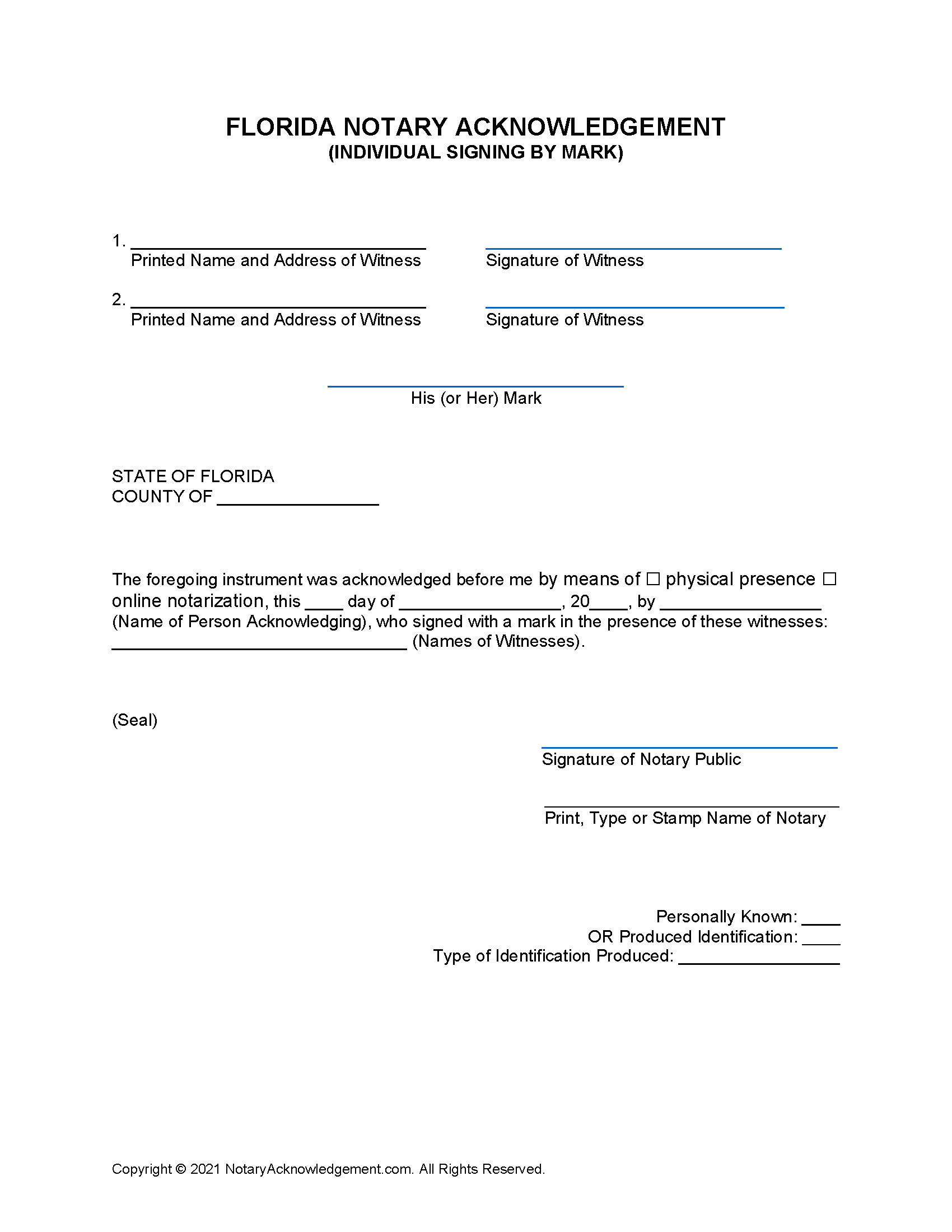
In an acknowledgment, the signer must appear before the notary, be identified, and declare that they have signed the document willingly for its stated purpose. The notary’s role is to verify the identity of the signer and confirm their voluntary execution of the document.
Jurats
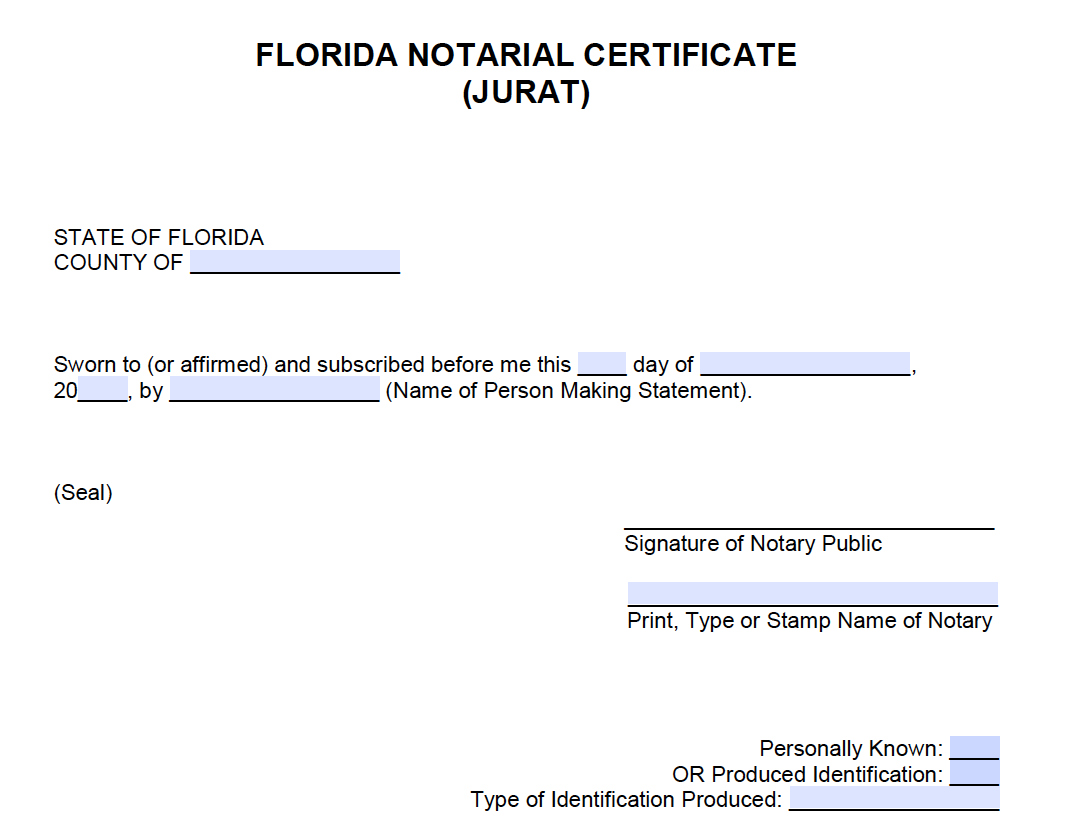
A jurat requires the signer to appear before the notary, be identified, and sign the document in the notary’s presence. Crucially, the signer must also swear or affirm to the truthfulness of the contents of the document. The notary then completes a certificate stating that the oath or affirmation was administered and that the document was signed in their presence.
Witnessing Signatures
In some cases, a notary may be asked to witness a signature without administering an oath or affirmation. However, it’s essential to remember that a notary’s primary role is to verify identity and the voluntary nature of the signature, not to attest to the content of the document itself.
Copy Certifications
Florida notaries can certify copies of certain documents, such as powers of attorney, but not vital records (birth, death, marriage certificates) or public records that are obtainable from a public records office. The notary verifies that the copy is a true and exact duplicate of the original document presented.
Maintaining Accurate Records
Florida law requires notaries to maintain a well-ordered record book, often referred to as a notary journal. This journal serves as a chronological record of all notarial acts performed. Each entry should include the date and time of the act, the type of act, the title of the document, the signature of the person for whom the act was performed, the method of identification used, and the fee charged, if any. This journal is a crucial tool for protecting yourself and the public, as it can provide evidence of your actions if questions or disputes arise. The journal must be kept in a secure place and should be turned over to the Clerk of the Circuit Court in your county of residence upon retirement, resignation, or removal from office.
Upholding Ethical Standards and Avoiding Conflicts of Interest
As a notary public, you are an officer of the state and must conduct yourself with the highest degree of integrity and impartiality. This means avoiding any situation where you have a personal interest in the transaction. You cannot notarize documents in which you are a party, stand to benefit financially, or have any other direct or indirect interest. It is your responsibility to identify such conflicts and to refuse to perform the notarial act if one exists. Furthermore, you must never refuse to perform a notarial act authorized by law unless you have a valid legal reason to do so. Notaries are prohibited from giving legal advice, acting as immigration consultants, or engaging in any activity that constitutes the unauthorized practice of law.
Maintaining and Renewing Your Commission
Your notary commission is valid for four years. To continue serving as a notary public in Florida, you must renew your commission before it expires. The renewal process is similar to the initial application but may have some variations.
Renewal Process and Deadlines
To renew your commission, you must again complete a three-hour notary education course approved by the Department of State. This continuing education ensures that notaries remain up-to-date with any changes in notary law and best practices. You will need to submit proof of completion of this course along with your renewal application. The renewal application form is available on the Department of State’s website. It is essential to start the renewal process well in advance of your expiration date to avoid any lapse in your commission. Missing the deadline means you will have to go through the entire application process again as a new applicant.
Fees and Requirements
Similar to the initial application, there are fees associated with the renewal process, including the application fee and the cost of the required education course. You will also need to obtain a new notary bond for the duration of your renewed commission. The bond requirement ensures that you continue to be bonded to protect the public. Once your renewal application is processed and approved, a new commission certificate will be issued, and you will be authorized to continue performing notarial acts for another four-year term. Remember to update your notary seal with your new commission expiration date.
Recommissioning After Expiration
If your commission expires and you wish to become a notary again, you will generally need to reapply as a new applicant. This means you will have to fulfill all the requirements for initial applicants, including completing the mandatory education course and undergoing a background check. It is always in your best interest to renew your commission promptly to avoid this more extensive process. Staying informed about your commission’s expiration date and the renewal requirements is key to maintaining your status as an active notary public in Florida.