
Imagine a lifestyle where you can explore the stunning landscapes of the Grand Canyon State, from the vibrant cityscapes of Phoenix and Tucson to the mystical red rock formations of Sedona, all while maintaining a flexible and rewarding career. For many avid travelers, digital nomads, and those seeking supplementary income, the dream of a location-independent profession is paramount. While being a notary might traditionally evoke images of stuffy offices, becoming a notary public in Arizona actually opens up a surprising avenue for flexibility, professional growth, and the opportunity to interact with diverse individuals—whether they are fellow travelers, new residents, or businesses catering to tourism.
The role of a notary public is crucial within the legal and business fabric of the United States. Notaries serve as impartial witnesses to the signing of important documents, verifying identities and ensuring the voluntary nature of signatures. This responsibility, far from being mundane, can be a cornerstone of a dynamic lifestyle, especially in a state as vibrant and growing as Arizona. Whether you’re considering a permanent move to the desert Southwest, seeking a part-time engagement to fund your explorations of Saguaro National Park or Antelope Canyon, or even aiming to offer valuable services to guests in hotels and resorts, understanding the process to become an Arizona notary is your first step toward unlocking this unique professional journey. This comprehensive guide will walk you through everything you need to know, contextualizing the requirements within a framework that aligns with travel, accommodation, and lifestyle aspirations.
The Allure of Notary Work in the Grand Canyon State
Arizona is more than just a destination; it’s a lifestyle. With its year-round sunshine, breathtaking natural landmarks, and burgeoning urban centers, it attracts a diverse population, including many who value flexibility and the freedom to explore. Becoming a notary public in this dynamic environment isn’t just about fulfilling a civic duty; it’s about crafting a career that supports your travel ambitions and lifestyle choices.
Why Consider Notary Services as a Flexible Career?
For individuals passionate about travel, the concept of a “desk job” can feel restrictive. Notary work, particularly as a mobile notary or a remote online notary (RON), offers an antidote to this. As a mobile notary, your office becomes the entirety of Arizona. You could find yourself notarizing documents for an individual closing on a property near Lake Havasu, verifying signatures for a business deal in Scottsdale, or assisting tourists with international travel documents in a busy Phoenix hotel. This variety of locations and client interactions can be incredibly enriching, providing a deeper connection to the local culture and economy than many traditional roles.
Moreover, the financial aspect is compelling. Notary services can provide a reliable source of supplemental income, perfect for funding your next adventure to the Grand Canyon or a long-term stay at a charming resort in Tucson. The ability to set your own hours and choose your assignments means you can tailor your work schedule around your personal travel plans, whether that involves a spontaneous weekend getaway or an extended exploration of Arizona’s numerous hidden gems. This level of autonomy is a cornerstone of the modern lifestyle sought by many, offering a genuine blend of professional responsibility and personal freedom.

Who Benefits from a Mobile Notary?
The demand for notary services in Arizona is broad, encompassing residents and visitors alike. Travelers, for instance, might unexpectedly require notarized documents for various reasons, from legal declarations to property transactions conducted remotely. A mobile notary provides the convenience of bringing the service directly to them, whether they are at their vacation rental, a business meeting at a Hyatt Regency, or even preparing for an outdoor adventure. This on-demand service is particularly valuable in a state where vast distances can separate communities and services.
Digital nomads and remote workers, a growing demographic in Arizona, also frequently need notary services for business contracts, employment agreements, or personal legal documents. As an Arizona notary, you could become an indispensable resource for this community, fostering connections and facilitating their transient yet productive lifestyles. Furthermore, hotels, vacation rentals, and convention centers often require notary services for their guests or for internal operational needs. By offering your services to these establishments, you not only meet a critical demand but also gain access to a network that aligns perfectly with a travel-centric professional life, potentially even securing preferred client relationships with these major players in the hospitality sector.

Navigating the Notary Application Process in Arizona
Embarking on your journey to become an Arizona notary public involves a clear, sequential process. While the steps are administrative, understanding each one thoroughly is vital for a smooth application and successful commissioning. Integrating these requirements into a flexible lifestyle requires meticulous planning, but the rewards of becoming a notary in a state rich with travel and tourism opportunities are well worth the effort.
Essential Steps to Your Arizona Notary Commission
The path to obtaining your notary commission in the State of Arizona is governed by specific criteria designed to ensure competence and integrity. Here’s a breakdown of the core requirements:
-
Eligibility Requirements: Before anything else, ensure you meet the fundamental qualifications. You must be at least 18 years old and a legal resident of Arizona. While the nomadic lifestyle might mean you spend significant time exploring beyond your residence, maintaining an official, verifiable residence in the state is non-negotiable for obtaining and retaining your commission. Furthermore, you must be able to read and write English. A clean criminal record is also paramount; individuals with felony convictions are generally ineligible unless civil rights have been restored. This ensures the public trust in your impartiality and adherence to the law, which is crucial whether you are notarizing documents for a traveler or a long-term resident.
-
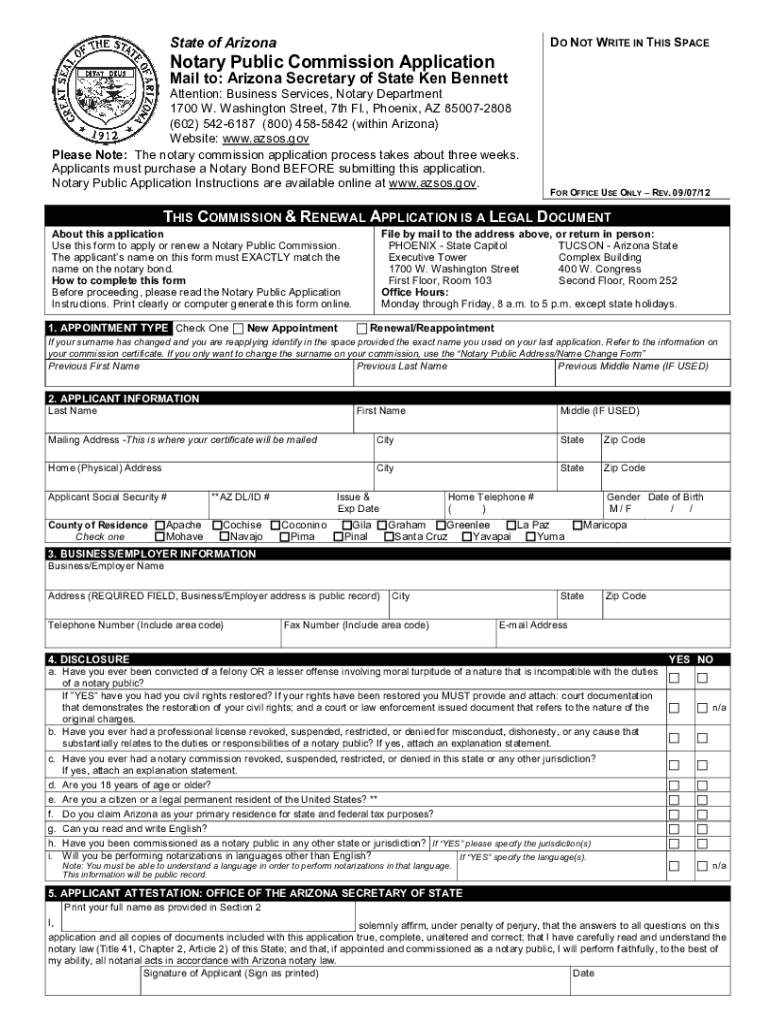
Complete the Notary Public Application: The primary document you’ll submit is the Notary Public Application form, which is available directly from the Arizona Secretary of State’s website. This form requires personal details, your declaration of eligibility, and the contact information for your surety bond provider. Carefully reviewing and accurately completing this application is critical to avoid delays. Think of this as your initial boarding pass for your notary journey – any errors could mean missing your flight.
-
Obtain a Notary Surety Bond: Arizona law mandates that all notaries public obtain a $5,000 surety bond. This bond is not insurance for you, but rather a protection for the public against any financial harm resulting from your misconduct or negligence as a notary. When you’re providing services to clients across Arizona, from bustling urban centers to serene desert communities, this bond offers reassurance to everyone involved in your transactions. You can typically secure a surety bond from most insurance companies or specialized notary supply vendors. The cost is usually quite affordable, making it a small investment for the significant trust and responsibility you will undertake.
-
Administer and File Your Oath of Office: Once your application is processed and the surety bond is in place, the next crucial step is to take your official oath of office. This must be administered by another duly appointed Arizona notary public, often someone at the county clerk’s office, or any official authorized to administer oaths. By taking this oath, you solemnly swear to uphold the laws of the United States and the State of Arizona and to faithfully discharge the duties of a notary public. Following the oath, you must then file your completed bond and oath of office with the Arizona Secretary of State. This final filing step officially completes your commissioning process, making you a recognized notary public in the state.
Understanding Training and Supply Requirements
Beyond the formal application, certain practical requirements and tools are essential for you to effectively and legally perform your duties as an Arizona notary.
-
Notary Education and Training: While Arizona does not currently mandate a state-approved training course for initial commissioning, it is highly recommended to seek out comprehensive education. Organizations like the National Notary Association (NNA) offer excellent courses that cover notary laws, best practices, and ethical considerations. For those looking to integrate notary work with a travel lifestyle, understanding these nuances is crucial for operating professionally in diverse settings, from a corporate conference room in Phoenix to a quiet coffee shop in Sedona. Proper training will equip you to handle various document types and client situations with confidence and compliance.
-
Official Notary Stamp/Seal: As an Arizona notary, you are required to use an official notary stamp or seal for all notarizations. This seal must contain specific information: your name as it appears on your commission, the words “Notary Public,” “State of Arizona,” your commission expiration date, and your commission number. This seal is your professional mark, authenticating your notarizations. When operating as a mobile notary, selecting a compact and durable stamp is practical for carrying it across different locations as you navigate Arizona’s scenic routes.
-
Notary Journal: Maintaining a detailed notary journal is not just good practice; it’s a legal requirement in Arizona for every notarial act performed. This journal serves as a meticulous record of each notarization, including the date, type of act, description of the document, the signer’s identity verification method, and the fee charged. A well-kept journal provides a safeguard for both you and the public, offering a verifiable record should any questions arise regarding a past notarization. For the traveling notary, a portable yet sturdy journal is indispensable, helping you maintain professional records wherever your work—or wanderlust—takes you within the state.
-
Remote Online Notarization (RON) Capabilities (Optional but Recommended): In today’s interconnected world, the ability to perform Remote Online Notarization (RON) has revolutionized the notary profession. Arizona permits RON, allowing you to notarize documents for signers located anywhere in the United States (and for documents intended for use in the United States) while you are physically located within Arizona. This is a game-changer for those seeking maximum flexibility, as it removes the need for physical presence for certain notarizations. To become a RON notary, you must first hold an active traditional notary commission, then apply separately to the Secretary of State and register with an approved electronic notarization provider. This advanced capability perfectly complements a travel-oriented lifestyle, enabling you to conduct business efficiently from a remote villa in Sedona or a cozy apartment in downtown Phoenix, catering to clients far and wide.
Maintaining Your Notary Commission and Expanding Your Horizons
Becoming an Arizona notary is an excellent step towards a flexible and fulfilling lifestyle, but the journey doesn’t end with your initial commission. Ongoing compliance and professional development are key to sustaining your role and expanding your opportunities, especially if you envision notary work as a long-term component of your travel-friendly career.
Renewing Your Arizona Notary Status
Your Arizona notary commission is valid for four years. To ensure a seamless continuation of your services, particularly if you’ve built a client base through your mobile or online notary work, timely renewal is crucial. The renewal process is similar to the initial application, requiring you to resubmit an application, obtain a new surety bond, and take a new oath of office.
The Arizona Secretary of State typically sends a renewal notice to your address of record several months before your commission expires. It’s essential to keep your contact information updated with their office, especially if your travels frequently take you to different accommodations within the state. Proactive planning for renewal ensures that there are no gaps in your commissioning, allowing you to continue serving clients without interruption, whether they’re setting up a new business in Flagstaff or completing a property purchase from a distant location. Maintaining an active commission keeps your professional journey on track, allowing you to continue integrating notary services into your adventurous lifestyle.
Exploring Advanced Notary Opportunities
Once you’ve established yourself as a competent notary public, you can consider specializing in areas that offer higher earning potential and align well with a flexible schedule. The most prominent example is becoming a Loan Signing Agent (LSA).
A Loan Signing Agent is a notary public specifically trained to handle loan documents for real estate transactions. This often involves guiding borrowers through complex mortgage paperwork, obtaining necessary signatures, and ensuring all documents are correctly filled out and notarized before returning them to the lender. The demand for LSAs is significant, particularly in a growing real estate market like Arizona’s. Loan signing assignments are typically well-compensated and offer flexible scheduling, making them ideal for someone who enjoys managing their own time and traveling to different locations. Imagine completing a signing in a beautiful home overlooking the Camelback Mountain one day, and assisting with a vacation property purchase near the Colorado River the next.
Becoming an LSA usually requires additional training and certification, often provided by organizations like the National Notary Association or other specialized training providers. This includes understanding real estate terminology, escrow processes, and various loan document types. While it requires an investment in time and further education, the ability to command higher fees per assignment and the sheer volume of work available can significantly boost your income, providing even more resources for your travel and lifestyle pursuits.
Another advanced opportunity is leveraging your Remote Online Notarization (RON) capabilities more extensively. As more transactions move online, the demand for RON notaries is steadily increasing. This allows you to serve clients nationally from your Arizona base, expanding your reach beyond geographical boundaries. Imagine being able to complete a notarization from a scenic overlook in Monument Valley (as long as you have a reliable internet connection!) for a client hundreds of miles away. This truly embodies the spirit of a flexible, modern professional lifestyle.
Becoming an Arizona notary public is more than just obtaining a certification; it’s about opening doors to a professional path that can seamlessly integrate with a desire for freedom, exploration, and a dynamic way of life. From the initial application and bond to ongoing training and exploring specialized roles like a Loan Signing Agent or a Remote Online Notary, each step contributes to building a fulfilling career. In a state as breathtaking and opportunity-rich as Arizona, your notary commission can be your ticket to not only serve your community but also to fund your adventures and craft a lifestyle that truly reflects your passion for travel and independence. So, if the thought of blending professional purpose with personal wanderlust appeals to you, the path to becoming an Arizona notary public is a journey well worth taking.