
While the allure of sun-drenched beaches, vibrant theme parks, and rich cultural experiences of Florida might initially steer your thoughts towards the tourism industry, the Sunshine State also offers a robust and rewarding career path in the legal field: becoming a paralegal. This profession, often misunderstood, plays a crucial role in supporting attorneys and ensuring the smooth operation of law firms, courts, and various legal departments. If you’re looking for a career that combines intellectual stimulation with practical application, and you’re drawn to the dynamic environment of Florida, then understanding the journey to becoming a paralegal here is your first step.

The demand for skilled paralegals in Florida is consistently high, driven by a growing population, a thriving business sector, and a complex legal landscape. From intricate real estate transactions to personal injury claims and corporate law, legal professionals are essential, and paralegals are their indispensable partners. This article will guide you through the essential steps, educational pathways, certification options, and practical considerations for embarking on this fulfilling career in Florida.
Understanding the Paralegal Role and Florida’s Legal Landscape
Before diving into the “how-to,” it’s vital to grasp what a paralegal actually does and the specific context of practicing in Florida. Paralegals, also known as legal assistants, perform a wide range of substantive legal work under the supervision of an attorney. Their duties can include conducting legal research, drafting legal documents like pleadings, motions, and contracts, interviewing clients and witnesses, organizing and managing case files, assisting with trial preparation, and even managing billing and administrative tasks. They are not licensed attorneys and cannot provide legal advice, represent clients in court, or set legal fees. However, their contributions are critical to the efficiency and effectiveness of legal services.
Florida’s legal system is diverse, mirroring its varied population and economy. The state operates under a common law system, with statutes enacted by the Florida Legislature and rules of procedure set forth by the Florida Supreme Court. Key areas of law in Florida that often employ paralegals include:
- Real Estate Law: Given Florida’s booming property market, from residential sales in cities like Miami and Orlando to commercial developments, paralegals are heavily involved in preparing deeds, reviewing title insurance, and managing closing documents.
- Family Law: Divorce, child custody, and adoption proceedings are common, requiring paralegals to assist with drafting petitions, gathering financial information, and preparing for mediation or court hearings.
- Personal Injury and Civil Litigation: Accidents, from car crashes on busy roads like the Florida Turnpike to slip-and-falls at tourist attractions like Walt Disney World Resort, generate a significant volume of cases. Paralegals are crucial in managing evidence, interviewing witnesses, and preparing for trials.
- Corporate and Business Law: With a strong business environment, paralegals assist with entity formation, contract drafting and review, corporate governance, and compliance matters for businesses operating in Tampa or Jacksonville.
- Estate Planning and Probate: Assisting individuals with wills, trusts, and navigating the probate process after a loved one passes is another area where paralegals provide essential support.
Understanding these prevalent legal fields in Florida can help you tailor your education and career focus.
Educational Pathways to Becoming a Paralegal in Florida
The foundation for a successful paralegal career in Florida lies in obtaining the right education. While Florida does not have a mandatory statewide licensing requirement for paralegals, employers strongly prefer candidates with formal legal education. There are several recognized educational routes:
1. Associate’s Degree in Paralegal Studies
An Associate of Science (AS) or Associate of Arts (AA) degree in Paralegal Studies is a common and highly recommended pathway. These programs typically take two years to complete and provide a comprehensive overview of legal principles, procedures, and terminology. Curricula usually cover areas such as:
- Introduction to Law
- Legal Research and Writing
- Civil Litigation
- Torts
- Contracts
- Family Law
- Criminal Law
- Legal Ethics
Many community colleges and some universities in Florida offer accredited Associate’s degree programs. For example, institutions in cities like Fort Lauderdale or St. Petersburg often have well-regarded paralegal programs. Graduates of these programs are well-prepared for entry-level positions and possess a solid understanding of the legal profession.
2. Bachelor’s Degree in Paralegal Studies or a Related Field
For those seeking a more advanced education or aiming for specialized roles, a Bachelor of Science (BS) or Bachelor of Arts (BA) in Paralegal Studies or a closely related field, such as Political Science or Pre-Law, is an excellent option. These programs offer a more in-depth exploration of legal subjects and often include internships or co-op opportunities, which are invaluable for gaining practical experience. A Bachelor’s degree can provide a competitive edge in the job market, especially for positions in larger law firms or specialized legal departments.
3. Post-Baccalaureate Certificate Programs
Individuals who already hold a Bachelor’s degree in another field may opt for a post-baccalaureate paralegal certificate program. These programs are typically shorter, focusing on the specific skills and knowledge required for paralegal work. They are an efficient way to transition into the legal field without completing another full degree program. Certificate programs often emphasize practical training, including legal software and document preparation.
4. On-the-Job Training and Experience
While less common as a primary route, some individuals can enter the legal field through administrative roles in law firms and gain paralegal experience through on-the-job training. This pathway typically requires a strong work ethic, a willingness to learn, and often some foundational legal coursework. However, for a comprehensive and competitive career, formal education is highly advisable.
When choosing an educational program, ensure that it is accredited by a recognized accrediting body. Accreditation signifies that the program meets certain quality standards. For paralegal programs, look for accreditation from organizations such as the American Bar Association (ABA) or organizations recognized by the U.S. Department of Education.
Gaining Experience and Seeking Certification
Education is a crucial first step, but practical experience and professional credentials can significantly enhance your employability and career progression in Florida.
1. Internships and Externships
Gaining hands-on experience is paramount. Most accredited paralegal programs include internship or externship components, where students work in law firms, courthouses, or corporate legal departments. These experiences provide invaluable exposure to real-world legal practice, allow you to apply your academic knowledge, and help you build a professional network. Even if your program doesn’t mandate them, seeking out internship opportunities independently is highly recommended. Consider interning in areas of law that pique your interest, whether it’s family law in Tampa Bay or business law in the vibrant financial district of Miami.
2. Professional Certifications
While not mandatory in Florida, pursuing professional certification can demonstrate a high level of competence and commitment to the profession. Several reputable organizations offer paralegal certifications:
- National Association of Legal Assistants (NALA): Offers the Certified Legal Assistant (CLA) and Certified Paralegal (CP) designations. These require passing an examination and meeting educational or experience prerequisites.
- National Federation of Paralegal Associations (NFPA): Offers the Certified Paralegal (CP) credential, which also involves an examination and specific qualifications.
Obtaining a certification can distinguish you from other candidates and signal to employers that you have met rigorous professional standards. These certifications often require ongoing continuing education, ensuring you stay current with legal developments.
3. Building Your Network
Networking is vital in any profession, and the legal field is no exception. Join professional organizations like the Florida Bar’s Paralegal Section or local paralegal associations. Attending their meetings, seminars, and events provides opportunities to connect with practicing paralegals, attorneys, and legal recruiters. These connections can lead to job leads, mentorship, and valuable insights into the legal community in Florida. Even exploring the diverse tourism landscape of Florida, from the historic streets of St. Augustine to the natural beauty of the Everglades National Park, can spark conversations and lead to unexpected professional connections.
Job Opportunities and Career Growth in Florida
Once you’ve completed your education and gained some experience, you’ll be ready to enter the job market. Florida offers a wide array of employment opportunities for paralegals across various settings:
- Private Law Firms: This is the most common employer for paralegals, ranging from small solo practices to large international firms. You can find opportunities in virtually every city, from the bustling urban centers like Jacksonville to smaller communities.
- Corporate Legal Departments: Many businesses, especially those in industries prominent in Florida like real estate development, hospitality, and technology, employ in-house paralegals to manage their legal affairs.
- Government Agencies: Federal, state, and local government entities, including state attorneys’ offices, public defender’s offices, and various regulatory agencies, hire paralegals.
- Courts: Clerks of court offices and judicial chambers may employ paralegals to assist with administrative and research tasks.
- Non-Profit Organizations: Legal aid societies and other non-profits often rely on paralegals to provide legal assistance to underserved populations.
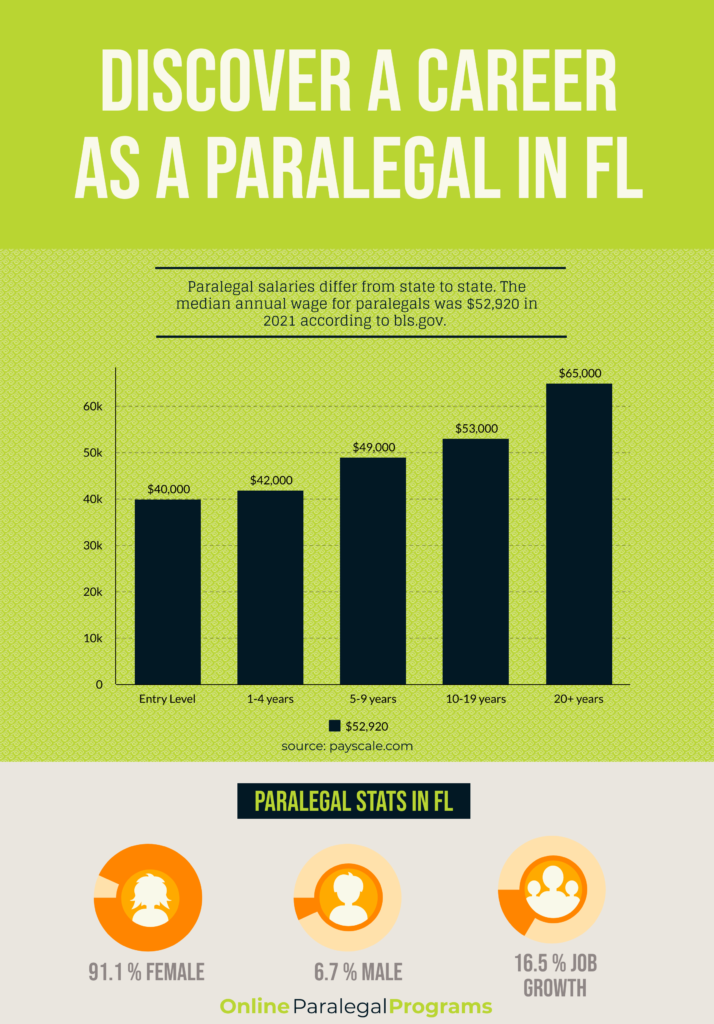
Career growth for paralegals in Florida can involve specializing in a particular area of law, moving into supervisory or management roles within a law firm, or even pursuing further education to become an attorney. The legal field is constantly evolving, and paralegals who remain adaptable, continue to learn, and develop specialized skills will find their careers flourishing. Whether you’re drawn to the vibrant nightlife of Miami Beach, the family-friendly attractions of Orlando, or the serene beauty of the Florida Keys, the Sunshine State offers a dynamic backdrop for a successful and rewarding career as a paralegal.