
As passionate travelers, we often find ourselves drawn to the rich tapestry of information that surrounds our journeys. Whether delving into the history of an ancient ruin, researching the best local eateries in Rome, or understanding the cultural nuances of Kyoto, books serve as invaluable companions. But when your travel research extends into academic pursuits, or you wish to properly credit the sources that have enriched your understanding, knowing how to cite them correctly becomes paramount. The Chicago Manual of Style offers a robust system for academic citation, and for those referencing books, mastering its intricacies is a key skill.

This guide will walk you through the essential elements of citing a book in Chicago style, covering both the Notes and Bibliography system and the Author-Date system. Understanding these formats will not only enhance your academic credibility but also equip you to create well-researched travel guides, personal essays, or even scholarly articles inspired by your explorations.
Understanding the Two Chicago Style Systems
The Chicago Manual of Style is renowned for its flexibility, offering two distinct citation systems: the Notes and Bibliography system and the Author-Date system. Each serves a different purpose and is preferred in different academic disciplines.
The Notes and Bibliography System
This system is widely used in humanities disciplines such as literature, history, and art. It relies on numbered footnotes or endnotes to cite sources within the text. A corresponding bibliography at the end of the work provides a complete list of all sources consulted.
- Footnotes/Endnotes: When you refer to a source for the first time, a numbered note appears at the bottom of the page (footnote) or at the end of the document (endnote). This note contains a shortened version of the citation. Subsequent references to the same source use an even more abbreviated note.
- Bibliography: This is an alphabetical list of all the books, articles, and other sources you have cited in your work. It appears at the end of your paper, essay, or book.
The Author-Date System
More common in the social sciences and natural sciences, the Author-Date system uses parenthetical citations within the text, typically including the author’s last name and the year of publication. A reference list at the end of the work provides full bibliographic details for each cited source.
- In-Text Citations: A brief citation, such as (Smith 2020), appears directly after the quoted or paraphrased material.
- Reference List: Similar to the bibliography in the Notes system, this list contains full bibliographic information for all cited sources, arranged alphabetically by author’s last name.
For the purposes of this guide, we will focus on the core elements of citing a book, as the principles apply similarly to both systems, with variations in how the information is presented.
Crafting Your Citations: Essential Book Elements
Regardless of which Chicago style system you employ, certain bibliographic elements are crucial for accurately identifying and locating a book. These include the author’s name, the book’s title, publication details, and edition information.
H3: Author and Title: The Foundation of Your Citation
The author and title are the most fundamental pieces of information for any book citation.
-
Author’s Name:
- Notes and Bibliography System: In the bibliography, the author’s last name is listed first, followed by their first name. For example, “Doe, Jane.” In footnotes/endnotes, the order is reversed: “Jane Doe.”
- Author-Date System: In the reference list, the author’s last name is also listed first. In-text citations use only the author’s last name and the year.
- Multiple Authors: For two authors, list both in the bibliography with the first author’s name inverted. For three or more authors, list only the first author followed by “et al.” in both the bibliography/reference list and in notes/in-text citations.
-
Book Title:
- Capitalization: Titles of books are always italicized in Chicago style. Capitalize the first word of the title and subtitle, as well as all principal words (nouns, verbs, adjectives, adverbs, and pronouns). Do not capitalize articles (a, an, the), conjunctions (and, but, or), or prepositions (of, in, on) unless they are the first word.
- Subtitle: If a book has a subtitle, it is separated from the main title by a colon. For example, The Art of Travel: A Comprehensive Guide to Exploring the World.
H3: Publication Details: Pinpointing Your Source
Accurate publication details are vital for enabling readers to find the exact edition of the book you consulted.
- Place of Publication: This is the city where the book was published. If multiple cities are listed, use the first one. If no city is provided, use “n.p.” (no place).
- Publisher’s Name: This is the name of the company that published the book. In the Chicago style, publisher names are often shortened. For example, “University Press” becomes “UP,” and “and Sons” is usually omitted. If no publisher is listed, use “n.p.” (no publisher).
- Year of Publication: This is the year the edition you are citing was published. It’s crucial to use the year of the edition you consulted, especially for older books or those with many reprints.
Constructing Citations for Common Book Scenarios
Let’s explore how to cite a book based on whether you are using the Notes and Bibliography system or the Author-Date system, and consider some common variations.
H2: Notes and Bibliography System: A Detailed Approach
This system prioritizes clarity within the text through notes, with a comprehensive list at the end.
H3: The First Full Note
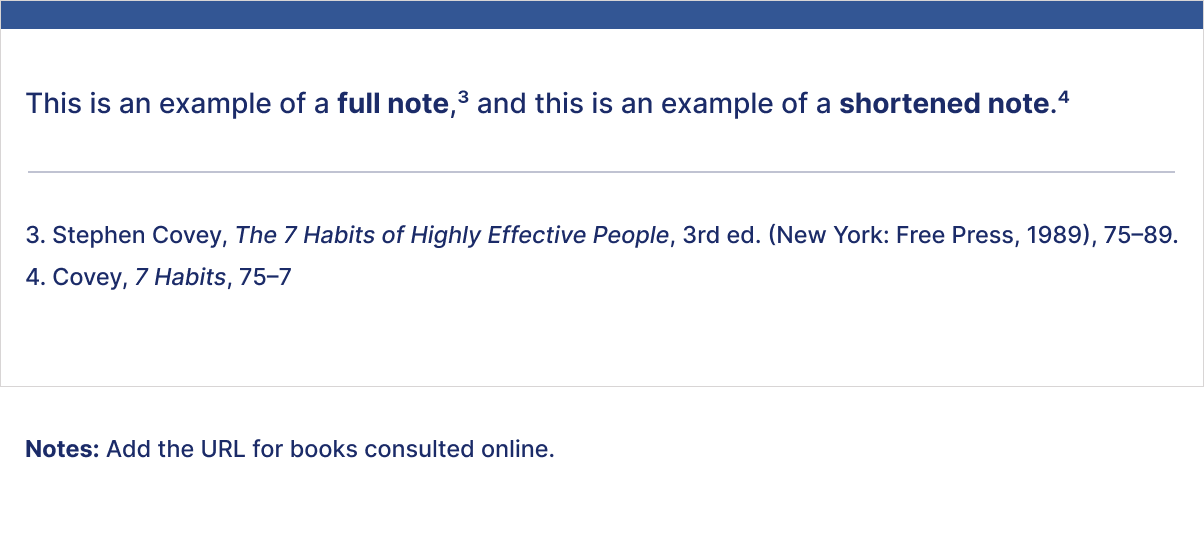
When you cite a book for the first time in a note, you provide a full bibliographic entry.
Format:
First Name Last Name, Title of Book (Place of Publication: Publisher, Year), Page Number(s).
Example:
- Jane Doe, Wanderlust Whispers: Exploring Ancient Civilizations (New York: Odyssey Press, 2019), 45.

H3: Subsequent Notes
For subsequent references to the same book, you can use a shortened note.
Format:
Last Name, Shortened Title, Page Number(s).
Example:
- Doe, Wanderlust Whispers, 78.
If you cite a different page of the same book immediately after the first note, you can use “Ibid.” (which means “in the same place”).
Example:
- Jane Doe, Wanderlust Whispers: Exploring Ancient Civilizations (New York: Odyssey Press, 2019), 45.
- Ibid., 78.
H3: The Bibliography Entry
Your bibliography entry should be a complete, alphabetized list of all sources.
Format:
Last Name, First Name. Title of Book. Place of Publication: Publisher, Year.
Example:
Doe, Jane. Wanderlust Whispers: Exploring Ancient Civilizations. New York: Odyssey Press, 2019.
H2: Author-Date System: Concise and Direct
This system integrates citation directly into the text, making it ideal for disciplines that emphasize data and research chronology.
H3: In-Text Citations
Parenthetical citations are placed within the text.
Format:
(Author Last Name Year, Page Number(s))
Example:
This idea is further explored in ancient texts (Doe 2019, 45).
When quoting directly, include the page number:
“The ruins spoke of a forgotten era” (Doe 2019, 45).
H3: Reference List Entry
The reference list provides full details for each in-text citation.
Format:
Author Last Name, First Name. Year. Title of Book. Place of Publication: Publisher.
Example:
Doe, Jane. 2019. Wanderlust Whispers: Exploring Ancient Civilizations. New York: Odyssey Press.
H3: Common Variations in Book Citations
The world of books is vast, and Chicago style has guidelines for various scenarios.
-
Books with an Editor instead of an Author:
- Notes and Bibliography:
- Note: First Name Last Name, ed., Title of Book (Place of Publication: Publisher, Year), Page Number(s).
- Bibliography: Last Name, First Name, ed. Title of Book. Place of Publication: Publisher, Year.
- Author-Date:
- Reference List: Last Name, First Name, ed. Year. Title of Book. Place of Publication: Publisher.
- Notes and Bibliography:
-
Books with No Author:
- Notes and Bibliography:
- Note: Title of Book, Page Number(s).
- Bibliography: Title of Book. Place of Publication: Publisher, Year.
- Author-Date:
- Reference List: Title of Book. Year. Place of Publication: Publisher.
- Notes and Bibliography:
-
Specific Editions (e.g., translated works, revised editions):
- Notes and Bibliography:
- Note: First Name Last Name, Title of Book, trans. Translator First Name Last Name (if applicable), Edition (Place of Publication: Publisher, Year), Page Number(s).
- Bibliography: Last Name, First Name. Title of Book. Trans. Translator First Name Last Name (if applicable). Edition. Place of Publication: Publisher, Year.
- Author-Date:
- Reference List: Last Name, First Name. Year. Title of Book. Trans. Translator First Name Last Name (if applicable). Edition. Place of Publication: Publisher.
Example for a translated work in the Notes system:
- Gabriel García Márquez, One Hundred Years of Solitude, trans. Gregory Rabassa (New York: HarperPerennial Modern Classics, 1970), 102.
Bibliography: Márquez, Gabriel García. One Hundred Years of Solitude. Trans. Gregory Rabassa. New York: HarperPerennial Modern Classics, 1970.
Example for a translated work in the Author-Date system:
Reference List: Márquez, Gabriel García. 1970. One Hundred Years of Solitude. Trans. Gregory Rabassa. New York: HarperPerennial Modern Classics. - Notes and Bibliography:
Mastering the Chicago style of citation for books is a skill that will serve you well in any academic or research-oriented endeavor. Whether you are detailing the history of Machu Picchu, analyzing the architectural marvels of Paris, or simply documenting your favorite culinary discoveries in Tuscany, accurate citation ensures that your work is both credible and respectful of the authors who have paved the way. By paying close attention to the author, title, and publication details, and by adhering to the conventions of either the Notes and Bibliography or Author-Date system, you can confidently cite your sources and contribute to a more informed and connected world of travel and learning.
LifeOutOfTheBox is a participant in the Amazon Services LLC Associates Program, an affiliate advertising program designed to provide a means for sites to earn advertising fees by advertising and linking to Amazon.com. Amazon, the Amazon logo, AmazonSupply, and the AmazonSupply logo are trademarks of Amazon.com, Inc. or its affiliates. As an Amazon Associate we earn affiliate commissions from qualifying purchases.