
In the dynamic world of travel, lifestyle, and tourism, sharing captivating stories, insightful guides, and well-researched recommendations is paramount. Whether you’re recounting the historical significance of a majestic landmark, comparing the amenities of various luxury hotels, or exploring the intricacies of local culture in a far-flung destination, the credibility of your content relies heavily on accurate information. Just as a meticulously planned itinerary ensures a seamless journey, proper citation ensures the integrity of your research. This is where the Chicago Manual of Style (CMOS) becomes an invaluable companion, offering a robust framework for acknowledging sources that enhances both the authority and trustworthiness of your writing.
Often favored in the humanities, social sciences, and some natural sciences, Chicago Style is renowned for its clarity, flexibility, and comprehensive guidelines. It provides two principal documentation systems: the Notes-Bibliography system (NB) and the Author-Date system. Understanding which system to employ and how to execute it flawlessly is crucial for any content creator aiming for academic rigor, even when the subject matter is as engaging as exploring the ancient ruins of Machu Picchu or reviewing the latest eco-friendly accommodations in Costa Rica. This guide will navigate you through the essentials of Chicago Style, equipping you with the tools to cite references with confidence, ensuring your readers can explore the origins of your insights with ease.

Navigating the Notes-Bibliography System: Your Guide to Academic Rigor in Travel Narratives
The Notes-Bibliography system is the preferred choice for many in the humanities, including those writing extensively about history, literature, and the arts – fields often intertwined with travel and lifestyle narratives. This system utilizes footnotes or endnotes to cite sources within the text, complemented by a comprehensive bibliography at the end of the work. It allows for detailed explanatory notes without interrupting the flow of the main text, making it ideal for richly descriptive travel essays, historical accounts of landmarks, or in-depth explorations of cultural phenomena.
When to Use and How to Format Footnotes/Endnotes
Footnotes appear at the bottom of the page, while endnotes are gathered at the end of the chapter or entire document. Both serve the same purpose: to provide specific source information for direct quotes, paraphrased ideas, or unique facts. When recounting the fascinating history of the Colosseum in Rome, for instance, you would insert a superscript number after the relevant passage, corresponding to a note containing the source details.
First Reference: The initial time you cite a source, the note should contain full bibliographic information, much like an entry in a bibliography, but with minor formatting differences (e.g., author’s first name first, commas instead of periods between elements, and specific page numbers). For example, if you’re writing about the architectural evolution of Paris and cite a book:
- Sarah Miller, The Grandeur of Parisian Architecture: From Gothic to Haussmann (London: Cityscape Press, 2022), 75.
This detailed note allows the reader to immediately identify the source. If your article touches upon the opulent designs of a particular luxury hotel like the Ritz-Carlton in Kyoto, and you draw information from a design magazine, the first note would similarly capture all relevant publication details. For online sources, such as an article detailing unique cultural activities in Barcelona, the URL and an access date are included. The flexibility of footnotes also permits brief tangential explanations or elaborations that wouldn’t fit smoothly into the main narrative, enhancing the reader’s understanding without distraction.
Subsequent References: Once a source has been cited in full, subsequent notes to the same work can be significantly shortened. This typically includes only the author’s last name, a shortened title (often just the main title if it’s brief, or a key phrase), and the specific page number. For example, if you cite Miller’s book on Paris again:
- Miller, Parisian Architecture, 102.
If two consecutive notes refer to the exact same page of the same source, the Latin abbreviation ibid. (meaning “in the same place”) can be used. If the subsequent note refers to a different page of the immediately preceding source, ibid. is followed by the new page number. For example:
- Miller, Parisian Architecture, 102.
- Ibid., 115.

This streamlined approach ensures readability while maintaining academic precision, allowing your narrative on anything from the ancient wonders of Angkor Wat to a review of a Four Seasons resort in Maui to flow gracefully, underpinned by thoroughly cited research.
Crafting a Comprehensive Bibliography for Your Travel Research
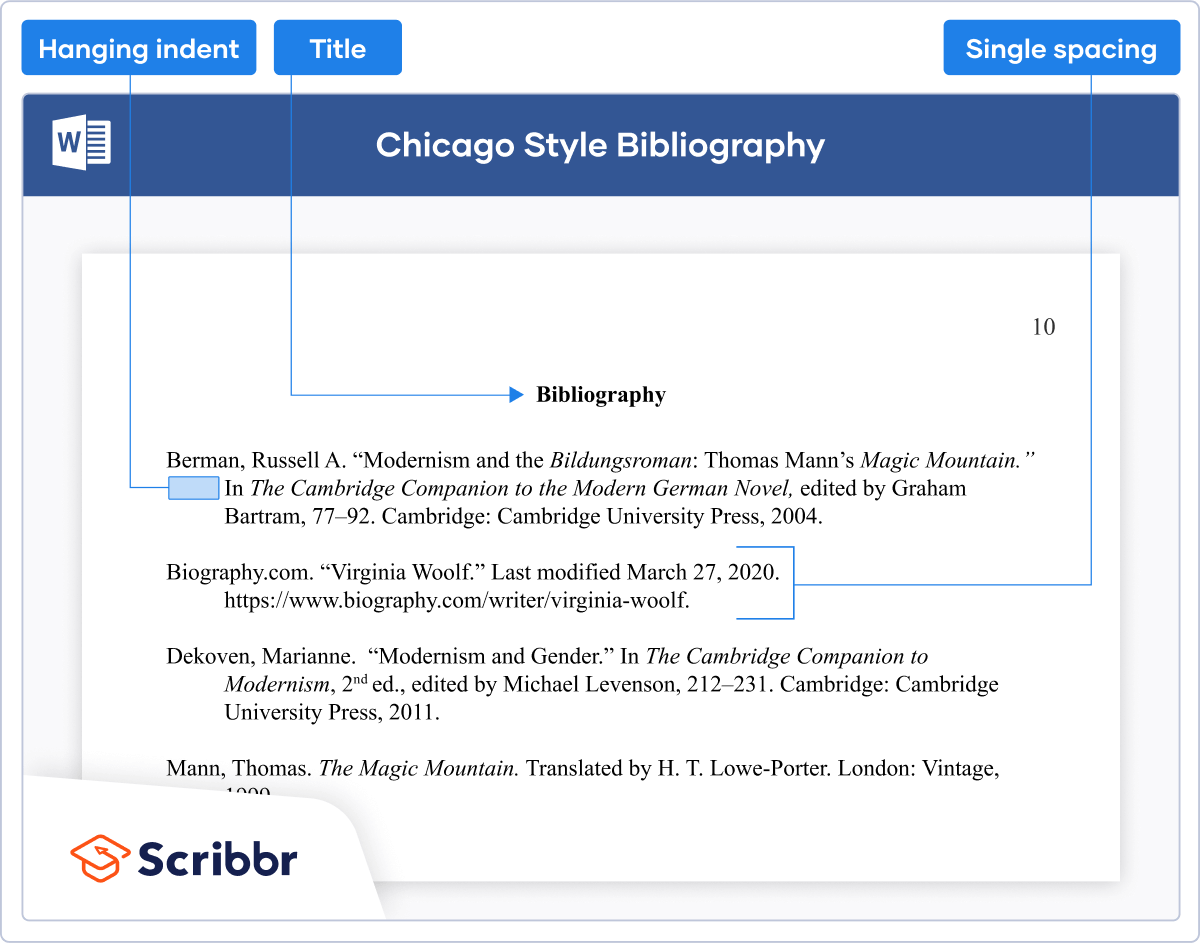
The bibliography, a cornerstone of the Notes-Bibliography system, is an alphabetical list of all sources cited in your work, placed at the very end of your document. It provides the full bibliographic details for each source, allowing readers to easily locate the original materials. Unlike footnotes, which can be quite specific to a page or section, bibliography entries offer a holistic view of the resources you consulted. For travel and lifestyle writers, this means providing a transparent account of the guidebooks, academic studies, historical texts, and expert interviews that informed your compelling narratives about destinations and experiences.
Formatting Principles: Each entry in the bibliography should be formatted with the author’s last name first, facilitating alphabetical organization. Titles of books and journals are italicized, while titles of articles or chapters are enclosed in quotation marks. Punctuation (periods between elements) and indentation (hanging indent, where the first line is flush left and subsequent lines are indented) are crucial for clarity.
Examples of Common Source Types:
-
Book: When referencing a book that delves into the culinary traditions of Thailand, or the historical context of the Pyramids of Giza, your entry would look like this:
Miller, Sarah. The Grandeur of Parisian Architecture: From Gothic to Haussmann. London: Cityscape Press, 2022.
-
Journal Article: For an academic article discussing the impact of sustainable tourism on local communities in Southeast Asia, perhaps focusing on Bali or Phuket:
Nguyen, Linh. “Eco-Tourism and Community Empowerment in Vietnam‘s Mekong Delta.” Journal of Responsible Travel 15, no. 3 (2020): 221-238.
-
Website/Blog Post: If you’re citing information from a travel blog, perhaps a detailed guide on navigating public transport in Tokyo or a review of a boutique hotel in Amsterdam:
Wong, Emily. “Exploring Singapore’s Hidden Culinary Gems.” Life Out Of The Box: Culinary Adventures. Last modified March 10, 2023. https://lifeoutofthebox.com/singapores-hidden-culinary-gems.
-
Chapter in an Edited Volume: Should you quote from a chapter within a compilation of essays about, say, the history of Venice’s canals or the unique local culture of Cuba:
Peterson, Mark. “The Allure of the Maldives: A Retreat for the Senses.” In Luxury Travel Destinations: An Insider’s Guide, edited by Joanna Clarke, 87-105. New York: Global Escapes Publishing, 2023.
By meticulously compiling your bibliography, you not only avoid plagiarism but also offer your audience the opportunity to delve deeper into the subjects you cover, from the majestic Eiffel Tower to the intricate planning of family trips. This commitment to thorough sourcing elevates your content from mere anecdote to well-substantiated insight, building trust and authority with every article.
Mastering the Author-Date System: Precision for Analytical Travel Content
While the Notes-Bibliography system thrives on detailed notes for humanities-focused narratives, the Author-Date system, preferred in many social sciences and natural sciences, offers a more streamlined approach suitable for analytical, data-driven, or empirical content. For travel and lifestyle writers, this system is particularly useful when presenting research on market trends in tourism, studies on accommodation preferences, or reports analyzing the economic impact of travel on different regions. It emphasizes brevity in the text, directing readers to a comprehensive reference list at the end for full source details.
In-Text Citations for Data-Driven Travel Analysis
The core of the Author-Date system lies in its parenthetical in-text citations, which include the author’s last name, the year of publication, and often a specific page number. These citations are placed directly within or at the end of the sentence where the information is used. This method provides immediate, concise attribution without disrupting the reader’s flow, making it ideal for content that regularly references statistical data, research findings, or expert opinions relevant to the travel industry.
For instance, when citing a study on the rising popularity of eco-tourism among millennials, or an analysis of how budget travel impacts specific local economies in places like Lisbon or Prague, your in-text citation would look like this:
(Smith 2021, 45)
If the author’s name is already mentioned in the text, you only need to include the year and page number in parentheses:
Smith (2021, 45) argues that the shift towards sustainable practices is transforming the hotel industry in Europe.
For sources with multiple authors, include all last names for two or three authors. For four or more authors, use the first author’s last name followed by “et al.” (meaning “and others”). This keeps the in-text citation compact while still accurately attributing the information. When discussing the trends in business stays in metropolitan hubs like London or New York City, and you cite a multi-authored report:
(Johnson et al. 2022, 112)
This system is particularly effective for reports analyzing visitor statistics for landmarks like the Great Wall of China or the average length of stay at resorts in the Caribbean. It provides the necessary attribution without cluttering the narrative, maintaining a professional and data-oriented tone.
Constructing Your References List with Clarity and Consistency
Similar to the bibliography in the Notes-Bibliography system, the Author-Date system requires a “References” list at the end of the document. This list provides full publication details for every source cited in the text, arranged alphabetically by the author’s last name. The key difference in formatting from a bibliography is the prominent placement of the publication date immediately after the author’s name, reflecting the “Author-Date” emphasis. This list serves as a comprehensive resource for readers who wish to verify information or explore the foundational research for topics ranging from global tourism forecasts to the behavioral economics of booking accommodation.
Formatting Principles: Entries in the References list typically follow a similar structure to bibliography entries but with the year of publication positioned right after the author’s name, enclosed in parentheses. Hanging indents are still used to improve readability. This structure makes it easy for a reader to quickly find the full source details corresponding to an in-text citation like “(Wong 2023)”.
Examples of Common Source Types:
-
Book: If you’re referencing a comprehensive guide on sustainable travel practices or a historical text on famous explorers in South America, such as those who first documented Patagonia:
Smith, John. 2021. The Future of Sustainable Travel: Practices and Policies. Chicago: University of Chicago Press.
-
Journal Article: For an analysis of traveler preferences when choosing hotels in competitive markets like Dubai or Singapore:
Johnson, Emily, David Lee, and Maria Chen. 2022. “Consumer Behavior in Luxury Hotel Bookings.” Journal of Hospitality Management 48, no. 2: 187-201.
-
Website/Online Report: When citing data from a report by a tourism board about visitor numbers to a country like Japan, or an article from a popular travel site:
Wong, Emily. 2023. “Exploring Singapore’s Hidden Culinary Gems.” Life Out Of The Box: Culinary Adventures. Last modified March 10. https://lifeoutofthebox.com/singapores-hidden-culinary-gems.
-
Chapter in an Edited Volume: For a chapter discussing specific amenities in modern suites or villas within an anthology focused on accommodation trends:
Clarke, Joanna. 2023. “The Evolution of Luxury Travel Experiences.” In Global Travel Trends 2023, edited by Michael Davies, 55-72. London: Travelers Insight Publishing.
By consistently applying the Author-Date system, particularly for articles that present data-driven analyses on travel, hotels, or lifestyle choices, you establish a professional standard that reinforces your content’s factual basis. This system is perfect for articles comparing the economic benefits of adventure travel in New Zealand versus cultural tourism in Italy, enabling readers to trace every piece of evidence back to its source efficiently.
Essential Chicago Style Formatting Tips for Polished Travel Publications
Beyond the specific citation systems, Chicago Style also offers comprehensive guidelines for general document formatting. Adhering to these standards ensures that your travel guides, destination reviews, and lifestyle articles maintain a professional and aesthetically pleasing appearance, akin to the careful presentation expected in a five-star hotel or a well-curated travel magazine. Consistent formatting not only enhances readability but also signals attention to detail, a quality highly valued by discerning readers.
Page Layout: Typically, Chicago Style recommends 1-inch margins on all sides of the document. The text should be double-spaced throughout, including the notes, bibliography/references list, and any block quotations. A readable font, such as 12-point Times New Roman or Garamond, is standard. Page numbers should be placed in the upper right-hand corner, beginning on the first page of the main text (or sometimes the title page, depending on specific requirements). This structured approach makes your content easy to follow, whether readers are learning about the best attractions in London or the historical context of landmarks in Athens.
Block Quotations: When incorporating direct quotations that are five or more lines long, or exceed 100 words, they should be formatted as a block quotation. This means they are indented half an inch from the left margin, double-spaced (though some disciplines might prefer single-spaced for block quotes), and presented without quotation marks. The citation follows the quotation, usually outside the final punctuation. For example, if you’re quoting an extensive passage from a historical account of the Statue of Liberty or an architectural critique of the Sydney Opera House, the block quote format gives it the prominence it deserves without interrupting the flow of your prose.
Titles of Works: Distinguishing between different types of titles is a subtle but important aspect of Chicago Style. Titles of longer works, such as books (e.g., Around the World in Eighty Days), journals (National Geographic Traveler), and complete websites (Life Out Of The Box), are italicized. Titles of shorter works, like articles within journals or books (e.g., “A Day Trip to Versailles”), individual blog posts (e.g., “The Best Hotels for Business Stays in Dubai”), or chapters, are enclosed in quotation marks. This distinction helps readers quickly identify the scope and nature of the referenced work.
Consistency is Key: Regardless of whether you’re detailing the intricacies of a luxury resort in Bali, outlining a budget travel guide for backpackers in Southeast Asia, or exploring the historical significance of a specific attraction in Mexico City, the most crucial formatting rule is consistency. Once you choose a particular method for headers, lists, or image captions, stick to it throughout your publication. This meticulous attention to detail not only elevates the professional appearance of your content but also reinforces your authority as a reliable source of information, fostering trust with your audience as they plan their next adventure.
In the realm of travel and lifestyle content, where rich imagery and evocative storytelling often take center stage, the subtle yet powerful act of proper citation with Chicago Style serves as the invisible backbone of credibility. It transforms engaging anecdotes into authoritative insights and captivating guides into trustworthy resources. By diligently applying these guidelines, whether you opt for the detailed Notes-Bibliography system for historical narratives or the concise Author-Date system for data-driven analyses, you uphold a standard of academic rigor that enriches your readers’ understanding and reinforces your position as a reliable authority in the expansive world of exploration and discovery. Your journey to impactful storytelling begins with the integrity of your sources.