
California – a name that evokes images of sun-drenched beaches, towering redwoods, innovative tech hubs, and a vibrant tapestry of cultures and lifestyles. For the aspiring entrepreneur, the seasoned digital nomad, or anyone with a vision for a flourishing business, the Golden State offers an unparalleled landscape of opportunity. Whether your dream involves launching a bespoke travel agency specializing in Napa Valley wine tours, establishing a chain of boutique hotels in Los Angeles, curating unique experiences in San Francisco, or managing a portfolio of luxury vacation accommodations along the San Diego coastline, formalizing your business structure is a critical first step.
Among the various business structures, the Limited Liability Company (LLC) stands out as a popular and advantageous choice, particularly for small to medium-sized enterprises and solo ventures. An LLC combines the personal liability protection of a corporation with the pass-through taxation benefits and operational simplicity of a partnership or sole proprietorship. This structure is ideal for those seeking to protect their personal assets from business debts and legal claims, project an image of professionalism, and enjoy flexibility in management and taxation. For entrepreneurs diving into the dynamic world of travel, hospitality, tourism, or lifestyle services in California, understanding how to create an LLC is not just a formality; it’s a strategic move to safeguard your investment, enhance credibility, and pave the way for sustainable growth. This comprehensive guide will walk you through the essential steps to form your LLC in the Golden State, empowering you to turn your entrepreneurial dreams into a legally sound reality.
Laying the Foundation: Why California is Prime for Your Business Venture
The Golden State Advantage for Entrepreneurs
California is more than just a picturesque destination; it’s a global economic powerhouse and a hotbed for innovation, making it an incredibly attractive place to establish a new business. Its sheer size and diversity mean that entrepreneurs can tap into a multitude of markets and demographics. From the bustling metropolitan energy of Los Angeles with its entertainment industry and vibrant lifestyle scene, to the tech-driven innovation and financial prowess of San Francisco, and the laid-back, tourism-centric atmosphere of San Diego, the opportunities are vast. Beyond these major cities, regions like Napa Valley and Temecula Valley beckon wine tourism businesses, while destinations like Lake Tahoe and Yosemite National Park offer boundless potential for outdoor adventure travel and accommodation providers. The state’s robust economy, coupled with a constant influx of both domestic and international travelers and residents, ensures a vibrant customer base for virtually any venture, particularly those centered around travel, hospitality, and dynamic lifestyle experiences.
For entrepreneurs, choosing an LLC structure in California offers several compelling advantages. The primary benefit is personal asset protection. As a distinct legal entity, an LLC separates your personal assets (like your home, car, and savings) from your business’s liabilities. This means that if your travel blog faces a lawsuit or your boutique hotel incurs significant debt, your personal wealth is generally shielded. This peace of mind is invaluable for anyone venturing into the unpredictable world of business. Furthermore, an LLC enhances your business’s credibility. Operating under a formally recognized structure signals professionalism to potential clients, partners, and investors. Imagine seeking partnerships with established hotels for your tour company or securing financing for a new resort project; having an LLC can significantly boost your standing.
Tax flexibility is another key draw. By default, an LLC is treated as a “pass-through” entity by the IRS, meaning profits and losses are passed through to the owners’ personal income without being taxed at the business level, avoiding “double taxation” common with corporations. However, LLCs also have the option to elect to be taxed as an S-corporation or C-corporation, which can offer further tax advantages depending on your business’s profitability and growth trajectory. This adaptability makes the LLC an excellent choice for businesses ranging from a sole proprietor managing vacation rentals in Palm Springs to a multi-member team developing new attractions in Hollywood. The operational simplicity, with fewer corporate formalities compared to a traditional corporation, allows entrepreneurs to focus more on their core business activities—be it curating unforgettable destinations or perfecting guest accommodation experiences—rather than getting bogged down in administrative complexities.
Navigating the California LLC Formation Process
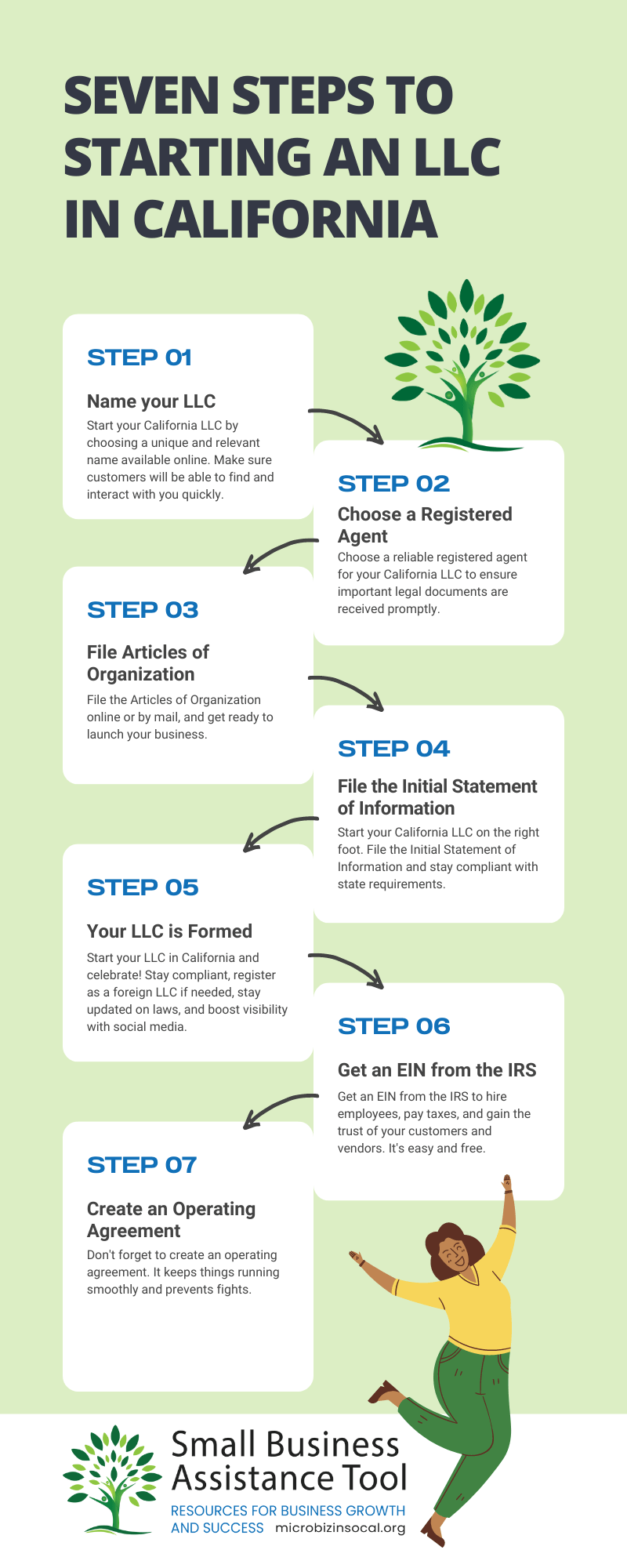
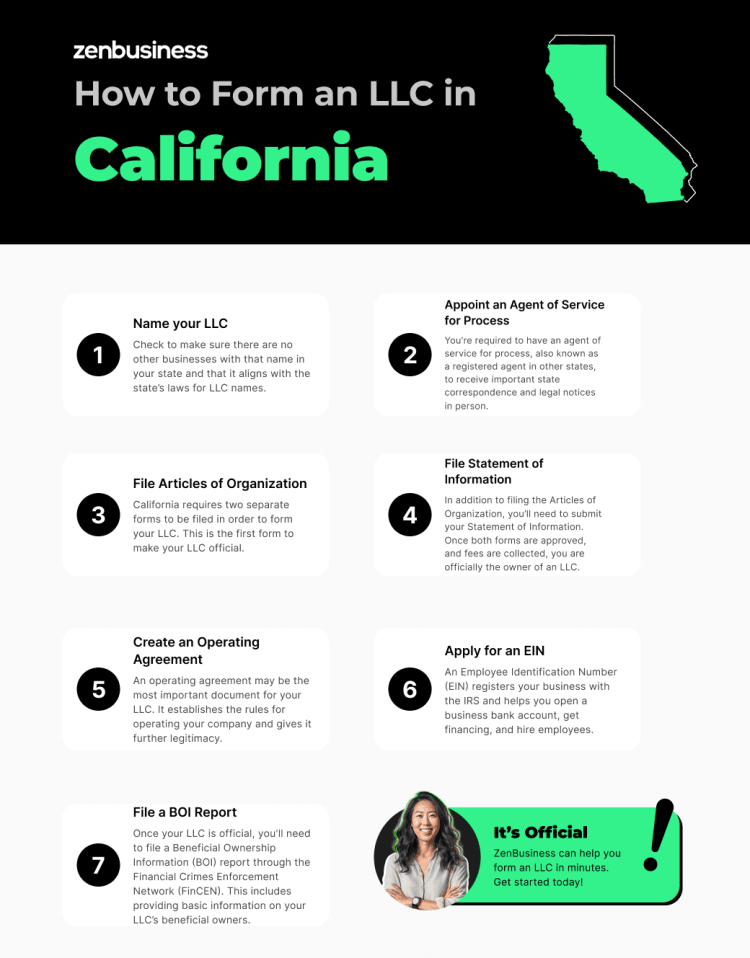
Establishing your LLC in California involves a series of clear, sequential steps. While the process may seem daunting at first, breaking it down into manageable actions will ensure a smooth and compliant formation, allowing you to quickly focus on building your travel or lifestyle brand.
Step 1: Choosing and Securing Your Business Name
The first tangible step in forming your LLC is selecting a compelling and legally compliant business name. For a travel or lifestyle business, your name is your brand’s identity, needing to be memorable, relevant, and attractive to your target audience. Whether you’re launching “Golden State Travel Guides” or “Pacific Coast Hotels,” the name must be unique and distinguishable from other registered entities in California.
To ensure compliance, your chosen name must include the words “Limited Liability Company,” “LLC,” or “L.L.C.” It cannot contain words implying it’s a corporation (e.g., “Inc.,” “Corp.”) or words restricted by the California Secretary of State, such as “bank” or “trust,” without additional permits or licenses. You can check the availability of your desired name by performing a name search on the California Secretary of State’s website. It’s wise to have several alternative names in mind in case your first choice is unavailable. Once a name is confirmed as available, you may reserve it for a limited period, typically 60 days, to prevent others from using it while you prepare your formation documents. Additionally, consider checking for corresponding domain names and social media handles to maintain brand consistency across all platforms. If you plan to operate under a name different from your official LLC name (e.g., “Laguna Beach Adventures” while your LLC is “Oceanfront Experiences LLC”), you will need to file a Fictitious Business Name (FBN) statement, also known as a “Doing Business As” (DBA), with the county clerk where your business is located.
Step 2: Designating a Registered Agent
Every LLC in California is legally required to designate a Registered Agent. This individual or entity acts as your LLC’s official point of contact for receiving legal documents, state correspondence, and service of process (e.g., lawsuits). The Registered Agent must have a physical street address in California (not a P.O. Box) and be available during regular business hours.
You have a few options for who can serve as your Registered Agent:
- Yourself: If you reside in California and have a physical street address, you can act as your own Registered Agent. However, this means your personal address will be publicly listed, and you must be available to receive documents during business hours.
- Another individual: A trusted friend, family member, or employee who meets the residency and availability requirements can serve.
- A professional Registered Agent service: This is often the preferred choice for many entrepreneurs, especially digital nomads, travel bloggers, or those frequently on the go. Professional services offer privacy (using their address instead of yours), reliability (ensuring documents are always received), and peace of mind. They notify you promptly of any received documents, allowing you to focus on managing your hotels, curating tourism packages, or writing your next travel guide.
Choosing a reliable Registered Agent is crucial for maintaining compliance and avoiding potential legal issues down the line.

Step 3: Filing the Articles of Organization (Form LLC-1)
The Articles of Organization (Form LLC-1) is the foundational document that formally establishes your LLC with the California Secretary of State. This is the official birth certificate of your business. The form requires essential information, including:
- The name of your LLC.
- The name and address of your Registered Agent.
- Your LLC’s mailing address.
- A statement on the purpose of your LLC (often a general purpose statement is sufficient).
- Details on how your LLC will be managed (member-managed, where all members participate in management, or manager-managed, where a designated manager or group of managers oversees operations). For a solo entrepreneur running a lifestyle blog or a small team managing a few accommodations, member-managed is common, but manager-managed might be better for larger ventures or those with passive investors.
You can file the Articles of Organization online, by mail, or in person with the California Secretary of State. There is a filing fee, which can vary. Be prepared for processing times; while online filings are generally faster, mail-in applications can take several weeks, especially during peak periods. Once approved, the Secretary of State will return a filed-stamped copy of your Articles of Organization, confirming your LLC’s legal existence.
Step 4: Crafting Your Operating Agreement
While not filed with the California Secretary of State, an Operating Agreement is perhaps the most crucial internal document for your LLC. It is a legally binding contract among the LLC members (owners) that outlines the operational procedures, rights, and responsibilities of each member. Even for a single-member LLC, an Operating Agreement is highly recommended as it helps reinforce the liability protection afforded by the LLC structure and clarifies internal operations, serving as a blueprint for your business’s governance.
A robust Operating Agreement typically covers:
- Ownership percentages: How the LLC is owned by its members.
- Management structure: Whether it’s member-managed or manager-managed, and the roles and responsibilities of each.
- Voting rights: How decisions are made and how votes are weighted.
- Profit and loss distribution: How profits and losses are allocated among members.
- Capital contributions: Initial investments made by each member.
- Procedures for adding new members or transferring ownership interests.
- Dissolution clauses: How the LLC will be dissolved if members decide to cease operations.
- Buy-sell provisions: What happens if a member wants to leave the LLC or passes away.
Having a well-drafted Operating Agreement is critical for avoiding future disputes among members, providing a clear framework for decision-making, and proving the legitimacy of your LLC to banks, potential investors in your next resort project, or when seeking loans. It demonstrates that your business is professionally structured and managed.
Step 5: Obtaining an Employer Identification Number (EIN)
An Employer Identification Number (EIN), also known as a Federal Tax Identification Number, is a unique nine-digit number assigned by the IRS to identify a business entity. Think of it as a Social Security number for your LLC. An EIN is required if your LLC has more than one member, if it plans to hire employees (perhaps for your new accommodation property), or if it elects to be taxed as a corporation instead of a pass-through entity. Even for single-member LLCs without employees, obtaining an EIN is often beneficial, as most banks require it to open a business bank account, and it can help maintain the separation between personal and business finances.
You can obtain an EIN for free directly from the IRS website, typically through an online application that takes only a few minutes to complete. This is a crucial step for managing your LLC’s finances, filing federal and state taxes, and establishing financial credibility.
Step 6: Complying with State and Local Regulations
Beyond the initial formation documents, your California LLC must adhere to various ongoing state and local regulations. These can vary significantly depending on your business’s specific activities and its physical location within the state (e.g., Los Angeles, San Francisco, San Diego, Sacramento).
Key compliance requirements include:
- Business Licenses and Permits: Most businesses will need a general business license from the city or county where they operate. Specific industries, such as those in hospitality (hotels, restaurants), tourism (tour operators, guides), or accommodation (short-term rentals), may require additional specialized licenses, health permits, or zoning approvals. For instance, operating a bed and breakfast in Big Sur will have different requirements than running an online travel blog from Beverly Hills. Researching these local requirements through your city and county clerk’s offices is essential.
- Statement of Information (Form LLC-12): California LLCs are required to file an initial Statement of Information with the Secretary of State within 90 days of filing the Articles of Organization, and then biennially thereafter. This form updates the state with current information about your LLC, such as its address, Registered Agent, and managing members/managers.
- Annual Franchise Tax: California imposes an annual minimum franchise tax on all LLCs, regardless of income. This fee is paid to the California Franchise Tax Board. Additional fees may apply based on the LLC’s net income if it exceeds a certain threshold. Understanding these tax obligations from the outset is crucial for financial planning.
- Employer Obligations: If you plan to hire employees, you’ll need to comply with federal and state employer laws, including payroll taxes, workers’ compensation insurance, and unemployment insurance.
Staying on top of these ongoing compliance tasks is vital for maintaining your LLC’s good standing and avoiding penalties.
Beyond Formation: Sustaining Your California Lifestyle Business
Ongoing Compliance and Strategic Growth
Forming your LLC is a monumental first step, but it’s equally important to understand that compliance and strategic growth are ongoing processes. Your LLC serves as the legal backbone of your travel or lifestyle business, and nurturing it means consistently adhering to legal requirements while also looking for opportunities to expand.
Ensuring regular compliance, such as timely filing of the biennial Statement of Information and payment of the annual franchise tax, is paramount. Missing deadlines can lead to penalties and potentially jeopardize your LLC’s good standing. It is also critical to maintain strict separation between your personal and business finances by opening a dedicated business bank account. This not only reinforces the liability protection of your LLC but also simplifies accounting and tax preparation, allowing you to clearly track the financial performance of your hotels, tour operations, or travel blog.
Beyond compliance, consider how your LLC structure supports strategic growth within California’s diverse markets. Continuously educate yourself on evolving California business laws and industry-specific regulations, especially if your venture touches on niches like luxury travel, adventure tourism, or unique accommodation offerings. Your LLC provides a credible platform for attracting investors, forming partnerships with other tourism businesses, or expanding into new destinations or service lines within the state, whether it’s launching new experiences in Joshua Tree National Park or opening another boutique hotel in Santa Monica. Networking within California’s vibrant entrepreneurial and tourism communities, attending industry events, and staying connected with local chambers of commerce can provide invaluable insights and opportunities for your growing business. Your LLC is not just a shield; it’s a launchpad for future success.
Creating an LLC in California is a foundational step toward realizing your entrepreneurial ambitions in one of the world’s most dynamic markets. By diligently following each stage of the formation process – from selecting a unique name and designating a Registered Agent to filing your Articles of Organization, drafting an Operating Agreement, obtaining an EIN, and adhering to ongoing state and local regulations – you establish a legally sound and credible business entity. This robust structure protects your personal assets, enhances your professional image, and provides the flexibility necessary to thrive in the competitive but rewarding travel, hospitality, and lifestyle sectors. Whether your vision involves curating unforgettable destinations, managing exceptional accommodations, or sharing unique experiences, your California LLC is the vessel that will help you navigate the journey, transforming your entrepreneurial dream into a tangible and flourishing reality amidst the Golden State’s endless opportunities.