
Managing rental properties, whether they are charming Austin bungalows for extended stays, sophisticated Houston apartments for business travelers, or scenic San Antonio homes catering to families on long vacations, can be a rewarding endeavor. Property ownership often intertwines with lifestyle choices, offering pathways to financial independence and opportunities within the vibrant accommodation sector. However, even the most meticulously screened tenants can, on occasion, present challenges that necessitate the difficult step of eviction.
While eviction is undeniably a last resort, understanding the precise legal framework for removing a tenant in Texas is paramount for any property owner. This guide is designed to equip landlords and property managers with a comprehensive understanding of the eviction process in the Lone Star State, ensuring compliance with state laws and minimizing potential complications. Navigating this intricate legal landscape correctly protects your investment, maintains your reputation within the accommodation community, and ensures a smooth operational flow for your properties, whether they are part of your travel business or a facet of your personal lifestyle investment portfolio.
Understanding Texas Eviction Laws and Grounds
Before initiating any eviction proceedings, it’s crucial to grasp the foundational legal principles that govern landlord-tenant relationships in Texas. The state’s eviction laws are primarily codified in the Texas Property Code, particularly Chapter 24 (Forcible Entry and Detainer) and Chapter 92 (Residential Tenancies). These statutes outline the permissible reasons for eviction, the required notice periods, and the judicial process involved. Missteps at this initial stage can lead to significant delays, financial penalties, or even a wrongful eviction claim, which could severely impact your property management efforts and investment returns.
Key Legal Frameworks: Lease Agreements and the Texas Property Code
The lease agreement is the cornerstone of the landlord-tenant relationship. This legally binding contract dictates the terms and conditions of the tenancy, including rent amount, payment due dates, property rules, and responsibilities of both parties. Most eviction grounds stem directly from a tenant’s violation of these agreed-upon terms or the statutory obligations outlined in the Texas Property Code. It’s essential that your lease agreement is clear, comprehensive, and compliant with all applicable Texas laws. For those managing properties that double as short-term vacation rentals but might also offer long-term accommodation, ensuring the distinction in lease types and their respective legal implications is vital.
Common Grounds for Eviction in Texas
In Texas, landlords must have a legally valid reason to evict a tenant. The most common grounds include:
- Non-payment of Rent: This is arguably the most frequent reason for eviction. If a tenant fails to pay rent on time as stipulated in the lease agreement, the landlord can initiate eviction proceedings after providing the requisite notice.
- Breach of Lease Terms: Any significant violation of the lease agreement can serve as grounds for eviction. This might include unauthorized pets, excessive noise complaints, damage to the property beyond normal wear and tear, illegal activities on the premises, or unauthorized sub-leasing, which is particularly relevant for properties marketed for specific accommodation types.
- Holdover Tenancy: A holdover tenant is someone who remains in possession of the property after their lease has expired and they have not renewed it. In such cases, the landlord is not required to provide a reason for eviction but must still follow the proper legal procedures to regain possession.
- Material Breach of Statutory Obligations: Even if not explicitly stated in the lease, tenants have statutory duties under the Texas Property Code, such as not damaging the property or engaging in certain illegal activities. A breach of these duties can also be grounds for eviction.
It’s important to note that Texas law prohibits “self-help” evictions, meaning landlords cannot forcibly remove tenants, change locks without proper notice (in specific, limited circumstances), or shut off utilities to coerce a tenant into leaving. All evictions must proceed through the judicial system.
The Texas Eviction Process: A Step-by-Step Guide
Successfully navigating an eviction in Texas requires strict adherence to a specific legal process. Each step is critical, and any deviation can result in the case being dismissed, forcing you to restart the entire procedure. For property owners leveraging their real estate for diverse accommodation needs, understanding this process protects your investment and maintains continuity in your business or lifestyle choices.
Step 1: Serving the Notice to Vacate
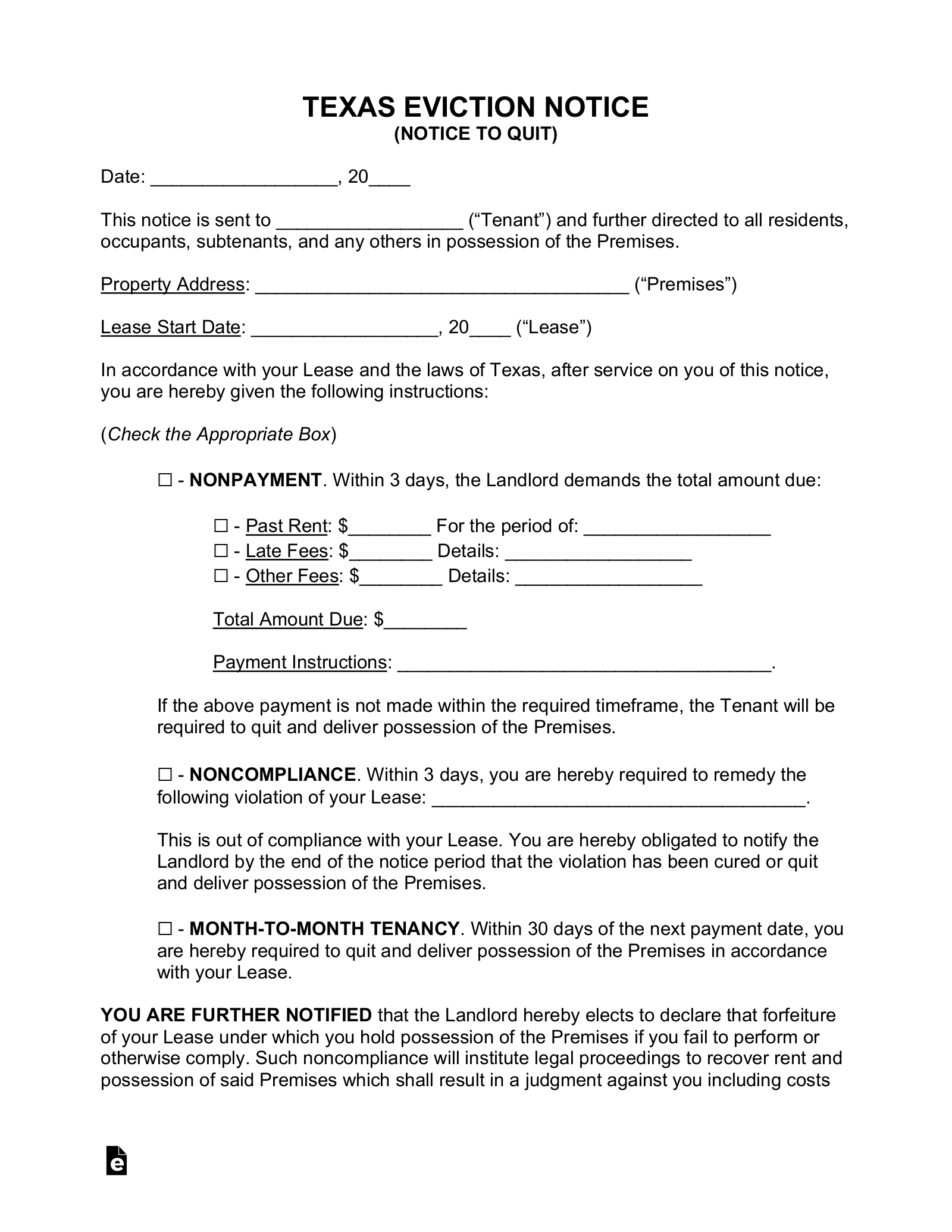
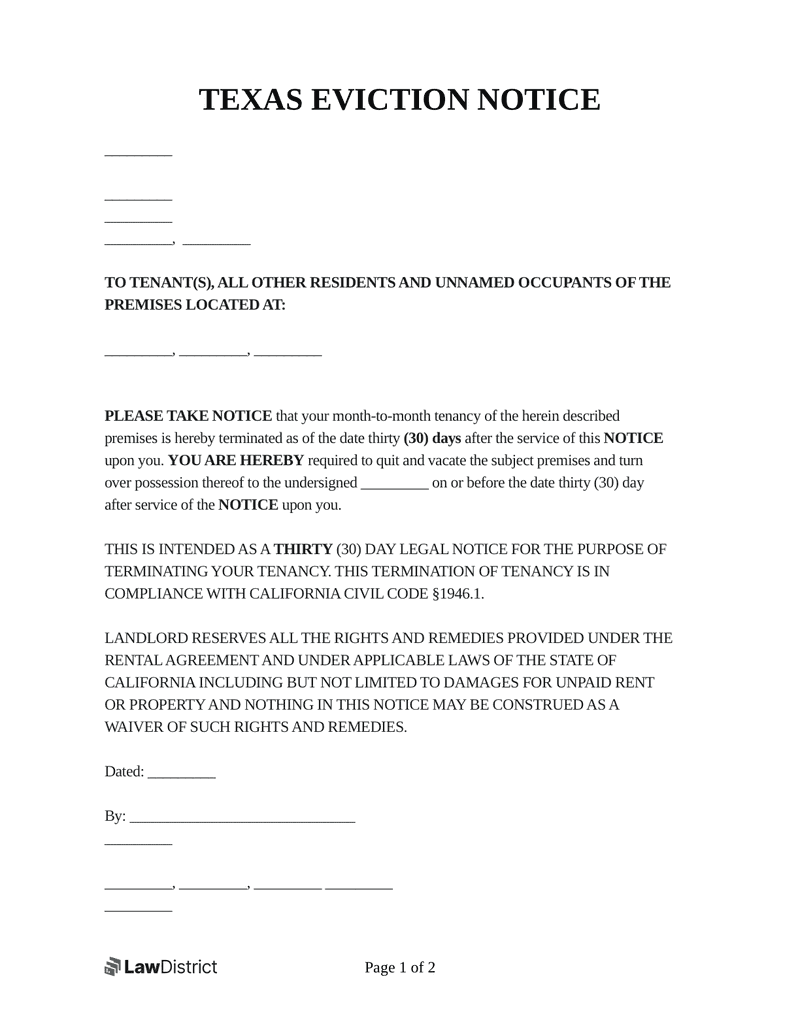
The eviction process officially begins with the landlord providing the tenant with a written “Notice to Vacate.” This notice informs the tenant that they must move out by a specific date or face an eviction lawsuit.
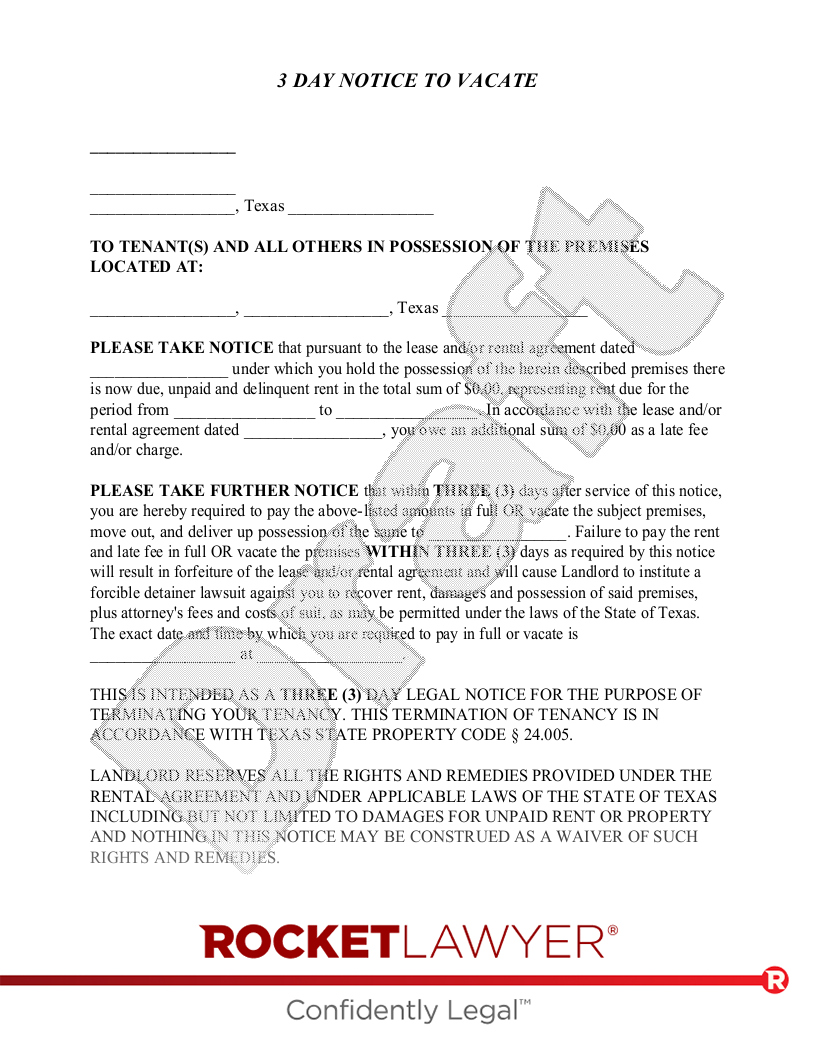
- Standard Notice Period: For most evictions based on non-payment of rent or breach of lease, Texas law requires a three-day written notice to vacate. This means the tenant has three full days after receiving the notice to either remedy the violation (e.g., pay the overdue rent) or move out.
- Calculating the Notice Period: The day the notice is served is not counted. Weekends and legal holidays are typically included unless they fall on the last day of the notice period, in which case the period extends to the next business day.
- Delivery Methods: The notice must be delivered properly. Acceptable methods include:
- Personal delivery to the tenant or any person 16 years or older residing at the premises.
- Certified mail, return receipt requested, and regular mail.
- Affixing the notice to the inside of the main entry door, provided no mailbox slot or other secure means of mailing is readily accessible, and a copy is also mailed (usually by certified mail).
- Specifics of the Notice: The notice should clearly state the reason for eviction, the date the tenant must vacate, and that an eviction lawsuit will be filed if they do not comply. For non-payment of rent, it should explicitly state the amount owed.
Step 2: Filing the Eviction Lawsuit ([Forcible Detainer] in Justice Court)
If the tenant fails to comply with the Notice to Vacate by the specified deadline, the landlord can then file an eviction lawsuit, formally known as a “Forcible Detainer” suit, in the appropriate Justice Court (also sometimes referred to as small claims court) precinct where the property is located.
- Petition for Eviction: The landlord (or their attorney) will file a “Petition for Eviction” with the Justice Court. This document details the landlord’s claims, the property address, the grounds for eviction, and the relief sought (possession of the premises and, sometimes, unpaid rent).
- Fees and Service: There will be filing fees and service fees associated with this step. The court will arrange for a constable or sheriff to serve the tenant with the lawsuit (the “citation”), informing them of the hearing date. Service must be properly executed, typically by personal delivery or by attaching it to the property if personal delivery is unsuccessful after diligent efforts.
Step 3: The Court Hearing
Eviction cases in Justice Court are typically scheduled fairly quickly, often within 10-21 days of filing the petition. Both the landlord and the tenant are expected to appear.
- Preparation: Landlords should come prepared with all relevant documentation:
- A copy of the lease agreement.
- The Notice to Vacate and proof of its delivery.
- Rent ledgers or payment records.
- Correspondence with the tenant.
- Photos or other evidence of lease violations (if applicable).
- Witnesses, if any.
- The Hearing: The judge (or Justice Court precinct clerk acting as a judge) will hear testimony from both sides. The landlord must prove their case by a preponderance of the evidence. Tenants have the right to present their defense, which might include issues with the property’s condition, improper notice, or retaliation claims.
- Judgment: If the judge rules in favor of the landlord, a “Judgment for Possession” will be issued. This judgment grants the landlord legal possession of the property. The judgment may also include an award for unpaid rent and court costs.
Step 4: Writ of Possession
If the tenant does not appeal the judgment or move out within five days after the judgment for possession is signed, the landlord can then request a “Writ of Possession” from the Justice Court.
- Purpose: The Writ of Possession is a court order directing a constable or sheriff to physically remove the tenant and their belongings from the property.
- Execution: Once the writ is issued, the constable will post a 24-hour notice on the tenant’s door, informing them of the impending removal. After this period, the constable will return to supervise the physical eviction, ensuring it’s carried out lawfully. Landlords are typically responsible for arranging for movers and ensuring the tenant’s property is removed and stored safely, though practices can vary by county. For example, in Harris County, the landlord must be present to change the locks and remove property.
Avoiding Pitfalls and Best Practices for Property Owners
While the eviction process in Texas is clearly defined, it’s riddled with potential pitfalls that can trip up even experienced landlords. For those who invest in properties as part of their lifestyle or business, especially within the competitive accommodation sector, avoiding these errors is crucial for efficiency and maintaining financial health.
Documentation is Key
Thorough and meticulous record-keeping is the most powerful tool a landlord possesses in an eviction case. Maintain organized files for:
- All lease agreements and addendums.
- Payment records, including rent ledgers, receipts, and bank statements.
- Copies of all notices served (Notice to Vacate, eviction petitions, etc.) with proof of delivery.
- All communication with the tenant (emails, text messages, certified letters).
- Maintenance requests and repair records.
- Move-in/move-out inspection reports and photos.
Comprehensive documentation not only strengthens your case in court but also helps demonstrate a history of good faith efforts and adherence to the lease terms, safeguarding your investment in that specific piece of accommodation.
Communication and Negotiation
Before resorting to eviction, open and professional communication with the tenant can sometimes resolve issues. If a tenant is struggling with rent, for instance, a landlord might consider a payment plan or offering resources for assistance, particularly in cases where the property is part of a larger portfolio aimed at sustainable accommodation solutions. However, any agreements made outside the lease must be in writing to be enforceable. Negotiation can save both parties time, money, and stress, preserving the potential for future positive relationships or at least an amicable departure.
Seeking Legal Counsel
While Texas law allows landlords to represent themselves in Justice Court, consulting with an attorney specializing in landlord-tenant law is highly recommended. An experienced lawyer can ensure proper adherence to all procedural requirements, craft compelling legal arguments, and navigate complex defenses raised by tenants. This legal expertise is an invaluable investment, especially when considering the significant costs associated with a prolonged or botched eviction, which can include lost rent, court fees, and potential damages if a wrongful eviction is proven. For property investors for whom these properties represent a significant portion of their lifestyle or income, legal protection is paramount.
Understanding Tenant Rights
Landlords must always remember that tenants in Texas have rights. These include:
- Right to Proper Notice: Tenants must receive proper written notice before an eviction suit is filed.
- Right to a Hearing: Tenants have the right to present their case in Justice Court.
- Right to Appeal: If a tenant disagrees with the Justice Court judgment, they have the right to appeal to the County District Court within five days.
- Protection Against Retaliation: Landlords cannot retaliate against tenants for exercising their legal rights (e.g., complaining about property conditions) by filing an eviction, increasing rent, or decreasing services.
- Fair Housing Protections: Evictions must comply with the Federal Fair Housing Act and similar state laws, prohibiting discrimination based on race, color, religion, sex, national origin, familial status, or disability.
Understanding and respecting these rights is not only a legal obligation but also a best practice that helps maintain a professional reputation and minimizes legal risks for property owners dedicated to ethical accommodation management.
Implications for Property Owners and the Accommodation Industry
For individuals whose lifestyle or business revolves around property ownership and providing accommodation, the eviction process carries broader implications beyond simply removing a problematic tenant. It touches upon reputation, financial health, and the overall guest or resident experience, even for properties dedicated to long-term stays.
Maintaining Reputation and Guest Experience
In the world of accommodation, whether it’s a boutique hotel, a resort, or a long-term rental, reputation is everything. A poorly handled eviction can generate negative publicity, harm your standing in the community, and potentially deter future tenants or guests. Property owners, especially those with multiple properties across popular destinations like Dallas or Austin, should strive to manage tenant issues with professionalism and strict adherence to legal procedures. This approach not only protects against legal challenges but also reinforces a positive image of responsible property management, which is vital for sustained success in the travel and accommodation sectors.
Financial Considerations of Eviction
Eviction is a costly process. Beyond lost rent, landlords incur:
- Court Filing and Service Fees: These can add up quickly.
- Legal Fees: If an attorney is retained, these costs can be substantial.
- Property Damages: Tenants being evicted may cause intentional damage.
- Cleaning and Repair Costs: Preparing the unit for a new tenant.
- Vacancy Costs: The period the unit remains empty while the eviction proceeds and the property is prepared for re-rental.
- Lost Rental Income: The most significant financial impact often comes from the months of lost rent during the process.
These financial burdens highlight why eviction should always be a last resort and why proactive tenant screening, clear lease agreements, and diligent property management practices are essential to mitigating risks and safeguarding your lifestyle investment.
In conclusion, while the prospect of evicting a tenant in Texas can be daunting, understanding the legal framework and meticulously following each step of the process is non-negotiable. For property owners leveraging real estate as a component of their personal lifestyle or as a core business within the accommodation and travel industry, navigating this process with precision, professionalism, and legal guidance is vital. By doing so, you protect your valuable assets, maintain operational efficiency, and uphold the integrity of your commitment to providing quality accommodation.