
Navigating the legal landscape can be daunting, especially when it comes to clearing past mistakes. For residents of Texas, the prospect of expunging a criminal record might seem like an insurmountable financial hurdle. However, this article aims to illuminate the path to achieving a clean slate in the Lone Star State without incurring significant costs. While legal assistance often comes with a price tag, Texas law provides avenues for individuals to pursue expungement independently, and in some cases, access pro bono legal services, effectively making the process free. This guide will delve into the nuances of Texas expungement, explore the types of offenses eligible for clearing, and outline the practical steps involved, empowering you to reclaim your future.

Understanding Expungement in Texas: A Fresh Start
Expungement, often referred to as sealing or clearing a criminal record, is a legal process that allows certain eligible offenses to be removed from public view. This means that once your record is expunged, it is as if the arrest or conviction never happened. For employers, landlords, educational institutions, and even licensing boards, your expunged record will not be visible. This can be a transformative step for individuals seeking employment, housing, educational opportunities, or professional licenses.
It’s crucial to understand that “expungement” and “non-disclosure” are distinct legal mechanisms in Texas, though both aim to limit public access to criminal history. Expungement involves the complete destruction or sealing of records. Non-disclosure, on the other hand, is an order that prevents certain agencies from disclosing your criminal history information to the public, though it may still be accessible to law enforcement and other authorized entities. This article focuses primarily on expungement, which offers a more comprehensive removal of past offenses.
Who is Eligible for Expungement in Texas?
The eligibility criteria for expunging a record in Texas are specific and depend on the outcome of the case. Not all offenses can be expunged. Generally, cases that were dismissed, resulted in a “not guilty” verdict, or were otherwise resolved in your favor are prime candidates for expungement.
Arrests Without Conviction
One of the most common scenarios for expungement involves an arrest that did not lead to a conviction. This can happen for various reasons:
- Charges Dropped: The prosecutor may decide to drop the charges before a trial.
- Acquittal: You were found not guilty in a trial.
- Deferred Adjudication Dismissal: You successfully completed a period of deferred adjudication probation, and the case was dismissed.
If you were arrested and the case was ultimately dismissed or resulted in an acquittal, you are likely eligible to have the arrest record expunged. This is a critical distinction, as even without a conviction, an arrest can appear on background checks and create obstacles.
Certain Misdemeanors and Felonies
Beyond arrests that never led to conviction, certain completed misdemeanors and felonies may also be eligible for expungement, provided specific conditions are met. The type of offense and the time elapsed since the completion of the sentence or probation play a significant role. For instance, some low-level misdemeanors might have shorter waiting periods than more serious felony offenses.
It’s important to note that certain serious offenses, particularly those involving family violence or sexual offenses, may have stricter rules and longer waiting periods, or may not be eligible for expungement at all. Consulting with a legal professional or utilizing free legal resources is highly recommended to determine the specific eligibility of your case.
The Cost of Expungement: Can it Really Be Free?
The “free” aspect of expunging your record in Texas primarily hinges on two factors: your ability to navigate the process yourself and the availability of pro bono legal services.
DIY Expungement: Navigating the Legal Maze
The Texas legal system, while complex, does allow individuals to represent themselves in many civil matters, including expungement. This means that by understanding the required forms and procedures, you can file the necessary paperwork without hiring an attorney. The primary costs associated with a DIY expungement would be filing fees at the court and potentially the cost of obtaining official court documents. However, many counties offer fee waivers for individuals who demonstrate financial hardship. This can significantly reduce, if not eliminate, the direct court costs.
The process involves petitioning the court that has jurisdiction over your case. This typically means the court where you were originally charged or where the arrest occurred. You will need to file an “Order for Expunction” and serve it to the relevant agencies, such as the arresting agency and the Texas Department of Public Safety. Gathering the correct information, such as case numbers, dates of arrest, and disposition of the case, is paramount.
Pro Bono Legal Aid: Free Assistance for Those in Need
Recognizing that legal representation can be a barrier to justice, Texas offers various avenues for pro bono legal services. Pro bono is Latin for “for the public good,” and it refers to legal services provided by attorneys free of charge.
Several organizations in Texas are dedicated to providing free legal assistance to low-income individuals. These organizations often have attorneys who specialize in areas like expungement. If you qualify based on your income and the nature of your case, you may be able to receive free legal advice and representation throughout the expungement process.
Where to find Pro Bono Services:
- Legal Aid Societies: Organizations like Legal Aid of Northwest Texas, Lone Star Legal Aid, and Texas RioGrande Legal Aid serve specific regions of the state and offer free legal services to eligible individuals. These organizations often handle expungement cases as part of their broader mission to assist vulnerable populations.
- Bar Associations: Local and state bar associations often have pro bono programs or can direct you to attorneys who offer free services.
- Law School Clinics: Many law schools in Texas have clinics where students, supervised by experienced faculty, provide legal assistance to the public, including expungement services.
- Online Legal Resources: Websites like TexasLawHelp.org provide free legal information and resources, including self-help guides and directories of legal aid providers. While not direct representation, these resources can be invaluable for understanding the process and identifying potential help.
The key to accessing free legal assistance is to thoroughly research the organizations available in your area and understand their eligibility requirements. Often, these services are reserved for individuals who meet certain income thresholds.
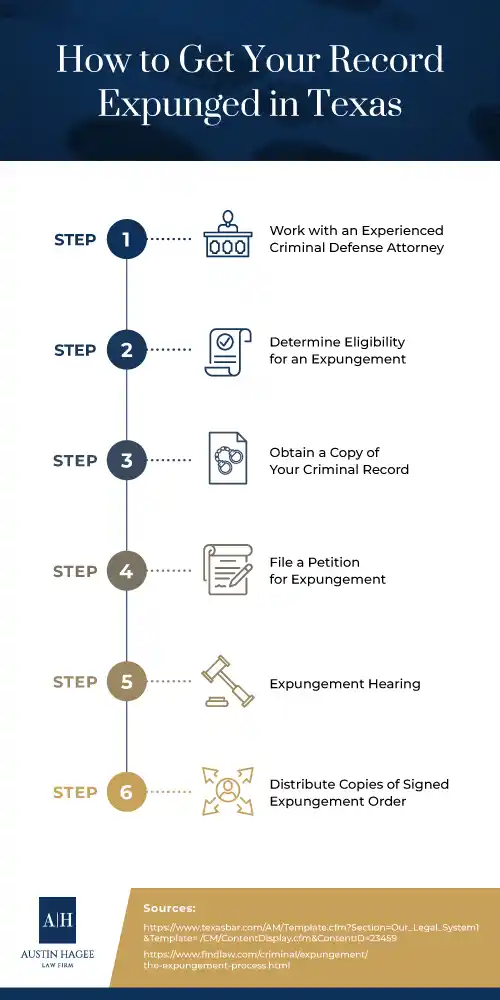
The Expungement Process: Step-by-Step Guide

While the specifics can vary slightly depending on your county and the nature of your offense, the general process for expunging a record in Texas follows a predictable path.
Step 1: Determine Eligibility
This is the foundational step. As discussed earlier, you must confirm that your case meets the criteria for expungement. Gather all documentation related to your arrest and the subsequent legal proceedings. This includes:
- Arrest reports
- Court dockets or minutes
- Final disposition orders (e.g., order of dismissal, judgment of acquittal, order granting deferred adjudication dismissal)
- Probation completion certificates
If you are unsure about your eligibility or need help obtaining these documents, reaching out to the court clerk where your case was handled or seeking advice from a legal aid organization is a wise move.
Step 2: Obtain the Necessary Forms
Once eligibility is confirmed, you will need to obtain the correct legal forms. The primary document is the “Petition for Expunction” or “Order for Expunction.” These forms are usually available from the court clerk’s office or can be downloaded from legal aid websites. Ensure you are using the most current versions of these forms.
Step 3: Complete and File the Petition
Fill out the petition accurately and completely. This will require details about your identity, the offense(s) you wish to expunge, the arresting agency, the court where the case was handled, and the disposition of the case. Mistakes on the petition can lead to delays or rejection.
Once completed, you will need to file the petition with the appropriate court clerk. If you are seeking a fee waiver, you will need to submit the waiver application along with your petition. The court will then schedule a hearing date.
Step 4: Serve the Relevant Agencies
After filing, you are required to legally notify certain government agencies that you are seeking an expungement. This typically includes:
- The law enforcement agency that made the arrest (e.g., local police department, sheriff’s office).
- The Texas Department of Public Safety (DPS).
- The prosecuting attorney’s office (e.g., District Attorney or County Attorney).
The exact method of service can vary, but it often involves certified mail or personal delivery. The purpose of serving these agencies is to give them an opportunity to object to your expungement request.
Step 5: Attend the Court Hearing
On the scheduled hearing date, you will appear before a judge. If no objections have been filed by the agencies you served, the judge may grant your expungement order without a lengthy hearing. If there are objections, you may need to present evidence and arguments to support your request. Having an attorney present, even if pro bono, can be incredibly beneficial during this stage.
Step 6: Fulfill the Order
If the judge grants your Order for Expunction, it is legally binding. The order will direct the relevant agencies to destroy or seal your records. You will typically receive a certified copy of the Order for Expunction. It is advisable to keep this document for your records, as it serves as proof that your record has been expunged.
Post-Expungement: Enjoying Your Clean Slate
Successfully expunging your record in Texas is a significant achievement that opens doors to opportunities previously closed. It’s a chance to move forward without the burden of past legal issues.
How Expungement Impacts Background Checks
Once your record is expunged, it should no longer appear on standard background checks conducted by employers, landlords, and other private entities. This means you can truthfully answer questions about your criminal history without disclosing the expunged offense(s). This can significantly improve your chances in the job market, allowing you to compete on a level playing field.
Important Considerations and Limitations
While expungement is powerful, it’s not a magic wand for all situations.
- Law Enforcement Access: In some limited circumstances, law enforcement agencies may still be able to access expunged records for specific investigative purposes.
- Future Legal Issues: If you are ever arrested again, expunged records might potentially be considered in sentencing for new offenses, though this is not always the case.
- Specific Licensing: Certain professional licenses or government positions may have their own background check processes that could potentially uncover information not visible on standard checks, even after expungement.
It is always wise to consult with an attorney to understand any specific limitations that might apply to your situation.
Protecting Your Future: Maintaining a Clean Record
After successfully expunging your record, the focus shifts to maintaining a clean slate moving forward. This means adhering to all laws and regulations and avoiding any further legal entanglements. For those who have experienced the transformative power of expungement, it’s an opportunity to build a positive future, free from the shadows of the past. Whether planning a serene retreat to the Texas Hill Country to reflect on your journey or seeking new adventures in vibrant Austin or historic San Antonio, a clear record allows you to embrace these experiences with confidence and a renewed sense of freedom. The ability to find comfortable accommodation and enjoy the local tourism without undue scrutiny enhances the overall travel lifestyle, making every trip a truly liberating experience. The dream of staying in a charming boutique hotel or a luxurious resort is more attainable with a clean record, paving the way for a brighter future.