
Navigating the legal system can often feel daunting, especially when you’re seeking recourse for a dispute. Fortunately, California has established a streamlined process through its small claims court system, designed to resolve monetary disagreements without the need for an attorney. This accessible forum empowers individuals to represent themselves and seek justice for issues ranging from unpaid debts and property damage to breaches of contract. Whether you’ve encountered a landlord dispute, a faulty product, or an unresolved service issue, understanding how to file a small claims case in California is a valuable skill. This guide will walk you through the essential steps, from determining eligibility to presenting your case in court, ensuring you feel prepared and confident throughout the process.
Understanding Small Claims Court in California
Small claims court in California is a specialized division of the Superior Court intended for straightforward civil cases where the amount of money in dispute is relatively small. The primary goal is to provide an inexpensive and efficient forum for resolving these matters. Unlike regular civil courts, attorneys are generally not permitted to represent parties in small claims court, making it a truly “people’s court.” This prohibition is designed to level the playing field and allow individuals to present their own arguments effectively. The jurisdiction of small claims court is limited to monetary claims, meaning you cannot use it to seek divorce, custody, or injunctions.
Eligibility and Monetary Limits
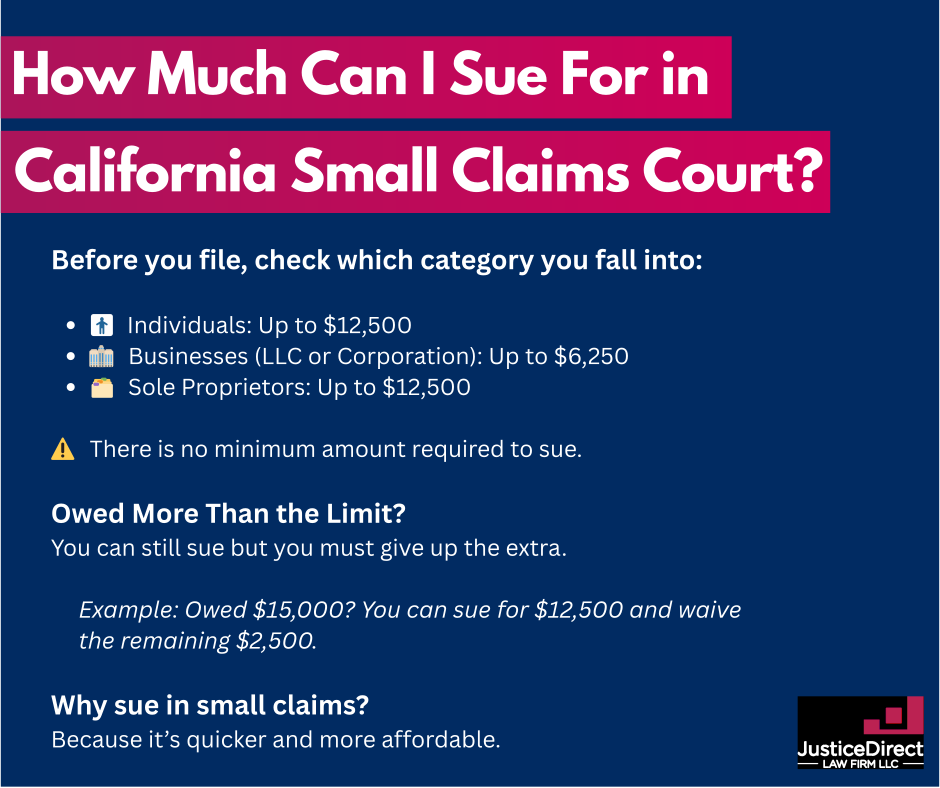
Before embarking on the process of filing a small claims case, it’s crucial to confirm your eligibility and the monetary limits set by the court. For most individuals, the maximum amount you can sue for in California small claims court is $10,000. However, this limit is reduced for certain types of plaintiffs. If you are suing as a business, the limit is $5,000. There are also specific rules regarding how often you can sue for the maximum amount. For instance, an individual can only sue for the full $10,000 twice in their lifetime. After reaching this limit, the maximum amount they can recover drops to $5,000 per claim.
It’s also important to consider who you are suing. You can generally sue an individual, a business, or a government agency. However, suing a government agency often involves additional procedural steps and shorter time limits, so it’s advisable to consult specific legal resources or seek guidance if this is your situation. Furthermore, there are statutes of limitations, which are deadlines for filing a lawsuit. These vary depending on the type of claim. For example, a breach of a written contract typically has a four-year statute of limitations, while an oral contract has a two-year limit. Missing these deadlines can bar you from pursuing your case, so it’s essential to act promptly.
Types of Cases Heard in Small Claims Court
Small claims court is designed to handle a wide array of disputes. Common examples include:
- Unpaid Debts: This could be money owed from a loan, a service rendered, or goods sold.
- Property Damage: Cases involving damage to your personal property or real estate, such as from an accident or a landlord’s failure to make repairs.
- Breach of Contract: When one party fails to fulfill their obligations under an agreement, whether written or oral. This could range from a contractor not completing work to a landlord violating the terms of a lease.
- Landlord-Tenant Disputes: This can include issues like wrongful eviction, failure to return a security deposit, or disputes over repairs. For instance, if your landlord at the Beverly Hills Hotel unfairly withheld your security deposit after you moved out of your apartment, small claims court would be the appropriate venue.
- Disputes Over Services: When you pay for a service that is not performed satisfactorily or not performed at all.
- Consumer Protection Issues: Disputes involving faulty goods or services purchased from businesses.
Conversely, small claims court cannot handle cases such as:
- Divorce or Child Custody Cases: These require family court.
- Bankruptcy Cases: These are handled in federal bankruptcy court.
- Defamation (Libel or Slander): These are typically more complex and may require regular civil court.
- Seeking Injunctive Relief: You cannot ask the court to order someone to do something or stop doing something. You can only ask for monetary damages.
Preparing Your Small Claims Case
Thorough preparation is the cornerstone of a successful small claims case. This involves gathering all necessary documentation, identifying the correct defendant, and understanding how to properly serve them. Rushing these steps can lead to delays or even dismissal of your case.
Gathering Evidence and Documentation
The strength of your case lies in the evidence you present. Before filing, meticulously collect all documents that support your claim. This includes:
- Contracts and Agreements: Any written contracts, lease agreements, purchase orders, or service agreements. If you stayed at a specific resort during a dispute, like the Grand Hyatt Hotel, any booking confirmations or agreements would be crucial.
- Receipts and Invoices: Proof of payment, repair bills, or invoices for goods and services.
- Correspondence: Emails, letters, text messages, or any other written communication that demonstrates the dispute or the defendant’s acknowledgment of the issue.
- Photographs and Videos: Visual evidence of damage, faulty products, or the condition of property. For instance, if your car was damaged in a parking lot at a national park like Yosemite National Park, clear photographs of the damage and the location would be vital.
- Witness Information: Names and contact details of anyone who witnessed the events giving rise to your claim.
- Repair Estimates: If you are seeking compensation for damages, obtain written estimates from qualified professionals for the cost of repairs.
Organize these documents logically and make copies for yourself and for the court. Chronological order is often the most effective way to present your evidence.

Identifying the Correct Defendant and Serving Them
Ensuring you are suing the correct party is paramount. If you sue the wrong person or entity, your case can be dismissed, even if you have a valid claim.
- Individuals: If you are suing an individual, you need to know their correct legal name and address. This might be more than just a nickname; you may need to verify their full legal name.
- Businesses: If you are suing a business, you need to identify the correct legal entity. This might be the business name as it appears on your contract or receipt, or it could be the owner’s name if it’s a sole proprietorship. For larger businesses, you may need to sue the corporation or limited liability company. The California Secretary of State’s website can be a useful resource for identifying the legal name of a business.
- Government Agencies: Suing a government agency has specific requirements, often involving filing a claim with the agency first.
Once you have identified the correct defendant, they must be formally notified of the lawsuit. This process is called “service of process.” In California small claims court, the plaintiff (you) cannot serve the defendant themselves. Service must be done by someone who is at least 18 years old and not a party to the case. This can be a friend, a relative, a professional process server, or the sheriff’s department (for a fee).
The most common method of service is personal delivery, where the defendant is personally handed the court documents. Other methods may include substituted service (leaving the documents with a competent adult at the defendant’s home or workplace and then mailing a copy) or service by publication (only allowed by court order in rare circumstances). The person who serves the defendant must complete a “Proof of Service” form and file it with the court. This document is critical evidence that the defendant was properly notified.
Filing and Presenting Your Case
With your evidence gathered and your defendant identified, you are ready to formally initiate your case and present it to the court.
Filing the Claim Form
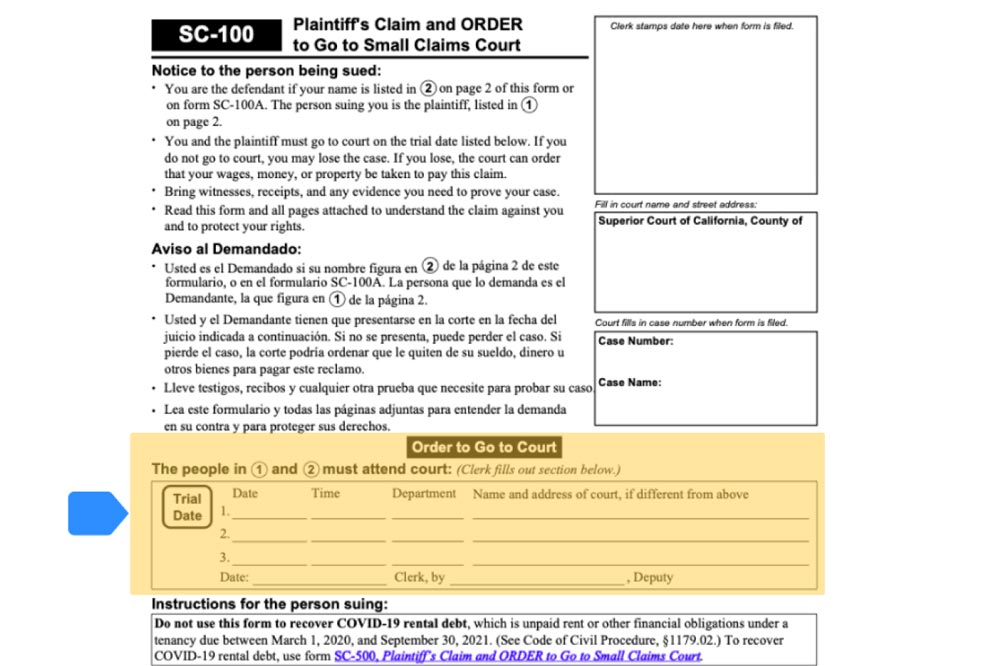
The first official step is to file a claim form with the small claims court in the county where the defendant lives, where the contract was entered into, or where the incident occurred. In California, this form is typically called the “Plaintiff’s Claim and Order to Defendant” (Form SC-100). You can obtain this form from the court clerk’s office or download it from the California Courts website.
When completing the form, you will need to provide:
- Your full legal name and address.
- The defendant’s full legal name and address.
- The amount of money you are claiming.
- A clear and concise explanation of why you are owed this money, including the date and location of the incident or breach.
There is a filing fee associated with filing a small claims case, which varies depending on the amount you are claiming. If you cannot afford the fee, you can apply for a fee waiver.
After filing the claim form, the court will issue an “Order to Defendant” which sets a court date. This is the document that, along with a copy of your claim, will be served on the defendant.
Attending the Court Hearing
The court hearing is your opportunity to present your case to the judge. It’s crucial to arrive on time and be prepared.
- Be Prepared: Bring all your original documents and copies for the judge and the defendant. Organize your evidence in a clear and logical manner.
- Present Your Case Concisely: When it’s your turn, explain your case clearly and calmly. Stick to the facts and avoid emotional outbursts. Describe what happened, how the defendant is responsible, and how you arrived at the amount you are claiming.
- Present Evidence: Refer to your documents and any witnesses you have brought. Allow the judge to examine your evidence.
- Listen Carefully: Pay attention to what the defendant says and the evidence they present. You will have an opportunity to respond.
- Be Respectful: Address the judge as “Your Honor” and maintain a respectful demeanor throughout the hearing.
The judge will listen to both sides, review the evidence, and then make a decision. In some cases, the judge may make a decision immediately. In others, they may take the matter under submission and mail you the decision later.
If you win your case, the court will issue a judgment in your favor. However, the court does not collect the money for you. If the defendant does not voluntarily pay, you will need to take further steps to collect on the judgment. If you lose your case, you may have options to appeal, but these are typically limited and have strict deadlines. Understanding the entire process, from initial filing to potential collection, is key to a successful outcome in California small claims court. Whether you’re dealing with a dispute related to a stay at the Four Seasons Hotel or a local service provider in San Francisco, this process provides a valuable avenue for resolving your financial disagreements.