
Florida, often known as the Sunshine State, beckons with its captivating blend of pristine beaches, vibrant cities, and world-class attractions. From the magical theme parks of Orlando to the sun-drenched shores of Miami and the historic charm of St. Augustine, it offers an unparalleled lifestyle that attracts millions each year. Whether you’re dreaming of a luxurious coastal retreat, an adventurous family vacation, or a tranquil long-term stay, Florida provides a diverse tapestry of experiences and accommodations. Its appeal extends beyond just tourism; many choose to make Florida their permanent home, drawn by its favorable climate, cultural richness, and, importantly, its advantageous tax policies. For those considering establishing roots here, understanding the intricacies of property ownership is paramount, and at the heart of this lies the invaluable Florida Homestead Exemption.
This exemption is more than just a legal term; it’s a significant financial benefit that can profoundly impact the cost of living for homeowners, freeing up resources that could otherwise be spent exploring Florida’s myriad destinations, indulging in its culinary delights, or enjoying its luxurious resorts. For anyone looking to invest in a property, whether it’s a vacation home that transitions into a primary residence or a direct move for retirement or career, navigating the homestead exemption process is an essential step towards optimizing your financial well-being in this beautiful state. This comprehensive guide will walk you through everything you need to know about filing for this exemption, ensuring you can fully embrace the Florida lifestyle with peace of mind.
Understanding the Allure of Florida and the Homestead Advantage
Florida’s magnetism is undeniable. It’s a land where travel dreams come true, from the thrilling rides at Walt Disney World Resort and Universal Orlando Resort to the serene natural beauty of Everglades National Park and the vibrant art deco architecture of South Beach. Beyond the immediate attractions, the state offers diverse accommodation options, from opulent hotels in Palm Beach to charming villas in Naples and family-friendly resorts in Sarasota. This allure often translates into a desire for permanence, leading many visitors to become residents. For these new or prospective homeowners, the Florida Homestead Exemption is a crucial financial tool.
What is the Florida Homestead Exemption?
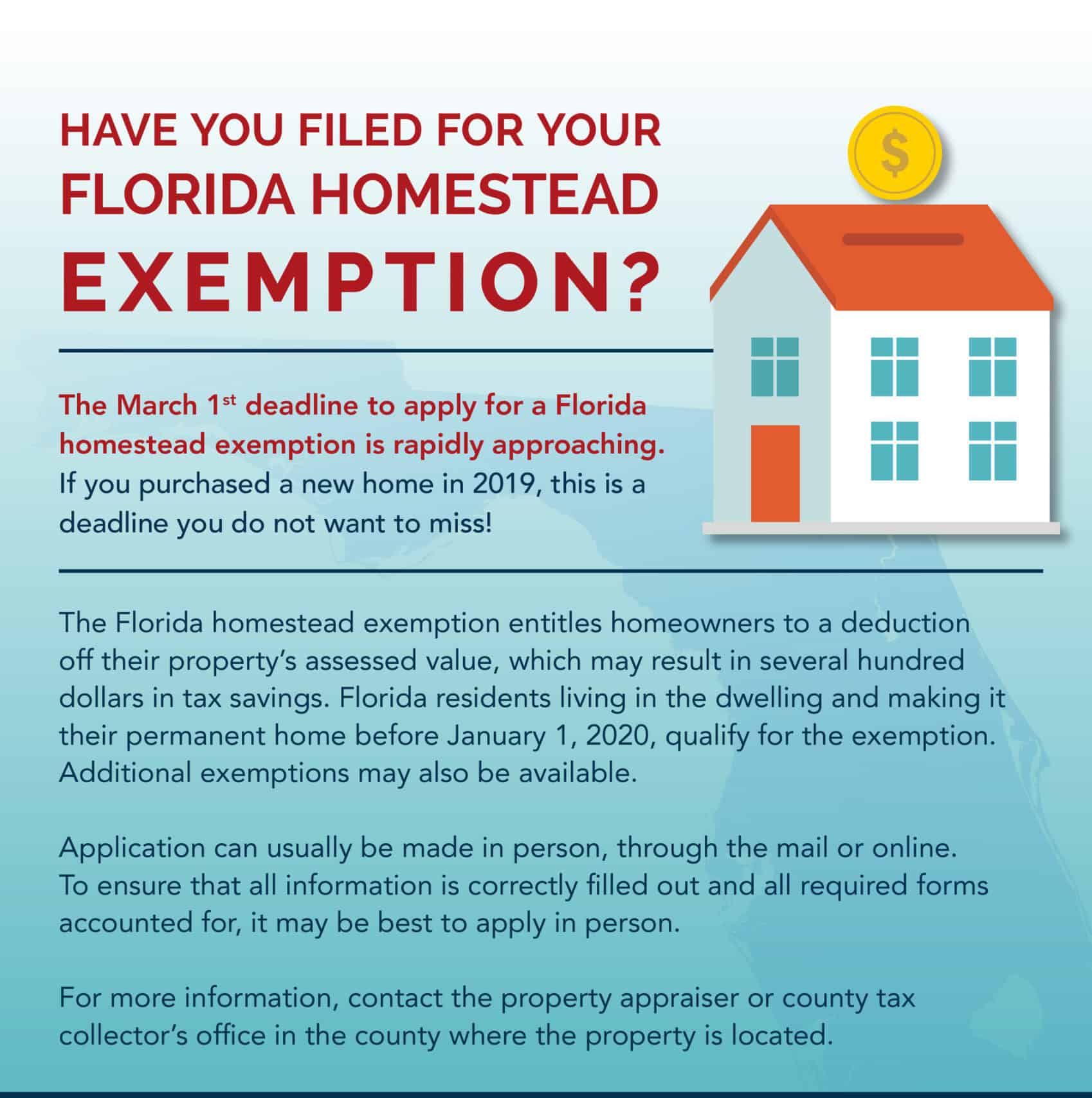
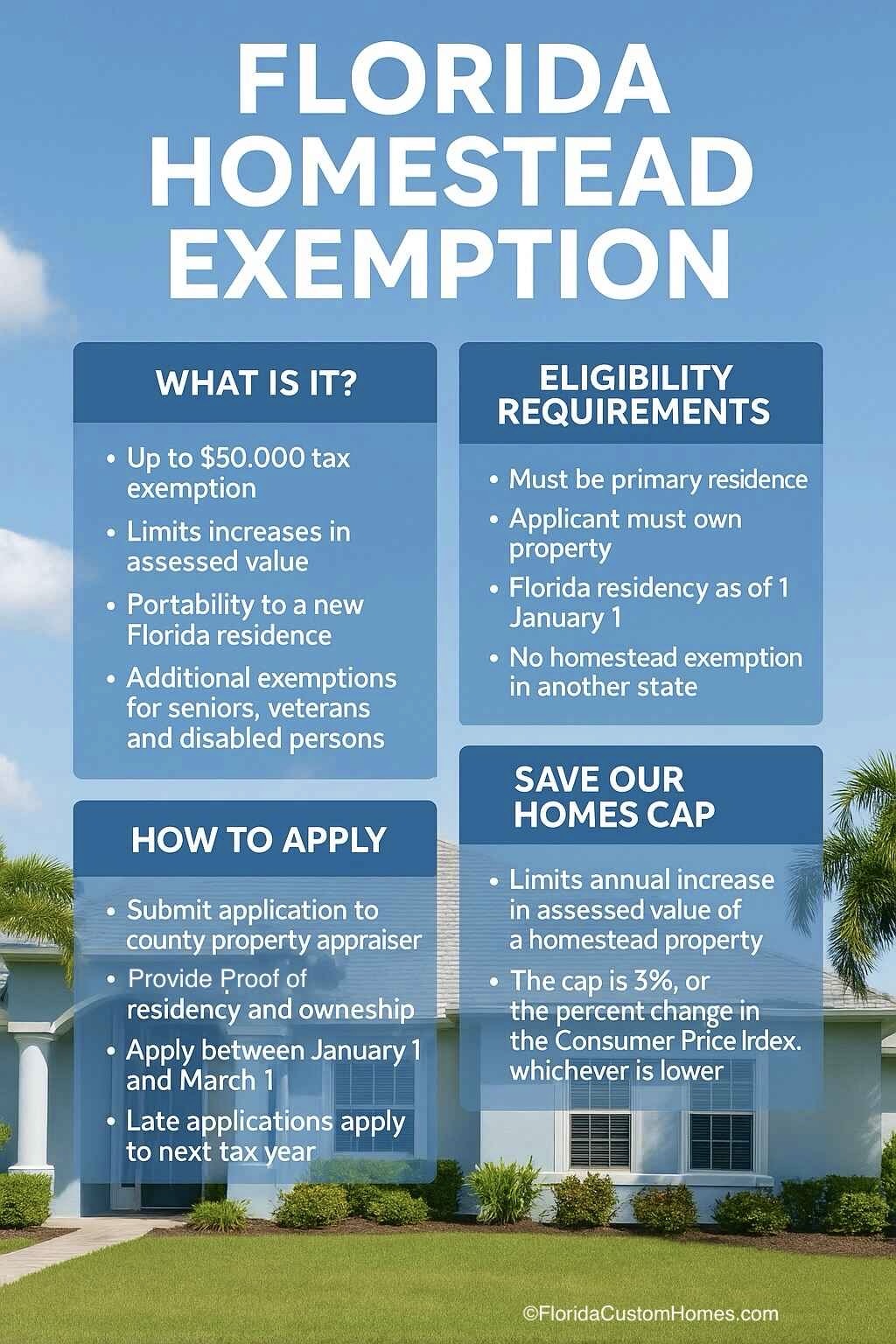
At its core, the Florida Homestead Exemption is a provision in Florida law designed to reduce the taxable value of an owner-occupied primary residence. It’s not a complete waiver of property taxes but rather a reduction in the assessed value upon which those taxes are calculated. Specifically, it grants eligible homeowners up to a $50,000 exemption from the assessed value of their home for property tax purposes. The first $25,000 applies to all taxing authorities, while the additional $25,000 applies to the assessed value between $50,000 and $75,000, excluding school district taxes.
Beyond the initial tax reduction, the homestead exemption also provides two other extremely valuable benefits: the Save Our Homes (SOH) cap and protection from creditors. The SOH amendment limits the annual increase in the assessed value of a homesteaded property to 3% or the Consumer Price Index, whichever is lower. This cap provides a crucial safeguard against rapidly rising property values, offering long-term stability in property tax bills. For those seeking a long-term stay or even a permanent relocation to Florida, this predictability is invaluable for budgeting and financial planning, allowing more funds for exploring new destinations or enjoying local tourism. Furthermore, the homestead exemption offers significant protection from creditors, making it a cornerstone of personal asset protection for homeowners in the United States.
Who Qualifies? Eligibility Essentials for Florida Residents
To claim this substantial benefit, homeowners must meet specific criteria established by Florida Statutes. Understanding these requirements is the first step towards a successful application and securing your financial advantage in popular areas like Tampa, Jacksonville, or Key West.
The fundamental requirements are:
- Ownership: You must hold legal or equitable title to the property as of January 1st of the year you are applying for the exemption. This means you must own the home or have a beneficial interest in it.
- Residency: The property must be your permanent primary residence as of January 1st of the tax year for which you are applying. This is the most crucial requirement and often the most scrutinized. Florida law defines “permanent residence” as the place where you habitually reside and intend to return whenever you are absent. It cannot be a secondary residence, a vacation home, or an investment property.
- Occupancy: You must occupy the dwelling on January 1st of the tax year.
Proving permanent residency typically involves demonstrating your intent to make Florida your home. This could include having a Florida driver’s license or identification card, registering your vehicle in Florida, registering to vote in Florida, filing federal income tax returns using your Florida address, and cancelling homestead exemptions in other states or countries. For individuals who frequently travel or maintain properties elsewhere, clearly establishing Florida as their definitive primary residence is paramount. This clarity is especially important for snowbirds or those with global lifestyle preferences who might spend significant time abroad or in other states.
Unlocking Financial Benefits: More Than Just a Home
The decision to move to Florida and purchase a home often intertwines with broader lifestyle aspirations – whether it’s enjoying year-round warmth, having access to world-class attractions like the Kennedy Space Center, or simply enjoying a relaxed pace of life. The financial benefits of the homestead exemption significantly enhance these aspirations, turning a house into a more affordable, protected home.
Significant Property Tax Savings
The most immediate and tangible benefit of the Florida Homestead Exemption is the reduction in your annual property tax bill. For a home valued at $200,000, for example, the $50,000 exemption reduces the taxable value to $150,000. Depending on the local millage rates (tax rates), this can translate into hundreds or even thousands of dollars in savings each year. These savings are not trivial; they can be redirected towards enhancing your Florida experience. Imagine using those saved funds to book a luxury suite at a beachfront resort for a weekend getaway, finance an exciting excursion like a deep-sea fishing trip off the coast of Fort Lauderdale, or contribute to your travel budget for exploring more of Florida’s diverse regions and hidden gems.
Moreover, the Save Our Homes (SOH) cap acts as a long-term inflation hedge, preventing sudden, drastic increases in your property tax burden, even as property values in desirable locations like Miami-Dade County or Orange County continue to climb. This stability is a key factor for long-term financial planning, allowing homeowners to confidently budget for future travel, entertainment, and accommodation expenses without the anxiety of unpredictable tax spikes.
Portability and Protections for Your Florida Home
Beyond the direct tax savings, the Florida Homestead Exemption offers two other critical advantages: Portability and robust asset protection.
Portability refers to the ability to transfer a portion of your Save Our Homes (SOH) assessment limitation from one Florida homestead to another. If you sell your homesteaded property and purchase a new one within Florida, you may be able to transfer all or a portion of the accumulated savings under the SOH cap to your new home. This is a tremendous benefit for those who anticipate moving within the state, perhaps upgrading to a larger family home in Gainesville or downsizing to a cozy apartment in Pensacola during retirement. It ensures that the tax benefits you’ve accrued aren’t lost, encouraging mobility within Florida while maintaining a degree of tax predictability. The maximum amount that can be transferred is $500,000, and it generally applies if the new homestead is established within two assessment years of abandoning the old one. This flexibility supports various lifestyle choices, from career-driven relocations to retirement planning, ensuring continuity in financial advantages.
Protection from Creditors is another cornerstone of Florida’s homestead law. With a few specific exceptions (such as property taxes, mortgages, and liens for work performed on the homestead), your primary residence is generally protected from forced sale to satisfy judgments from most creditors. This safeguard provides an invaluable layer of financial security for homeowners, ensuring that their most significant asset, their home, is protected against unforeseen financial hardships or business liabilities. This robust protection contributes significantly to peace of mind, allowing individuals and families to focus on enjoying their Florida journey, whether it’s planning a dream vacation or simply relishing the comforts of home.
Navigating the Application Process with Ease
Applying for the Florida Homestead Exemption might seem daunting, but by understanding the process and preparing the necessary documentation, it can be a straightforward experience. Most applications are handled by the County Property Appraiser’s Office in the county where your property is located.
Required Documentation for a Smooth Application
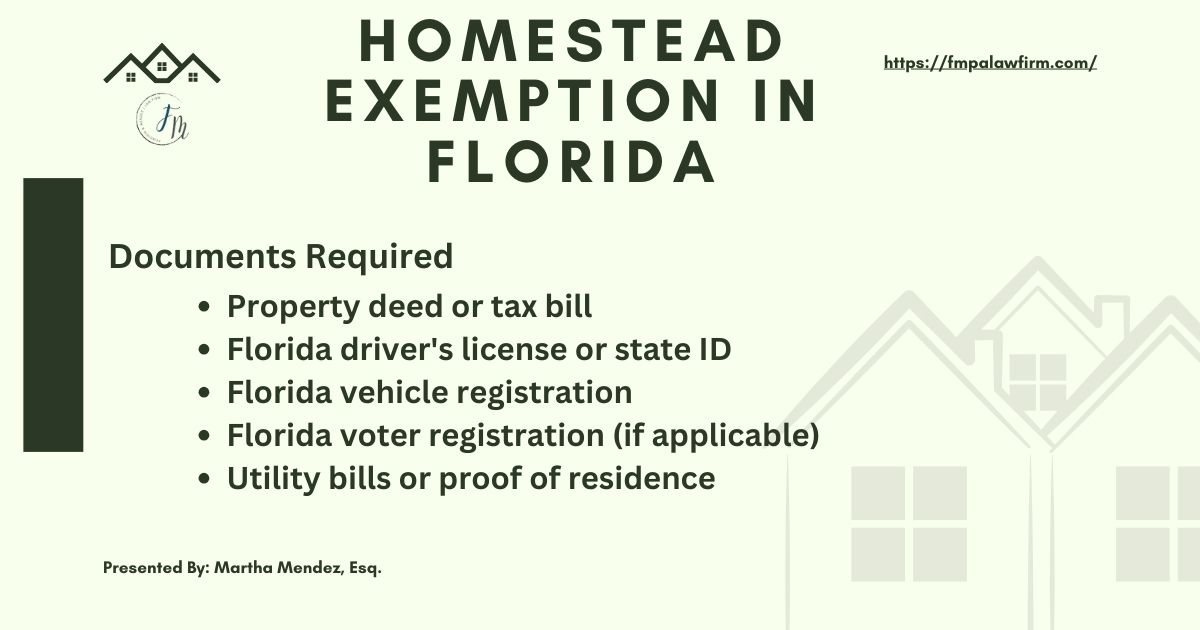
To ensure a successful application, it’s crucial to gather all required documents beforehand. These typically serve as proof of your ownership and, more importantly, your intent to make the property your permanent residence as of January 1st. While specific requirements can vary slightly by county, the following are generally necessary:
- Proof of Ownership: A copy of the recorded deed to the property or other proof of legal title. This confirms that you legally own the home.
- Proof of Florida Residency (as of January 1st): This is the most critical component. The Property Appraiser’s Office will be looking for multiple forms of evidence to substantiate your claim of permanent residency. This may include:
- Florida Driver’s License or Florida Identification Card: This is often considered primary proof of residency.
- Florida Vehicle Registration: If you own a car, registering it in Florida is another strong indicator.
- Florida Voter Registration Card: Registering to vote in Florida reinforces your intent to be a permanent resident.
- Declaration of Domicile: While not always mandatory, filing a Declaration of Domicile with the Clerk of Court is a formal statement of your intent to make Florida your permanent home.
- Federal Income Tax Returns: Copies of your most recent federal income tax returns showing your Florida address as your primary residence. This is particularly important if you previously filed taxes from another state.
- Utility Bills and Bank Statements: Recent utility bills (electricity, water, gas) or bank statements mailed to your Florida property address.
- Social Security Number: For all applicants.
- Other Supporting Documents: Depending on your unique situation, the Property Appraiser may request additional documents, such as proof of children attending Florida schools, employment verification in Florida, or professional licenses issued by the state.
It’s advisable to visit your specific County Property Appraiser’s Office website (e.g., Miami-Dade County Property Appraiser, Hillsborough County Property Appraiser, Lee County Property Appraiser) or call them directly to confirm their exact requirements before you visit or submit your application. This proactive step can save you time and prevent delays.
Key Deadlines and Where to File
The application process is time-sensitive, so understanding the deadlines is crucial.
Deadline: The application for the Florida Homestead Exemption must be filed between January 1st and March 1st of the year for which you are seeking the exemption. For example, if you purchased and occupied your home as your primary residence on January 1st, 2024, you must file your application between January 1st, 2024, and March 1st, 2024.
- Late Filing: Florida law does provide for a late-filing provision under certain circumstances, but it’s always best to file on time to avoid potential complications or the need to prove “extenuating circumstances.” Late-filed applications can be approved for up to two preceding years if the applicant was eligible and failed to file due to extenuating circumstances.
- Where to File: You must file your application with the County Property Appraiser’s Office in the county where your property is located. Most counties offer online application portals, mail-in options, or in-person filing at their physical offices. For first-time applicants, an in-person visit can be beneficial, as staff can review your documents and answer any specific questions you may have.
After your initial application is approved, the homestead exemption generally renews automatically each year as long as your eligibility doesn’t change. You will typically receive a notice from the Property Appraiser’s Office each January confirming your renewal or requesting updated information if a change is suspected.
Maintaining Your Exemption and Embracing the Florida Lifestyle
Once granted, the Florida Homestead Exemption significantly contributes to your financial stability and enhances your ability to enjoy all that the Sunshine State has to offer. However, maintaining this valuable benefit requires ongoing awareness and adherence to the eligibility criteria.
Annual Review and Avoiding Common Mistakes
While your homestead exemption generally renews automatically, it’s essential to understand that eligibility is not a one-time determination. The County Property Appraiser’s Office has the authority to review your status annually. If you receive a “Notice of Homestead Exemption Renewal” and your information is correct, no action is usually required on your part. However, if your circumstances have changed, or if you receive a request for additional information, it’s imperative to respond promptly and accurately.
Common Mistakes to Avoid:
- Failing to Notify of Changes: If your marital status changes, or if you no longer permanently reside in the homesteaded property (e.g., you move out, rent it out, or establish primary residency elsewhere), you are legally obligated to notify the Property Appraiser’s Office. Failure to do so can result in significant penalties, including repayment of past taxes, plus interest and penalties.
- Claiming Homestead in Another State: You can only claim homestead exemption on one property at a time. If you move from Florida and claim homestead on a property in another state, you must relinquish your Florida exemption. The Department of Highway Safety and Motor Vehicles and voter registration records are often cross-referenced to identify dual claims.
- Renting Out Your Homesteaded Property: While short-term rentals (like Airbnb) of a portion of your home may be permissible if you continue to reside there permanently, using your entire homesteaded property as a rental for extended periods can jeopardize your exemption. The property must remain your primary residence.
- Not Updating Information: If you change your mailing address or legal name, ensure the Property Appraiser’s Office has your most current information.
Staying vigilant about these points ensures that you continue to reap the benefits of the exemption without encountering any unwelcome surprises. This attention to detail allows you to fully immerse yourself in the rich tapestry of Florida living, whether it’s enjoying the serene beaches of Sarasota, the vibrant nightlife of Fort Myers, or the cultural events across Broward County.
Making the Most of Your Florida Residency
With your Florida Homestead Exemption securely in place, you’re in an excellent position to fully embrace the myriad opportunities the Sunshine State offers. The financial relief from reduced property taxes and the peace of mind from asset protection mean more freedom to customize your Florida experience.
Perhaps the savings enable you to explore more of Florida’s unique destinations, from the charming historic streets of St. Augustine to the tranquil natural beauty of the Florida Keys and the bustling metropolis of Tampa. You might choose to invest in more enriching travel experiences, such as a luxurious stay at a five-star resort, a long-term rental in a new city to experience local culture firsthand, or even a budget-friendly adventure exploring national parks and lesser-known attractions. The reduced financial burden on your primary residence provides a solid foundation for a lifestyle rich in travel, tourism, and diverse accommodations.
For families, the exemption helps make family trips to theme parks or educational visits to landmarks more feasible. For retirees, it provides greater financial security, allowing for more comfortable long-term stays and the ability to enjoy leisure travel without undue financial strain. The Florida Homestead Exemption is not just about saving money; it’s about enhancing the overall quality of your life in Florida, allowing you to maximize your enjoyment of its unparalleled beauty, vibrant communities, and endless possibilities. By diligently managing your exemption, you ensure that your Florida home truly serves as the bedrock for a lifetime of exploration and cherished memories.
LifeOutOfTheBox is a participant in the Amazon Services LLC Associates Program, an affiliate advertising program designed to provide a means for sites to earn advertising fees by advertising and linking to Amazon.com. Amazon, the Amazon logo, AmazonSupply, and the AmazonSupply logo are trademarks of Amazon.com, Inc. or its affiliates. As an Amazon Associate we earn affiliate commissions from qualifying purchases.