
For anyone considering a long-term stay, a permanent relocation, or simply seeking to optimize their living expenses in the Lone Star State, understanding the intricacies of property ownership is paramount. While many of us dream of exotic travel or luxurious hotel experiences, the foundation of a stable and enjoyable lifestyle often lies in smart financial planning for your primary accommodation. One of the most significant benefits for homeowners in Texas is the homestead exemption, a tax break that can considerably reduce your property tax burden. This isn’t just about saving money; it’s about making your dream of living in vibrant cities like Austin, Dallas, Houston, or San Antonio more achievable and sustainable.
Imagine settling into your perfect home in Texas, a state known for its rich tourism, iconic landmarks, and diverse culture. Whether you’re drawn to the live music scene of Austin, the historical charm of San Antonio, the bustling business landscape of Dallas, or the global energy hub of Houston, making a long-term commitment to the state involves understanding the financial landscape. The homestead exemption is a cornerstone of this understanding, offering a direct path to lower property taxes and, consequently, a more comfortable and affordable lifestyle. It’s an essential piece of information for anyone transitioning from temporary lodging, like a short-term rental or hotel stay, to becoming a permanent resident and homeowner. This guide will walk you through everything you need to know about filing for a homestead exemption in Texas, ensuring your long-term accommodation choice is as financially sound as it is personally fulfilling.
Understanding the Texas Homestead Exemption: A Foundation for Your Lifestyle
The Texas homestead exemption is not merely a bureaucratic formality; it’s a powerful tool designed to support homeowners and make living in the state more accessible. In essence, it removes a portion of your home’s value from taxation, thereby lowering the overall amount you owe in property taxes. Property taxes in Texas are notoriously high compared to some other states, as there is no state income tax. This makes the homestead exemption an even more critical component of managing your personal finances and enhancing your overall lifestyle within the state. For those accustomed to the transient nature of travel or frequent changes in accommodation, embracing homeownership in Texas comes with significant financial advantages that are well worth exploring.
The primary goal of the homestead exemption is to provide tax relief on your principal residence. This means that if you own a home in Texas and it is where you primarily live, you are likely eligible for this benefit. The exemption reduces the appraised value of your home, which is the figure used to calculate your property taxes. For instance, if your home is appraised at $300,000 and you qualify for a $25,000 homestead exemption, your property taxes will be calculated as if your home were worth only $275,000. This can translate into hundreds, or even thousands, of dollars in annual savings, freeing up funds that can be used for enhancing your lifestyle, exploring local tourism, or saving for future travel experiences.
Beyond the general homestead exemption, Texas also offers additional exemptions for specific groups, such as the elderly (over 65), disabled individuals, and disabled veterans. These special exemptions can further reduce the taxable value of your home, providing even greater financial relief and supporting these communities in maintaining their quality of life. Understanding these various layers of exemptions is key to maximizing your savings and ensuring your long-term accommodation in Texas is as economical as possible. For someone moving from a state with lower property taxes or who has only experienced temporary stays in hotels or rentals, grasping these local tax benefits is a crucial step towards true integration into the Texas way of life. It’s about more than just a house; it’s about building a financially secure home base in a destination that offers so much to explore.
Eligibility Requirements: Who Can Claim This Texas Benefit?
To enjoy the financial advantages of the homestead exemption in Texas, you must meet certain eligibility criteria. These requirements are straightforward and are designed to ensure the benefit goes to legitimate homeowners who use the property as their primary residence. If you’re considering making Texas your permanent home, moving past the temporary accommodation phase, understanding these requirements is your first step toward securing this valuable tax relief.
The core eligibility requirements are as follows:
- Ownership: You must own the home on January 1st of the tax year for which you are applying. This means that if you purchased your home later in the year, you would apply for the exemption for the next tax year.
- Primary Residence: The property must be your principal residence. This is perhaps the most crucial criterion. It means that you live at the property, and it is the place where you return after work, travel, or visiting landmarks. You cannot claim a homestead exemption on a vacation home, a rental property you own (unless you also live there), or a property where you temporarily stay while your primary home is elsewhere. This distinguishes it significantly from a short-term hotel stay; it’s about establishing roots.
- Residency: You must be a resident of Texas. This generally means you must reside in the state, but you do not need to be a U.S. citizen to claim the exemption. Lawful permanent residents or those with appropriate immigration status are eligible, provided they meet all other criteria.
- No Other Homestead Exemption: You can only claim one homestead exemption per person and per year. If you own multiple properties in Texas, you must choose the one that serves as your primary residence. This prevents individuals from gaining multiple tax benefits across different properties.
Specific Considerations for Eligibility
While the main criteria are fairly simple, there are nuances that potential applicants should be aware of, especially those making a significant lifestyle change by moving to Texas from another state or country.
- Temporary Absence: A temporary absence from your home, for instance, for travel, military deployment, or medical reasons, does not disqualify you from the exemption, provided you intend to return and the property remains your principal residence.
- Married Couples: If you are married, only one spouse needs to meet the ownership and residency requirements for the exemption to apply to the jointly-owned property.
- Mobile Homes: Even if your home is a manufactured home (mobile home), it can qualify for a homestead exemption if it is permanently affixed to land you own and is used as your primary residence. This expands the definition of eligible “home” beyond traditional stick-built houses, making the Texas dream accessible to a wider range of residents.
- Trusts and LLCs: If your home is owned by a trust or a limited liability company (LLC), specific conditions apply. Generally, for a trust, you must be the sole beneficiary or a co-beneficiary with an unrevoked right to use the property. For LLCs, it’s typically more complex, and often the exemption is not applicable unless specifically structured for residential purposes with direct ownership. It is always advisable to consult with a property tax professional or legal expert if your property is held in a trust or LLC to ensure compliance.
Meeting these eligibility requirements is the fundamental prerequisite for anyone looking to secure the homestead exemption, a critical step towards a financially optimized and enjoyable lifestyle in the dynamic state of Texas.
The Application Process: Your Guide to Securing Your Homestead in Texas
Once you’ve confirmed your eligibility, the next step is to navigate the application process. While it might seem daunting, especially if you’re new to Texas and its specific procedures, the process is straightforward when broken down. This “how-to” guide is crucial for ensuring your long-term accommodation choice in Texas is financially beneficial.
Gathering Your Documents: What You’ll Need for a Smooth Application
Preparation is key to a hassle-free application. Before you even touch the application form, ensure you have the necessary documentation readily available. These documents serve to verify your ownership and residency, which are core components of your eligibility.
- Proof of Ownership: This is typically a copy of your deed or a settlement statement from when you purchased your home. This verifies that you legally own the property.
- Proof of Residency: This is where you demonstrate that the property is indeed your primary home. You will need at least two forms of identification that match the address of the property for which you are seeking the exemption. Acceptable forms of proof include:
- A Texas driver’s license or state-issued personal identification card with the property’s address.
- A utility bill (electric, water, gas) showing the property’s address and your name.
- A voter registration card with the property’s address.
- Vehicle registration with the property’s address.
- Bank statements or other financial records with the property’s address.
- Cell phone bill from a provider that can verify your physical location.
- For applicants who do not have a Texas driver’s license or ID card (e.g., non-citizens), other forms of identification, along with a copy of your U.S. Citizenship and Immigration Services document, may be accepted. It’s always best to check with your specific appraisal district if you have unique circumstances regarding identification.
- Social Security Number: You will need to provide your Social Security Number (SSN) or another government-issued identification number on the application form. This helps the appraisal district verify your identity and ensure you are not claiming multiple exemptions.
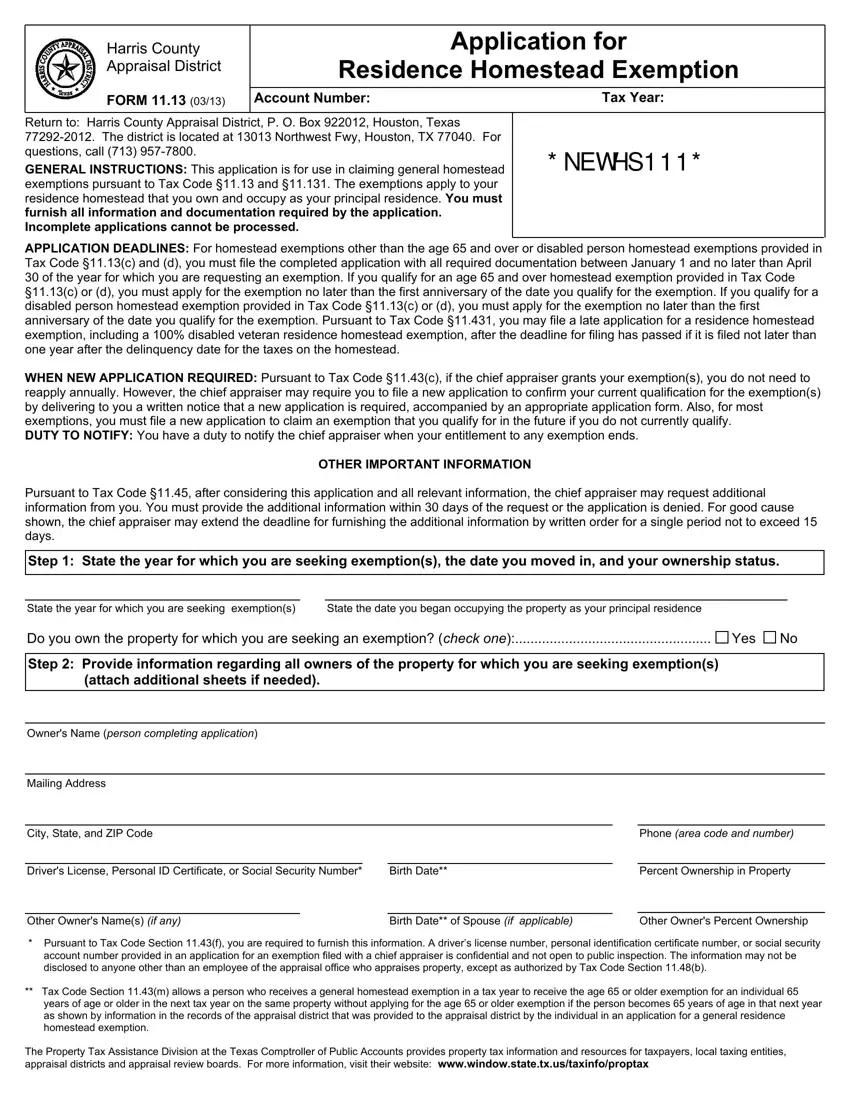
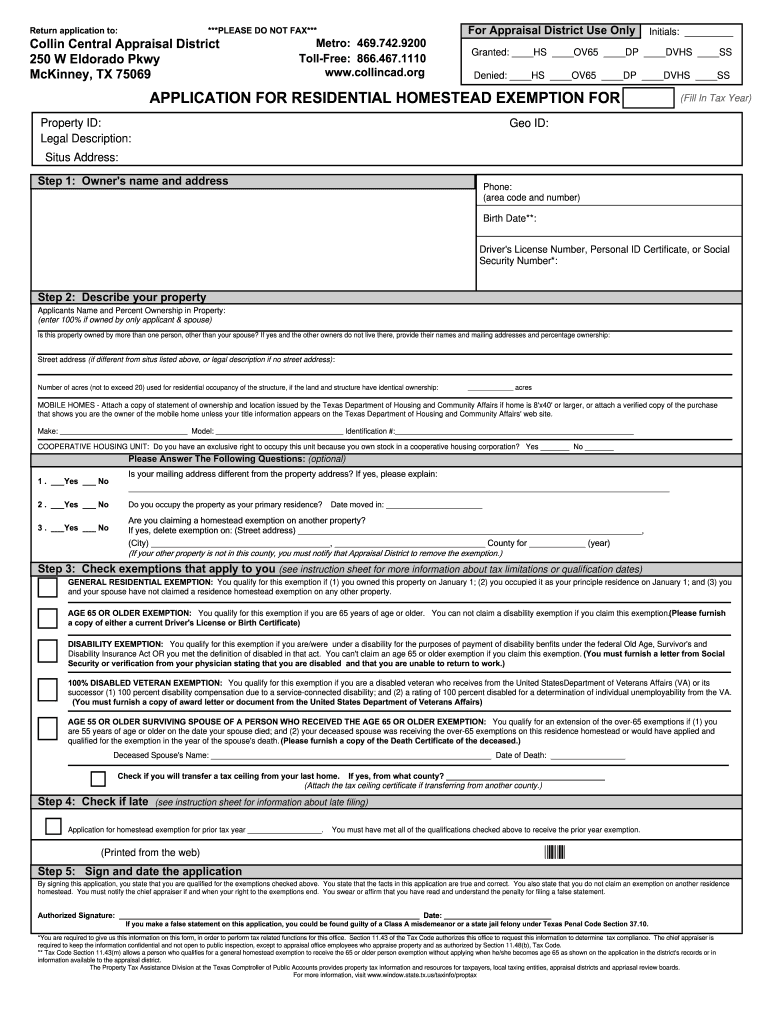
- Completed Application Form: The official form is Form 50-114, Application for Residential Homestead Exemption, provided by the Texas Comptroller of Public Accounts. You can usually download this from your local county appraisal district’s website or the Comptroller’s website.
Having these documents organized before you begin will streamline the application process and prevent delays.
Submitting Your Application: Where and When to File
The homestead exemption application is filed with your local county appraisal district. Each county in Texas has an appraisal district responsible for appraising property for tax purposes and processing exemption applications.
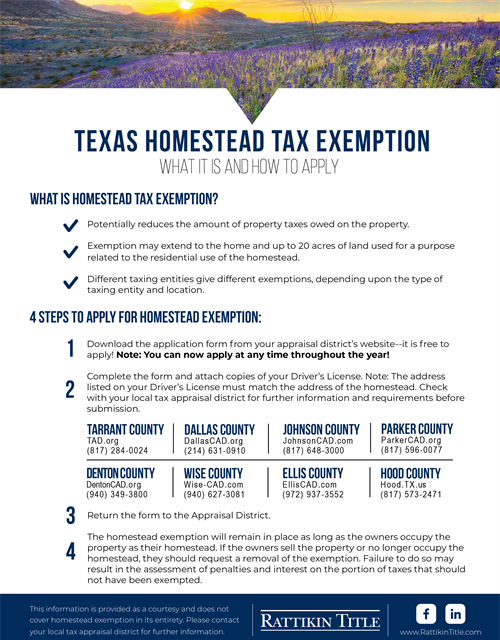
- Where to File: You must file your application with the appraisal district for the county where your property is located. For example, if your home is in Houston, you would file with the Harris County Appraisal District. Most appraisal districts offer online portals for submission, or you can mail the physical form.
- When to File: The general deadline to apply for a homestead exemption is April 30th of the tax year for which you are requesting the exemption. However, if you became eligible for the exemption later in the year (e.g., you purchased your home in August), you have up to one year after the date you became eligible to file. It is always recommended to file as soon as possible after January 1st of the year you become eligible to ensure you don’t miss any deadlines and to benefit from the exemption promptly. For instance, if you bought your home in July 2023, you would apply for the 2024 tax year, and your deadline would be April 30, 2024.
Remember, you only need to apply once for the general homestead exemption. Once approved, it remains on your property as long as you own and reside there. You do not need to reapply annually unless specifically requested by the appraisal district or if there are changes to your eligibility (e.g., marriage, death of a spouse, or property transfer).
What Happens Next: Approval and Maintaining Your Exemption
After you submit your application, the appraisal district will review it.
- Approval: If your application is approved, you will typically receive notification from the appraisal district, usually an approval letter or a revised appraisal notice showing the exemption applied to your property’s value. This confirmation means your property tax bill will reflect the reduced taxable value.
- Denial: If your application is denied, the appraisal district must provide a reason for the denial and inform you of your right to protest the decision. If you believe the denial was an error, you can file a protest with the appraisal review board (ARB) in your county.
- Maintaining Your Exemption: As long as you continue to own and reside in the property as your primary residence, your homestead exemption will remain in effect. You are legally obligated to notify the appraisal district if your eligibility changes (e.g., if you sell the property or move out and establish a new primary residence elsewhere). Failure to do so could result in penalties.
This process, while requiring attention to detail, is a vital step for any homeowner in Texas looking to optimize their finances and embrace a more affordable lifestyle.
Beyond the Basics: Special Exemptions and Their Impact on Your Texas Home Life
While the general homestead exemption offers significant savings, Texas provides additional, more substantial exemptions for specific groups of homeowners. These special provisions are a testament to the state’s commitment to supporting its residents, particularly those who have contributed to the community or face unique circumstances. Understanding these additional benefits is crucial for maximizing your financial well-being and enhancing your long-term lifestyle in Texas.
Exemptions for Over-65 and Disabled Residents
One of the most impactful additional exemptions is for homeowners who are over 65 years old or disabled. These individuals can qualify for an additional $10,000 exemption from their school district taxes. On top of this, school districts often provide a “tax ceiling” for these homeowners. A tax ceiling means that once you qualify, the amount of school property taxes you pay will not increase as long as you own and live in that home. This provides invaluable financial stability, especially for those on fixed incomes, safeguarding them against rising property values and the associated tax hikes.
To qualify for the over-65 exemption, you must simply be 65 years of age or older and reside in the property. For the disabled exemption, you must meet the definition of “disabled” for purposes of receiving disability insurance benefits under the Federal Social Security Act, or you must be considered disabled under the Texas Property Tax Code. You only need to qualify for one of these, even if you are both over 65 and disabled. The application process is similar to the general homestead exemption, typically involving checking the appropriate box on Form 50-114, Application for Residential Homestead Exemption and providing proof of age or disability.
Exemptions for Disabled Veterans
Texas also offers significant property tax exemptions for disabled veterans and their surviving spouses. The amount of the exemption depends on the percentage of service-connected disability the veteran has, as determined by the Veterans Affairs.
- Veterans with a disability rating of 10% to 29% may qualify for an exemption of $5,000 from the appraised value of their home.
- For disability ratings of 30% to 49%, the exemption increases to $7,500.
- Veterans with 50% to 69% disability can claim a $10,000 exemption.
- And for those with 70% to 100% disability, the exemption is a substantial $12,000.
Furthermore, 100% disabled veterans who receive 100% disability compensation due to a service-connected disability and a rating of 100% unemployability may be eligible for a full property tax exemption on their homestead. This means they pay no property taxes on their primary residence, an enormous benefit that profoundly impacts their lifestyle and financial security. Surviving spouses of 100% disabled veterans may also qualify for this benefit under certain conditions.
Applying for a disabled veteran exemption requires providing documentation from the Veterans Affairs verifying the disability rating. This usually involves attaching a copy of your VA award letter to Form 50-114, Application for Residential Homestead Exemption.
These special exemptions underscore the comprehensive nature of property tax relief in Texas. For individuals who qualify, these benefits can transform the financial landscape of homeownership, making Texas an even more attractive destination for long-term accommodation and a fulfilling lifestyle. It’s a testament to how practical financial planning intersects with government policy to improve the quality of life for its residents, beyond the allure of travel and tourism attractions.
Texas Living: Homestead Exemption as Part of a Broader Appeal
Making the decision to establish roots and purchase a home in Texas is often a blend of practical considerations and aspirational dreams. While the state is widely celebrated for its diverse landscapes, rich cultural heritage, and vibrant cities that attract millions of tourists annually, its appeal extends far beyond temporary travel and hotel stays. For those seeking a permanent change of scenery, a new community, or an advantageous economic environment, Texas offers a compelling proposition. The homestead exemption, while seemingly a purely financial mechanism, plays a significant role in enhancing this broader appeal, directly impacting the quality and affordability of your long-term lifestyle and accommodation.
Consider the allure of Texas from a lifestyle perspective. You could be drawn to the entrepreneurial spirit of Dallas, the technological innovation in Austin, the global diversity of Houston, or the historical landmarks and cultural richness of San Antonio. Each city offers unique tourism experiences, from world-class museums and thriving culinary scenes to outdoor adventures and lively entertainment districts. For someone moving from a high-cost-of-living state, the prospect of enjoying this rich tapestry of experiences while simultaneously benefiting from property tax relief through a homestead exemption makes the transition even more attractive. It means more disposable income to spend on exploring local attractions, dining out, or even investing in a vacation to one of the state’s beautiful national parks.
The homestead exemption also provides a sense of financial security and stability, which is invaluable for long-term residents. Knowing that a portion of your home’s value is protected from taxation helps in budgeting and planning for the future. This stability can empower residents to invest further in their homes, contribute more to their local communities, or simply enjoy a greater degree of financial freedom. For families, this can mean more resources for education or recreational activities, while for retirees, it offers peace of mind regarding fixed incomes.
Moreover, the property tax code, including exemptions, reflects the state’s commitment to fostering a favorable environment for homeowners. This approach supports a robust housing market and encourages new residents to make Texas their permanent home. It transforms the concept of “long-term stay” from simply an extended rental agreement into a foundational commitment to a place where you can truly thrive. While hotels and resorts cater to temporary enjoyment, the homestead exemption underpins the joy and financial prudence of building a life within the Texas community.
In conclusion, filing for your homestead exemption in Texas is more than just a procedural task; it’s a strategic move to secure your financial future and enhance your overall lifestyle in a state that offers immense opportunities and experiences. By understanding the eligibility requirements, meticulously preparing your documentation, and submitting your application to the correct appraisal district, you can unlock significant savings that contribute to a more affordable and enjoyable existence. Whether you’re drawn by the promise of vibrant city life, the tranquility of rural landscapes, or the numerous cultural and recreational offerings, the homestead exemption is a key component in truly making Texas your home. Don’t overlook this crucial step in solidifying your place in the Lone Star State.