
Navigating the intricacies of property ownership and protection can often feel like a daunting task, especially when dealing with legal frameworks that differ significantly from one state to another. For residents of the Lone Star State, understanding homestead rights is paramount to safeguarding their primary residence. This guide aims to demystify the process of filing for homestead in Texas, ensuring you can secure this crucial protection for your home. While the concept of homestead protection is well-established, the practical steps involved in formalizing it can sometimes be unclear. This article will serve as your comprehensive roadmap, breaking down what homestead is, who qualifies, and the straightforward procedures to claim it in Texas.
The Texas homestead exemption is a powerful legal protection that shields a portion of a homeowner’s equity from seizure by creditors. It’s not just about saving money on property taxes; it’s about ensuring that your home, a cornerstone of your life and family, remains a sanctuary. Whether you’ve recently purchased your dream home in Austin, are settled in a bustling apartment in Houston, or are enjoying the tranquility of a villa in the Texas Hill Country, understanding and claiming your homestead is a vital step in responsible homeownership. This protection is rooted in the fundamental idea that a person’s primary dwelling should be secure, preventing individuals and families from being rendered homeless due to financial difficulties.
The State of Texas offers some of the most robust homestead protections in the United States. These protections are enshrined in the Texas Constitution and further elaborated upon in the Texas Property Code. For homeowners, this translates into significant safeguards against forced sale by most creditors. It is important to note that homestead protection is not absolute; certain debts, such as those for the purchase of the property itself (mortgages), property taxes, and debts for labor or material used to construct or repair the home, are typically not dischargeable by homestead protections. Nevertheless, for the vast majority of unsecured debts, such as credit card debt or medical bills, your homestead remains a safe haven.
Understanding Texas Homestead Rights
Before delving into the “how-to” of filing, it’s crucial to grasp the fundamental principles of Texas homestead law. What exactly constitutes a homestead, and who is eligible to claim it? These foundational questions will pave the way for a clearer understanding of the subsequent steps.
What is a Homestead in Texas?
In Texas, a homestead is defined as the principal residence of a family or an individual. It’s not merely a piece of property you own; it’s where you and your family live and establish your domicile. The law recognizes two types of homesteads: urban and rural. The distinction between the two is important as it affects the maximum acreage that can be claimed.
Urban Homestead
An urban homestead is typically located within the limits of a municipality or its adjacent platted additions, provided that the property is served by municipal services such as police protection, fire protection, and other services usually provided by a municipality. For a family, an urban homestead is limited to a maximum of 10 acres of land, along with the improvements thereon. For a single adult, the limit is 20 acres, though this can be more nuanced and often aligns with family limits if the single adult supports dependents. The key is that the property must be your primary residence and connected to urban services. This could include a house in Dallas, an apartment in San Antonio, or a condo in El Paso.
Rural Homestead
A rural homestead is for individuals or families who do not live within an incorporated city or town and are not served by municipal services. For a family, a rural homestead is limited to a maximum of 200 acres of land. For a single adult, the limit is 100 acres. These acreage limits apply to the land and all improvements. This might encompass a sprawling ranch outside of Fort Worth, a farm in rural East Texas, or a secluded cabin near the Big Bend National Park.
It’s vital to establish your homestead status before any creditor attempts to enforce a judgment. Proactive filing offers the strongest protection.
Who Qualifies for Homestead Exemption?
To qualify for homestead protection in Texas, you must meet specific criteria:
- Ownership: You must own the property. This can be through direct ownership, joint ownership, or even beneficial interest in a trust.
- Principal Residence: The property must be your primary residence. You can only have one homestead at a time. If you own multiple properties, the one you occupy most of the time and consider your true home is your homestead. For example, if you own a vacation home in the Texas Hill Country but live in Houston, your Houston property is likely your homestead.
- Intent to Reside: You must have the intention to make the property your home. This is demonstrated through actions like living there, receiving mail there, registering to vote there, and obtaining a Texas driver’s license with that address.
- Family or Single Adult Status: The laws are designed to protect both families and single adults. As outlined above, the acreage limits differ. If you are married, both spouses generally need to agree on the homestead property.
It’s important to understand that merely occupying a property does not automatically grant homestead status if it’s not your principal residence. For instance, owning a rental property in Galveston while living in Austin would not make the Galveston property your homestead.

Filing for Homestead Exemption in Texas
The process of filing for homestead exemption in Texas is relatively straightforward, though it requires attention to detail and understanding of the local procedures. Unlike some states where you actively “file” a homestead exemption with a state agency, in Texas, the primary mechanism for claiming homestead tax benefits is through an exemption application filed with the local county appraisal district. However, the broader homestead protection against creditors is often established by simply occupying the property as your principal residence.
Claiming Homestead Tax Exemption
To benefit from property tax reductions associated with homestead, you need to file an application with your county’s appraisal district. This is typically done annually, though once granted, it generally continues unless you move or lose eligibility.
Steps to File for Homestead Tax Exemption:
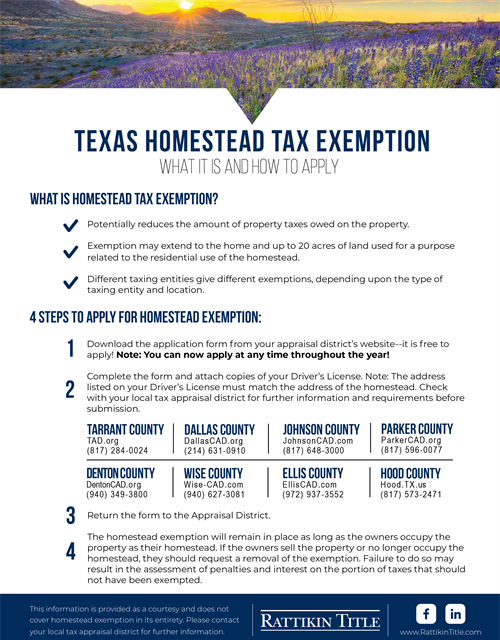
- Identify Your County Appraisal District: Each county in Texas has an appraisal district responsible for appraising property for tax purposes. You can usually find your county’s appraisal district website by searching online for “[Your County Name] CAD.” For example, if you live in Travis County, you would search for “Travis County CAD.”
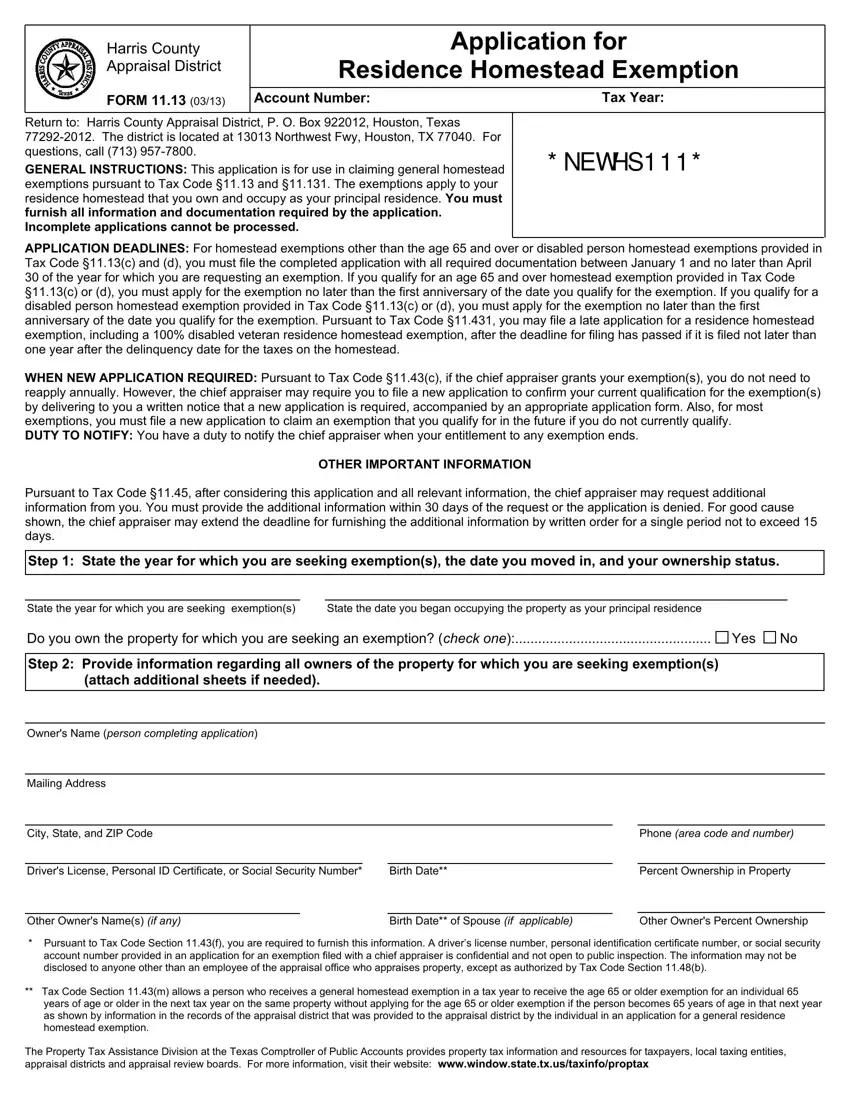
- Download or Obtain the Application Form: Most appraisal districts provide homestead exemption application forms on their websites. You can often download a PDF version. Alternatively, you can request a form by mail or pick one up in person.
- Complete the Application: The application will ask for basic information about you and your property, including your name, property address, account number (found on your property tax statement), and Social Security number. You will also need to indicate the type of homestead exemption you are applying for (e.g., General Homestead, Over-65, Disabled).
- Provide Supporting Documentation (If Required): In most cases, for a standard homestead exemption, no extensive documentation is needed beyond accurately completing the form. However, if you are applying for exemptions based on age, disability, or veteran status, you may need to provide proof such as a copy of your birth certificate, a doctor’s note, or a DD-214 form.
- Submit the Application: The completed application must be submitted to your county appraisal district by the deadline, which is typically April 30th each year for the exemption to apply to that tax year. You can usually submit it by mail, online (if the district offers this option), or in person. It is advisable to mail it with a return receipt requested or to get a confirmation if submitting in person.
- Review Your Approval: Once your application is processed, you will receive a notice from the appraisal district regarding the approval or denial of your homestead exemption. If denied, the notice will usually explain why and how to appeal.
Additional Homestead Exemptions
Texas offers several additional homestead exemptions that can provide further property tax relief:
- Over-65 Homestead Exemption: For homeowners aged 65 or older.
- Disabled Homestead Exemption: For homeowners who are disabled as defined by law.
- Exemption for Disabled Veterans: For veterans with a service-connected disability rating.
- Exemption for the Surviving Spouse of a First Responder: For spouses of certain deceased first responders.
These exemptions often provide a larger dollar amount of exemption than the general homestead exemption. Eligibility requirements vary, so check with your county appraisal district for specifics.
Establishing Homestead Protection Against Creditors
While the homestead tax exemption is filed with the appraisal district, the broader constitutional protection against creditors is more about establishing your residence as your principal dwelling. There isn’t a specific document you file with a court or government agency just to claim this protection; it’s established through your actions and the nature of your residency.
Key actions that help establish your homestead for creditor protection include:
- Living in the Property: This is the most crucial element. The property must be your actual, physical residence.
- Registering to Vote: Using the property address as your voter registration address is strong evidence of intent.
- Obtaining a Driver’s License or ID: Having your Texas driver’s license or state ID issued with the homestead address reinforces your claim.
- Receiving Mail at the Property: Consistently receiving personal and official mail at the homestead address.
- Utility Bills in Your Name: Having utilities like electricity and water services billed to your name at the property.
- Filing a Homestead Designation (Optional but Recommended in Some Cases): While not always legally required, in situations where you have multiple properties or there’s a potential for dispute, you can file a formal “homestead designation” with the county clerk’s office. This is a legal document that clearly declares which property is your homestead. This can be particularly useful if you have a rural property that borders a larger tract of land you also own.
When to File or Designate Your Homestead
The best time to establish your homestead is as soon as you purchase and move into your primary residence. For the tax exemption, remember the April 30th deadline for the current tax year. For creditor protection, the sooner you can demonstrate your intent to reside and make it your principal dwelling, the stronger your claim will be.
If you are facing potential creditor issues or are involved in a legal dispute, it is highly advisable to consult with a qualified Texas attorney specializing in real estate or creditor rights. They can provide specific guidance based on your unique situation and ensure all necessary steps are taken to protect your homestead. The peace of mind that comes from knowing your home is secure against most financial challenges is invaluable. Whether you’re exploring boutique hotels in San Marcos for a weekend getaway or planning a long-term stay in an apartment in Plano, the security of your primary residence remains a constant.
The Texas homestead laws are designed to offer significant protection to homeowners, ensuring that their principal residence remains safe from many financial threats. By understanding the definitions, eligibility requirements, and the straightforward procedural steps for both tax exemptions and general creditor protection, you can confidently secure this vital benefit for yourself and your family. Remember that proactive steps and clear documentation are key to maximizing the protection afforded by Texas homestead rights.