
Operating a successful business in the golden state of California offers unparalleled opportunities, especially within its thriving travel, hospitality, and lifestyle sectors. From the sun-kissed beaches of Laguna Beach to the majestic peaks near Lake Tahoe, and the bustling urban landscapes of Los Angeles and San Francisco, entrepreneurs are constantly bringing innovative ideas to life. Whether you’re managing a luxury boutique hotel, orchestrating bespoke travel experiences, curating unique local tours, or running a chain of vacation rental apartments, maintaining legal compliance is paramount. One critical, yet often overlooked, aspect of this compliance is filing the Statement of Information with the California Secretary of State.
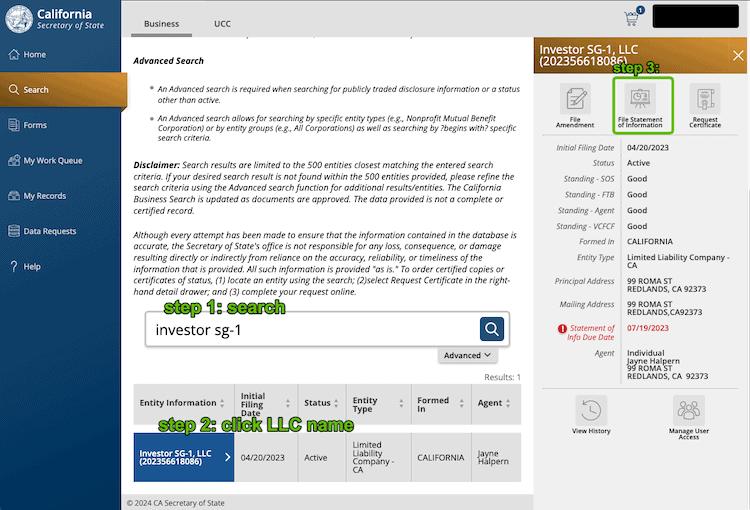
This essential filing acts as a periodic health check for your business, ensuring that your company’s public record is current and transparent. For businesses in the travel and lifestyle industry, where trust and accessibility are cornerstones of client relationships, keeping this information updated is not just a legal obligation but a strategic advantage. Imagine a potential guest researching a Four Seasons Hotels and Resorts or a charming bed-and-breakfast in Napa Valley; accurate public records instill confidence and signal professionalism. This comprehensive guide will walk you through everything you need to know about filing your Statement of Information, ensuring your business remains in good standing and continues to flourish in California’s vibrant economy.
Understanding the California Statement of Information
Navigating the administrative landscape for businesses in California can sometimes feel as complex as planning a multi-city tour through Europe. However, understanding key compliance requirements like the Statement of Information is crucial for smooth operations, much like having a meticulously planned itinerary ensures a seamless travel experience. This fundamental document is designed to keep the public record of your business up-to-date, fostering transparency and accountability within the state’s commercial environment.
What is a Statement of Information?
At its core, the Statement of Information (often abbreviated as SI) is a mandatory filing that provides the California Secretary of State with current information about your business entity. This includes details such as your company’s principal office address, the names and addresses of its directors and officers (for corporations), or managing members (for LLCs), and the name and address of your registered agent for service of process. Think of it as your business’s public profile, ensuring that anyone – from potential investors and partners to customers seeking accommodation or lifestyle services, or even legal entities – can easily find accurate contact and governance details.
For businesses engaged in tourism, hospitality, and lifestyle services, this transparency is invaluable. A traveler booking a stay at a resort in Palm Springs or planning an excursion near Yosemite National Park relies on the legitimacy of the operating company. The Statement of Information confirms that your business is active, compliant, and transparent, building trust and safeguarding your reputation. It’s a proactive measure against misrepresentation and ensures that all stakeholders have access to verifiable information, which is particularly important in industries where customer experience and confidence are paramount. Without this up-to-date information, the public, and even the state, would have difficulty contacting your business or understanding its structure, leading to potential distrust and operational hurdles.
Who Needs to File?
The requirement to file a Statement of Information extends to most formal business entities registered with the California Secretary of State. This includes:
- Corporations: Both domestic (formed in California) and foreign (formed outside California but qualified to do business here) for-profit and non-profit corporations.
- Limited Liability Companies (LLCs): Similar to corporations, both domestic and foreign LLCs must file.
- Limited Partnerships (LPs) and Limited Liability Partnerships (LLPs): These entities also have specific filing requirements to maintain their good standing.
Consider the diverse array of businesses that contribute to California’s vibrant economy and fall under this mandate. This could include a thriving travel agency based in San Diego that specializes in luxury cruises, a chain of boutique hotels stretching from Santa Monica to Monterey Bay, a company managing short-term vacation rentals near Disneyland Park, or a lifestyle brand organizing wellness retreats in the serene landscapes of Big Sur. Even a local tour operator guiding visitors across the Golden Gate Bridge or a concierge service catering to high-net-worth individuals in Beverly Hills must comply. Failure to file can lead to penalties and even the suspension of your business entity, jeopardizing its ability to legally conduct operations, open bank accounts, or enter into contracts – all critical functions for any successful enterprise in the travel, accommodation, or lifestyle sectors. Ensuring your business is properly registered and compliant is the first step towards building a trusted and sustainable brand.
When and How Often to File?
The timing and frequency of filing your Statement of Information are crucial details that every California business owner must commit to memory. There are two primary filing schedules:
- Initial Filing: For new businesses, an initial Statement of Information must be filed within 90 days of filing your original Articles of Incorporation or Organization with the [California Secretary of State](https://lifeoutofthebox.com/california-secretary of-state). This kick-starts your public record, ensuring your brand-new travel startup or newly opened resort in Palm Springs is officially recognized and transparent from the outset.
- Subsequent Filings:
- Corporations: Must file a Statement of Information annually, typically within the calendar month of their original incorporation date, plus the preceding five calendar months. For example, if your corporation was formed in July, your filing window would be February through July each year.
- LLCs, LPs, and LLPs: Are generally required to file biennially (every two years) within the calendar month of their original registration date, plus the preceding five calendar months.
Missing these deadlines can lead to significant consequences. Beyond the immediate late filing fees, non-compliance can result in the suspension or forfeiture of your entity’s legal standing. This means your luxury travel agency in Los Angeles could lose its ability to legally operate, enter into contracts, or even defend itself in court. Such a situation would be catastrophic for businesses heavily reliant on bookings, partnerships, and a stellar reputation. Imagine a hotel struggling to process payments or a tour company being unable to secure permits for excursions to Universal Studios Hollywood simply because of an overlooked administrative task. Proactive management of these filing deadlines, perhaps by setting reminders or utilizing compliance services, is a small effort that yields immense returns in terms of business continuity and peace of mind.
Preparing Your Statement of Information
The preparation phase for filing your Statement of Information is akin to packing for a crucial trip: meticulous attention to detail ensures nothing is forgotten and everything is in its right place. Just as you wouldn’t embark on a luxury cruise without your passport and itinerary, you shouldn’t approach this legal filing without all the necessary information readily accessible and accurate. For businesses deeply rooted in the travel, accommodation, and lifestyle sectors across California, precision in these administrative tasks reinforces the professionalism and reliability that clients expect.
Key Information Required
Before you even begin filling out the form, it’s essential to gather and verify several pieces of critical information about your business. Accuracy here is paramount, as discrepancies can lead to delays or further issues down the line. The primary details required include:
- Corporate/Entity Name: Your exact legal business name as registered with the California Secretary of State. For instance, “Golden State Adventures Inc.” or “Pacific Coast Boutique Hotels, LLC.”
- Principal Executive Office Address: This is the main physical address where your business operations are conducted, not just a P.O. Box. For a travel agency, this would be where your booking agents operate. For a hotel, it’s the physical location of the property.
- Mailing Address: If different from your principal office, this is where you receive official correspondence.
- Agent for Service of Process: This is a designated individual or corporate entity in California who is authorized to receive legal documents on behalf of your business. This agent must have a physical street address in California (not a P.O. Box). Ensuring this information is current is vital for legal notices, protecting your business from missed deadlines in potential legal actions. For a concierge service in San Francisco or a resort management company, having a reliable registered agent is non-negotiable.
- Names and Addresses of Directors and Officers (for Corporations): This includes the CEO, President, Secretary, and Treasurer, along with their respective business addresses.
- Names and Addresses of Managing Members (for LLCs): Similar to corporations, the names and business addresses of all managing members must be listed.
- Statement of Business Activities: A brief description of the type of business your entity is engaged in. This could be “Hotel Management,” “Travel Planning Services,” “Luxury Accommodation Provider,” or “Event Coordination.”
Ensuring all this information is current and correctly entered is fundamental. Any inaccuracies could not only delay processing but also lead to your business falling out of good standing, potentially affecting your ability to operate transparently and effectively in the public eye.
Gathering Your Documentation
To ensure a smooth filing process and guarantee the accuracy of the information you submit, having your business documentation well-organized is indispensable. Consider this your pre-flight checklist for compliance. Before you even open the Statement of Information form, gather the following:
- Previous Statement of Information Filings: Referencing your last filed Statement of Information is an excellent starting point. It provides a baseline of your previously reported data, making it easier to identify any changes that need to be updated.
- Articles of Incorporation/Organization: Your original formation documents are critical for confirming the exact legal name of your entity and the date of its formation, which influences your filing schedule.
- Corporate Bylaws or Operating Agreement: These internal documents will clearly outline the roles and responsibilities of your directors, officers, or managing members, helping you accurately list the required personnel.
- Current Board Resolutions or Member Meeting Minutes: If there have been changes in your leadership team, these records will be essential to confirm the new appointments and their effective dates. For a chain of The Ritz-Carlton properties or a rapidly expanding travel tech startup, leadership changes are common, and keeping these records current is crucial.
- Registered Agent Information: Confirm the current name and address of your designated agent for service of process. If you’ve changed agents, ensure you have the new details.
Maintaining an organized system for your corporate records is not just good practice; it’s a necessity. For businesses operating across multiple locations in California, such as a chain of short-term rental properties in San Diego and Los Angeles, or a comprehensive tour company offering experiences from Disneyland Resort to the Hollywood Walk of Fame, centralized and accessible documentation simplifies compliance significantly. This preparation ensures that when it’s time to file, you can do so confidently, efficiently, and without the stress of scrambling for missing details, allowing you to focus on delivering exceptional travel and lifestyle experiences to your clientele.
The Filing Process: Step-by-Step Guide
Once you’ve meticulously gathered all the necessary information and documentation, the actual process of filing your Statement of Information becomes straightforward. Think of it as the final leg of a well-planned journey – with the right directions, you’ll reach your destination efficiently. The California Secretary of State has streamlined the process, offering both online and mail-in options to accommodate various preferences.

Accessing the Forms
The first step is to obtain the correct form for your specific business entity. The California Secretary of State website is the primary and most reliable resource for this.
- Online Access: The most convenient and increasingly preferred method is to access the forms and file online. The California Secretary of State provides dedicated portals for corporations and LLCs. Simply navigate to their business programs section, locate the “Statement of Information” link, and you’ll find the specific form based on your entity type (e.g., Form SI-100 for corporations, Form SI-150 for LLCs). Online filing offers immediate submission confirmation, reduced processing times, and the ability to pay fees electronically. For a fast-paced travel agency in San Francisco or a luxury resort developer, the efficiency of online submission is a significant advantage.
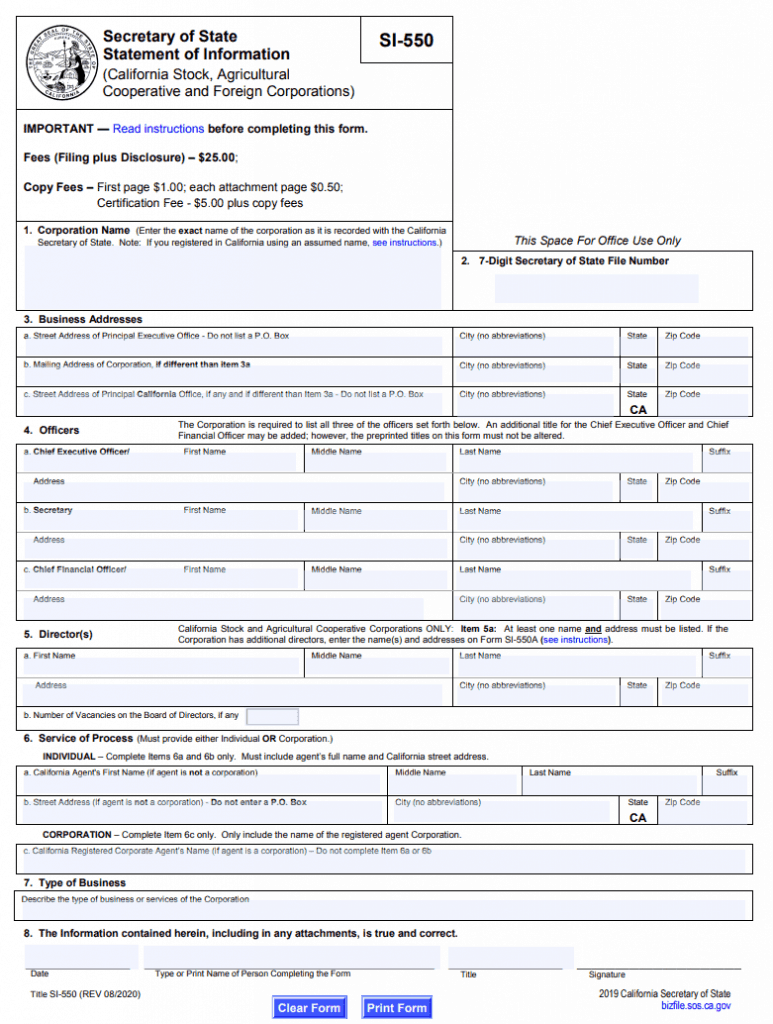
- Mail-In Option: If you prefer to file by mail, you can download a printable PDF version of the form from the same website. Once completed, it needs to be mailed to the California Secretary of State office in Sacramento. While viable, this method typically involves longer processing times and requires you to track your submission manually. This might be less ideal for businesses needing swift compliance confirmation, but remains a reliable option.
Always ensure you download the most current version of the form, as requirements can occasionally be updated. Using an outdated form can lead to rejection and delays.
Completing the Form Accurately
With the correct form in hand, the next critical step is to fill it out completely and accurately. This stage demands careful attention to detail, as any errors could lead to rejection or necessitate re-filing, causing unnecessary delays and frustration.
- Follow Instructions Carefully: Each form comes with specific instructions. Read them thoroughly before you begin. Pay close attention to sections requiring corporate officer titles or managing member designations, as these vary by entity type.
- Verify Information: Double-check every piece of data you enter against your gathered documentation. Ensure names, addresses, and titles match exactly what is on record or what has been officially updated. For instance, if your boutique hotel in Napa Valley recently changed its principal executive office, ensure the new address is accurately reflected.
- Registered Agent: Confirm that the agent for service of process’s name and physical street address (not a P.O. Box) in California are correct. This is a common area for errors.
- Business Activity: Provide a clear, concise description of your business activity. For a company offering guided tours of Disneyland Resort, “Theme Park Tour Operator” would be appropriate.
- Signatures: The form must be signed by an authorized individual (e.g., an officer for a corporation or a managing member for an LLC). Ensure the signature is legible and dated.
A common pitfall is rushing through this section. For tourism and hospitality businesses that thrive on reputation and precise execution, accuracy in legal filings reflects the same attention to detail you provide your guests. An incorrectly filed Statement of Information can be a small but irritating hurdle that detracts from your focus on providing exceptional experiences.
Submitting Your Statement
Once the form is thoroughly completed and reviewed, it’s time for submission. The method you choose will dictate the next steps:
- Online Submission: If filing electronically, you’ll typically submit the form directly through the California Secretary of State’s online portal. This usually involves an immediate confirmation of submission. The system guides you through payment, and you’ll receive an email receipt. This is by far the quickest way to get your filing processed and recorded.
- Mail Submission: For physical mail, send your completed form and payment (check or money order) to the specific address provided on the form or the California Secretary of State website, usually their office in Sacramento. It’s advisable to send it via certified mail with a return receipt requested. This provides proof of mailing and delivery, which can be invaluable if there are any questions about your submission later. Processing times for mailed documents can range from several weeks to a couple of months, so plan accordingly to avoid any lapse in compliance.
After submission, it’s a good practice to keep a copy of the submitted form and any confirmation receipts for your records. This serves as proof of your compliance and can be referenced if needed.
Filing Fees and Payment
A fee is associated with filing your Statement of Information, which helps cover the administrative costs of maintaining the public record.
- Fee Amounts: The fee typically varies slightly by entity type and can change, so always check the current fee schedule on the California Secretary of State website or directly on the form you download. As of recent times, the fee for corporations and LLCs has generally been around $20 or $25.
- Payment Methods:
- Online: Payments are made electronically using a credit card or electronic funds transfer through the online portal. This is secure and provides immediate payment confirmation.
- Mail: For mailed submissions, payment must typically be made by check or money order, payable to the “Secretary of State.” Do not send cash. Ensure the check amount is exact, as incorrect payments can lead to your filing being returned unprocessed.
Understanding and correctly handling the filing fees is the last hurdle in this administrative process. Once completed, your business will have fulfilled its obligation, allowing you to refocus on the exciting work of delivering exceptional travel, accommodation, and lifestyle experiences across California.
Maintaining Compliance and Avoiding Penalties
For businesses thriving in California’s competitive travel and lifestyle markets, maintaining impeccable legal compliance is as crucial as providing five-star service or curating unforgettable experiences. Just as a leading hotel brand like The Ritz-Carlton wouldn’t compromise on guest safety, a responsible business owner must never overlook regulatory filings. Failing to keep your Statement of Information current can lead to serious repercussions that disrupt operations and tarnish your hard-earned reputation. Proactive management of these requirements is not just about avoiding penalties; it’s about safeguarding your business’s future and ensuring its continued ability to operate legitimately across the state, from the bustling streets of Los Angeles to the serene landscapes of Yosemite National Park.
The Importance of Timeliness
Timely filing of your Statement of Information is non-negotiable. Missing your annual or biennial deadline can set off a cascade of negative consequences for your business:
- Late Filing Penalties: The most immediate consequence is the imposition of monetary penalties. While the fee for the Statement of Information itself is modest, late fees can accumulate, adding unnecessary financial strain, especially for small businesses.
- Loss of Good Standing: The California Secretary of State will mark your entity as “suspended” or “forfeited” if you fail to file the Statement of Information. This loss of good standing is a severe blow.
- Inability to Conduct Business Legally: A suspended entity cannot legally conduct business in California. This means your travel agency cannot sign new contracts, your hotel cannot enforce existing agreements, and your lifestyle brand may be unable to open new bank accounts or even renew its business licenses. Imagine a tour operator trying to obtain permits for excursions to Universal Studios Hollywood only to find their entity is suspended. Such a situation would paralyze operations and lead to significant financial losses.
- Loss of Name Protection: Your business name, a valuable asset in the competitive tourism sector, may no longer be exclusively protected, potentially allowing another entity to register a similar name.
- Personal Liability: In some cases, owners or officers of suspended entities may face increased personal liability for business debts incurred during the period of suspension.
The administrative burden of reinstating a suspended entity is also considerable, often involving additional filings, fees, and a waiting period. It’s far simpler and less costly to file on time, ensuring your business remains compliant and operational without interruption.
Keeping Your Information Current
Beyond the periodic filing of the Statement of Information, it is equally important to keep the information on file with the California Secretary of State current at all times. Changes within your business, such as new directors, officers, managing members, or a change in your principal office address, should not wait for the next scheduled Statement of Information filing.
- Amendments: If key information changes between your scheduled filing periods (e.g., a new CEO for your company operating a chain of hotels in San Diego and Santa Monica, or a change in your registered agent for your luxury concierge service in Beverly Hills), you can, and in some cases should, file an amended Statement of Information. This ensures that the public record accurately reflects your current business structure. While there isn’t typically a specific penalty for not filing an amendment immediately for all types of changes, having outdated information can still cause issues, particularly if legal notices are sent to an old address or an incorrect agent.
- Credibility and Trust: For businesses in the hospitality and lifestyle sectors, where client trust is built on transparency and reliability, having up-to-date public records reinforces your professional image. Potential partners, investors, or discerning clients researching your business will find consistent and accurate information, bolstering their confidence in your operations. Inaccurate information, conversely, can raise red flags and deter business opportunities.
Resources and Support
Navigating corporate compliance doesn’t have to be a solo journey. California offers various resources to help businesses stay on track:
- California Secretary of State Website: This is your primary source for forms, filing instructions, current fee schedules, and official updates. Their business resources section is comprehensive and well-maintained.
- Legal Counsel: For complex situations, or if you simply prefer professional guidance, consulting with a business attorney in California is always a wise decision. They can provide tailored advice and ensure your compliance strategy aligns with your business goals.
- Registered Agent Services: Many companies offer professional registered agent services, taking on the responsibility of receiving legal documents and notifying you promptly. This can be particularly beneficial for businesses with frequently changing personnel or those operating across multiple states.
In conclusion, filing your Statement of Information is a minor administrative task with major implications for your business’s health and longevity in California. By understanding the requirements, preparing diligently, filing accurately and on time, and proactively maintaining your records, you ensure your business remains in good standing, fostering trust and allowing you to focus on creating memorable travel, accommodation, and lifestyle experiences that truly capture the spirit of the Golden State.