
For those considering a long-term stay, setting down roots, or simply exploring the vibrant lifestyle opportunities within the Lone Star State, understanding the intricacies of local financial benefits can significantly enhance your experience. While Texas is renowned for its diverse landscapes, rich history, and burgeoning culinary scenes – from the barbecue pits of Austin to the Tex-Mex delights of San Antonio – it also offers tangible financial advantages for its residents. One of the most significant, often overlooked by newcomers but cherished by long-time homeowners, is the Texas Homestead Exemption. This property tax relief mechanism isn’t just a dry legal term; it’s a vital tool that can free up significant funds, ultimately supporting a more comfortable lifestyle, greater financial flexibility, and even more opportunities for travel and exploration within and beyond Texas borders.
Navigating property taxes can be daunting, especially when relocating to a new state or country. However, the Texas Homestead Exemption provides a much-needed respite, reducing the taxable value of your primary residence and lowering your annual property tax bill. This guide will walk you through everything you need to know about this valuable exemption, from eligibility requirements to the step-by-step application process, ensuring you can maximize your savings and fully embrace the unique lifestyle that Texas offers. Whether you’re drawn to the bustling urban centers like Dallas and Houston, the serene beauty of the Hill Country, or the coastal charm of Galveston, understanding and utilizing the homestead exemption is a cornerstone of responsible homeownership in Texas.
Understanding the Texas Homestead Exemption: A Foundation for Your Lifestyle
The concept of a homestead exemption is rooted in the idea of protecting homeowners and providing a stable foundation for families. In Texas, this isn’t just a minor discount; it’s a substantial benefit designed to make homeownership more affordable and sustainable. For many, the prospect of living in a state without a personal income tax is a significant draw, but understanding the property tax landscape is equally crucial. The homestead exemption serves as a counterbalance, ensuring that local property taxes, which fund essential services like schools, police, and fire departments, remain manageable for primary residents.
What Exactly is a Homestead Exemption?
At its core, a homestead exemption in Texas allows a homeowner to reduce the taxable value of their primary residence. This reduction is applied before the tax rate is calculated, resulting in a lower property tax bill. It’s not an exemption from taxes entirely, but rather a discount on the assessed value of your home for tax purposes. For example, if your home is appraised at $300,000 and you qualify for a $40,000 general residence homestead exemption, your property taxes will be calculated as if your home were worth only $260,000. This saving can translate into hundreds, or even thousands, of dollars annually, depending on your home’s value and local tax rates. These savings aren’t just numbers on a ledger; they represent potential discretionary income that could be used for enriching travel experiences, dining out at Texas’s renowned eateries, or investing in hobbies that contribute to a fulfilling lifestyle.
The Texas Constitution provides for the protection of a homestead from forced sale for payment of debts, except in certain specific circumstances. The homestead exemption for property taxes is a separate, though related, benefit. It’s overseen by the local appraisal districts in each county, such as the Harris County Appraisal District or the Travis Central Appraisal District in Austin. Each district is responsible for appraising property values and administering these exemptions.
Who Qualifies for this Valuable Benefit?
Eligibility for the Texas Homestead Exemption is straightforward but strict, focusing on ensuring the benefit goes to those who genuinely make Texas their primary home. The fundamental requirements are:
- Ownership: You must own the home as of January 1st of the tax year for which you are applying.
- Primary Residence: The property must be your principal residence. This means it’s where you live and consider your permanent home. You cannot claim an exemption on a second home, a vacation rental property, or an investment property, even if it’s in Texas. This distinction is key for those who might own multiple properties or are considering relocating permanently.
- Residency: You must be a Texas resident. While there’s no specific time frame you must have lived in the state, the intent to make the property your primary residence is critical.
Key indicators of primary residency often include:
- Your Texas driver’s license or state-issued ID shows the property address.
- Your vehicle is registered at the property address in Texas.
- Your voter registration is at the property address.
- The address is used for federal income tax purposes.
- Utility bills are in your name at the property.
- You do not claim a homestead exemption on another property in Texas or any other state.
It’s important to remember that you can only claim one homestead exemption, regardless of how many properties you own. The exemption is tied to your primary residence, reinforcing the idea that it’s about supporting your core living situation within the state.
Navigating the Application Process: Your Step-by-Step Guide
Applying for the Texas Homestead Exemption is a relatively simple process, designed to be accessible to all eligible homeowners. While the specific forms and submission methods might vary slightly between counties, the general steps remain consistent across the state. Taking the time to understand and follow these steps can unlock significant savings, allowing you to allocate more resources to exploring Texas’s incredible destinations, from the historic sites in San Antonio to the vibrant music scene in Austin.
Gathering Your Essential Documentation
Before you even fill out a form, preparation is key. Having the necessary documents ready will streamline your application process significantly. The local appraisal district primarily wants to verify your ownership and that the property is indeed your primary residence.
Commonly required documents include:
- A copy of your Texas driver’s license or state-issued personal identification certificate: The address on this document must match the address of the property for which you are seeking the exemption. If you recently moved, ensure your ID reflects your current homestead address.
- A copy of your vehicle registration receipt (Texas): This should also show the property address. If you don’t own a vehicle or don’t have a Texas registration, alternative proofs may be accepted.
- Utility bill copies: Recent utility bills (electricity, water, gas) in your name at the property address provide proof of occupancy.
- Other supporting documents (if applicable):
- Voter registration card: Showing the property address.
- Federal income tax return: If you don’t have a Texas driver’s license, you might be asked for this to prove Texas residency, though it’s less common for the general exemption.
- Proof of ownership: While the appraisal district usually has this information, having your deed readily available can be helpful in rare cases of discrepancies.
It’s advisable to check your specific county’s appraisal district website (e.g., Dallas Central Appraisal District, Bexar Appraisal District) for the most up-to-date and precise list of required documentation, as there can be minor variations.
Where and When to File Your Application
The application process is handled by your local county appraisal district. These districts are responsible for valuing all properties within their jurisdiction and processing exemptions.
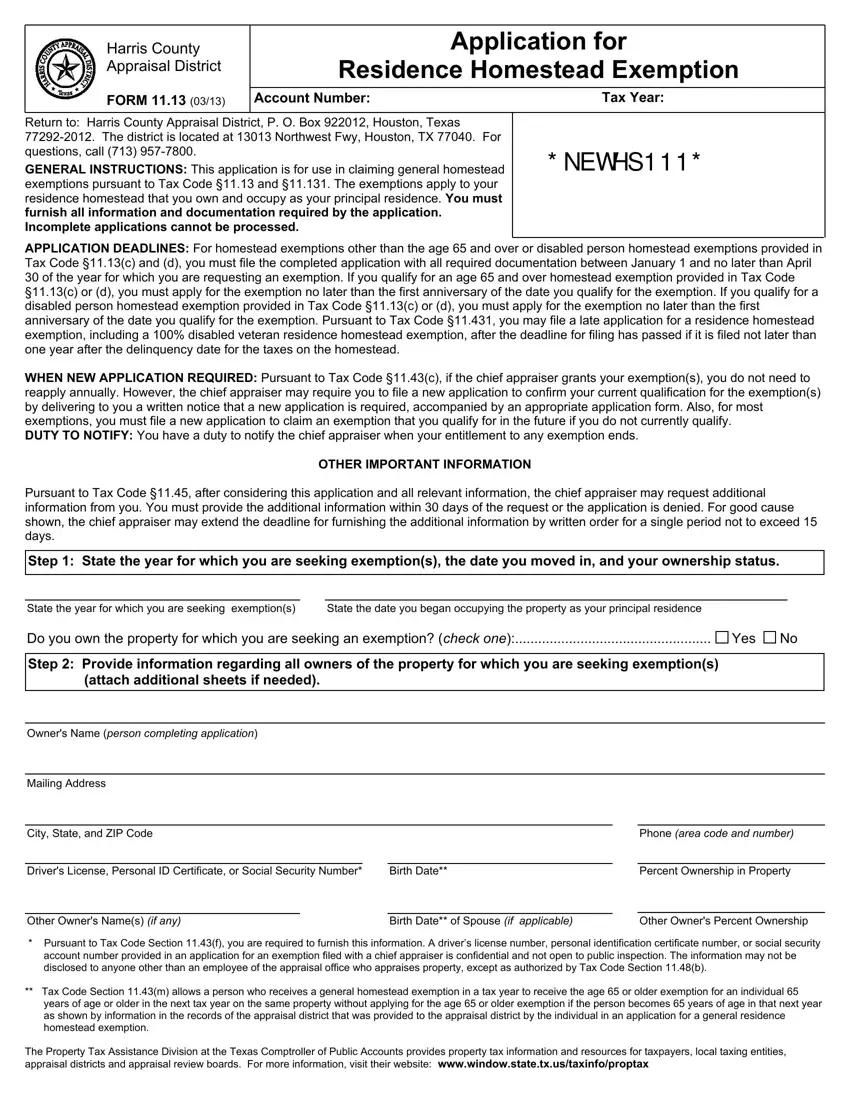
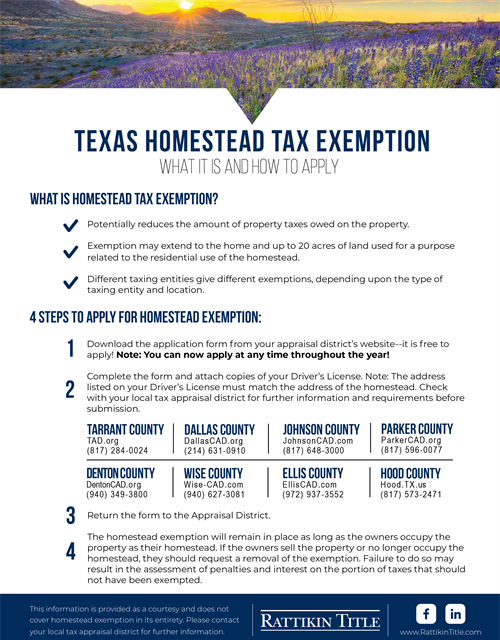
- Where to File: You will need to contact the appraisal district for the county where your property is located. Most appraisal districts offer the application form (Form 50-114, Application for Homestead Exemption) on their website for download. Many also provide online filing portals, which offer a convenient way to submit your application and supporting documents electronically. Alternatively, you can typically mail the completed form and copies of your documents, or deliver them in person.
- When to File: The standard filing period for a homestead exemption is between January 1st and April 30th of the tax year for which you are applying. For instance, if you purchased your home in 2023 and it became your primary residence, you would typically apply between January 1st and April 30th of 2024 to receive the exemption for the 2024 tax year.
- Late Filing: Texas law does allow for late filing. You can generally file for a homestead exemption up to two years after the tax delinquency date. This means if you bought your home, lived in it as your primary residence, but forgot to file, you might be able to claim a refund for the past two years. This is a significant relief for those who were unaware of the benefit or missed the initial deadline.
- New Homeowners: If you purchase and occupy your home as your primary residence after January 1st, you can still apply for the exemption for the current tax year. The exemption will become effective on January 1st of the year following your purchase and occupation. However, some appraisal districts allow an application to be filed during the year you move in, with the exemption becoming active for the following year’s taxes. Always confirm with your local appraisal district.
Special Exemptions and Considerations
Beyond the general residence homestead exemption, Texas offers several additional exemptions for specific groups of homeowners, further reflecting the state’s commitment to supporting its residents. These can significantly increase your tax savings.
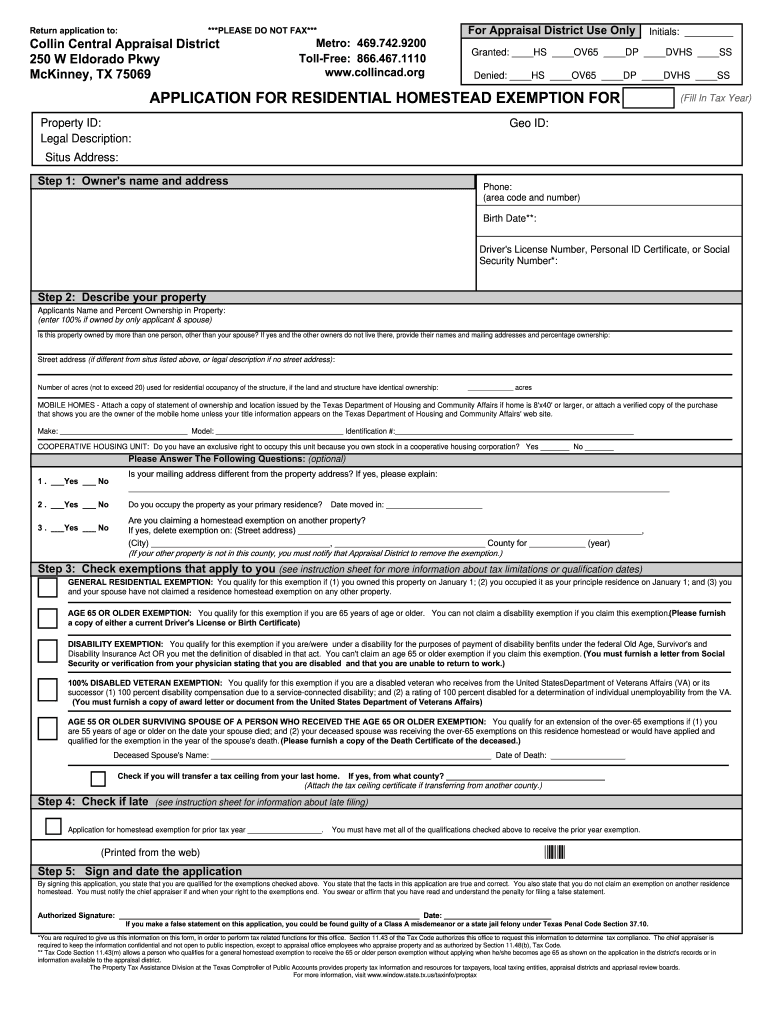
- Over-65 Exemption: Homeowners who are 65 years or older by January 1st of the tax year qualify for an additional homestead exemption. This includes a mandatory $10,000 exemption from school taxes and often additional exemptions from other taxing units (county, city, etc.). Once granted, the over-65 exemption also provides a “tax ceiling” for school taxes, meaning the amount of school tax you pay will not increase above the amount charged in the year you qualified, even if the value of your home increases. This is an invaluable benefit for seniors living on fixed incomes, providing financial stability and allowing them to enjoy their retirement years without fear of rapidly escalating tax bills.
- Disabled Person Exemption: Individuals with a qualifying disability also receive an additional exemption similar to the over-65 exemption. The applicant must be unable to engage in gainful work and must meet the Social Security Administration’s definition of disability. Like the over-65 exemption, this often includes a tax ceiling for school taxes.
- 100% Disabled Veterans Exemption: Veterans who are certified by the U.S. Department of Veterans Affairs as 100% disabled, or are individually unemployable, or who have a service-connected disability rating of 100%, are eligible for a total exemption from property taxes on their primary residence. This means they pay no property taxes on their homestead. This is a profound benefit for those who have served the nation and faced significant challenges.
- Surviving Spouse of a 100% Disabled Veteran: The surviving spouse of a 100% disabled veteran may also qualify for the same total tax exemption, provided they have not remarried.
- Surviving Spouse of a First Responder Killed in the Line of Duty: Similar to the disabled veteran exemption, the surviving spouse of a first responder killed in the line of duty can also qualify for a total property tax exemption on their homestead.
When applying for these special exemptions, you will typically use the same homestead application form but will need to provide additional documentation, such as proof of age, disability certification, or veteran status. Always ensure you check the appropriate boxes on the application form to claim all applicable exemptions.
Beyond the Application: Maintaining and Maximizing Your Savings
Once you’ve successfully filed for your homestead exemption, the initial hurdle is cleared. However, understanding how to maintain this valuable benefit and avoid common pitfalls is crucial for ensuring continuous savings and long-term financial stability. These savings, year after year, can significantly contribute to your personal budget, potentially funding those dream trips or allowing you to explore more of Texas’s incredible tourism offerings.
Keeping Your Exemption Active
The good news is that in Texas, you typically do not need to reapply for your general residence homestead exemption every year, unless the chief appraiser specifically requests it or if there are changes to your ownership or residency status. Once granted, the exemption automatically renews annually. This passive renewal simplifies the process for homeowners and ensures continuous relief.
However, there are circumstances where you might need to take action:
- Changes in Ownership: If you sell your home, the exemption naturally expires with the change of ownership. The new homeowner will need to apply for their own exemption.
- Change of Primary Residence: If you move to a different home in Texas and establish it as your new primary residence, you will need to apply for a homestead exemption for the new property. It’s critical to remember you can only have one homestead exemption active at a time.
- Changes in Eligibility for Special Exemptions: For over-65 or disabled exemptions, these are generally permanent once granted. However, if there’s a change in your disability status that affects your eligibility (e.g., your disability rating changes), you should notify the appraisal district.
- Chief Appraiser’s Request: In rare instances, the chief appraiser may send a request for reapplication or additional verification to ensure continued eligibility. It is essential to respond to these requests promptly to avoid losing your exemption.
- Transferring Exemptions (Over-65/Disabled Ceilings): If you move to a new homestead within Texas, you may be able to transfer a portion of your school tax ceiling (related to over-65 or disabled exemptions) to your new property. This is a vital benefit for older adults or those with disabilities who wish to downsize or move to a different community within the state. You’ll need to contact your appraisal district for the necessary forms and guidance on transferring these benefits.
It’s always a good practice to review your annual appraisal notice, usually sent in April or May, to ensure all your exemptions are correctly applied. If anything looks incorrect, contact your appraisal district immediately.
Common Mistakes to Avoid
While the process is generally straightforward, a few common errors can prevent you from receiving or maintaining your homestead exemption. Being aware of these can save you time, money, and frustration.
- Not Filing at All: This is by far the most common mistake. Many new homeowners simply don’t know about the exemption or assume it’s automatically applied. The onus is on the homeowner to file the initial application.
- Missing the Deadline: While late filing is possible, missing the April 30th deadline for the current tax year means you won’t see the savings immediately and might have to wait for a refund process. Filing on time ensures your tax bill reflects the exemption from the outset.
- Filing for the Wrong Property: Attempting to file an exemption for a rental property, vacation home, or any property that is not your primary residence is a mistake. This can lead to your application being denied or, in severe cases, penalties if deemed intentional misrepresentation.
- Not Updating Information: If you change your name, mailing address (though the property address remains your homestead), or other pertinent details, it’s wise to update your appraisal district records. While not always directly impacting the exemption, accurate records prevent future complications.
- Ignoring Appraisal District Communications: Do not dismiss mail from your appraisal district as junk. These communications often contain important information regarding your property value, exemptions, or requests for verification. Failure to respond can result in the loss of your exemption.
- Claiming Multiple Homesteads: As stressed earlier, you can only claim one homestead exemption. If you own homes in different Texas cities or even in different states, only your designated primary residence qualifies. Attempting to claim multiple exemptions is illegal and can lead to severe penalties.
By being diligent and proactive, you can ensure that your Texas Homestead Exemption remains a consistent source of financial relief, contributing positively to your overall well-being and lifestyle.
The Lifestyle Impact: How Tax Savings Enhance Your Texas Experience
While the Texas Homestead Exemption is primarily a financial benefit, its impact extends far beyond just a lower tax bill. It’s a mechanism that underpins a stable, affordable, and enriched lifestyle for homeowners across the Lone Star State. For those who cherish travel, enjoy local culture, and value financial freedom, the savings from this exemption can unlock new possibilities and deepen their connection to their Texas home.
Financial Freedom for Exploration and Travel
Imagine saving several hundred or even a few thousand dollars annually on your property taxes. What could you do with that extra money? For many Texas homeowners, these savings translate directly into more disposable income, which can be strategically channeled into fulfilling lifestyle pursuits, chief among them, travel.
- Exploring Texas’s Diverse Attractions: The saved funds could finance weekend getaways to explore the historic Alamo in San Antonio, discover the vibrant arts scene in Marfa, hike through Big Bend National Park’s stunning landscapes, or indulge in the culinary delights of Houston’s diverse food scene. From the beaches of South Padre Island to the vineyards of the Texas Hill Country, Texas offers an incredible array of destinations.
- Budget for International Adventures: For those with bigger travel dreams, consistent savings from the homestead exemption can contribute significantly to a travel fund for international adventures. Picture yourself exploring the ancient ruins of Rome, relaxing on the beaches of Thailand, or trekking through the majestic Swiss Alps. The financial cushion provided by tax savings makes these dreams more attainable.
- Enhancing Local Experiences: Even if grand international travel isn’t your immediate goal, the extra funds can enrich your local lifestyle. This might mean more frequent visits to local museums, enjoying more fine dining experiences, attending concerts and festivals, or investing in hobbies like golf, kayaking on Lady Bird Lake, or cycling the scenic routes around your Texas town. These activities contribute to a richer, more engaged life right where you are.
The homestead exemption, therefore, isn’t just about reducing a bill; it’s about expanding possibilities and enhancing the overall quality of life for Texas homeowners.
Stability and Security in the Lone Star State
Beyond the direct financial benefit, the Texas Homestead Exemption fosters a greater sense of stability and security for homeowners, which is foundational to a stress-free lifestyle. Knowing that a portion of your home’s value is protected from property taxation provides a significant peace of mind.
- Protection Against Rising Values: In a rapidly appreciating real estate market, such as those seen in Austin or Dallas, the homestead exemption acts as a buffer. While your home’s market value may soar, the exemption ensures that a portion of that value is shielded, preventing your tax bill from skyrocketing proportionally. For those over 65 or with disabilities, the school tax ceiling provides even greater long-term financial predictability.
- Encouraging Long-Term Residency: By making homeownership more affordable, the exemption encourages individuals and families to establish long-term roots in Texas. This contributes to stable communities, stronger local economies, and a more vibrant cultural fabric. Whether you’re a remote worker seeking a home base, a family looking for excellent schools, or retirees desiring a comfortable and tax-friendly environment, the homestead exemption makes Texas an even more attractive destination.
- Financial Planning: For homeowners, especially those on fixed incomes, the predictable reduction in property taxes is an invaluable tool for financial planning. It allows for better budgeting, saving, and investing, creating a more secure future. This security means less worrying about unexpected financial burdens and more focus on enjoying the unique lifestyle and travel opportunities that living in Texas provides.
In conclusion, filing for the Texas Homestead Exemption is an essential step for any eligible homeowner in the state. It’s a powerful financial tool that not only reduces your annual tax burden but also frees up resources that can be invested back into your lifestyle, supporting travel, enriching experiences, and fostering a greater sense of security. By understanding the eligibility, navigating the application process, and being diligent in maintaining it, you can unlock significant savings and truly maximize your life in the Lone Star State. Don’t leave money on the table – embrace this benefit and enhance your Texas journey.