
While Texas might conjure images of vast ranches, vibrant cities like Austin and Dallas, and world-class destinations for every type of traveler, the Lone Star State is also a fertile ground for business ventures. For entrepreneurs looking to establish a strong legal foundation for their endeavors, forming a Limited Liability Company (LLC) in Texas offers a compelling blend of flexibility and protection. This guide will walk you through the essential steps, ensuring your business journey in Texas begins on solid ground, whether you’re planning to open a boutique hotel in San Antonio or launch a unique local tour experience in Houston.
Understanding the Texas LLC: Benefits for Your Business Adventure
Before diving into the procedural aspects, it’s crucial to understand why a Texas LLC is an attractive choice for businesses, particularly those in the travel, tourism, and hospitality sectors. The primary allure of an LLC lies in its “limited liability” feature. This means that the personal assets of the business owners (members) are generally protected from business debts and lawsuits. If your LLC, perhaps a burgeoning travel agency or a chain of vacation rental apartments, incurs debt or faces legal action, your personal home, car, or savings are typically off-limits to creditors. This shield is invaluable, especially in industries that can be subject to unexpected fluctuations or liabilities.
Beyond liability protection, Texas LLCs offer operational flexibility. Unlike corporations, LLCs generally don’t have the same stringent requirements for holding regular board meetings or keeping extensive minutes, making them a less burdensome structure for many small to medium-sized businesses. The tax structure is also a significant advantage. By default, LLCs are treated as “pass-through” entities for tax purposes. This means that the business itself does not pay federal income tax. Instead, the profits and losses are “passed through” to the individual members, who then report them on their personal income tax returns. This avoids the potential for double taxation that can occur with C-corporations. This simplified tax structure can be a welcome relief for business owners who are already managing the complexities of running a business, be it a luxury resort or a family-friendly caravan park.
Furthermore, Texas has made the process of forming an LLC relatively straightforward, a boon for those eager to get their business off the ground and begin offering unique experiences, such as guided tours of the Alamo or culinary expeditions through the Hill Country. The state’s business-friendly environment encourages innovation and growth across various sectors, making it an ideal location for establishing a new enterprise.
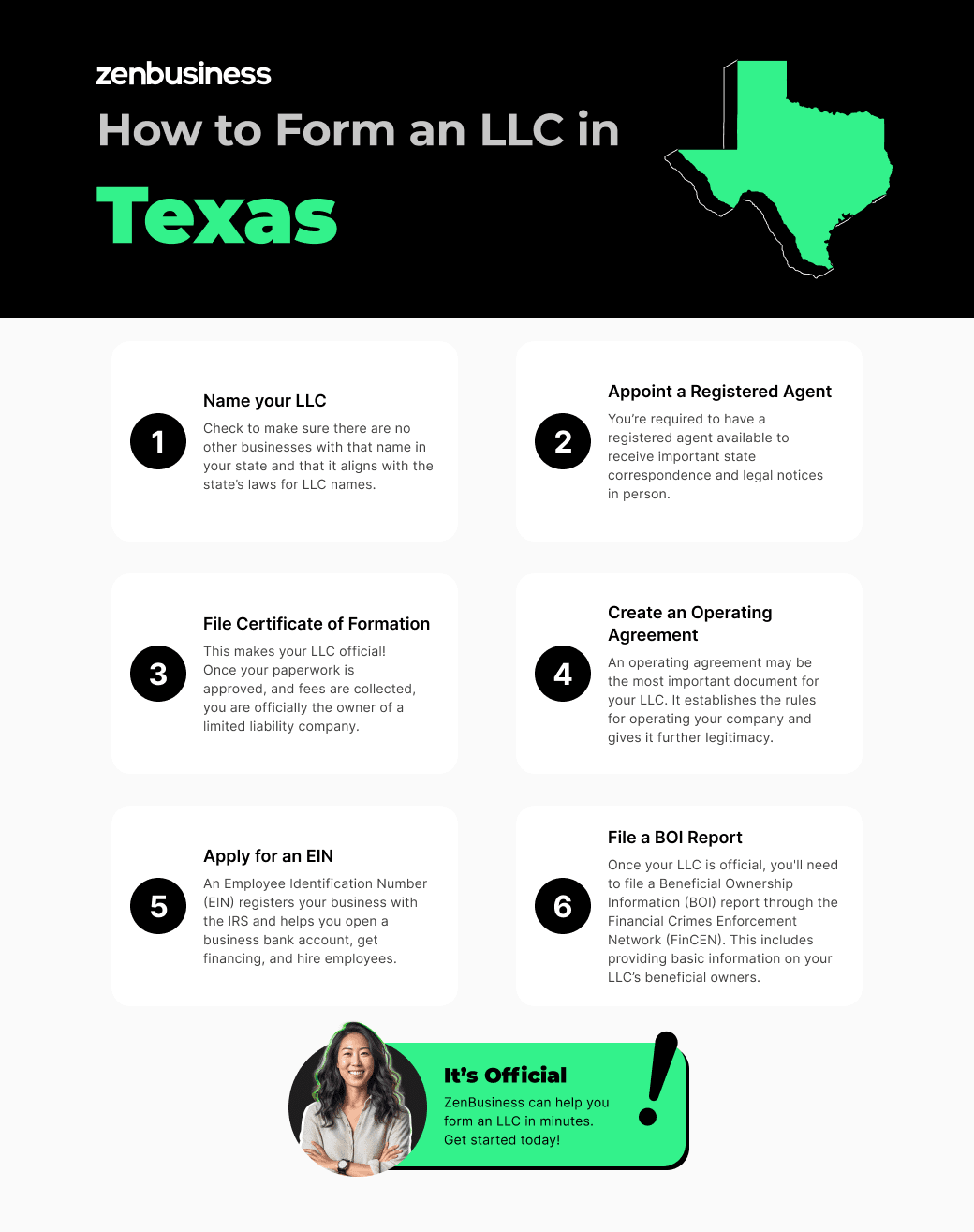
The Step-by-Step Guide to Forming Your Texas LLC
Forming an LLC in Texas involves a series of distinct steps, each designed to establish your business as a legally recognized entity. While the process is manageable, attention to detail is key to ensuring everything is completed correctly.
Step 1: Choose a Name for Your Texas LLC
The first crucial step is selecting a unique and compliant name for your Limited Liability Company. Texas law requires that the name of an LLC be distinguishable from the names of other existing businesses registered with the Texas Secretary of State. You’ll need to ensure your chosen name includes a designator indicating it’s an LLC, such as “Limited Liability Company,” “LLC,” or “L.L.C.” It’s also wise to avoid using words that might suggest the company is a government agency or affiliated with any regulated profession unless you are properly licensed.
To check the availability of your desired name, you can conduct a name availability search through the Texas Secretary of State’s website. This preliminary search can save you time and frustration by identifying potential conflicts early on. It’s also a good practice to consider reserving your business name if you’re not quite ready to file all the necessary paperwork. This reservation is valid for a specific period, allowing you to secure your preferred name while you finalize other aspects of your business plan, perhaps scouting for the perfect location for your boutique hotel or planning the itinerary for your next adventure tour.
Step 2: Appoint a Registered Agent in Texas
Every LLC in Texas is required to designate a registered agent. This individual or company is responsible for receiving official legal and tax documents on behalf of your LLC. The registered agent must have a physical street address within Texas (a P.O. Box is not sufficient) and be available during normal business hours to accept service of process.
You can choose to be your own registered agent, appoint another member of your LLC, or hire a professional registered agent service. If you are constantly on the move, exploring new destinations or managing remote properties, it might be more practical to use a professional service to ensure that important documents are never missed. This is particularly important if your business activities, like operating a chain of vacation rental villas or managing a popular tourist attraction, could lead to legal correspondence. A reliable registered agent is your business’s official point of contact with the state and the legal system.
Step 3: File the Certificate of Formation
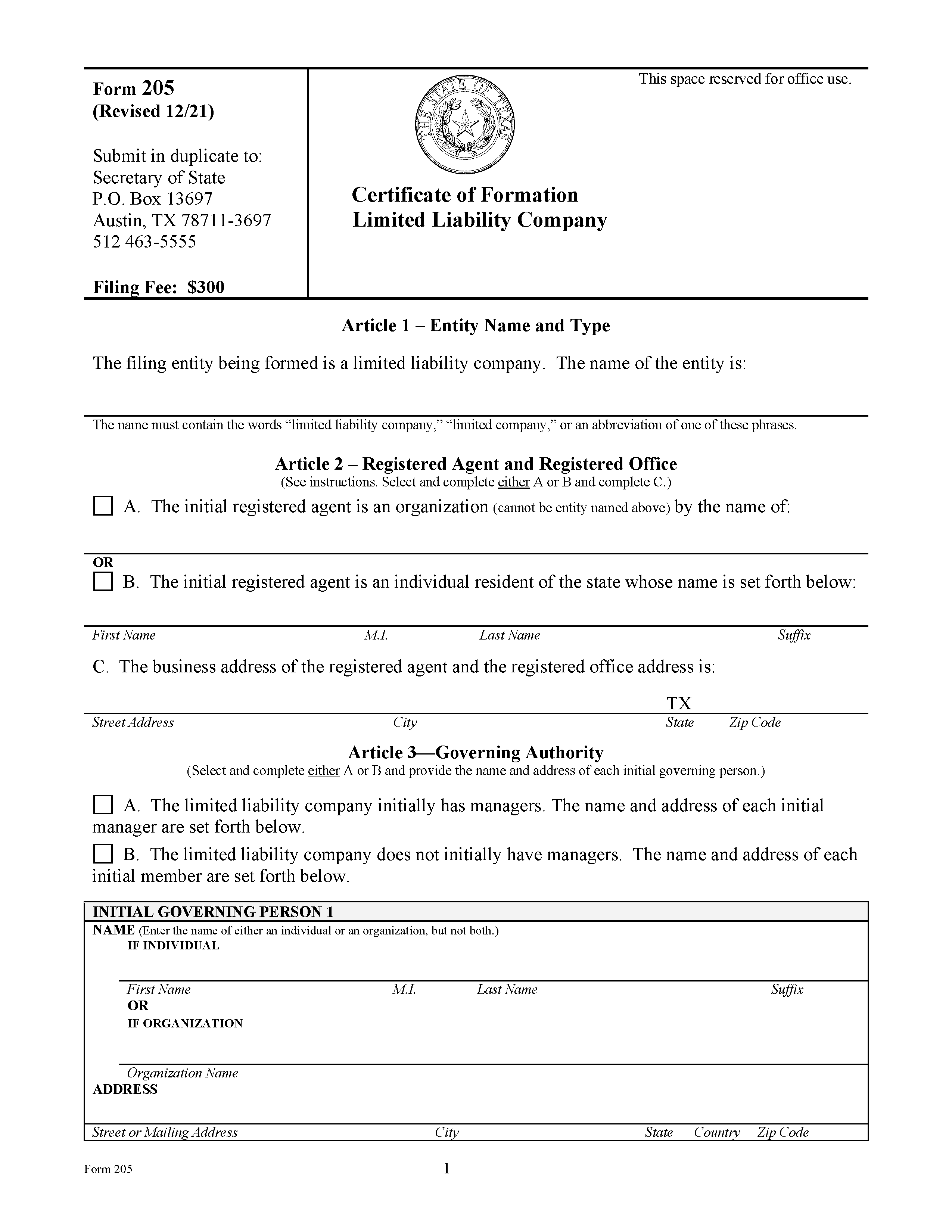
The core document for establishing your Texas LLC is the Certificate of Formation (Form 205). This document must be filed with the Texas Secretary of State. The Certificate of Formation requires specific information, including:
- The name of the LLC: As chosen and verified in Step 1.
- The name and address of the registered agent: As appointed in Step 2.
- The management structure: You’ll need to indicate whether the LLC will be member-managed or manager-managed. In a member-managed LLC, all members are involved in the day-to-day operations and decision-making. In a manager-managed LLC, members appoint one or more managers (who can be members or non-members) to oversee the business operations. This choice often depends on the size and complexity of your business; for a small family-run guesthouse in Galveston, member-management might be ideal, while a larger resort development might benefit from a dedicated manager.
- The principal office address: This is the main place of business for your LLC within Texas.
- The organizer’s information: The person filing the Certificate of Formation.
You can file the Certificate of Formation online, by mail, or in person. Filing online is generally the fastest and most efficient method. There is a filing fee associated with this process, which is subject to change, so it’s advisable to check the Texas Secretary of State’s website for the current fee schedule. Once the Secretary of State approves your Certificate of Formation, your LLC is officially formed and recognized as a legal entity in Texas.
Beyond Formation: Essential Operational Considerations
With your Texas LLC officially formed, you’re ready to embark on the exciting journey of building your business. However, the process doesn’t end with the filing of the Certificate of Formation. Several ongoing considerations are crucial for maintaining compliance and ensuring the continued success and protection of your LLC.
Creating an Operating Agreement
While not legally required by the state of Texas for LLCs, an Operating Agreement is a vital internal document that outlines the ownership structure, member responsibilities, and operational procedures of your LLC. It’s akin to a roadmap for your business, detailing how decisions will be made, how profits and losses will be distributed, and how members can join or leave the company.
For an LLC with multiple members, an Operating Agreement is highly recommended to prevent future disputes and clarify expectations. Even for a single-member LLC, it’s beneficial as it helps to reinforce the separateness of the business from its owner, further strengthening the liability protection. This document is especially important if your business involves diverse operations, such as managing a portfolio of different hotels, offering various tour packages, or catering to different lifestyle travel segments. A well-drafted Operating Agreement ensures that all parties are on the same page, fostering a harmonious and efficient business environment.
Obtaining an EIN and Opening a Business Bank Account
To conduct business and manage your finances effectively, you’ll need to obtain an Employer Identification Number (EIN) from the Internal Revenue Service (IRS). An EIN is like a Social Security number for your business and is required if you plan to hire employees, operate your LLC as a corporation or partnership for tax purposes, or file certain tax returns. You can apply for an EIN online through the IRS website for free.
Once you have your EIN, it’s essential to open a dedicated business bank account for your LLC. This is a critical step in maintaining the separation between your personal finances and your business finances, which is fundamental to preserving your limited liability protection. Depositing all business income into this account and paying all business expenses from it will create a clear financial record and make bookkeeping much simpler. This is crucial whether your business is a small bed and breakfast in a charming historic district or a large-scale adventure tourism company planning expeditions to Big Bend National Park.

Staying Compliant with Texas Regulations
Operating a business in Texas requires ongoing compliance with state and federal regulations. This includes renewing your LLC’s registration as required, maintaining accurate financial records, and filing appropriate tax returns. Texas does not have a state income tax for individuals or corporations, but it does have a franchise tax for certain entities. You will need to determine if your LLC is subject to the Texas franchise tax and file accordingly.
Understanding and adhering to industry-specific regulations is also paramount. If your LLC is involved in hospitality, for instance, you’ll need to be aware of health and safety codes for hotels and restaurants. If you’re in the travel or tour business, consider any licensing or insurance requirements specific to those activities. Staying proactive with compliance ensures your business operates smoothly and avoids potential penalties or legal issues, allowing you to focus on what truly matters: providing exceptional travel experiences, luxurious accommodations, or unforgettable local tourism adventures to your clients.
In conclusion, forming a Limited Liability Company in Texas is a strategic move that can provide substantial benefits for entrepreneurs across various industries. By understanding the advantages of an LLC, diligently following the formation steps, and committing to ongoing operational best practices, you can establish a robust legal framework for your business, paving the way for success and growth in the dynamic landscape of Texas. Whether your vision involves creating a unique luxury travel experience, managing a portfolio of desirable accommodations, or showcasing the rich tapestry of local culture, Texas provides a welcoming environment for your entrepreneurial dreams to take flight.