
Navigating the administrative processes that follow the passing of a loved one can be one of life’s most challenging endeavors. When that difficult time occurs in a state like Florida, known globally for its vibrant lifestyle, stunning beaches, and as a popular destination for both short-term visits and long-term residency, understanding how to obtain a death certificate becomes even more critical. Whether you’re a long-time resident, a snowbird with a second home in the Sunshine State, or managing affairs from a distance, securing this vital document is a foundational step for numerous legal and personal matters, from estate settlement to insurance claims, and even travel arrangements.
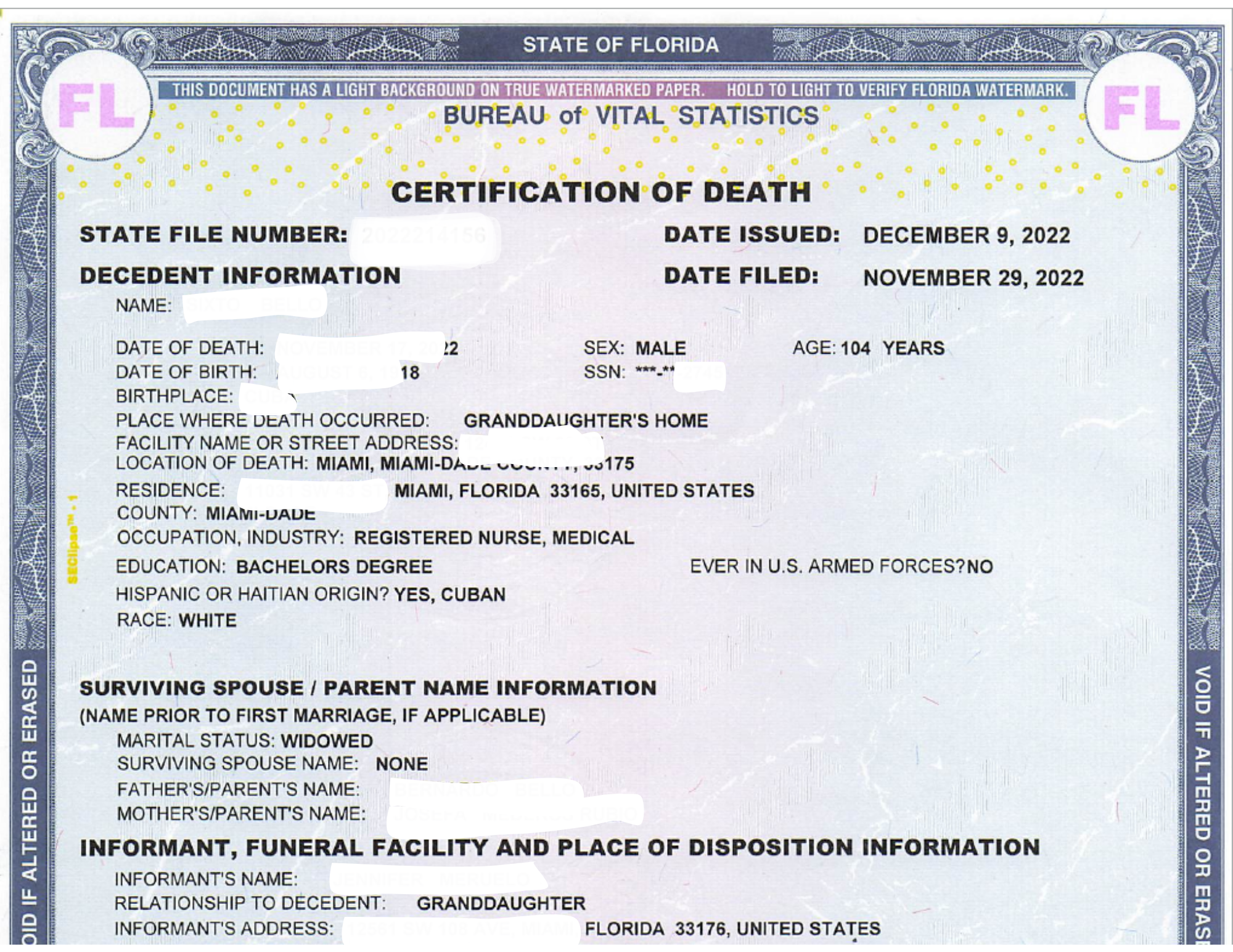
For many who embrace the lifestyle of travel and exploration, or who have family members scattered across various locales, the need to manage such sensitive affairs remotely or with minimal disruption to ongoing commitments is paramount. This comprehensive guide aims to demystify the process of obtaining a death certificate in Florida, providing clarity and practical steps to ensure a smoother experience during a time of grief. We’ll delve into the necessary protocols, who is authorized to make a request, and the various methods available to acquire this essential document, all while acknowledging the unique considerations that might arise for those living a dynamic, travel-oriented life.
Understanding the Initial Steps: The Role of Professionals
The journey to obtaining a death certificate in Florida begins almost immediately after a death occurs, involving several key professionals who play crucial roles in establishing the facts and initiating the official documentation process. Their timely actions are critical to the subsequent issuance of the death certificate, impacting how quickly you can proceed with other necessary arrangements, especially if you are coordinating from a distance or have travel plans that require a swift resolution of affairs.
The Funeral Director’s Essential Involvement
Perhaps the most instrumental figure in the initial phase is the funeral director. In Florida, the funeral director is typically responsible for preparing and filing the death certificate with the local Florida Department of Health‘s Office of Vital Statistics. This professional handles much of the intricate paperwork, acting as a crucial intermediary between the family, medical certifiers, and the state. Their responsibilities include:
- Gathering Information: Collecting personal demographic information about the deceased from the family or informant. This includes full name, date of birth, place of birth, social security number, marital status, occupation, and parents’ names. Accuracy is paramount, as errors can cause delays.
- Obtaining Medical Certification: Working with the attending physician or medical examiner to certify the cause of death.
- Filing the Certificate: Electronically filing the completed death certificate with the state. This electronic system, known as the Electronic Death Registration System (EDRS), significantly streamlines the process, often reducing the time it takes for the certificate to become officially registered.
- Ordering Copies: Once the death certificate is filed and registered, the funeral director can assist families in ordering certified copies directly from the Florida Department of Health. This service is invaluable, particularly for those who may be out of state or overwhelmed by other responsibilities.
For individuals managing affairs from afar, establishing clear communication with the chosen funeral home is vital. They are often your primary point of contact and can provide updates on the status of the filing and advise on when the death certificate will be available for order. This efficiency can directly influence your ability to coordinate travel, finalize arrangements, and attend to necessary administrative tasks without unnecessary delays.
The Medical Certifier and Cause of Death
Equally important is the role of the medical certifier, who is typically the attending physician, a healthcare practitioner, or the medical examiner. This individual is responsible for accurately determining and certifying the cause and manner of death. This critical step ensures the integrity and legal validity of the death certificate.
- Physician Certification: If the death was due to natural causes and the physician had been treating the deceased, they will certify the cause of death within a specified timeframe (usually 48-72 hours) after pronouncement.
- Medical Examiner Involvement: In cases of accidental, violent, unexpected, or suspicious deaths, a medical examiner will be involved. The medical examiner’s office conducts investigations, which may include an autopsy, to determine the cause and manner of death. This process can sometimes extend the timeframe for certification, as investigations must be thorough.
The promptness of medical certification directly impacts when the funeral director can file the death certificate. While most certifications are straightforward, delays can occur, especially if further medical review or investigation is required. Understanding these potential timelines can help manage expectations, particularly if you’ve traveled to Florida specifically to handle these matters and need to plan your departure. A proactive conversation with the funeral director about the expected certification timeline is always advisable.
Who Can Request a Death Certificate and Why It Matters for Your Lifestyle
Once the death certificate has been officially filed and registered by the Florida Department of Health, the next step is obtaining certified copies. However, access to these sensitive documents is restricted to protect privacy and prevent fraud. Understanding who is authorized to make a request is crucial, especially for individuals navigating the complexities of estate management, insurance, and personal affairs from various locations, fitting into diverse lifestyles from those retired in Florida to those with global travel commitments.
Authorized Individuals: Ensuring Proper Access
In Florida, certified copies of a death certificate can generally only be issued to specific, authorized individuals. This strict protocol ensures that these vital records are used appropriately. The eligible parties typically include:
- Immediate Family Members: This includes the deceased’s spouse, parent (legal or biological), child (legal or biological), or sibling. Proof of relationship, such as a birth certificate or marriage certificate, is usually required.
- Grandparent or Grandchild: If they can demonstrate their relationship to the deceased.
- Legal Guardians: Individuals who were the legal guardian of the deceased at the time of death.
- Legal Representatives: Attorneys representing the deceased’s estate or an authorized family member, often requiring a letter of representation or court order.
- Anyone with a Documented Legal Interest: This might include individuals needing the certificate for insurance claims, government benefits, or property transfers, provided they can furnish documentation proving their direct and tangible interest.
For those planning to request a death certificate, particularly if you are traveling to Florida for this purpose, it is imperative to bring adequate identification (such as a valid government-issued photo ID) and any documents that prove your relationship to the deceased or your legal interest. Failing to provide sufficient proof can lead to significant delays, impacting your travel schedule and the timely resolution of affairs.
Navigating Different Scenarios: Local vs. Out-of-State Applicants
The process remains largely consistent whether you are a local resident of a Florida city like Orlando or Miami, or an out-of-state applicant managing affairs from across the country or even internationally. However, logistical considerations differ.
- Local Applicants: Residents of Florida have the advantage of being able to visit a local county health department office in person, which can sometimes expedite the process. For instance, if the death occurred in Tallahassee, visiting the local health department office there might be an option.
- Out-of-State Applicants: For those managing affairs from beyond Florida’s borders, mail-in or online applications become the primary methods. This is particularly relevant for snowbirds who may have returned north for the season or for family members who reside in other states or countries. While convenient, these methods require careful attention to detail to avoid errors that could cause setbacks. Ensuring all required documents, including notarized signatures if necessary, are correctly submitted is vital to prevent additional travel or communication costs.
Regardless of your location, the ability to clearly define your relationship to the deceased and provide the necessary supporting documentation is the cornerstone of a successful application. This understanding allows individuals to effectively plan their steps, minimize administrative hurdles, and smoothly transition through a challenging period, whether they are settling into a long-term stay in Florida or coordinating from a resort in a faraway land.
The Application Process: Channels and Requirements

Once you have confirmed your eligibility to request a death certificate, the next step involves understanding the various application channels available through the Florida Department of Health‘s Bureau of Vital Statistics. Each method offers distinct advantages, catering to different needs and circumstances, particularly for individuals who lead diverse lifestyles or are handling affairs from varying locations. Careful consideration of these options can significantly streamline the process and minimize stress.
In-Person Applications: Visiting the Florida Department of Health
For those who are physically present in Florida, applying in person at a local county health department or the state’s Bureau of Vital Statistics office can often be the quickest way to obtain a death certificate. This method is particularly convenient for residents or individuals who have traveled to the state specifically to handle the deceased’s affairs.
- Where to Go: You can visit any county health department office in Florida. The main office of the Bureau of Vital Statistics is located in Jacksonville, but local offices offer the same service. For example, if you are staying in Tampa, you can visit the Hillsborough County Health Department.
- Required Documents: You will need to bring a valid government-issued photo ID, such as a driver’s license or passport. Additionally, any documentation proving your relationship to the deceased (e.g., birth certificate, marriage certificate) or legal interest (e.g., court order, letter of representation) is essential.
- Payment: Fees are typically payable by cash, check, money order, or credit card, depending on the specific office. It’s wise to check the accepted payment methods in advance.
- Benefits: Immediate processing is often a possibility, meaning you might walk out with your certified copies on the same day. This can be a considerable advantage if you have limited time in Florida or urgent deadlines.
Applying by Mail: Convenience for Distant Applicants
Applying by mail is a popular and practical option for those who are not in Florida but need to obtain a death certificate. This method is especially useful for snowbirds who have returned to their northern homes or for family members residing out of state or internationally.
- Application Form: You will need to download the official “Application for a Florida Death Record” form from the Florida Department of Health website.
- Information Required: The form will ask for the deceased’s full name, date of death, place of death (city or county), and information about the applicant (name, relationship to deceased, mailing address).
- Proof of Identity and Relationship: A clear photocopy of your valid government-issued photo ID must be included. If you are not the spouse, parent, or child, additional documentation proving your relationship or legal interest may be required. Some applications may require your signature to be notarized, especially for specific legal interests. Always review the instructions carefully.
- Payment: Payment is typically made by check or money order, payable to “Vital Statistics.” Do not send cash through the mail.
- Mailing Address: The application and payment should be mailed to the Florida Department of Health, Bureau of Vital Statistics, P.O. Box 210, Jacksonville, Florida 32231-0042.
- Processing Time: Mail-in requests generally have longer processing times compared to in-person applications, typically several weeks. Factor this into your planning, especially if you have upcoming travel or time-sensitive matters.
Online and Third-Party Services: Modern Solutions
In an increasingly digital world, online services offer another convenient option for requesting death certificates. The Florida Department of Health partners with third-party vendors for online requests.
- How it Works: These authorized services allow you to submit your application and payment electronically. They then process your request with the Bureau of Vital Statistics and mail the certificate to you.
- Benefits: Online applications offer 24/7 accessibility, which is excellent for those living across different time zones or with busy travel schedules. They often provide tracking services, allowing you to monitor the status of your request.
- Considerations: While convenient, these services usually charge an additional processing fee on top of the state’s standard fees. Always ensure you are using an official, authorized vendor to protect your personal and financial information. The Florida Department of Health website will typically list their approved partners.
- Required Information: Similar to mail-in applications, you will need to provide detailed information about the deceased and yourself, along with electronic copies of your ID and proof of relationship/interest.
Choosing the right application method depends on your personal circumstances, urgency, and location. For those leading a nomadic or international lifestyle, the mail-in or online options offer essential flexibility, allowing critical administrative tasks to be managed without requiring an immediate trip back to Florida.
Fees, Processing, and Special Considerations for Your Travel Plans
Understanding the financial and time commitments involved in obtaining a death certificate is essential for effective planning, particularly for those whose lifestyles involve travel or who are managing affairs remotely. Awareness of fees, processing times, and special services like apostilles can prevent unexpected delays and costs, ensuring a smoother journey through this administrative process.
Understanding Costs and Expedited Options
The cost of a death certificate in Florida is generally standardized, but additional fees can apply for extra copies or expedited services.
- Standard Fee: As of the latest updates, the initial certified copy of a death certificate typically costs around $10. Each additional copy ordered at the same time usually costs $4. These fees are set by the Florida Department of Health and are subject to change, so always verify the current rates on their official website.
- Payment Methods: In-person payments can often be made by cash, check, money order, or credit/debit card. Mail-in requests usually require a check or money order. Online services accept credit/debit cards.
- Expedited Services: For those with urgent needs, perhaps needing the document to finalize travel plans or for immediate estate matters, expedited processing options are often available. This usually involves an additional fee and can significantly reduce the waiting time. For example, courier services or express mail options might be offered by third-party vendors, or a walk-in service at a county health department might be faster than mailing. If you are flying in from New York or London specifically for this, exploring expedited options can be a wise investment to align with your travel schedule.
It’s crucial to order sufficient copies upfront. Many institutions (banks, insurance companies, government agencies, real estate offices) will require an original certified copy, not a photocopy. Ordering several at once is more cost-effective than placing multiple separate orders later.
Apostille Services for International Use
For individuals managing the affairs of a deceased loved one with international connections—perhaps a foreign property, overseas bank accounts, or beneficiaries residing abroad—an apostille is often required. An apostille is a certification that authenticates the origin of a public document (like a death certificate) for use in countries that are party to the Hague Apostille Convention.
- When an Apostille is Needed: If the Florida death certificate needs to be presented to an authority in another country that is part of the Hague Convention, it will require an apostille. Without it, the document may not be accepted.
- How to Obtain an Apostille: In Florida, apostilles are issued by the Florida Department of State. You would first obtain the certified death certificate from the Florida Department of Health, and then submit that certified copy to the Florida Department of State for the apostille. This can be done by mail or in person at their office in Tallahassee.
- Impact on Travel/Timeline: This adds another layer to the process, requiring an additional application and waiting period. If you have international travel plans related to the estate, factor in the extra time needed for apostille processing, which can range from a few days for in-person requests to several weeks by mail. Misunderstanding this requirement can cause significant delays in international estate settlements or the transfer of foreign assets.
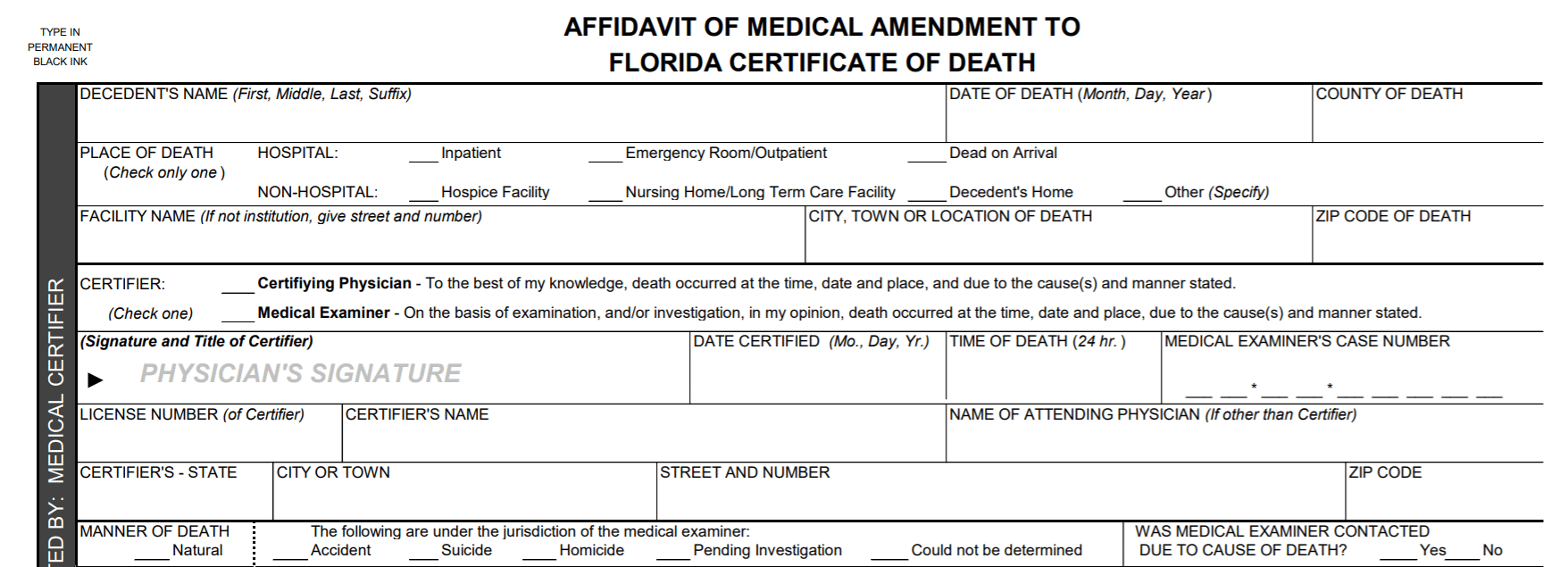
Correcting Information on a Death Certificate
Despite the best efforts of funeral directors and medical certifiers, errors can sometimes occur on a death certificate. Correcting these errors is essential, as even minor discrepancies can cause issues with legal and financial institutions.
- The Process: To correct a death certificate, an application for amendment must be submitted to the Florida Department of Health. This usually requires an affidavit from the informant or funeral director and supporting documentation that proves the correct information (e.g., birth certificate, marriage license, court order).
- Implications for Lifestyle/Travel: Discovering an error after you’ve left Florida can be particularly frustrating, potentially necessitating further communication or even another trip to the state. It underscores the importance of carefully reviewing all information provided by the funeral director before the certificate is filed and upon receipt of the first copies. Proactive verification can save considerable time and effort later on, allowing you to maintain your travel rhythm and lifestyle without unforeseen administrative burdens.
In conclusion, obtaining a death certificate in Florida is a systematic process that, while sensitive, can be navigated efficiently with the right information and preparation. For those who embrace the diverse opportunities Florida offers, whether as a temporary retreat, a permanent home, or a place where loved ones reside, understanding these procedures is a critical aspect of responsible life and travel planning. By leveraging the expertise of funeral directors, understanding access restrictions, choosing appropriate application channels, and being aware of costs and special services like apostilles, you can ensure a smoother and more peaceful resolution during a challenging time, allowing you to focus on healing and remembrance, rather than administrative complexities.
LifeOutOfTheBox is a participant in the Amazon Services LLC Associates Program, an affiliate advertising program designed to provide a means for sites to earn advertising fees by advertising and linking to Amazon.com. Amazon, the Amazon logo, AmazonSupply, and the AmazonSupply logo are trademarks of Amazon.com, Inc. or its affiliates. As an Amazon Associate we earn affiliate commissions from qualifying purchases.