
Turning 18 marks a significant milestone in anyone’s life, a true passage into adulthood. For residents of the Lone Star State, obtaining a driver’s license at this age isn’t just about legal driving; it’s about unlocking an unparalleled sense of freedom, independence, and the ability to truly explore the vast and vibrant landscape of Texas. This pivotal document transforms daily commutes and errands into opportunities for adventure, opening doors to travel experiences that were once out of reach. From spontaneous road trips to exploring hidden local gems, your Texas driver’s license at 18 is your ticket to a world of new possibilities, influencing everything from your career prospects to your personal lifestyle and travel ambitions.
The Road to Independence: Why a Texas Driver’s License at 18 Matters
For many, the age of 18 is synonymous with newfound autonomy, and a driver’s license is arguably the most tangible symbol of this shift. While younger drivers in Texas navigate a graduated licensing system, turning 18 often streamlines the process, placing you directly on the path to a full, unrestricted license. This isn’t merely a piece of plastic; it’s a foundational element for a self-directed life, especially when considering the expansive nature of Texas and the travel-centric lifestyle many aspire to.
Unlocking Travel Freedom and Exploration
Imagine a weekend getaway to the historical grandeur of San Antonio, a culinary journey through the vibrant streets of Austin, or a serene escape to the natural beauty of Big Bend National Park. Without a driver’s license, these experiences often require careful planning around public transport, expensive ride-shares, or relying on others. With your own license, the open road becomes an invitation.
Your driver’s license enables you to:
- Embark on Spontaneous Road Trips: Discover charming small towns, roadside attractions, and unique local eateries that are often bypassed by conventional tourist routes. A drive through the Texas Hill Country during wildflower season, for instance, becomes an effortless adventure rather than a logistical challenge.
- Access Remote Destinations: Many of Texas’s most stunning natural landmarks, from Guadalupe Mountains National Park to the tranquil beaches of Padre Island National Seashore, are best reached by car. A license allows you to immerse yourself fully in these natural wonders, setting your own pace and schedule.
- Enhance Accommodation Choices: Your ability to drive significantly expands your options for accommodation. You’re no longer confined to hotels and resorts within walking distance of public transport hubs. You can choose a secluded cabin in the woods, a charming Airbnb in a quiet neighborhood, or a beachfront villa a little further afield, knowing you have the means to reach it and explore its surroundings. This freedom opens up possibilities for budget-friendly stays and unique luxury experiences alike.
Enhancing Your Lifestyle and Opportunities
Beyond leisure travel, a driver’s license at 18 profoundly impacts your daily life and future prospects. It’s an invaluable asset for various aspects of a well-rounded lifestyle:
- Work and Education: Many job opportunities, especially in service industries, require a valid driver’s license. Furthermore, commuting to college, internships, or vocational training outside of immediate public transport routes becomes feasible, broadening your educational and career horizons across cities like Dallas, Houston, and Fort Worth.
- Social Life and Errands: The convenience of driving allows you to maintain an active social life, visit friends and family, and run errands without relying on others. This autonomy fosters self-reliance and better time management.
- Emergency Preparedness: In urgent situations, having the ability to drive can be critical, providing peace of mind and an essential life skill.
In essence, a driver’s license at 18 in Texas is more than just a permit; it’s an empowerment tool that fundamentally transforms your access to places, people, and experiences, setting the stage for a fulfilling adult life marked by independence and adventure.
Essential Steps to Obtain Your Texas Driver’s License
While the exact steps might seem daunting, breaking down the process makes it manageable. For an 18-year-old in Texas, the journey to getting a driver’s license is relatively straightforward, designed to ensure you’re a safe and responsible driver on the road.
Gathering Required Documents: Your Travel Passport to Texas Roads
Before you even think about stepping into a Department of Public Safety (DPS) office, the most crucial first step is to meticulously gather all necessary documentation. Think of these documents as your “travel passport” to the roads of Texas – without them, your journey can’t begin.
You will need to present:
- Proof of Identity and U.S. Citizenship or Lawful Presence:
- An unexpired U.S. passport or passport card.
- Original or certified copy of your birth certificate (issued by a government agency).
- Permanent Resident Card (Green Card) or other immigration documents if not a U.S. citizen.
- Proof of Texas Residency: You’ll need two documents showing your current Texas residential address. These must be from different sources and dated within 90 days of your application. Examples include:
- Current utility bill (electric, water, gas, internet).
- Current Texas vehicle registration or title.
- Current homeowner’s or renter’s insurance policy or statement.
- A valid Texas voter registration card.
- A statement from a financial institution (bank, credit union).
- A residential mortgage statement.
- A current lease agreement.
- Proof of Social Security Number (SSN):
- Your Social Security Card.
- A W-2 form or 1099 form with your full SSN.
- A pay stub with your SSN.
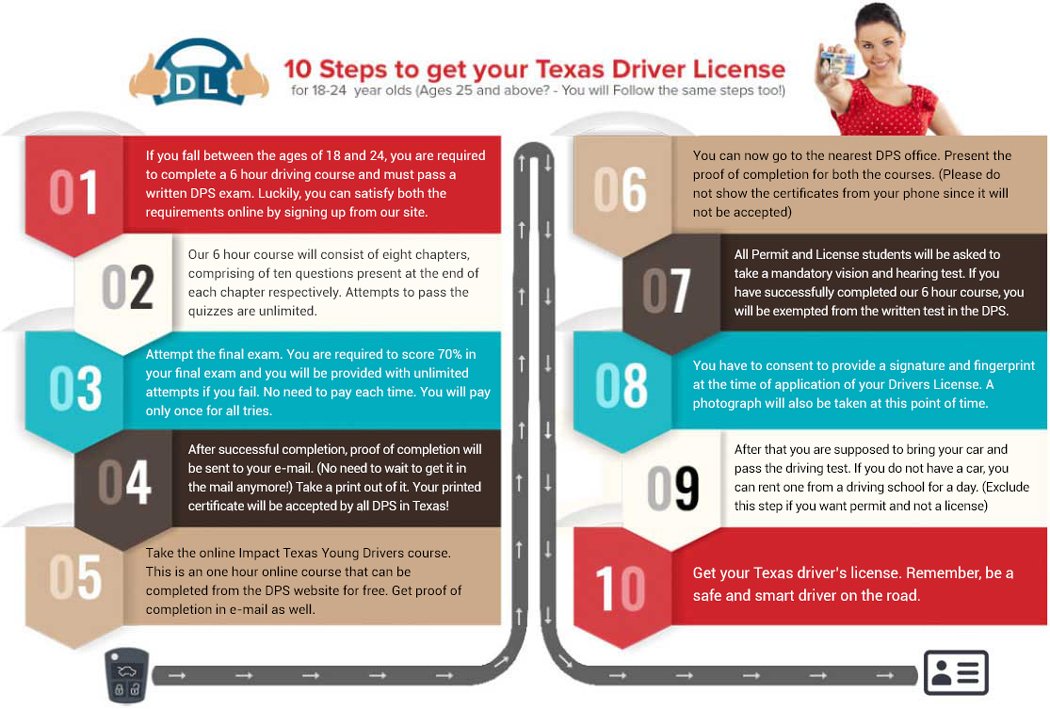
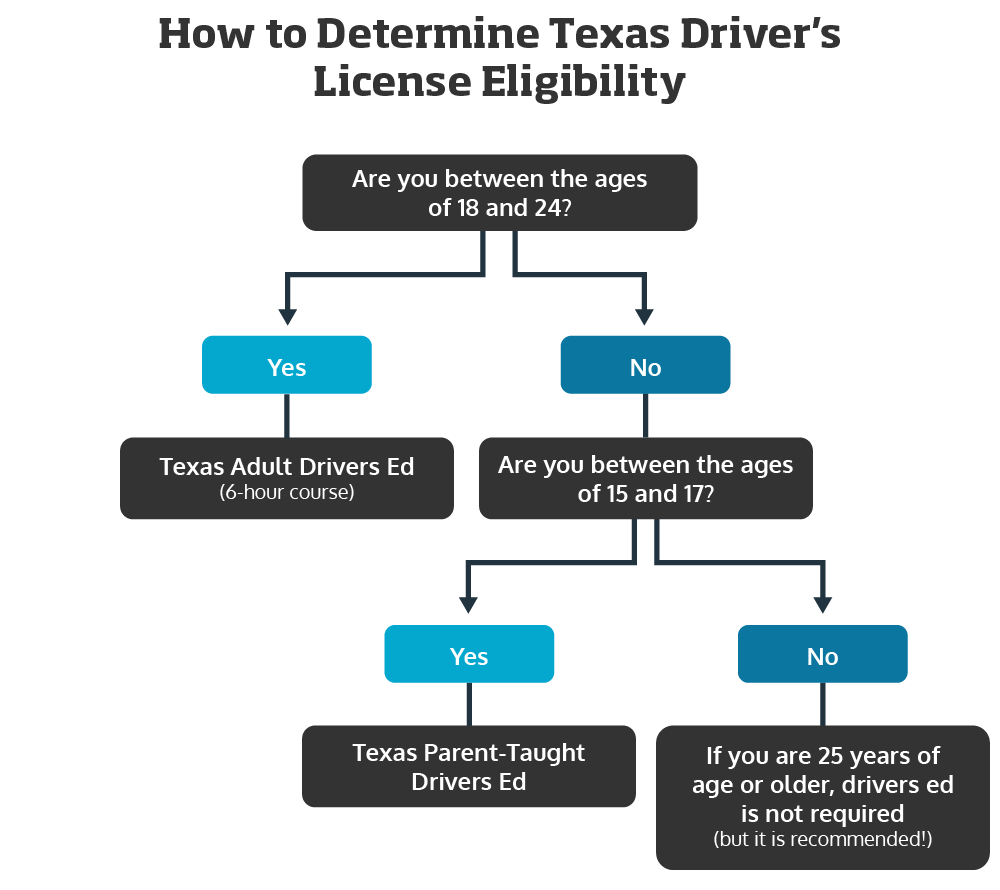
- Proof of Driver Education (if applicable): While not strictly mandated for individuals 18 and older in Texas, completing an approved Adult Driver Education course is highly recommended and often makes the process smoother, especially for the knowledge test. If you complete a 6-hour adult driver education course, you’ll receive a certificate (DE-964 or ADE-1317) that exempts you from the written knowledge test at the DPS. This is a smart investment in your driving skill and efficiency.
Ensure all documents are originals or certified copies; photocopies are generally not accepted. It’s a good practice to organize them in a folder to streamline your visit to the DPS office.
Driver Education and Knowledge Test: Building Your Foundation
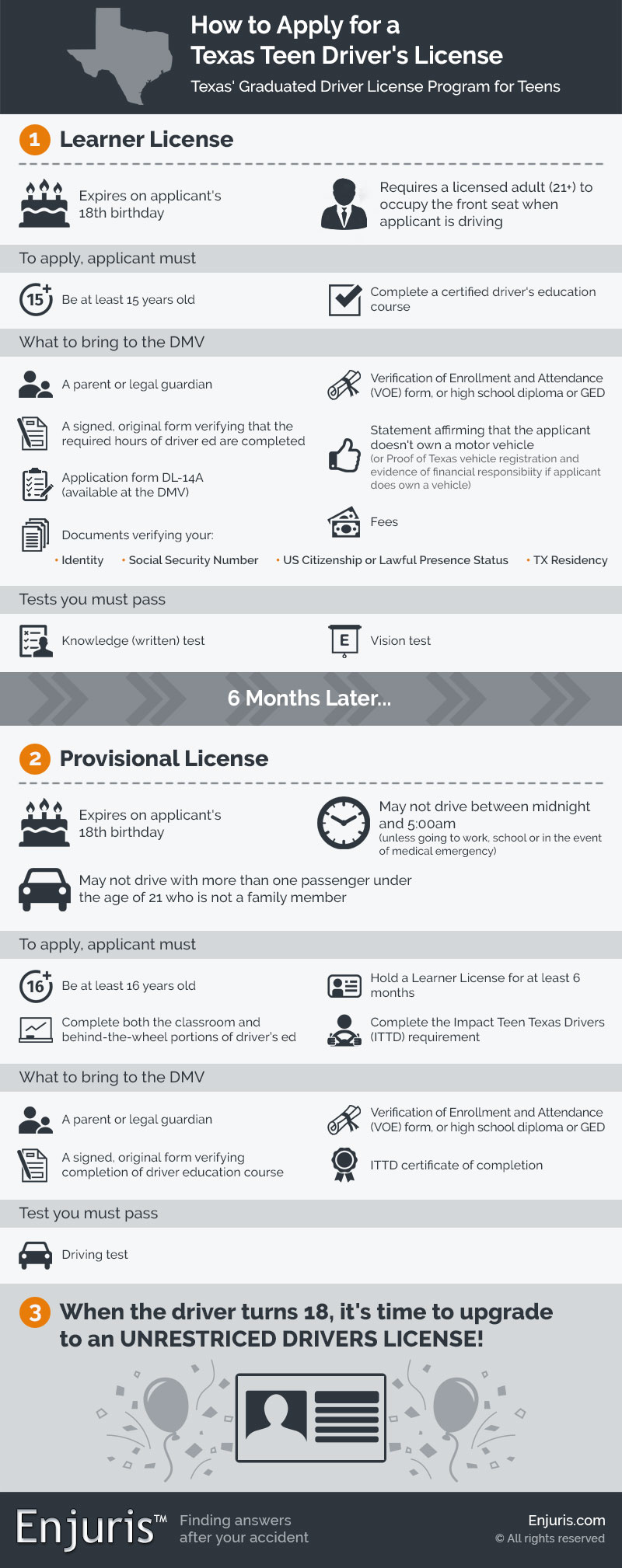
Even at 18, a solid understanding of road rules and safety is paramount. Many 18-year-olds opt to take an Adult Driver Education course. These courses, typically 6 hours long, are available online or in-person and cover crucial topics like traffic laws, road signs, defensive driving techniques, and the dangers of impaired driving. Completing such a course not only prepares you for the written knowledge test but also instills confidence, making you a safer driver on the road.
If you complete the 6-hour course, you will typically take the written knowledge test as part of the course and receive a certificate. If you do not take the course or if your course certificate does not include the knowledge test, you will take this test at the DPS office. The knowledge test assesses your understanding of Texas traffic laws and road signs. Study the official Texas Driver’s Handbook diligently; it contains all the information you need to pass.
After passing the knowledge test and presenting all required documents, you will undergo a vision test. Assuming you pass, you’ll be issued an Adult Learner Permit, which is valid for a limited period and allows you to practice driving with a licensed adult. However, for 18-year-olds, if you’ve completed the driver education requirements, you can often proceed directly to schedule your driving test without needing a separate permit period.
The Driving Test: Navigating the Open Road
The final hurdle is the driving skills test, where you’ll demonstrate your ability to operate a vehicle safely and competently. This test evaluates your control of the vehicle, adherence to traffic laws, and awareness of your surroundings.
- Scheduling Your Test: Appointments for the driving test are highly recommended and can usually be booked online through the DPS website. Be sure to arrive early.
- The Vehicle: You must provide a vehicle for the test. It must be in good working order, properly registered, and insured. The vehicle must pass a safety inspection before the test, meaning all lights, turn signals, horn, and brakes must be operational.
- What to Expect: A DPS examiner will accompany you. You’ll be asked to perform various maneuvers, including parallel parking, backing up, turning, changing lanes, and navigating intersections. The examiner will assess your observation skills, proper use of signals, speed control, and overall adherence to traffic regulations. Stay calm, drive defensively, and remember what you learned in driver education.
- Passing the Test: Upon successful completion of the driving test, you will return to the DPS office, pay the required fee, and have your photo taken. You’ll then be issued a temporary driver’s license, valid until your permanent card arrives in the mail, typically within two to three weeks.
With your temporary license in hand, the roads of Texas are officially open to you!
Beyond the License: Exploring Texas with Your Newfound Freedom
Obtaining your Texas driver’s license at 18 isn’t just about the process; it’s about the incredible journey that lies ahead. The Lone Star State is a treasure trove of diverse landscapes, vibrant cities, and unique cultural experiences, all now within your reach.
Iconic Texas Destinations to Discover by Car
Your driver’s license is the key to unlocking the true essence of Texas. Consider these unforgettable road trip destinations:
- San Antonio and the Alamo: Drive south to immerse yourself in rich history and the picturesque River Walk. Explore historic missions and enjoy the vibrant culinary scene. Many boutique hotels and charming inns line the river, offering a perfect stay.
- Austin’s Live Music Scene: Head to the state capital for an electrifying experience. With your car, you can easily hop between famous music venues on Sixth Street, explore unique food trucks, and visit nearby Texas Hill Country wineries. Consider staying in a modern hotel downtown or a cozy vacation rental for a local feel.
- Houston and Beyond: Explore the sprawling metropolis, home to the NASA Johnson Space Center, world-class museums, and diverse culinary offerings. From Houston, it’s a short drive to the coastal charm of Galveston, where historic architecture meets sandy beaches and fresh seafood. Luxurious resorts and family-friendly apartments are plentiful.
- Big Bend National Park: For the ultimate adventure, drive west to this remote national park, a haven for hikers, stargazers, and nature enthusiasts. The sheer size and rugged beauty demand a car to fully appreciate its canyons, mountains, and desert landscapes. Accommodations range from park lodges to charming stays in nearby Terlingua.
- Dallas and Fort Worth: Discover the sophisticated arts scene, upscale shopping, and historical sites in Dallas, then head west to Fort Worth for a taste of the authentic Texas cowboy culture at the Stockyards National Historic District. Both cities offer a wide array of hotels, from budget-friendly options to luxury suites.
- Waco and Magnolia Market: A popular stop for fans of home design and unique shopping experiences. Your car will provide easy access to the market and other local attractions, including the Dr Pepper Museum and the Baylor University campus.
Planning Your First Texas Road Trip: Accommodation and Logistics
With your driver’s license secured, the exciting part begins: planning your first adventure. Integrating your newfound driving freedom with the world of travel, tourism, and accommodation is key.
- Route Planning: Use online mapping tools to plan your route, considering mileage, fuel stops, and potential points of interest. Road conditions in Texas can vary, especially in rural areas, so it’s wise to check forecasts.
- Accommodation Booking: Leverage your ability to drive by exploring diverse accommodation options. Websites like Booking.com, Expedia, Airbnb, and VRBO become your best friends. You can choose anything from a Marriott or Hilton in a city center to a quaint B&B in a small town, or even a unique glamping site accessible by car. Consider the amenities you desire – a pool for summer, pet-friendly options, or a kitchen for longer stays.
- Budgeting for Travel: Factor in fuel costs, accommodation, food, and attraction entry fees. A driver’s license allows for budget-friendly travel by enabling you to seek out cheaper accommodation options slightly outside city centers or to pack your own snacks and drinks for the road.
- Local Culture and Food: Drive to local markets, family-owned restaurants, and community events to truly experience the local culture and culinary delights of Texas. From BBQ joints in Lockhart to Tex-Mex in El Paso, your car is your passport to authentic flavors.
Tips for a Seamless Experience and Safe Travels
Getting your driver’s license is a significant achievement, but the journey of responsible driving is ongoing.
- Practice Makes Perfect: Even after passing your test, continue to practice in various conditions (different times of day, light rain) to build confidence and refine your skills.
- Understand Your Vehicle: Familiarize yourself with your car’s features, including blind spots, braking distances, and how to check fluid levels and tire pressure.
- Stay Informed: Keep abreast of changes in Texas traffic laws and driving regulations.
- Prioritize Safety: Always wear your seatbelt, avoid distractions (especially mobile phone use), never drive under the influence of alcohol or drugs, and adhere to speed limits.
- Plan Ahead for Long Trips: Before embarking on a major road trip, ensure your vehicle is in good condition, plan your stops, get adequate rest, and let someone know your itinerary. Carry an emergency kit.
- Insurance Matters: Understand your auto insurance policy and ensure you have adequate coverage for your vehicle and yourself.
A Texas driver’s license at 18 is far more than a legal formality; it’s a catalyst for personal growth, exploration, and the pursuit of a lifestyle defined by freedom and discovery. Embrace this new chapter responsibly, and the vast and beautiful world of Texas and beyond will be yours to explore.