
Earning a GED (General Educational Development) credential in California is a significant achievement that opens doors to higher education, better job opportunities, and personal growth. For individuals who did not complete high school, the GED offers a recognized and respected alternative to a traditional diploma. This guide will walk you through the entire process of obtaining your GED in the Golden State, from understanding the eligibility requirements to preparing for and passing the exam. We will also explore how this pursuit can be seamlessly integrated with the vibrant lifestyle and diverse experiences California has to offer.

Understanding the GED Exam in California
The GED test is a comprehensive assessment of high school-level academic skills. It is designed to measure proficiency in four subject areas: Reasoning Through Language Arts, Mathematical Reasoning, Science, and Social Studies. Passing the GED exam demonstrates that you have achieved a level of academic knowledge comparable to that of a high school graduate.
Eligibility Requirements
Before embarking on your GED journey, it’s crucial to understand the specific eligibility criteria set forth by the California Department of Education. Generally, to be eligible to take the GED test in California, you must:
- Be at least 18 years old.
- Have not graduated from a high school or received a high school equivalency certificate.
- If you are 16 or 17 years old, you must meet additional requirements, such as obtaining an official withdrawal form from the last high school you attended and parental/guardian consent.
- Be a resident of California.
It’s important to note that the GED test is administered by official testing centers across the state. These centers are authorized to conduct the exam under strict supervision to ensure the integrity of the process. You cannot take the GED test online from home, though some preparatory courses may be available online.
The GED Test Structure and Content
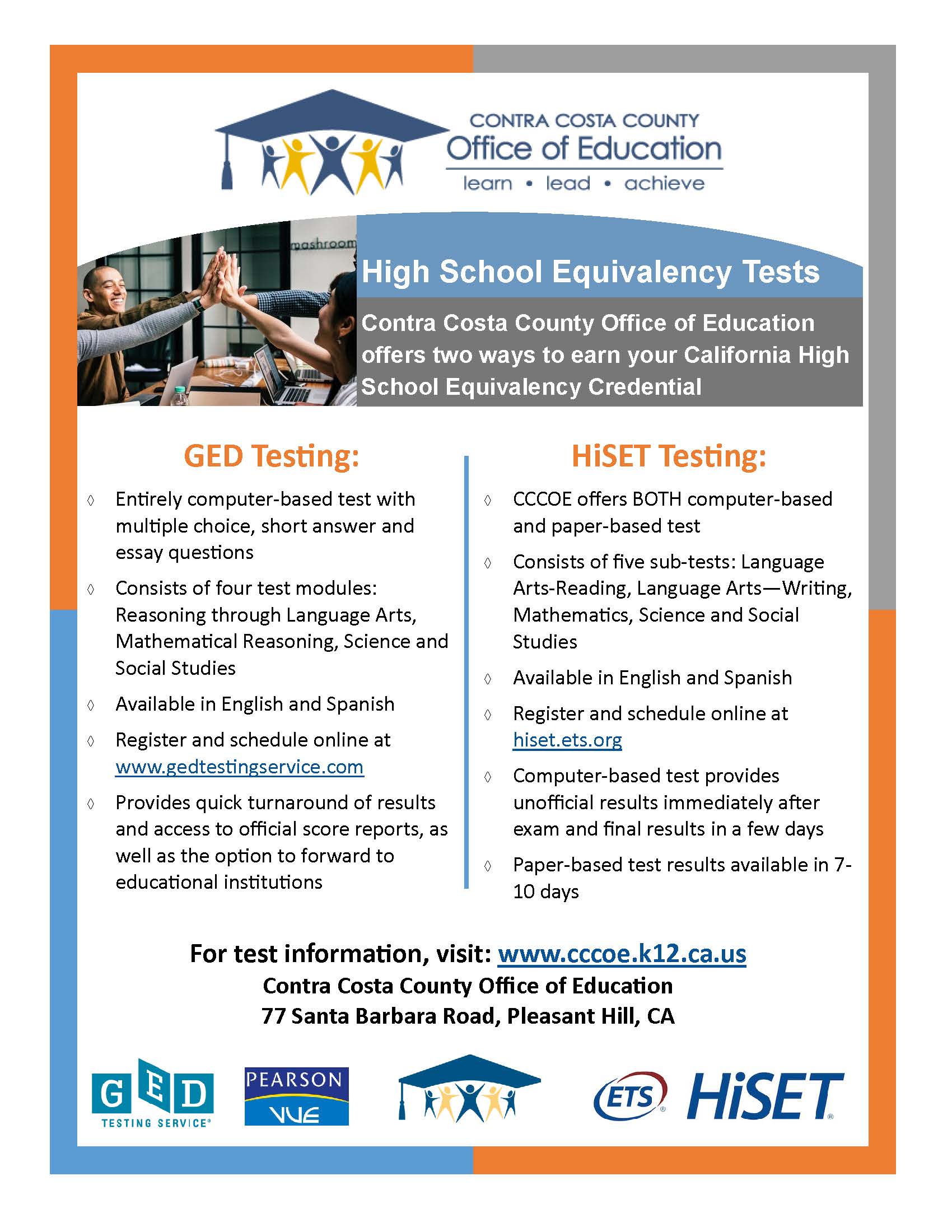
The GED test is computer-based and consists of four separate subtests, each covering a specific academic area. Each subtest is timed, and you can take them in any order you prefer.
- Reasoning Through Language Arts (RLA): This subtest assesses your ability to read and comprehend informational and literary texts, as well as your skills in writing extended responses. It includes multiple-choice questions and a constructed response (essay) task. The RLA test evaluates critical thinking, analysis, and interpretation skills.
- Mathematical Reasoning: This subtest focuses on mathematical concepts and problem-solving skills. It includes questions on number operations, algebra, geometry, and data analysis. Calculators are permitted for portions of this test, and you’ll be provided with an on-screen calculator.
- Science: The science subtest covers life science, physical science, and Earth and space science. It emphasizes scientific reasoning, data interpretation, and understanding of scientific concepts. You will encounter multiple-choice questions that require you to analyze scientific information and draw conclusions.
- Social Studies: This subtest assesses your knowledge of history, economics, civics, and geography. It requires you to interpret historical documents, analyze economic concepts, and understand governmental structures. Like the other subtests, it primarily uses multiple-choice questions.
To earn your GED credential, you must pass all four subtests. A passing score on each subtest is 145, with a total score of at least 270 across all four tests. There is also a minimum score of 145 on each subtest to pass.
Preparing for Your GED Exam
Preparation is key to successfully passing the GED exam. California offers a variety of resources to help you study effectively, catering to different learning styles and needs. A well-structured study plan will significantly increase your chances of success.
GED Preparation Programs and Resources
California provides numerous avenues for GED preparation, many of which are free or low-cost. These programs are designed to equip you with the knowledge and skills necessary to tackle the GED test with confidence.
- Adult Schools and Community Colleges: Many local adult schools and community colleges throughout California offer GED preparation classes. These classes are often taught by experienced instructors and provide structured lessons, practice tests, and personalized feedback. They are an excellent option for those who benefit from a classroom setting and direct interaction with teachers and peers. For example, institutions like Long Beach City College offer comprehensive GED programs.
- Libraries: Public libraries in California are valuable resources for GED preparation. They often provide access to study materials, practice books, and online learning platforms such as Gale Courses. Librarians can also guide you to relevant resources.
- Online Learning Platforms: Numerous online platforms offer GED preparation courses. These can be flexible and convenient for those who need to study at their own pace or have scheduling conflicts. Some popular online resources include Khan Academy (which offers free GED-aligned practice), GED.com (the official GED testing service), and various paid online courses that offer more in-depth instruction and practice.
- Study Guides and Practice Tests: Purchasing GED study guides and taking practice tests are essential components of preparation. These materials help you understand the test format, identify your strengths and weaknesses, and get accustomed to the types of questions you will encounter. Many bookstores and online retailers carry official GED practice books.
When choosing a preparation program, consider your learning style, available time, and budget. Attending classes, working with online modules, and practicing regularly with mock exams will build your confidence and improve your performance.
Strategies for Effective Study
- Create a Study Schedule: Allocate dedicated time for studying each subject area. Consistency is more important than cramming.
- Identify Your Weaknesses: Use practice tests to pinpoint areas where you need the most improvement. Focus your study efforts on these subjects.
- Practice Regularly: Consistent practice with different types of questions is crucial. The more familiar you are with the format and content, the more comfortable you will be on test day.
- Utilize Official Resources: The official GED website (GED.com) offers valuable information, practice questions, and diagnostic tools.
- Join a Study Group: Studying with others can provide motivation, different perspectives, and the opportunity to discuss challenging concepts.
Taking the GED Exam in California
Once you feel adequately prepared, it’s time to register for and take the GED exam. The process is straightforward, but it’s important to follow the correct steps to ensure a smooth experience.
Registration and Scheduling
The official platform for registering and scheduling your GED tests is GED.com. You will need to create an account, select your preferred testing center in California, choose the subtests you wish to take, and pay the required fees.
- Find a Testing Center: GED.com provides a locator tool to help you find the nearest authorized GED testing center. California has numerous official testing sites spread across the state, from major cities like Los Angeles and San Francisco to smaller towns. You can choose a center that is convenient for you.
- Scheduling Your Tests: You can schedule your subtests individually or as a complete battery. Many test-takers prefer to take them one at a time to focus on each subject. You can reschedule tests, but be aware of the cancellation policy and any associated fees.
- Test Fees: The cost of the GED test varies by state. In California, there is a fee for each subtest. You can find the current fee structure on GED.com. Some preparation programs may offer vouchers or assistance with test fees.
What to Expect on Test Day
On the day of your GED exam, arrive at the testing center early to allow time for check-in. You will need to bring a valid form of identification, such as a driver’s license or passport. Lockers will be available for your personal belongings, as you will not be permitted to bring any electronic devices or personal notes into the testing room.
The testing environment is designed to be quiet and conducive to concentration. You will be provided with a computer and a headset. The proctor will guide you through the initial steps and answer any questions you may have. Remember to manage your time effectively during each subtest. If you encounter a difficult question, don’t spend too much time on it; move on and come back if time permits.
Receiving Your Scores and Diploma
After completing your GED tests, your scores will be available through your GED.com account, usually within a few business days. If you pass all four subtests, you will be issued a GED credential by the California Department of Education. This official certificate serves as your high school equivalency diploma.
You can then request official transcripts and your GED credential for applications to colleges, universities, or for employment. The process for obtaining these documents is also typically managed through your GED.com account or directly through the California Department of Education.
Leveraging Your GED for Future Opportunities in California
Earning your GED in California is not just about passing an exam; it’s about unlocking a future filled with possibilities. The skills and knowledge you gain, combined with the credibility of a GED credential, can significantly enhance your life and career prospects.
Pathways to Higher Education
With a GED in hand, you can pursue higher education at colleges and universities across California and beyond. Many California community colleges, such as Santa Monica College or Pasadena City College, welcome GED graduates and offer various academic and vocational programs. Universities like the University of California, Berkeley or the California State University, Fullerton also consider GED holders for admission, often alongside traditional high school graduates. You may need to take additional placement tests or complete prerequisite courses, but the path to a degree is open.
Career Advancement and Job Opportunities
The GED is recognized by employers nationwide as a valid indicator of a high school education. This can open doors to a wider range of job opportunities and career advancement. Many employers require at least a high school diploma or its equivalent for entry-level positions and promotions. With your GED, you can apply for jobs in fields such as healthcare, technology, skilled trades, and business that might have previously been out of reach.
Embracing the California Lifestyle
Achieving your GED is a significant personal accomplishment, and it’s a perfect opportunity to celebrate and explore the diverse lifestyle that California offers. Whether you’re interested in the bustling cultural scene of San Diego, the natural beauty of Yosemite National Park, the historic charm of San Luis Obispo, or the iconic landmarks of Los Angeles, California provides endless opportunities for exploration and enjoyment.
Consider planning a celebratory trip to a renowned California landmark, perhaps visiting the Golden Gate Bridge in San Francisco or experiencing the entertainment of Disneyland in Anaheim. You might also explore the diverse culinary scene, from the farm-to-table restaurants in Napa Valley to the vibrant food trucks in Oakland. For those seeking adventure, the hiking trails in the Sierra Nevada mountains or the beaches along the Pacific Coast Highway offer incredible experiences.
Your GED journey is a testament to your dedication and resilience. By preparing thoroughly, navigating the testing process, and embracing the opportunities that follow, you are setting yourself up for a brighter future. California is a state of endless potential, and with your GED, you are well-equipped to seize it.